Alachua County Bicyclist Killed and a Lake City Driver Faces DUI Manslaughter Charges
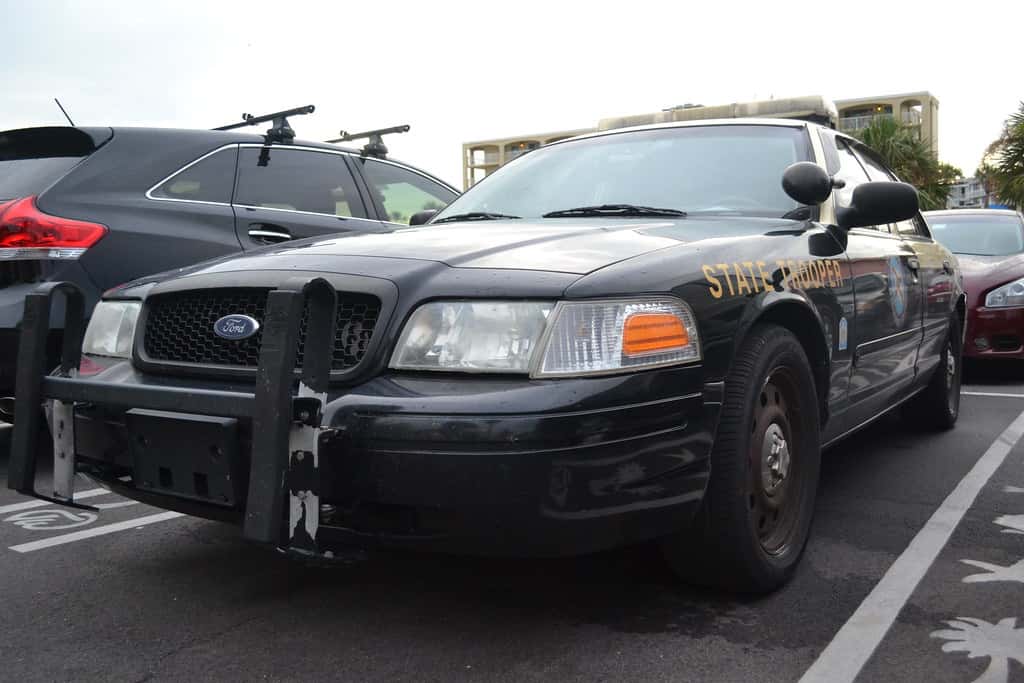
A 30-year-old Lake City woman is facing homicide and driving under the influence charges after a 68-year-old bicyclist was struck and killed in Alachua County, according to the Florida Highway Patrol. Troopers said the crash occurred at about 8:09 p.m. on Wednesday, September 16, at NW 75th Street and NW 5th Place.
Investigators said the driver, identified as Shateria Glenn, had three young children in the SUV at the time of the crash, described as a one-year-old boy, a three-year-old girl, and another young girl. She faces a DUI manslaughter charge according to the agency.
Glenn is accused of the offenses and has not been convicted. Under Florida law, a person charged with a crime is presumed innocent unless and until the state proves the case beyond a reasonable doubt, and the allegations described here come from law enforcement rather than from any judicial finding.
What DUI manslaughter means under Florida law
DUI manslaughter is a second-degree felony in Florida, carrying a maximum penalty of 15 years in prison, and the offense also carries a mandatory minimum term. The charge applies when a person operates a vehicle while under the influence and, by reason of that operation, causes or contributes to causing the death of another person.
The offense is distinct from vehicular homicide, which addresses deaths caused by reckless driving without requiring impairment, and from lesser DUI charges that do not involve a fatality. Prosecutors sometimes charge multiple theories in the alternative.
The presence of minors in a vehicle can affect DUI charging and sentencing under Florida law, and separate child endangerment provisions may apply depending on the circumstances and on prosecutorial charging decisions. Whether additional charges are filed in this case is a matter for the State Attorney's Office.
How impaired driving cases are built
Impairment is established through a combination of evidence. Officer observations at the scene, including field sobriety exercises where administered, form one component. Chemical testing, whether breath, blood, or urine, provides another.
Florida's implied consent law provides that a person operating a vehicle in the state has consented to testing under specified circumstances, with license consequences for refusal. In fatality cases, blood draws may be obtained pursuant to a warrant.
Crash reconstruction is the third component. In a fatal crash, Highway Patrol traffic homicide investigators document the scene, examine vehicle damage and final positions, and analyze available electronic data from the vehicle to establish speed, braking, and the sequence of events.
The investigative timeline
Charges filed at the scene or shortly afterward are based on the evidence available at that point. Chemical test results frequently take weeks to return from laboratory analysis, which means the evidentiary picture in an impaired driving case develops after the initial arrest.
Traffic homicide investigations in Florida are conducted by specially trained investigators and typically take months to complete. The final report informs the State Attorney's charging decision, which may confirm, expand, or reduce the charges initially filed.
That sequence is why early reporting in these cases describes allegations rather than established facts, and why the charges at arrest sometimes differ from the charges that ultimately proceed.
Bicyclist deaths in Florida
Florida has consistently ranked among the most dangerous states in the country for bicyclists, measured by fatalities per capita and per mile ridden. The reasons are structural rather than incidental.
Much of the state's roadway network was built around automobile travel, with wide multi-lane arterials carrying high speeds through areas that also serve pedestrians and cyclists. Bicycle infrastructure, where it exists, is frequently a painted lane adjacent to fast-moving traffic rather than a physically separated facility.
Year-round riding weather means exposure is continuous rather than seasonal. Florida also has a substantial population of people who ride bicycles out of necessity rather than recreation, often traveling at times and on routes that carry elevated risk.
The Alachua County context
Alachua County, home to Gainesville and the University of Florida, has a larger cycling population than most Florida counties, driven by the university community and by a network of recreational routes through surrounding rural areas.
The county and the city have invested in bicycle infrastructure over the years, including designated routes and trail connections, and Gainesville has been recognized in bicycle-friendly community programs. That infrastructure does not extend uniformly across the county.
The crash location, at the intersection of NW 75th Street and NW 5th Place, sits in an area west of Gainesville's urban core where roadways serve both local traffic and through movement.
Impaired driving statewide
Florida Highway Patrol enforcement against impaired driving operates continuously, with increased emphasis around holidays and events associated with elevated risk. The agency reports fatal crashes and DUI arrests as part of its public information function.
Recent weeks have seen multiple FHP impaired driving cases across the state, including a wrong-way crash on Interstate 75 in Alachua County on September 14 in which a 19-year-old Orlando driver faced DUI and other charges, and a Madison County crash that killed a nine-year-old in which a driver later turned herself in on DUI charges.
Those cases are separate matters with separate defendants, and each proceeds independently through the courts. Their clustering in public reporting reflects the frequency of the underlying problem rather than any connection among them.
The children in the vehicle
The presence of three young children in the SUV adds a dimension that will shape both the criminal case and any civil or dependency proceedings that follow. Florida law addresses child endangerment in the impaired driving context through specific statutory provisions.
The Department of Children and Families may become involved where children are present during an alleged offense of this nature, through a process separate from the criminal prosecution and governed by different standards.
Information about the children's condition following the crash has not been detailed in available reporting, and minors involved in such cases are generally not identified publicly.
How these cases resolve
DUI manslaughter cases in Florida proceed through arraignment, discovery, and pretrial motions, with the defense frequently challenging the admissibility of chemical test results, the legality of the stop or blood draw, and the reliability of crash reconstruction.
Many cases resolve through negotiated pleas, with the mandatory minimum sentence structure shaping negotiations substantially. Cases that go to trial turn on whether the state can establish both impairment and causation to the required standard.
Victims' families participate in the process through Florida's constitutional victims' rights provisions, which include rights to notice, to be present at proceedings, and to be heard at sentencing.
Roadway safety measures
Florida has pursued several approaches to reducing bicyclist and pedestrian fatalities, including infrastructure investment, enforcement campaigns, and education programs. The Florida Department of Transportation has targeted high-crash corridors for design changes.
Design interventions with documented effectiveness include physically separated bicycle facilities, reduced roadway speeds, improved lighting at intersections, and median refuges that shorten crossing distances. Those changes are expensive and take years to implement.
Enforcement addresses a different part of the problem. Impaired driving remains a leading contributor to fatal crashes, and enforcement intensity correlates with reductions, though the effect depends on sustained visible presence rather than on episodic campaigns.
What it means for Florida residents
For cyclists, the practical guidance from safety organizations is unchanged: use lights and reflective equipment after dark, ride in the direction of traffic, use separated facilities where available, and assume drivers have not seen you.
For drivers, the legal and moral point is straightforward. Florida's DUI penalties are severe, and a fatality converts a misdemeanor into a second-degree felony carrying prison time. Ride services and designated drivers are available in every Florida metropolitan area.
For families, the presence of children in a vehicle during an alleged impaired driving offense carries consequences extending well beyond the criminal charges, reaching into dependency proceedings and custody arrangements.
Why evening hours carry elevated risk
The crash occurred shortly after 8 p.m., which places it in the period that crash data consistently identifies as the most dangerous for people on bicycles and on foot. Darkness reduces the distance at which drivers detect a cyclist, and it does so most severely for riders without lighting.
Florida law requires a bicycle operated between sunset and sunrise to be equipped with a lamp on the front and a red reflector and lamp on the rear. Compliance in practice varies widely, and the requirement is enforced unevenly.
The combination of reduced visibility and the hours when impaired driving is most common produces a compounding effect. Analyses of fatal bicycle crashes nationally have found that a disproportionate share occur in the hours after dark, and that impairment on the part of the driver, the cyclist, or both appears in a substantial fraction of them.
What a traffic homicide investigation examines
Beyond impairment, traffic homicide investigators reconstruct the physical sequence of a crash in detail. Skid marks, debris fields, vehicle crush patterns, and the final resting positions of vehicle and bicycle all yield information about speed and angle of impact.
Modern vehicles store data in event data recorders capturing the seconds before a crash, including speed, throttle position, braking, and seat belt status. That data is frequently decisive in establishing what occurred, and it is recovered under warrant in fatality investigations.
Causation is the element that reconstruction addresses most directly. A DUI manslaughter charge requires that the impaired operation caused or contributed to causing the death, which means the state must connect the impairment to the crash rather than simply establishing that both existed.
The broader fatality picture
Florida records hundreds of bicyclist fatalities in a typical year, a figure that places it at or near the top of state rankings regardless of whether the measure is raw count or rate. Pedestrian fatalities follow a similar pattern, with several Florida metropolitan areas appearing consistently among the most dangerous in national analyses.
The concentration is not random. It tracks roadway design, with the highest fatality counts occurring on multi-lane arterials carrying speeds above 40 miles per hour through areas with commercial development, transit stops, and residential access.
Addressing that pattern requires changing roads rather than changing behavior, which is why transportation agencies have increasingly framed the issue as a design problem. Progress is measured in decades, and individual crashes continue in the meantime.
What's next
The case proceeds through the criminal courts in the Eighth Judicial Circuit, which encompasses Alachua County. The State Attorney's Office will make the formal charging decision based on the completed investigation.
The Florida Highway Patrol's traffic homicide investigation continues, and its findings will inform the prosecution. Chemical test results, if not already available, will be a significant element.
The bicyclist who was killed was 68 years old. Nothing in the legal process that follows changes that outcome, and the case will be resolved through a system designed to determine criminal responsibility rather than to address the loss itself.
Spotted an issue with this article?
Have something to say about this story?
Write a letter to the editor