ATF Ends Registration for Suppressors and Short-Barreled Rifles, Leaving Florida's Federal-Linked Gun Law in Limbo
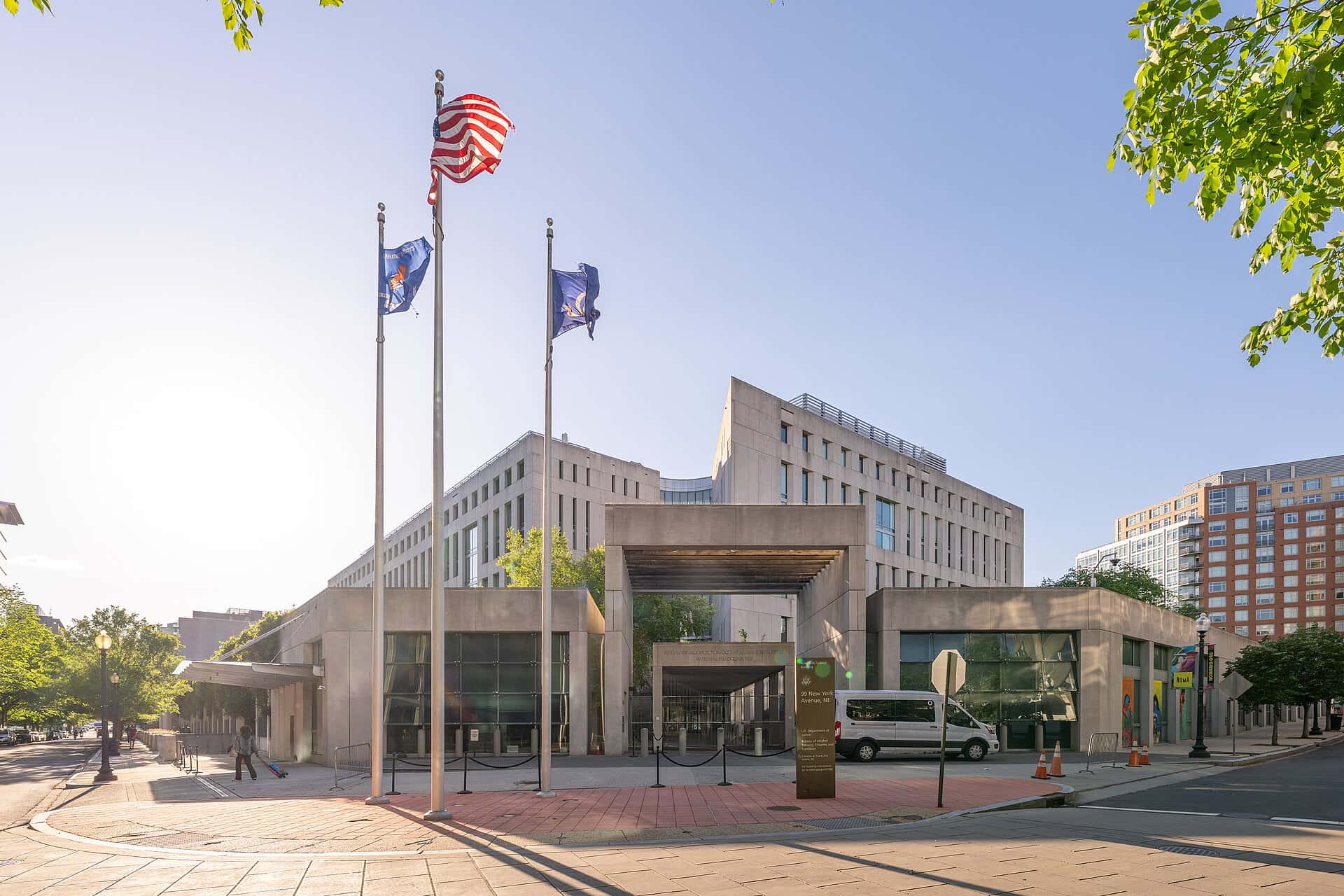
The federal government has stopped requiring buyers of firearm suppressors, short-barreled rifles and short-barreled shotguns to register them with the Bureau of Alcohol, Tobacco, Firearms and Explosives. In Florida, that creates an unusual legal question, because the state's own ban on short-barreled guns depends on federal law.
ATF Director Robert Cekada announced the change Friday, Oct. 9, in an open letter. The bureau said it will no longer enforce the National Firearms Act's approval, registration and tax stamp requirements for suppressors, short-barreled rifles, short-barreled shotguns and items classified as "any other weapons." The Justice Department applied the policy nationwide. Before Friday, buyers of these items had to fill out a federal form, submit fingerprints and wait for government approval.
Florida law makes owning a short-barreled rifle or shotgun a second-degree felony. It exempts guns "lawfully owned and possessed under provisions of federal law." Until now, that phrase meant an item registered with the ATF. Federal agents will no longer require registration, and Florida has not said how the exemption applies to an unregistered short-barreled rifle bought under the new federal policy.
What changed in Washington
The policy follows an Aug. 5 ruling by U.S. District Judge James Hendrix in Texas in a lawsuit brought by gun rights groups, Silencer Shop Foundation v. ATF. The National Firearms Act is a 1934 law passed in response to gangland violence, and Congress based it on its taxing power. Starting Jan. 1, 2026, Congress and President Donald Trump cut the act's $200 tax on suppressors, short-barreled rifles, short-barreled shotguns and "any other weapons" to zero. Hendrix ruled that once the tax was gone, the government could no longer justify the registration requirements for those items.
The ruling technically covered only the parties to the case. The Justice Department did not appeal and chose to stop enforcing the requirements for everyone.
"The direction from the President, Congress, and the courts is clear," Cekada said in a statement. "ATF is now following suit with our enforcement posture while continuing to ensure we remain focused where we are needed the most: combating violent crime in American communities."
Cekada told The Associated Press the bureau was flooded with questions from the public and members of Congress after the ruling. He said the administration decided the "best and fairest thing to do" was to apply the change nationwide instead of creating a patchwork.
Several requirements remain:
- Machine guns and "destructive devices" stay under full National Firearms Act registration, and Congress kept the $200 tax on them.
- Buyers from licensed dealers must still complete the standard federal firearms transaction form and pass a background check.
- Short-barreled rifles and shotguns are still regulated under the separate Gun Control Act of 1968. Compliance guides published after the letter say that law, not the National Firearms Act, requires ATF approval before an owner takes a short-barreled rifle or shotgun across state lines.
The Associated Press reported that the ATF will keep requiring registration for buyers in about 15 states whose laws require people to go through the federal permitting process.
Florida's law is tied to federal law
Florida's statute on these weapons is short. Section 790.221 makes it "unlawful for any person to own or to have in his or her care, custody, possession, or control any short-barreled rifle, short-barreled shotgun, or machine gun which is, or may readily be made, operable." A violation is a second-degree felony, which carries up to 15 years in prison.
The exemption in subsection 3 reads in full: "Firearms in violation hereof which are lawfully owned and possessed under provisions of federal law are excepted."
Florida defines a short-barreled rifle as one with a barrel shorter than 16 inches, or a weapon made from a rifle with an overall length under 26 inches. A short-barreled shotgun has a barrel shorter than 18 inches or an overall length under 26 inches.
For decades, Florida owners met the federal-law exemption by registering their short-barreled guns with the ATF and keeping their approved paperwork. Under Friday's policy, a Floridian can buy one without that paperwork. Whether the gun is then "lawfully owned and possessed under provisions of federal law" for state purposes is a question for Florida prosecutors and courts. Compliance guides published after the letter warn that federal non-enforcement does not make an item legal under state law.
The Florida Attorney General's Office and the Florida Department of Law Enforcement had not publicly addressed the issue as of Sunday in materials reviewed by The Florida Press.
Suppressors are a simpler case in Florida
Suppressors, often called silencers, are less complicated in Florida. The state has no separate statute banning or licensing them.
"Florida law is silent on suppressors, so they're pretty good," James Phillips, an Orlando firearms attorney with Katz and Phillips, told Spectrum News after the August ruling. On short-barreled rifles and shotguns, Phillips noted that "we still have the state law statute that does provide an affirmative defense to possess a SBR or SBS," and he advised clients to wait for state guidance.
Florida dealers were in the same position in August. "We haven't really got any guidance from any of the local agencies, FDLE or the attorney general, or ATF," Marc Bernstein, owner of Orlando FFL Gun Shop, told Spectrum News then. With the ATF's nationwide letter now out, the federal part of that question is settled. The state part is not.
Supporters and critics
Gun rights groups have argued for years that the registration process was burdensome and they cheered the change. Gun Owners of America called it a major win while saying it still wants the National Firearms Act abolished.
Gun control advocates condemned the decision. John Feinblatt, president of Everytown for Gun Safety, said Cekada had embraced the "smash-and-grab lawlessness of the Trump administration by attempting to pick and choose which federal gun laws he enforces." Groups that favor gun restrictions have argued the registry helps law enforcement trace weapons used in crimes.
Missouri's attorney general filed a separate lawsuit in September seeking to end the registry for the zero-tax items. Other states and industry groups have pursued related challenges.
What's next
For now, Florida buyers of suppressors can complete a purchase with a background check and no federal registration. Buyers of short-barreled rifles and shotguns face more uncertainty. Florida attorneys such as Phillips have advised clients to wait for clear state guidance, and some compliance guides suggest owners in states with registration-linked laws consider voluntarily registering, because a second-degree felony charge could turn on how a Florida court reads a 1969 statute.
Florida lawmakers could settle the question by amending Section 790.221 when the Legislature returns for its 2027 session. Until then, the issue is likely to be decided case by case, whether in a guidance letter from Tallahassee, a prosecutor's charging decision or the first court challenge from a Floridian arrested with an unregistered short-barreled rifle.
Spotted an issue with this article?
Have something to say about this story?
Write us a letterComments
No comments yet. Be the first to weigh in.
Related Coverage

Appeals Court Lowers the Bar for Proving U.S. Jurisdiction in High-Seas Cocaine Cases Prosecuted in Florida
40m ago

Trump's Russian Diesel Deal Unlikely to Ease Florida's Near-$6 Fuel Bills, Experts Say
18h ago
Trump Approves Federal Emergency Declaration for 27 Florida Counties Hit by Isaias. Here's What It Covers and What It Doesn't
18h ago

Severe Turbulence on Avianca Flight Sends 8 to Miami Hospitals After Emergency Diversion
19h ago