Electric Aircraft Retrace World's First Airline Route in Florida's First Advanced Air Mobility Flight
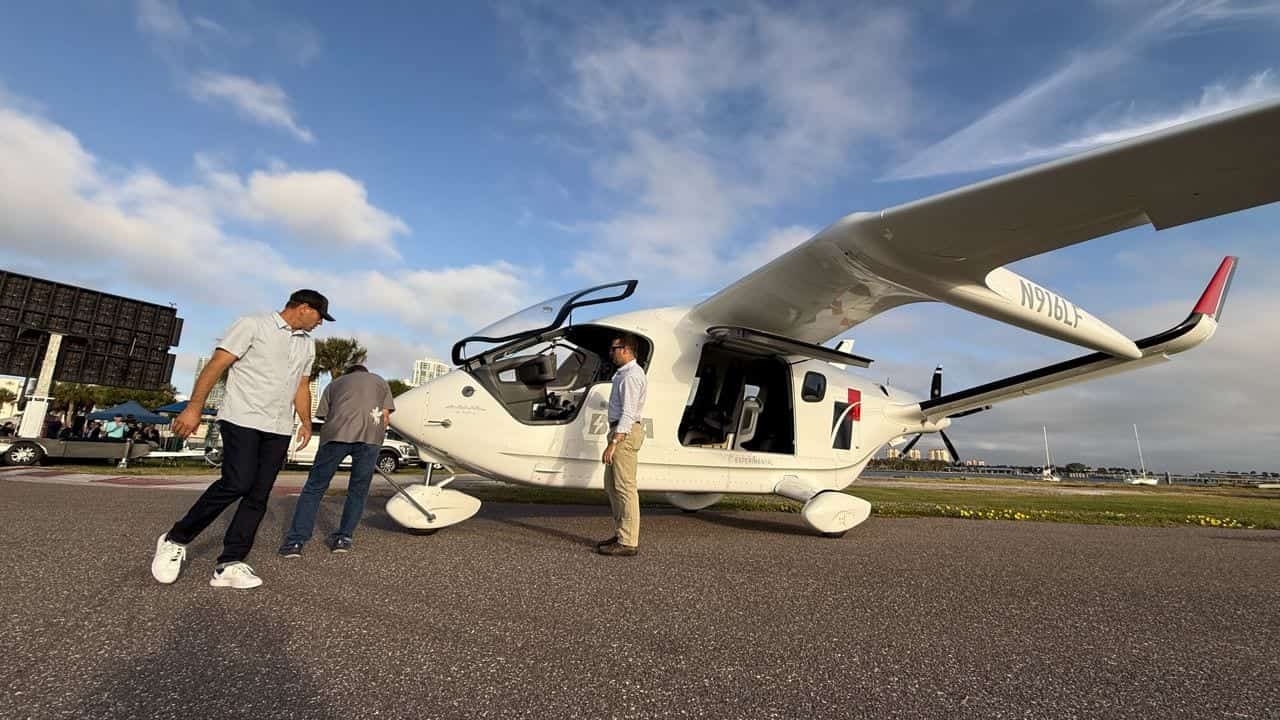
Two battery-powered aircraft took off from Albert Whitted Airport in downtown St. Petersburg on Friday, Oct. 30, flew in formation across Tampa Bay and landed at Tampa International Airport, completing Florida's first Advanced Air Mobility demonstration flight. The route deliberately retraced the path of the St. Petersburg-Tampa Airboat Line, which launched the world's first scheduled commercial airline service over the same stretch of water in 1914.
The flight, led by the Florida Department of Transportation, paired a Joby Aviation electric vertical takeoff and landing aircraft, or eVTOL, with a BETA Technologies Alia CX300, an all-electric airplane that takes off and lands on a runway. Gov. Ron DeSantis's office said thousands of spectators watched the aircraft leave St. Petersburg and touch down at Signature Aviation at Tampa International.
The demonstration arrived the same week the Miami Herald reported that the state has backed away from a plan to spend nearly all of its $197 million in federal electric vehicle charging money on infrastructure for flying cars, a separate but closely watched piece of Florida's air taxi push.
What happened over Tampa Bay
According to the governor's office, the Oct. 30 flight was the first in a planned series FDOT calls the "Future of Flight Series." The flights are part of the Federal Aviation Administration's eVTOL and Advanced Air Mobility Integration Pilot Program, known as eIPP, which the FAA is using to gather real-world data as it writes the rules, infrastructure standards and operating procedures needed before such aircraft can carry paying passengers.
The Joby aircraft lifts off like a helicopter, then tilts its propellers forward so it can cruise like an airplane. Bonny Simi, Joby's president of operations, told Bay News 9 the aircraft is much quieter than conventional planes, which she said could allow it to operate in downtown areas such as St. Petersburg. Simi said the company expects to bring the technology to market within the next year or two, and that Joby's partnership with Uber is aimed at fares around the price of an Uber XL or Uber Black.
BETA's aircraft was flown by Chris Caputo, the company's director of flight operations. "Flying is actually a dream," Caputo told Bay News 9. "The visibility is amazing. The acoustics are awesome." BETA is currently focused on cargo and medical flights, with passenger service expected later, the station reported.
FAA Administrator Bryan Bedford, who attended, said there is no set date for full certification. "We want to be absolutely certain that we've got all the risks identified and mitigated before we certify these," Bedford told Bay News 9, adding that he sees a pathway to get there by working with manufacturers.
Retracing the world's first airline
On Jan. 1, 1914, pilot Tony Jannus flew a Benoist flying boat from St. Petersburg across the bay to Tampa, inaugurating the St. Petersburg-Tampa Airboat Line. Historical accounts describe it as the first scheduled airline service using winged aircraft anywhere in the world. Former St. Petersburg Mayor Abram C. Pheil, who reportedly won the first seat at auction for $400, was the lone passenger. The service ran as a roughly three-month trial and ended that spring.
Rui Farias, executive director of the St. Petersburg Museum of History, told Bay News 9 that Jannus took off from just north of today's Albert Whitted Airport and reached Tampa in about 23 minutes, at a time when the same trip took about six hours by train and as long as 12 hours by car. "It's only taken us 112 years to get back here," Farias said. Supporters of electric air taxis say the same crossing could eventually take about 10 minutes.
DeSantis tied the two moments together in a statement. "From the first commercial airline flight over Tampa Bay in 1914, to today's AAM demonstrations along that same historic route, Florida has long been a launchpad for new ideas that shape the future of transportation," the governor said.
What state and industry leaders said
FDOT Secretary Jared W. Perdue said in the governor's release that the flight series "will serve as an important step forward in our efforts to take highways to the sky."
BETA founder and CEO Kyle Clark said in the same release that the company flew high-cadence operations along the Interstate 4 corridor with Republic Airways earlier this year, up to nine legs a day, with energy costs under $17 per leg. Joby founder and CEO JoeBen Bevirt said the company plans to fly its aircraft across the state, "from Tampa Bay and Orlando to the Space Coast."
The state says the flights will be among the first to use its Aerial Highway Network, a planned system of dedicated aerial corridors linking major hubs and following I-4, Florida's busiest travel corridor. Data collected during the series will cover noise, airspace integration and other areas the FAA must evaluate. FDOT directs people seeking more information to its SunTrax program; the SunTrax campus in Polk County is the department's testing hub for emerging transportation technology.
How Florida landed in the federal pilot program
The FAA and the U.S. Department of Transportation selected eight eIPP projects in March 2026. Florida's statewide project, run by FDOT, was among them. Joby has said it was selected for five of the eight projects, including Florida's, and listed Florida among the states where it could begin early operations in 2026. Joby's first-quarter shareholder letter described Florida's effort as having three operational phases covering cargo, passenger transportation and other uses, with BETA and other manufacturers among the participants.
Tampa Bay has been preparing for the technology for several years. Tampa International Airport hosted a crewed eVTOL test flight by Volocopter in November 2023, and St. Petersburg has studied how air taxis could operate at Albert Whitted, the city-owned waterfront airport, with planners floating a corridor between Albert Whitted and Tampa International.
The $197 million charging question
Friday's flight landed in the middle of a debate over how Florida should spend its share of the National Electric Vehicle Infrastructure program, a federal fund created to build public chargers for electric cars and trucks.
In July, the Miami Herald reported that FDOT planned to put all of its roughly $197 million on an "Aerial Highway Network" of charging, takeoff and landing sites for eVTOL aircraft. State documents estimated each of 32 planned sites would cost about $5.6 million and pointed to locations such as airports, luxury apartment buildings, golf courses and military bases. An FDOT document said the department "will not waste taxpayer dollars and spend it on everyday passenger vehicles."
A new FDOT report dated Sept. 9 softens that stance, the Herald reported on Oct. 30. The report now says NEVI-funded chargers "will primarily serve surface passenger vehicles including cars and trucks," while possibly also supporting aviation users such as eVTOL aircraft "where co-location is feasible." The Herald noted the wording leaves room for continued spending on flying vehicles, and FDOT did not answer the paper's questions about what it plans to build. The report says the state intends to spend the money before 2028 but does not say how many chargers would be installed or where.
Electric vehicle advocates welcomed the shift. Ali DySard, Florida manager for the Environmental Defense Fund, called the commitment to charging for surface vehicles "a smart investment in affordability and energy independence." Ryan McKinnon of the Charge Ahead Partnership, a coalition of gas stations and convenience stores, called the report "nebulous" and said businesses need clarity before investing in chargers.
What's next
FDOT says more demonstration flights in the Future of Flight Series will follow, with Joby saying it plans flights in the Orlando area and on the Space Coast. No commercial passenger service can begin until the FAA certifies the aircraft and approves operating rules, and Bedford declined to give a date. For Tampa Bay residents, the immediate question is how quickly the 10-minute bay crossing that Friday's flight previewed becomes something they can book, and what it will cost.
Spotted an issue with this article?
Have something to say about this story?
Write us a letterComments
No comments yet. Be the first to weigh in.
Related Coverage
Hackers Breach Florida Student Financial Aid Website, Exposing Social Security Numbers of Up to 4.9 Million People
23h ago

Florida AG James Uthmeier Sues Company Behind A2E, Saying the AI Platform Lets Users Create Sexually Explicit Images of Children
1d ago

Florida Poly unveils Astro, a piloted electric aircraft it calls the nation's first flying police vehicle
Oct 21
Palm Beach County Bets About $15 Million in Public Money on Becoming a Quantum Computing Hub
Oct 20