Federal Judge Blocks FIU From Punishing Students Over Silent ICE Protest
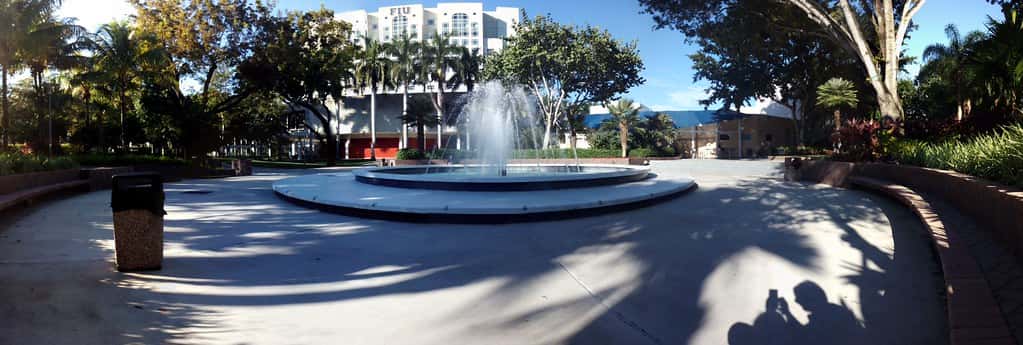
A federal judge has barred Florida International University from disciplining students who staged a silent protest against federal immigration enforcement on campus, ruling that the university likely violated their First Amendment rights. U.S. District Judge Jacqueline Becerra of the Southern District of Florida issued a preliminary injunction pausing the disciplinary actions and halting enforcement of a university policy prohibiting expressive activities indoors.
The case arose from a March 13 protest during a public event featuring FIU President Jeanette Nunez and retired baseball player Alex Rodriguez. Students in the audience stood, turned to face the crowd and wore shirts reading ICE OFF FIU. They did not speak or otherwise interrupt the event.
The ruling is a preliminary one, meaning the court found the students likely to succeed on the merits rather than issuing a final judgment. But preliminary injunctions in First Amendment cases carry substantial practical weight, because they suspend the challenged policy while litigation proceeds.
What happened at the event
The March event was open to the public and featured Nunez, a former Florida lieutenant governor who became FIU's president, alongside Rodriguez. Students affiliated with a group called ICEBreakers attended and, at a point during the program, stood up in the audience and turned to face other attendees.
They wore shirts with the message ICE OFF FIU. According to the court's description of the evidence, the students did not speak, chant, hold signs or take any action beyond sitting, standing and walking. The protest was, in the most literal sense, silent.
The university subsequently initiated disciplinary proceedings against the participating students, citing a policy that prohibits expressive activities inside university buildings. That policy restricts where on campus students may engage in protest and demonstration, confining such activity to outdoor areas.
The students sued in federal court, and Becerra held a hearing before issuing the preliminary injunction three days later.
The legal standard
Becerra's ruling applied the framework established in Tinker v. Des Moines Independent Community School District, the 1969 Supreme Court decision holding that student speech cannot be curtailed unless it materially disrupts the educational mission or involves substantial disorder or invasion of the rights of others.
The court wrote that based on the evidence submitted, it did not appear that any plaintiff, or anyone else wearing an ICE OFF FIU shirt, spoke or did anything other than sit, stand and walk. That factual finding is what drives the legal conclusion: without disruption, the Tinker standard does not permit restriction.
The judge found a substantial likelihood that the students would succeed on the merits, which is the threshold requirement for a preliminary injunction. Courts also weigh irreparable harm, the balance of equities and the public interest, and First Amendment cases carry a presumption that the loss of speech rights constitutes irreparable harm.
Becerra is a Biden appointee to the Southern District of Florida, the federal trial court covering Miami Dade, Broward, Palm Beach, Monroe and neighboring counties.
Campus speech policy in Florida
The ruling lands in a state where campus speech has been an active legislative and regulatory subject for years. Florida enacted legislation in 2021 requiring public universities to survey students and faculty about intellectual freedom and viewpoint diversity, and has passed multiple measures addressing what may be taught and how universities operate.
Florida law also includes a campus free expression statute designating outdoor areas of public university campuses as traditional public forums and limiting universities' ability to restrict expressive activity in those spaces. That statute's focus on outdoor areas is part of what makes FIU's indoor policy legally significant.
The distinction between indoor and outdoor spaces is not arbitrary in First Amendment doctrine. Courts analyze government property using a forum framework, with traditional public forums receiving the strongest protection, designated public forums receiving similar protection, and limited or nonpublic forums permitting greater regulation.
An indoor university event open to the public occupies contested ground within that framework. The university's argument is that an auditorium during a scheduled program is not a public forum for uninvited expression. The students' argument, which the court found likely to prevail, is that silent expression that does not disrupt the program cannot be punished regardless of the forum classification.
The immigration enforcement backdrop
The protest targeted Immigration and Customs Enforcement activity, and Florida has been at the center of federal immigration enforcement expansion. The state has cooperated extensively with federal authorities, including through agreements deputizing state and local officers for immigration functions.
Florida also hosts the Everglades detention facility that opened in 2025, which the Eleventh Circuit Court of Appeals ruled in April 2026 could continue operating without federal environmental review because it is not under federal control. That litigation, brought partly by environmental organizations, generated substantial public attention.
Campus communities in South Florida have particular stakes in immigration policy. FIU serves a student body drawn heavily from Miami Dade County's immigrant communities, including large Cuban, Venezuelan, Haitian, Nicaraguan and Colombian populations, and many students have family members with varying immigration statuses.
Universities across the country have faced the question of how to handle student protest over immigration enforcement, and responses have varied widely. The FIU case is notable because the protest at issue was silent and non disruptive, which narrows the range of justifications available to the university.
What it means for Florida students
The immediate effect is that the disciplinary proceedings against the named students are paused and FIU cannot enforce the indoor expressive activity policy while the injunction stands. That applies to the policy generally, not only to these students.
For students at other Florida public universities, the ruling is persuasive but not binding. A district court decision does not control other institutions, though university general counsel offices across the state will read it closely, and similar policies elsewhere are now more legally exposed.
The broader principle the ruling reinforces is that the content of speech does not determine whether it may be restricted. A silent protest supporting a different political position would receive the same analysis, and universities that restrict one viewpoint while permitting another face additional legal problems under viewpoint discrimination doctrine.
Students considering campus protest should understand that the ruling addresses non disruptive expression specifically. Conduct that materially disrupts an event, blocks access, or prevents others from participating remains subject to discipline under the same Tinker framework the court applied.
The Tinker standard and what it protects
The 1969 Supreme Court decision the ruling relies on arose from a very different set of facts with a strikingly similar structure. In Tinker, public school students in Des Moines wore black armbands to protest the Vietnam War and were suspended under a policy adopted specifically to prevent the protest.
The Court held that students do not shed their constitutional rights to freedom of speech or expression at the schoolhouse gate, and established that school authorities may restrict student expression only where they can show it would materially and substantially interfere with the operation of the school or invade the rights of others.
Applying that framework requires a factual finding about disruption, which is why Becerra's description of what the FIU students actually did carries so much weight in the ruling. The court found they sat, stood and walked while wearing shirts. Under Tinker, silent symbolic expression without disruption is precisely the category the decision protects.
Universities differ from primary and secondary schools in the doctrine's application. Courts have generally given college students broader speech protection than high school students, reasoning that adults in a university setting have a stronger claim to expressive freedom and that higher education's mission includes exposure to contested ideas.
Clothing as protest has its own line of cases. Wearing a message on a shirt is expressive conduct, and courts have consistently treated it as speech for First Amendment purposes. The message's political content does not reduce that protection; if anything, political speech receives the strongest protection in American constitutional law.
What the ruling does not do is create a right to disrupt. Students who shout down a speaker, block access to a venue or prevent an event from proceeding fall outside Tinker's protection, and universities retain authority to discipline that conduct. The distinction the court drew is between expression and interference.
What a preliminary injunction settles
The procedural posture matters for understanding what has and has not been decided. A preliminary injunction preserves the status quo while a case proceeds, and it rests on a prediction about the eventual outcome rather than a final determination of it.
Courts weigh four factors: likelihood of success on the merits, irreparable harm absent relief, the balance of equities between the parties, and the public interest. In First Amendment cases, courts have held that even minimal periods of unconstitutional speech restriction constitute irreparable harm, which makes the second factor comparatively easy for plaintiffs to satisfy.
That leaves likelihood of success as the operative question, and the court found it satisfied. The university retains the ability to develop a fuller factual record and to argue the merits, but the finding signals how the court currently reads the evidence.
Preliminary injunctions are immediately appealable, which distinguishes them from most interim rulings. That gives FIU an avenue to the Eleventh Circuit without waiting for final judgment, and universities defending speech policies have sometimes taken it.
Cases in this posture frequently settle. A university facing an adverse preliminary ruling often revises the challenged policy and resolves the disciplinary matters, which ends the litigation without a binding precedent that constrains other institutions.
What's next
The preliminary injunction is not a final ruling. The case proceeds toward either a final judgment on the merits, a settlement, or an appeal. FIU may appeal the preliminary injunction to the Eleventh Circuit Court of Appeals, which covers Florida, Georgia and Alabama.
The Eleventh Circuit has produced a substantial body of First Amendment law and has ruled on campus speech questions before. An appeal would give the circuit an opportunity to address the indoor expressive activity question at a level that binds all Florida public universities.
FIU may also revise the policy rather than defend it. Universities facing First Amendment challenges frequently amend the challenged regulation, which can moot the litigation while achieving some of the institution's original objectives through narrower drafting.
The State University System's Board of Governors and the Legislature both have authority over university policy in Florida, and either could address the question if the litigation produces an outcome the state's leadership wants to change. The Legislature's next regular session convenes in 2027.
Spotted an issue with this article?
Have something to say about this story?
Write us a letterComments
No comments yet. Be the first to weigh in.
Related Coverage

Every Florida Child Now Has a Trump Account, but Parents Must Claim It to Unlock the $1,000
3h ago
Businessman Samir Handal Pleads Not Guilty in Miami as Federal Case Over Haitian President's Assassination Expands
4h ago

Panhandle Roads and Bridges Reopen After Isaias, but Pensacola and Okaloosa Airports Stay Closed
1d ago

Ex-CIA official pleads guilty in $194 million fraud, will forfeit $102 million in Palm Beach and Hobe Sound real estate
1d ago