Donalds and Jolly Split Sharply on How to Fix Florida's Property Insurance Costs
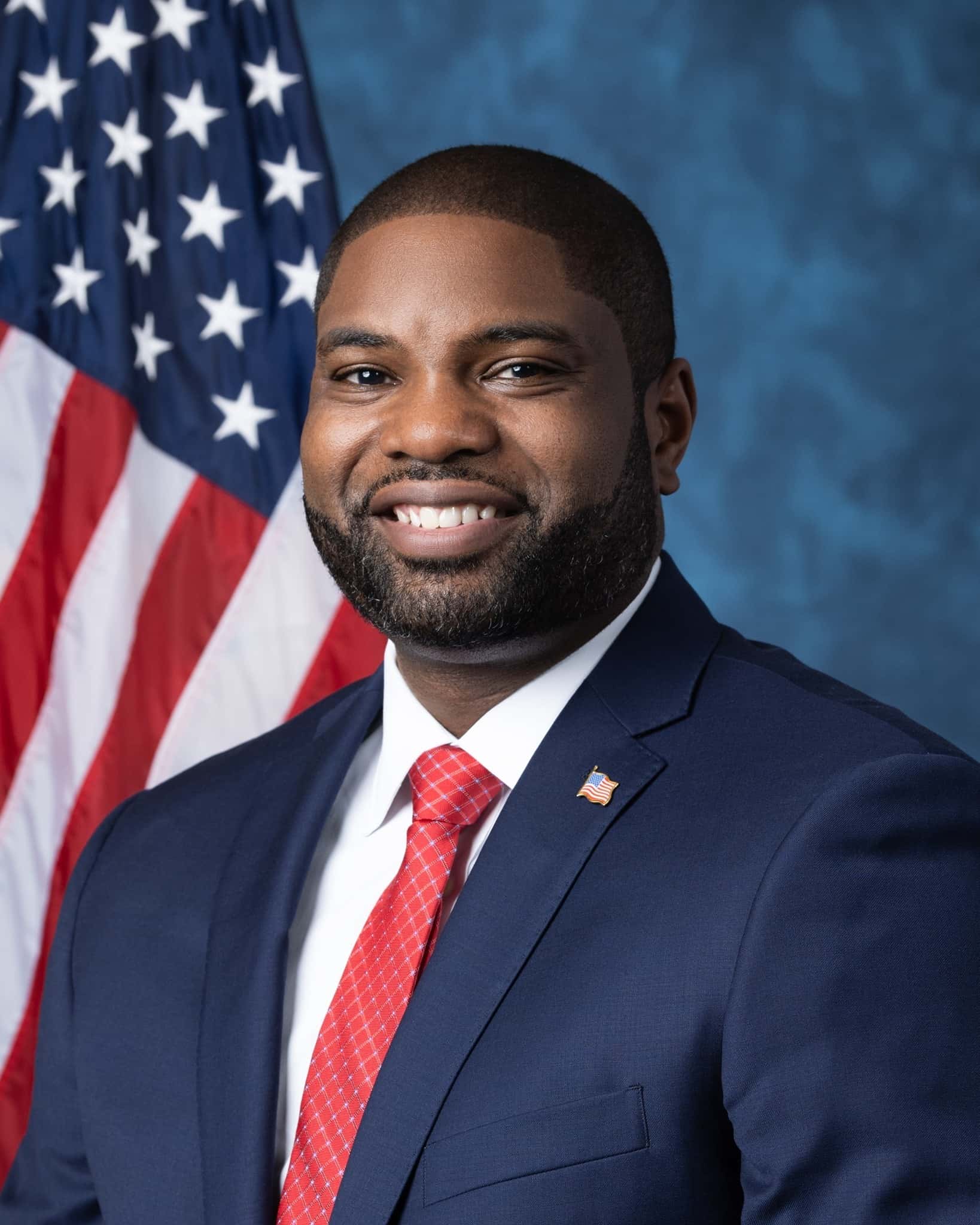
Property insurance has become the central economic argument of Florida's race for governor, and the two major-party nominees have arrived at approaches that are not variations on a theme but genuinely opposite. Republican Byron Donalds and Democrat David Jolly are both campaigning on affordability heading into the November 3 general election, and both have identified the same problem. Their proposed solutions run in different directions, and the exchange sharpened this week as Donalds launched advertising attacking his opponent's plan.
Jolly's catastrophe fund proposal
Jolly, a former Republican congressman now running as a Democrat, has proposed removing hurricane and other natural disaster coverage from the private insurance market entirely and placing it with a state catastrophic fund. Under the design he has described, private insurers would continue writing coverage for perils such as fire and theft, while the state would assume responsibility for storm losses.
Jolly has said the approach would reduce property insurance costs for Florida families by roughly 60 percent. The logic behind that number is that catastrophe risk is the dominant driver of Florida premiums, and that a state entity, which does not need to earn a profit margin or satisfy shareholders, could carry that risk at lower cost than the private market plus its reinsurance layers.
Florida already operates something structurally related in the Florida Hurricane Catastrophe Fund, which provides state-backed reinsurance to private carriers rather than direct coverage to homeowners. Jolly's proposal would go considerably further by making the state the direct writer of hurricane coverage rather than a reinsurer sitting behind private carriers.
Donalds' market competition approach
Donalds has taken the opposite view of where the leverage sits. His stated goal is to let consumers compare insurers directly before purchasing a policy, on the theory that better price transparency drives competition and puts downward pressure on premiums.
He has also argued for a broader review of Florida's property insurance regulatory framework, saying it has not been substantially updated in nearly 25 years. He has suggested that changes along those lines could reduce rates by as much as 20 percent.
That framing places Donalds in continuity with the direction the state has taken since the Legislature's 2022 and 2023 reforms, which restricted attorney fee awards in property insurance litigation, tightened claims procedures and made changes intended to attract carriers back into the Florida market. Supporters of those reforms credit them with stabilizing the market and enabling recent rate filings that moved downward rather than upward.
The hurricane tax attack
Donalds has gone directly after the catastrophe fund concept, releasing advertising that characterizes Jolly's plan as creating a hurricane tax on Florida families, with the campaign putting a figure of roughly $1,000 on it, and arguing that it would amount to a bailout for large insurance companies.
The underlying argument is about who bears catastrophe risk and how it gets funded. If the state assumes hurricane losses directly, it must either accumulate reserves sufficient to pay a major event, purchase reinsurance in global markets, or borrow after a storm and repay the debt. Florida's existing catastrophe fund has historically funded post-event shortfalls through assessments on policyholders, which appear on insurance bills as line items. Critics of an expanded state role argue that those assessments are a tax by another name, imposed after the fact and unavoidable.
Supporters of a state fund counter that Florida policyholders already pay for catastrophe risk, embedded in premiums that include private reinsurance costs and carrier profit, and that the question is not whether Floridians fund hurricane risk but through which mechanism and at what markup.
Neither claim about magnitude, the 60 percent reduction or the roughly $1,000 hurricane tax, has been independently validated in any public actuarial analysis. Both are campaign figures resting on assumptions that have not been published in detail.
Where the market actually stands
The debate is happening against a backdrop of genuine, if partial, improvement. Citizens Property Insurance Corporation, the state-backed insurer of last resort, approved 2026 rate recommendations that reduced average rates for personal lines policyholders for the first time since 2015. The filing called for a statewide average decrease of 2.6 percent for personal lines, with a majority of Citizens policyholders receiving an average premium reduction of roughly 11.5 percent, or about $359. Commercial lines moved the other direction, with a recommended annual impact of about 10.4 percent after glide path capping.
Several private carriers also filed rate decreases for 2026, and new carriers have entered the Florida market since the reforms took effect. Those are real signals of stabilization.
They are also not the same thing as affordability. Florida premiums remain among the highest in the country in absolute terms, and a percentage decrease from a very high base still leaves many households paying more than they did five years ago. That gap between a stabilizing market and an unaffordable bill is the space both campaigns are competing in.
What it means for Floridians
For homeowners, the choice on the ballot has practical consequences that would unfold over years rather than months. A state catastrophe fund would require legislation, actuarial design, capitalization and almost certainly litigation before it wrote a single policy. A regulatory modernization and transparency agenda would likewise require legislative action and rulemaking through the Office of Insurance Regulation.
Neither candidate can change what a Florida household pays in the next renewal cycle. Rates for 2027 will be shaped by filings made under current law, by reinsurance pricing set in the global market in the spring, and by whether the current quiet hurricane season holds through November.
Renters are affected indirectly but substantially. Property insurance costs flow into rents through landlord expenses, and condominium owners face a compounding version of the problem, where association master policies and reserve requirements have driven assessments sharply higher in many South Florida buildings.
The state of the race
Donalds is the Republican nominee with Bryan Avila as his running mate. Jolly is the Democratic nominee with former congresswoman Gwen Graham as his. Both won their primaries on August 18. Five candidates with no party affiliation and one Libertarian also qualified for the November 3 ballot. Governor Ron DeSantis is term-limited and cannot seek a third consecutive term.
Public polling before the primaries showed Donalds leading by mid single digits, with an average of the two most recent pre-primary surveys tracked by one election forecasting site putting Donalds at 45.5 percent and Jolly at 39.5 percent. On August 27, the Cook Political Report shifted its rating from Solid Republican to Likely Republican, citing Jolly's fundraising disadvantage as the principal constraint on a more competitive race.
Fundraising has favored Donalds by a wide margin through the cycle, which matters in a state with ten media markets and some of the most expensive advertising real estate in the country.
How Florida got here
Understanding the debate requires understanding the sequence that produced it. Florida's property insurance market deteriorated sharply in the years leading up to 2022, with multiple carriers becoming insolvent, others withdrawing from the state, and rates rising at rates that far outpaced inflation.
The diagnosis offered by state officials and much of the industry centered on litigation costs. Florida accounted for a wildly disproportionate share of national property insurance lawsuits relative to its share of claims, driven substantially by assignment of benefits arrangements and by attorney fee provisions that created strong incentives to litigate.
The Legislature responded in special sessions in 2022 and in subsequent regular sessions, eliminating one-way attorney fee awards in property insurance cases, restricting assignment of benefits, tightening claim filing deadlines and creating a reinsurance program to stabilize carrier costs.
Critics of those reforms, including consumer advocates and the trial bar, argued they shifted power decisively toward carriers and left policyholders with fewer tools when a claim is denied or underpaid. That argument has not gone away, and it forms part of the backdrop to the current campaign debate.
What Citizens represents
Citizens Property Insurance Corporation occupies a central and uncomfortable position in any Florida insurance discussion. Created as an insurer of last resort, it grew into one of the largest property insurers in the state as private carriers withdrew, which concentrated an enormous amount of catastrophe risk in a state-backed entity.
The concern that follows is assessment exposure. If Citizens exhausts its resources paying claims after a major storm, Florida law permits assessments on Citizens policyholders and, beyond that, on holders of most other property and casualty policies statewide. That means a Floridian who has never held a Citizens policy can end up paying for its losses.
Reducing the Citizens policy count has therefore been an explicit state objective, pursued through depopulation programs that move policies to private carriers and through eligibility rules that require policyholders to accept a private offer within a certain range of their Citizens premium.
The 2026 rate filing that produced the first personal lines decrease since 2015 reflects a market in which those pressures have eased. Whether the improvement is durable depends heavily on storm activity, and the current quiet season has been the most favorable possible condition for it.
What's next
Expect insurance to dominate paid advertising through the fall, and expect the affordability frame to widen beyond insurance to fuel prices, housing costs and utility bills. Florida gasoline prices climbed back above four dollars a gallon this week, which gives both campaigns a fresh and highly visible affordability data point.
Debates, if scheduled, would be the first setting in which either candidate faces sustained questioning on the mechanics of their proposals rather than the topline numbers. The unanswered questions are specific: how a state catastrophe fund would be capitalized and what assessment structure would backstop it, and which particular regulatory provisions Donalds would change to produce a 20 percent reduction.
Voters will decide on November 3. Whichever candidate wins will face a Legislature that has already invested substantial political capital in the current reform framework, which means the practical path for either agenda runs through lawmakers who have their own view of what is already working.
Spotted an issue with this article?
Have something to say about this story?
Write us a letterComments
No comments yet. Be the first to weigh in.
Related Coverage

Pinellas commissioners set Oct. 27 vote on Vince Nowicki's Flock camera ban after Bob Gualtieri's fierce defense
22h ago

Volusia County Launches Florida's First Online Database of Convicted Domestic Abusers
1d ago

Miami-Dade sheriff ends Sergeant-at-Arms security detail; Levine Cava warns of risk at Government Center
1d ago

Florida AG Uthmeier proposes Safe Screens Act with overnight shutoff, app store age checks for teens
1d ago