FHP Investigates Fatal Turnpike Crash That Killed Man Standing on Shoulder
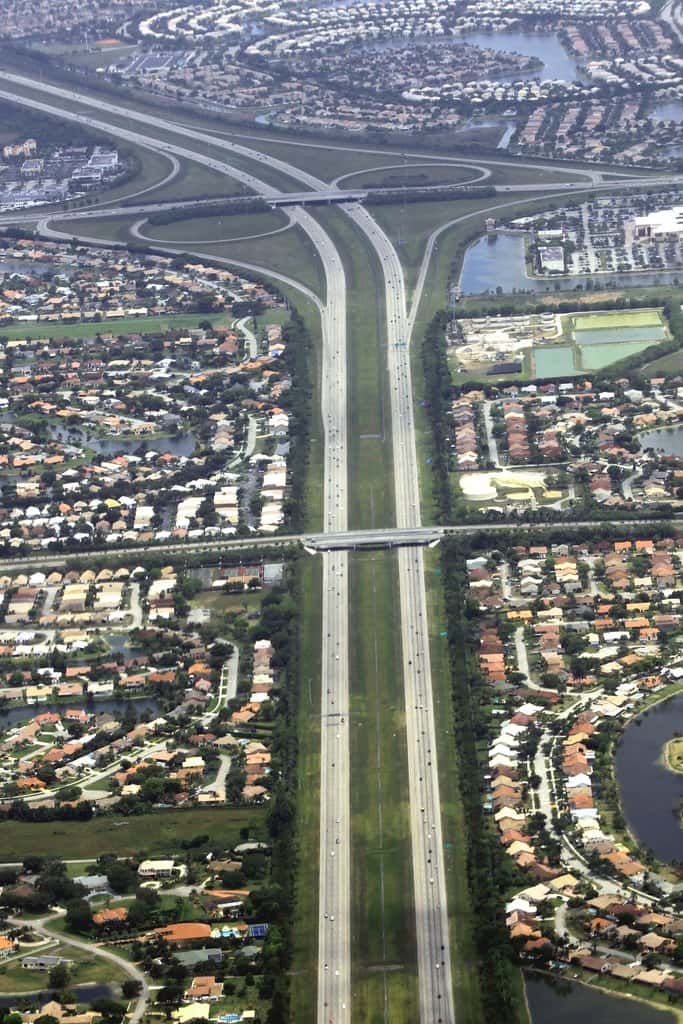
A man was struck and killed early Wednesday morning while standing outside his vehicle on the emergency shoulder of Florida's Turnpike in southwest Miami-Dade County, according to the Florida Highway Patrol. Troopers said a Honda Civic traveling southbound struck the man near Southwest 216th Street at about 4:50 a.m., and that he died at the scene. His vehicle had been stopped on the right emergency shoulder at the time.
All southbound lanes of the Turnpike were closed at Southwest 216th Street for the crash investigation, reopening by approximately 6:30 a.m. Authorities had not publicly identified the man and had not explained why his vehicle was stopped on the shoulder.
The crash occurred in the Cutler Bay area during predawn darkness, conditions that recur in a large share of Florida's pedestrian and roadside fatalities. The investigation remains open and no determination of fault has been announced.
What troopers have described
The Florida Highway Patrol account places the man outside his vehicle rather than inside it, which is the fact that distinguishes this crash from an ordinary rear-end collision with a disabled car. A person standing on a shoulder is largely unprotected, and the difference in outcome between being struck while seated in a vehicle and being struck while standing beside it is close to absolute.
The location near Southwest 216th Street sits on a stretch of the Turnpike that carries heavy commuter volume between South Miami-Dade and the urban core. At 4:50 a.m. traffic is lighter than at peak, which typically means higher travel speeds.
FHP crash investigations of this type involve scene measurement, vehicle inspection, examination of any available dashboard or roadway camera footage, witness interviews and, where warranted, toxicology. Those steps take weeks, and the agency's initial release is preliminary by design.
Why shoulder stops are so dangerous
Traffic safety research has consistently identified the highway shoulder as among the most hazardous places a person can stand. Drivers exhibit a documented tendency to steer toward what they are looking at, a phenomenon sometimes described as target fixation, which means the visual attention a disabled vehicle attracts can draw traffic toward it rather than away.
Darkness compounds it. A person in ordinary clothing standing beside a vehicle on an unlit shoulder is extremely difficult to see at highway speeds, particularly against headlight glare from oncoming traffic on the opposite carriageway. Reaction distance at 70 miles per hour exceeds 100 feet before braking even begins.
Safety agencies consistently advise that occupants of a disabled vehicle on a limited-access highway remain inside with seat belts fastened and hazard lights on, exiting only if the vehicle's position makes staying inside more dangerous, and exiting on the side away from traffic when exiting is necessary. Walking on a highway shoulder to retrieve an item, inspect damage or make a phone call is where a substantial share of these deaths originate.
Florida's pedestrian fatality problem
Florida has for years ranked among the most dangerous states in the country for pedestrians, with several Florida metropolitan areas appearing near the top of national rankings for pedestrian death rates. The causes are structural: wide multi-lane arterial roads designed for vehicle throughput, long distances between crossings, extensive development along high-speed corridors, and year-round warm weather that keeps people walking at all hours.
Limited-access highway pedestrian deaths are a subset of that broader problem and have their own profile. They involve disabled vehicles, crash scenes, people crossing on foot where no crossing exists, and roadside workers.
The Florida Department of Transportation has pursued a target of zero traffic deaths, and countermeasures deployed statewide include lighting improvements, median refuges, reduced crossing distances and speed management on arterials. Those interventions address surface streets more than limited-access highways, where the primary countermeasures are shoulder width, barrier placement and rapid incident clearance.
The Move Over law
Florida's Move Over law requires drivers approaching a stopped vehicle displaying hazard lights, warning lights or flares on a roadside to move over one lane when safely possible, or to slow to 20 miles per hour below the posted speed limit when moving over is not possible.
The law was expanded in recent years to cover any disabled vehicle displaying hazard lights or warning devices, not only law enforcement, emergency and utility vehicles. That expansion was a direct response to deaths of ordinary motorists on Florida shoulders.
Compliance is uneven. Enforcement is difficult because it requires an officer to observe the violation in the moment, and public awareness of the expanded scope remains incomplete. Violations carry a fine and points against a license.
The Turnpike and incident response
Florida's Turnpike is operated by Florida's Turnpike Enterprise, a division of the state transportation department, and it runs roughly 320 miles through the peninsula carrying heavy commuter and freight volume. The system operates a Road Ranger service patrol that provides free assistance to disabled motorists, including fuel, tire changes and jump starts.
Road Ranger service is available by calling the statewide motorist assistance number, and the program exists precisely to reduce the time disabled vehicles and their occupants spend exposed on shoulders. Motorists frequently attempt self-help repairs rather than waiting, which is understandable and dangerous.
Full closure of southbound lanes for roughly 90 minutes reflects standard practice for a fatal crash investigation, where the scene must be documented before evidence is disturbed. Those closures generate significant congestion and occasionally secondary crashes in the resulting queue, which is why transportation agencies emphasize rapid clearance once documentation is complete.
What happens in the investigation
FHP will work to identify the deceased and notify next of kin before releasing a name, which is standard and is why identification is often withheld for a day or more. The agency will also determine why the vehicle was stopped, whether the driver of the Honda Civic bears criminal or civil liability, and whether any contributing factors such as impairment, distraction or vehicle defect were involved.
Charges in crashes of this kind are not automatic. A driver who strikes a person standing in a travel lane or on a shoulder may face charges ranging from none, if the crash is determined to have been unavoidable, to vehicular homicide or DUI manslaughter if impairment or reckless conduct is established.
The State Attorney's Office for the Eleventh Judicial Circuit, covering Miami-Dade County, would make any charging decision after receiving the completed FHP investigation. No charges have been announced.
What drivers should take from it
The practical guidance from traffic safety agencies is specific. If a vehicle becomes disabled on a limited-access highway, move it as far right as possible, ideally beyond the shoulder onto grass where available, and activate hazard lights immediately. Remain inside with seat belts fastened.
If exiting is necessary, exit on the passenger side away from traffic and move well beyond the guardrail or as far from the travel lanes as terrain allows. Do not stand between vehicles, behind a vehicle, or on the traffic side.
Call for assistance rather than attempting roadside repairs. On the Turnpike and other state facilities, Road Ranger service is free, and the wait is almost always shorter than the time a tire change takes.
How Florida investigates fatal crashes
A traffic homicide investigation is a specialized discipline within the Florida Highway Patrol, distinct from the work of a road trooper responding to an ordinary collision. Traffic homicide investigators are trained in crash reconstruction, which involves deriving speeds, trajectories and sequences from physical evidence at the scene.
The evidence base includes tire marks, debris fields, vehicle crush profiles, final rest positions and event data recorders. Most modern vehicles record several seconds of pre-crash data including speed, throttle position, braking and seat belt status, and that data is frequently decisive.
Scene documentation is why a fatal crash closes a highway for an extended period. Once vehicles are moved and traffic resumes, physical evidence is destroyed, and reconstruction depends on measurements taken before that happens. The competing pressure to reopen lanes is why agencies have invested in faster surveying technology.
Completed investigations go to the State Attorney with a recommendation, and the prosecutor makes the charging decision independently. That process routinely takes several weeks to several months in Florida, which is why an initial release stating that an investigation is ongoing is not an indication that anything unusual is happening.
Miami-Dade's roadway safety record
Miami-Dade County consistently records among the highest traffic fatality totals of any Florida county, a function of population, vehicle miles traveled and a road network that mixes high-speed limited-access highways with dense urban arterials.
The county and its municipalities have adopted safety programs targeting the corridors where deaths concentrate, with interventions including lowered speed limits on arterials, improved lighting, protected pedestrian crossings and raised medians.
Limited-access highways like the Turnpike, Interstate 95 and the Palmetto Expressway present a different problem set. Those facilities are engineered for speed, pedestrians are prohibited, and deaths involving people on foot there almost always involve a disabled vehicle, a prior crash or a person crossing where no crossing exists.
Predawn hours are overrepresented in these cases across Florida. Reduced visibility, higher speeds in light traffic, and a driving population that includes overnight shift workers and impaired drivers returning home combine into a period of elevated risk relative to traffic volume.
What's next
The Florida Highway Patrol investigation continues, and the agency will release the identity of the man killed after next-of-kin notification. A determination on charges, if any, will follow the completed investigation and any State Attorney review.
Miami-Dade County and Florida's Turnpike Enterprise track crash locations for engineering review, and fatal crashes on a specific segment can trigger evaluation of lighting, shoulder width, barrier placement and signage on that stretch.
For the broader pedestrian safety picture, Florida's annual traffic fatality data will show whether the state's counts continue at recent levels. Roadside deaths involving disabled vehicles are a small share of that total and one of the more preventable categories within it.
Spotted an issue with this article?
Have something to say about this story?
Write a letter to the editor