Florida Growers Begin Planting Gene-Edited Citrus Rootstock in a Last Stand Against Greening
Florida citrus growers have begun planting trees built on rootstock modified with gene-editing technology, in an attempt to survive a bacterial disease that has reduced the state's signature crop by more than 90 percent over roughly a quarter century. The rootstock, developed by the Tampa-based company Soilcea and marketed as CarriCea T1, was engineered using CRISPR gene editing and received Environmental Protection Agency approval earlier this year.
The scale of what the industry is trying to reverse is difficult to overstate. In the late 1990s Florida growers shipped roughly 300 million boxes of fruit in a season. In the season that ended in June, they shipped a little more than 15 million. Groves that were productive within living memory have been bulldozed, packinghouses have closed, and land that grew oranges for generations has been converted to housing and warehouses.
For Floridians the stakes extend past breakfast juice. Citrus is embedded in the state's rural economy, its land use patterns, and its identity, and the acreage lost to greening has generally not returned to agriculture. Whether an engineered rootstock can hold the line determines whether Florida citrus remains a commercial industry or becomes a heritage crop.
What greening does to a tree
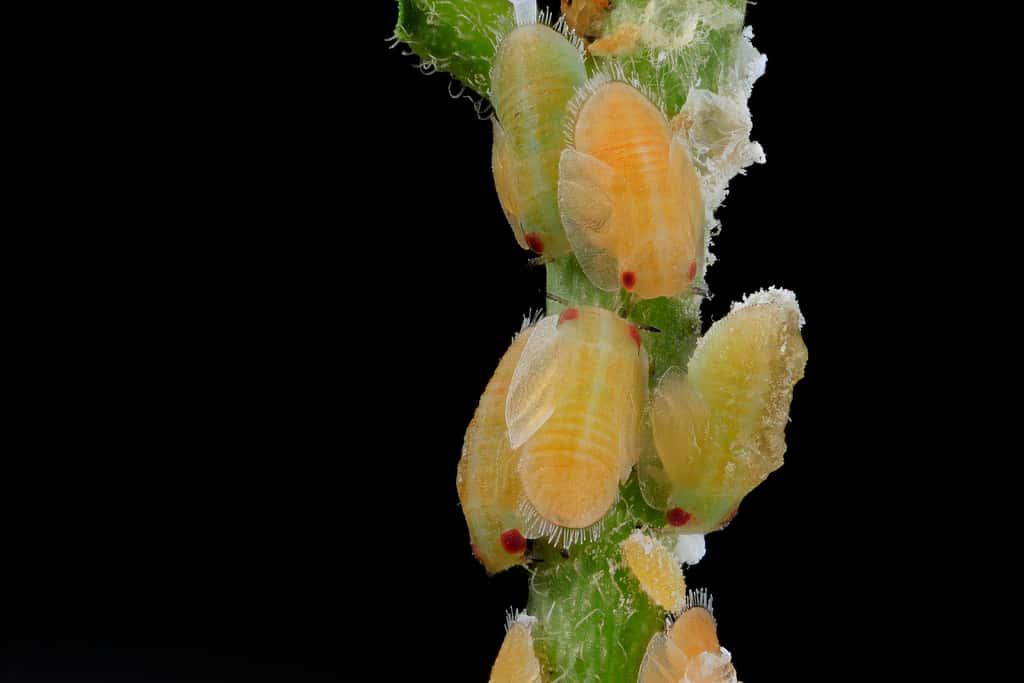
Citrus greening, also called huanglongbing, is caused by a bacterium spread by a tiny sap-feeding insect called the Asian citrus psyllid. The psyllid feeds on new growth, and an infected insect injects the bacterium into the tree's vascular system. From there the infection spreads through the phloem, the tissue that moves sugars from leaves to the rest of the plant.
The damage is essentially a slow starvation. Infected phloem becomes blocked, the tree cannot distribute what its leaves produce, and roots decline first, often before symptoms are obvious above ground. Leaves develop a characteristic blotchy mottle, fruit drops early, and what fruit remains is often small, lopsided, and bitter, with a green base that gives the disease its common name.
There is no cure. Once a tree is infected it remains infected, and it declines over a period of years until it is no longer economically productive. Because the bacterium is present throughout Florida's growing regions and the psyllid is established statewide, a newly planted conventional tree can expect to be exposed early in its life, often before it reaches bearing age.
That last point explains the depth of the crisis better than the production numbers alone. A grower facing a disease that kills mature trees can replant. A grower facing a disease that infects young trees before they produce a return on the planting investment has no straightforward path forward.
What growers have already tried
The industry's response over two decades has been a sequence of increasingly expensive workarounds. Aggressive insecticide programs aimed at suppressing psyllid populations raised costs and never achieved control across a landscape where unmanaged residential citrus and abandoned groves serve as reservoirs.
Enhanced nutrition programs sought to keep infected trees productive longer by compensating for the root damage, essentially treating symptoms. Individual protective covers, mesh enclosures placed over young trees to keep psyllids off during the vulnerable establishment years, work but are labor intensive and must eventually come off. Antimicrobial treatments, including trunk injections, have been used to suppress bacterial levels without eliminating infection.
Conventional breeding has continued in parallel, and researchers at the University of Florida Institute of Food and Agricultural Sciences have pursued tolerant varieties and rootstocks through traditional methods. Citrus breeding is slow work because trees take years to evaluate, and the genetics of commercial citrus are complex.
The cumulative effect of these measures has been to slow the decline rather than stop it. Each added cost per acre in an industry with falling yields pushed more growers to exit, which is a large part of why acreage has contracted alongside production.
How the edited rootstock is different
Commercial citrus trees are almost always two plants joined together. A rootstock supplies the root system and influences vigor, disease resistance, and tolerance of soil conditions. A scion grafted onto it produces the fruit and determines the variety, whether Valencia orange, Hamlin, or grapefruit. Changing the rootstock changes the tree's foundation without changing the fruit.
That architecture is why rootstock is an attractive target. A grower adopting an engineered rootstock is not asking consumers to accept an unfamiliar variety, and the fruit that reaches a juice plant or a grocery shelf comes from a conventional scion.
Soilcea's approach used CRISPR editing to alter the plant's own genes rather than introducing genetic material from another organism. The described mechanism is to keep the tree's immune system functioning under infection pressure rather than to make the plant immune to the bacterium outright. The company has said the result allows growers to rely less on insecticides, which addresses one of the industry's largest recurring costs.
The regulatory path reflects that distinction. The Environmental Protection Agency approved the genetic modifications earlier this year. Gene-edited plants that carry no foreign DNA have generally moved through United States regulatory review on a different track than traditional transgenic crops, on the reasoning that the resulting change could in principle have arisen through breeding or mutation.
The unanswered question
The honest summary of where this stands is that growers are now waiting to find out whether it works in a commercial grove. Laboratory and greenhouse performance is necessary but not sufficient evidence for a perennial tree crop, and citrus trees are evaluated over years rather than seasons.
Several questions will only be answered by field time. Whether the resistance holds as a tree matures and its canopy expands is one. Whether it holds under Florida's specific combination of heat, humidity, sandy soils, and year-round psyllid pressure is another. Whether the bacterium or the psyllid population shifts in response to widespread planting of a resistant rootstock is a third, and it is the question plant pathologists tend to raise first, because durable resistance in agriculture is the exception rather than the rule.
Horticultural performance matters independently of disease resistance. A rootstock determines tree size, fruit quality, yield, and tolerance of the flooding and drought cycles Florida groves experience. A rootstock that resists greening but produces less marketable fruit or fails in a wet season would not solve the grower's problem.
What is riding on it economically
Florida citrus supports processing plants, packinghouses, harvesting crews, nurseries, equipment dealers, and trucking operations, most of them concentrated in inland counties where alternatives are limited. The contraction from 300 million boxes to 15 million has worked through all of those links.
Land use is the most permanent consequence. Grove land in Central and Southwest Florida sits in the path of some of the fastest residential growth in the country, and a grower who cannot make citrus pay has a ready buyer. Once acreage converts to subdivisions or distribution centers it does not return to agriculture, which means the industry's productive capacity has a floor set by how much land remains in trees when a solution arrives.
Orange juice supply and pricing reflect the same arithmetic. Reduced Florida production has shifted the United States juice supply toward imports, which exposes American consumers to Brazilian crop conditions and to trade and currency effects. A recovery in Florida output would change that balance, but only over the years it takes new plantings to bear.
The research pipeline behind it
The edited rootstock is one entry in a broader portfolio. Researchers have pursued antimicrobial peptides, biological controls targeting the psyllid, tolerant conventional varieties, and cultural practices designed to keep infected trees productive. The consensus view among citrus pathologists has been that no single intervention would be sufficient and that a combination would be required.
Public research capacity in Florida is concentrated at the University of Florida, where work on greening has been a central priority since the disease was detected in the state in 2005. Federal support has flowed through Department of Agriculture programs, and the state has funded research through its own appropriations. Commercial ventures such as Soilcea sit alongside that public work, drawing on decades of publicly funded research into the disease's biology.
Consumer acceptance is a live question that the industry will have to address as adoption expands. Gene-edited crops occupy contested ground in food policy debates, and the rootstock and scion distinction is a nuance that does not always survive translation into a label or a headline.
Where Florida citrus still stands
Florida remains a significant citrus state despite the contraction, and the composition of what it grows has shifted. The state's production has historically been oriented toward juice rather than fresh fruit, which is the opposite of California, and that orientation shaped the processing infrastructure that now runs well below the capacity it was built for.
Grapefruit has taken a particularly heavy loss. Florida grapefruit, long concentrated in the Indian River district along the Atlantic coast, was a premium export product, and the combination of greening, hurricane damage, and acreage loss has reduced it to a fraction of its former volume. Specialty citrus including tangerines and tangelos has followed a similar path.
Weather has compounded the disease pressure. Hurricanes passing through growing regions strip fruit from trees before harvest and damage canopies in ways that make infected trees decline faster, and a hard freeze can set a grove back years. A crop already weakened by greening has less capacity to absorb those shocks, which is why storm seasons show up sharply in Florida citrus forecasts.
That accumulated fragility is the context for the interest in an engineered rootstock. Growers are not evaluating it against a healthy baseline. They are evaluating it against a decline that has already removed most of the industry, and against the prospect that conventional replanting is not a viable business decision.
What's next
The nearest milestone is simply observation. Growers planting CarriCea T1 rootstock now will learn over the next several seasons whether the trees establish, resist infection, and produce commercially acceptable fruit. Independent evaluation through university extension trials will matter more than company reporting for establishing what the rootstock does under Florida conditions.
The season ahead also provides a baseline. The United States Department of Agriculture issues periodic Florida citrus crop forecasts through the harvest season, and those figures are the standard measure of whether the industry's decline is continuing, flattening, or reversing. Any effect from new plantings would show up only after several years.
The broader outcome will be determined by acreage as much as by biology. A working solution matters only if enough land remains in trees, and enough growers remain in business, to use it. That makes the next few seasons consequential in a way that goes beyond one company's rootstock.
Spotted an issue with this article?
Have something to say about this story?
Write a letter to the editor