Florida Moves to Bar Cash Assistance From Tattoos, Theme Parks and Vape Shops
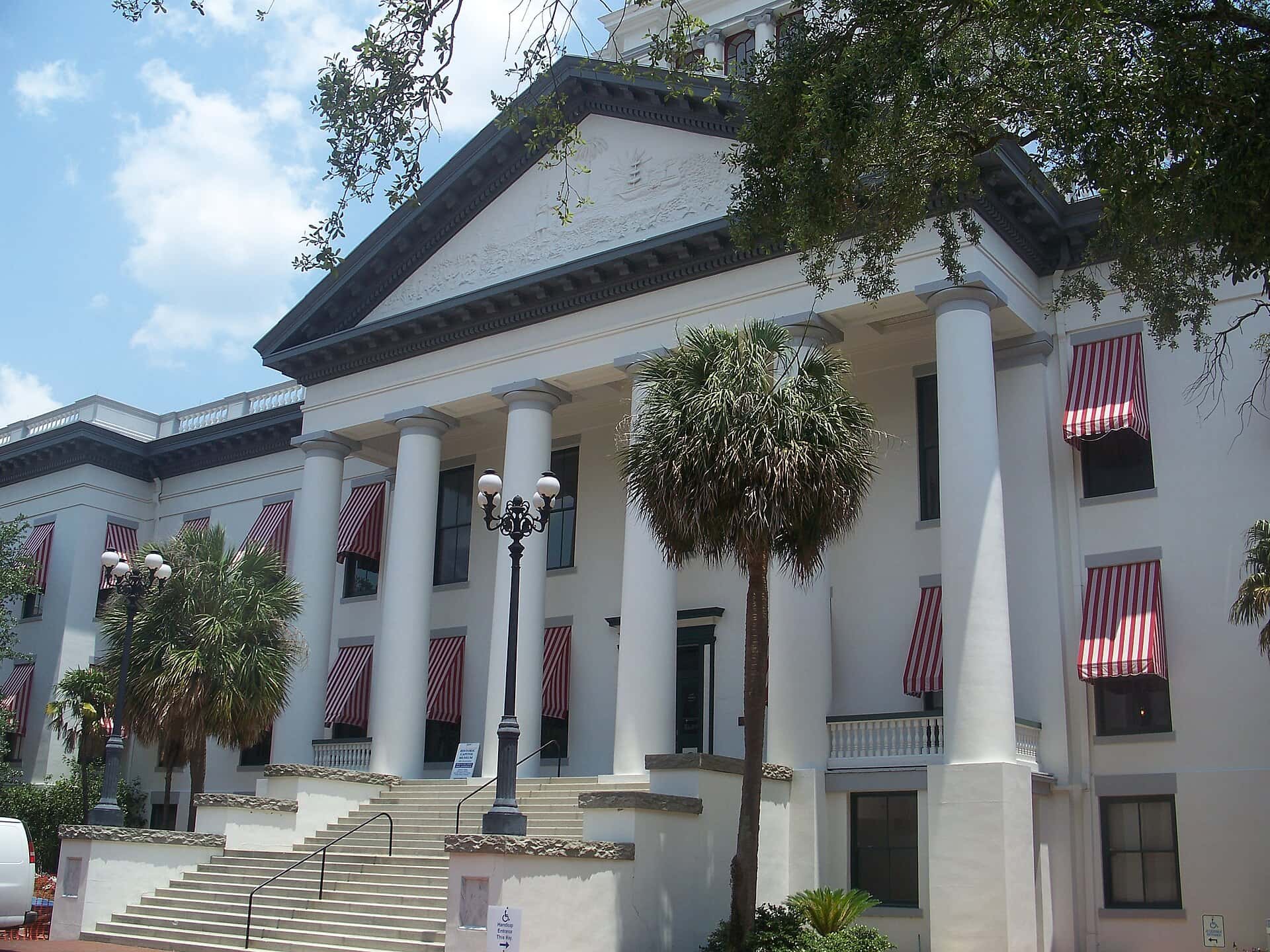
Florida is moving to become the first state in the country to write a list of prohibited purchases directly into its federal cash assistance plan, a change the governor's office announced this week that would block Temporary Cash Assistance recipients from spending benefits on tobacco and vaping products, alcohol, adult material, video games, theme park tickets, tattoos, tanning services and fortune telling. The state says the restrictions are aimed at narrowing the program to food, clothing and medicine, and at reducing what officials describe as improper use of taxpayer money.
The change would be made through an amendment to Florida's Temporary Assistance for Needy Families State Plan, the document every state files with the federal government describing how it will administer the block grant. Because TANF gives states unusually wide latitude to define program rules, Florida can attempt the restriction without new federal legislation, though the plan amendment still moves through a state and federal review process before it governs day to day transactions.
For Florida families, the practical question is how the restriction reaches the checkout counter. Temporary Cash Assistance is delivered through an Electronic Benefit Transfer card, the same plastic used for food benefits but drawing from a separate cash balance. Cash benefits can currently be spent widely, including at ATMs, which is precisely the enforcement gap that has made similar proposals difficult to execute in other states.
What the state announced
According to the announcement from the governor's office, the amended plan would prohibit the use of Temporary Cash Assistance benefits for a defined list of goods and services the state characterizes as luxury or non-essential. The categories named include tobacco and vaping products, alcoholic beverages, adult material, video games, theme park admission, tattoos and body art, tanning beds and tanning services, and fortune telling or psychic services.
The state framed the move as a first in the nation step, arguing that no other state has written this particular combination of prohibitions into its TANF plan. Federal law already bars the use of TANF benefits at liquor stores, casinos and adult entertainment establishments, a restriction Congress added in 2012. Florida's proposal goes further by targeting categories of purchase rather than only categories of merchant.
Officials also described the change as an anti-fraud measure. The argument is that a narrower definition of allowable spending gives the state a clearer basis to flag and investigate transactions that fall outside the program's stated purpose, and that the deterrent effect alone reduces misuse. The state has not published a dollar estimate of expected savings, and TANF cash assistance is a comparatively small line in Florida's health and human services budget.
The announcement drew immediate national attention because welfare purchase restrictions have become a recurring theme in Republican state governance, most visibly through waivers several states have sought to exclude soda and candy from food benefits. Florida's proposal operates on the cash side of the program rather than the food side, which is governed by different federal rules.
How Temporary Cash Assistance works in Florida
Temporary Cash Assistance is Florida's implementation of the federal TANF cash welfare program, administered by the Department of Children and Families. It provides monthly payments to very low income families with children, and to a smaller number of pregnant women and relative caregivers. Eligibility is tied to income, assets, work participation requirements and time limits.
Florida's monthly benefit levels are among the lowest in the country. A typical family of three receives a few hundred dollars per month, an amount that has not tracked inflation for decades. The caseload is also small relative to the state's population of low income households, because Florida pairs strict eligibility rules with a firm lifetime limit on months of assistance.
That structure matters for evaluating the new restrictions. Because benefit amounts are modest and the caseload is limited, the universe of spending the state is proposing to police is narrow. Supporters argue that is exactly why the rule is uncontroversial: the money is meant for necessities, and there is little of it to spare. Critics argue the same facts cut the other way, saying the administrative cost of enforcing categorical bans on small cash balances may exceed any recovered funds.
Florida distributes cash assistance through the same EBT infrastructure used for the Supplemental Nutrition Assistance Program, but the two balances are legally distinct. SNAP food benefits are governed by federal rules that limit purchases to eligible food items and require a federal waiver to narrow further. The cash side has historically been treated as more flexible, which is the opening the state is using.
The enforcement question
The central practical challenge for any cash assistance purchase restriction is that cash is fungible. A recipient who withdraws benefits at an ATM holds ordinary currency, and no merchant terminal can distinguish those bills from any other. Purchase level blocking works only where the transaction runs through the EBT card itself and where the merchant category code or item level data is specific enough to identify a prohibited good.
Merchant category codes are assigned by payment networks and describe the type of business, not the specific item sold. A code exists for tattoo parlors and for tanning salons, which makes those categories comparatively easy to block at the point of sale. Theme park admission is harder, because large resorts process transactions under codes that also cover hotels, restaurants and retail. Video games sold inside a big box store present the same problem in reverse: the merchant is a general retailer, and the item is not visible to the network.
States that have tried similar rules have generally found that the blocking works well at the merchant level and poorly at the item level. That suggests Florida's restriction will function most cleanly against standalone tattoo studios, tanning salons, vape shops and psychic services, and less cleanly against purchases embedded inside general merchandise or resort transactions.
The state has not detailed how it will handle ATM withdrawals, which remain the most common way cash assistance is accessed. Any meaningful enforcement against cash conversion would require either limiting ATM access or auditing spending after the fact, both of which carry administrative costs and legal complications the announcement did not address.
Reaction across Florida
Supporters of the change, including allied legislators and conservative advocacy groups, welcomed it as a straightforward statement about the purpose of public assistance. Their argument is that a program funded by taxpayers and justified as temporary support for families in crisis should not underwrite discretionary spending, and that drawing an explicit line strengthens public confidence in the program.
Anti-poverty organizations and some Florida social service providers raised a different set of concerns. They note that Florida's benefit levels are already too low to cover a family's basic needs in most of the state's housing markets, and they question whether misuse is common enough to justify new administrative machinery. Several have argued the more consequential policy questions involve benefit adequacy, application processing times and the state's low TANF participation rate relative to its poverty population.
Advocates for recipients also flagged what they see as ambiguity in the list. Video games, for example, may be purchased as gifts for children in a household receiving assistance. Theme park admission in Central Florida is sometimes bundled with resident discount programs used by working families. How the state treats those cases will depend on implementation guidance that has not yet been published.
Local social service agencies in the Tampa Bay, Central Florida and South Florida regions, which handle the largest shares of the caseload, said they are waiting for operational detail from the Department of Children and Families before advising clients. Until the plan amendment is finalized and processed, existing rules remain in effect.
What it means for Florida families
For families currently receiving Temporary Cash Assistance, nothing changes at the register until the amended plan takes effect and the state issues implementation guidance to merchants and processors. Recipients should expect notices from the Department of Children and Families describing the prohibited categories and how declined transactions will be handled.
The most likely near term effect is a small number of declined card transactions at businesses whose merchant codes fall inside the prohibited list, with recipients redirected to other payment methods. Because the vast majority of cash assistance spending goes to rent, utilities, transportation, diapers, school supplies and other necessities, most households are unlikely to encounter the restriction at all.
The broader effect may be reputational. Purchase restrictions are politically durable in part because they are easy to explain, and Florida's move is likely to be cited by other states considering similar amendments to their own TANF plans. That would extend the policy's reach well beyond the relatively small Florida caseload it directly governs.
There is also a budget dimension worth watching. TANF block grant dollars that are not spent on cash assistance can be redirected to other allowable uses, including child care, child welfare services and pregnancy support programs. Florida already directs a large share of its block grant away from direct cash aid, and any further reduction in cash spending would add to that pool.
What's next
The amended state plan must be submitted to the federal Administration for Children and Families before the restrictions take effect. TANF plan amendments are generally accepted as filed rather than approved on the merits, because states hold broad discretion under the block grant structure, but the filing establishes the effective date and the official description of the program.
After that, the Department of Children and Families would need to publish implementation guidance and coordinate with the state's EBT processor to configure merchant category blocking. That technical work typically takes months rather than weeks, and the department has not announced a target date.
Legal challenges are possible but not certain. TANF recipients have historically had limited standing to challenge state program design choices, and the federal statute's flexibility makes a successful challenge difficult. A more likely source of friction is administrative: disputes over which merchants fall inside a prohibited category, and how the state resolves wrongly declined transactions.
The proposal also lands in the middle of a Florida election year, with the governor's office term ending in January and a competitive general election ahead. Whether the restriction survives as written, expands, or is quietly narrowed during implementation will depend in part on who occupies the executive office when the operational details are finalized.
Spotted an issue with this article?
Have something to say about this story?
Write us a letterComments
No comments yet. Be the first to weigh in.
Related Coverage

Miami Voters to Decide $450 Million Police and Fire Bond as City Carries Heavy Debts and Pension Bills
1h ago

Martin County's MARTY Buses Stop Cold After Operator Walks Away From Contract, Stranding Riders on the Treasure Coast
1h ago
Florida now requires REAL ID or a passport with I-94 to register a vehicle, leaving some immigrants unable to qualify
3h ago
Broward Mayor Launches Probe of Sheriff Gregory Tony's Spending as County Budget Feud Escalates
5h ago