Florida's Coast Stays Clear of Red Tide as FWC Sampling Finds No Bloom Statewide
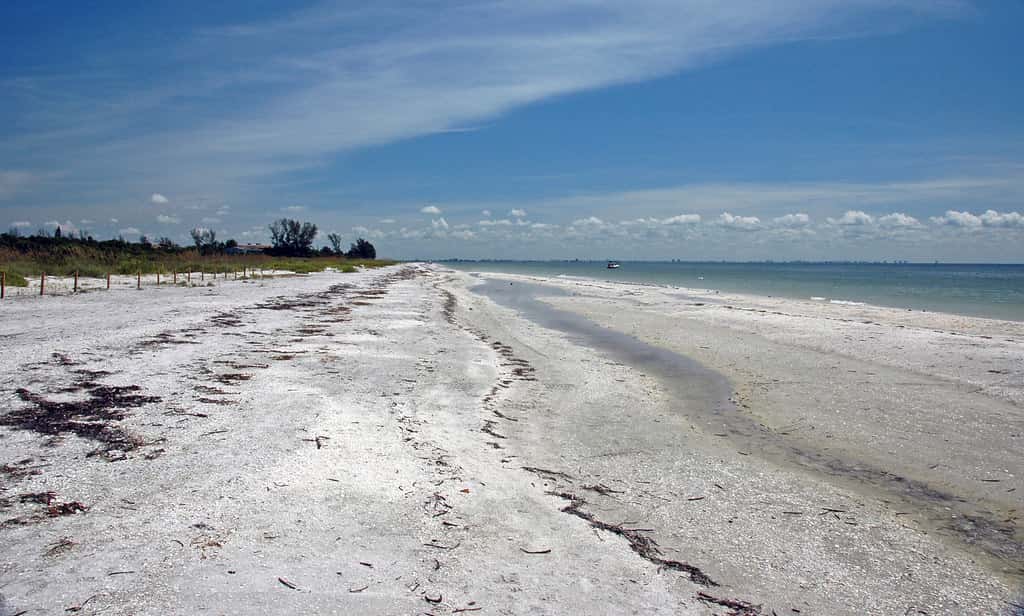
Florida's coastal waters have remained essentially free of red tide through late summer, with the Florida Fish and Wildlife Conservation Commission reporting that the red tide organism Karenia brevis was not observed in samples collected statewide over recent weekly monitoring periods. Where the organism has turned up at all, it has appeared at background concentrations in isolated samples, including one from Franklin County in Northwest Florida in early September.
Along the Southwest Florida coast, the region that historically bears the heaviest red tide burden, and along the Florida East Coast, sampling has found no Karenia brevis. The commission's monitoring program processes well over a hundred samples in a typical reporting period, drawing from state staff, partner institutions, and volunteer collectors.
For coastal communities from Pinellas County through Lee and Collier counties, a clean late summer represents meaningful relief. Red tide blooms in recent years have closed beaches, killed fish and marine mammals in large numbers, produced respiratory irritation severe enough to keep residents indoors, and cost the regional tourism economy substantially.
What red tide actually is
Red tide in Florida refers specifically to blooms of Karenia brevis, a single-celled marine organism that occurs naturally in the Gulf of Mexico. At low concentrations it is harmless and ordinarily present. At bloom concentrations it produces brevetoxins, a class of compounds that affect the nervous systems of fish, birds, and marine mammals.
The blooms typically originate offshore, often 10 to 40 miles out, and are carried toward the coast by winds and currents. Once nearshore, they can persist for weeks or months, and they can intensify when they encounter nutrient-rich coastal water.
The human health effect most people encounter is respiratory. Wave action aerosolizes brevetoxins, and onshore winds carry them inland, producing coughing, sneezing, and eye irritation in people on or near the beach. Effects are generally temporary for healthy individuals but can be serious for people with asthma or chronic respiratory conditions.
The manatee connection
Red tide poses a particular threat to Florida manatees. Brevetoxins accumulate in seagrass and in the water column, and manatees ingest them while feeding. The toxins can cause seizures that lead to drowning, since manatees must surface to breathe.
Large manatee mortality events attributed to red tide, defined as more than 50 animals, have occurred repeatedly over the past three decades, in 1996, 2003, 2005, 2006, 2007, 2013, 2016, 2017, 2018, and 2021. Those episodes compound other pressures on the species, including seagrass loss in the Indian River Lagoon that produced a separate and severe mortality event earlier this decade.
A year without a significant bloom allows the population some recovery margin, and it reduces strain on the rescue and rehabilitation network that responds to affected animals. Florida's manatee rehabilitation capacity is finite, and mass mortality events have historically overwhelmed it.
Why this year has been clean
Red tide bloom formation is driven by a combination of factors that researchers have not fully disentangled. Offshore conditions including water temperature, salinity, and circulation patterns govern whether an initial bloom develops. Wind and current patterns then determine whether it reaches the coast.
Once nearshore, nutrient availability influences how long a bloom persists and how intense it becomes. That is where human activity enters the picture, through agricultural runoff, stormwater, wastewater, and fertilizer, all of which deliver nitrogen and phosphorus to coastal waters.
A significant variable this year has been the weather. The 2026 Atlantic hurricane season passed its climatological peak without producing a single hurricane, a record in the modern satellite era. Tropical systems influence red tide in complex ways, sometimes dispersing blooms and sometimes flushing nutrients into coastal waters that feed them. A season without Florida storm impacts removes one substantial source of variability.
The Lake Okeechobee dimension
Florida's red tide problem is connected, though not simply, to water management in the center of the state. When the Army Corps of Engineers releases water from Lake Okeechobee to manage lake levels, that water flows east through the St. Lucie River and west through the Caloosahatchee River toward the coast.
Those discharges carry nutrient loads accumulated in the lake from agricultural and urban sources in its watershed. Nutrient-rich freshwater reaching coastal estuaries can feed blue-green algae blooms in the rivers themselves and can contribute nutrients that sustain marine blooms offshore.
The relationship is not one-to-one. Red tide blooms originate offshore and have occurred in years with minimal discharges, and discharges have occurred without triggering blooms. But the nutrient contribution is real, and it is the primary mechanism through which inland water management affects coastal water quality.
Everglades restoration and the long game
The state and federal response to that dynamic runs through Everglades restoration, and the centerpiece is the Everglades Agricultural Area Reservoir, designed to store and clean water south of Lake Okeechobee so that it can flow toward the Everglades rather than being discharged east and west.
Florida and the Army Corps announced earlier this year that all federally funded contracts for the reservoir had been executed, positioning the project for completion by 2029, ahead of the original schedule. State officials have framed the acceleration as a direct response to the discharge problem.
The reservoir does not by itself solve coastal water quality. Nutrient sources within coastal watersheds, including stormwater and wastewater infrastructure in fast-growing counties, contribute independently of anything Lake Okeechobee sends. But redirecting a significant volume of water south changes the baseline against which every other factor operates.
What communities do during a bloom
Florida counties have developed operational responses to red tide over the past decade. Beach condition reporting systems give residents and visitors daily information about respiratory irritation and dead fish presence. Counties deploy crews to remove fish kills, which otherwise decompose on beaches and compound the problem.
Local governments in Southwest Florida have invested in monitoring partnerships with research institutions, giving them earlier warning of approaching blooms. Earlier warning allows tourism businesses to communicate honestly with visitors, which matters because uncertainty produces broader cancellations than accurate information about specific affected beaches.
Research into bloom mitigation has continued, including work on treatments that could reduce bloom intensity in confined areas such as canals and marinas. Large-scale mitigation of an offshore bloom remains beyond current capability.
The economic stakes
Red tide's economic cost falls heaviest on coastal tourism and on the fishing industry. A significant bloom during high season can produce cancellations across hotels, vacation rentals, restaurants, and charter operations in affected counties, and the effect extends to areas not directly experiencing the bloom because coverage is regional.
Commercial and recreational fishing absorb a separate hit. Fish kills reduce populations directly, and shellfish harvesting areas close when toxin levels rise, since brevetoxins accumulate in filter feeders and can cause neurotoxic shellfish poisoning in people who eat them.
Property values in affected coastal communities have shown measurable sensitivity to bloom history in academic studies, which makes water quality a long-term economic concern for Southwest Florida rather than a seasonal inconvenience.
How to check conditions
The Fish and Wildlife Conservation Commission publishes red tide status updates on a regular schedule and maintains sampling maps showing concentrations at individual sampling locations statewide. Those products are the authoritative source and are updated as laboratory results come in.
The state also operates a broader water quality dashboard that aggregates red tide alongside other indicators. County health departments issue advisories when conditions warrant, and many coastal counties maintain their own beach condition reporting.
Because conditions can vary substantially over short distances, a bloom affecting one stretch of beach may leave another a few miles away entirely clear. Checking specific locations rather than relying on regional summaries gives a more accurate picture.
What it means for Floridians
For Southwest Florida residents, the current absence of red tide means beaches are usable, fishing is unaffected by toxin closures, and the respiratory irritation that keeps some residents indoors during blooms is not a factor.
For visitors planning fall travel to the Gulf Coast, conditions are favorable, and the state's sampling products allow verification close to a trip date. Fall is a shoulder season in Southwest Florida, and clean water conditions support the visitor economy through a period when businesses depend on it.
For residents of watersheds feeding coastal waters, including inland areas far from any beach, the connection is through nutrient management. Fertilizer ordinances in many Florida counties restrict application during the rainy season for precisely this reason, and compliance at the household level aggregates into measurable load reduction.
Local impact across the state
Lee County and Collier County have historically experienced the most severe and most prolonged blooms, with the 2017 and 2018 event standing as the benchmark for economic and ecological damage in living memory for most residents.
Sarasota and Manatee counties sit in the same exposure zone and host significant research capacity, including institutions that have contributed substantially to understanding bloom dynamics. Pinellas County, at the northern end of the typical bloom range, experiences blooms less frequently but is not exempt.
The Florida East Coast experiences red tide rarely, since blooms originate in the Gulf, though they can occasionally be carried around the Keys and up the Atlantic side by the Gulf Stream. The east coast's more common water quality concern is blue-green algae in the St. Lucie estuary, a different organism with different causes.
What's next
Fall and winter are historically the seasons when Florida red tide blooms initiate and intensify, with many significant events beginning in autumn and persisting into the following year. The current clean readings are welcome but do not indicate what the coming months will bring.
The Fish and Wildlife Conservation Commission will continue weekly sampling and reporting, and any developing bloom would show up in that data before it became apparent on beaches. Coastal residents and businesses watching for early signals should follow those reports directly.
The longer-term trajectory depends on nutrient management and on the Everglades restoration projects now under construction. Those are decade-scale efforts, and their effect on coastal water quality will be measured over years rather than seasons.
Spotted an issue with this article?
Have something to say about this story?
Write a letter to the editorComments
No comments yet. Be the first to weigh in.
Related Coverage
Florida Wildlife Officials Propose Strict New Sloth Rules After Dozens Died at an Orlando Attraction
2d ago
Everglades Canal Diversion Opens to Relieve the St. Lucie Estuary
6d ago
Florida Completes $57 Million C-23 Canal Project to Cut St. Lucie Discharges
Sep 11
Everglades Reservoir Contracts Fully Executed as Completion Target Moves to 2029
Sep 9