Florida Voters to Decide $250,000 Homestead Exemption on November Ballot
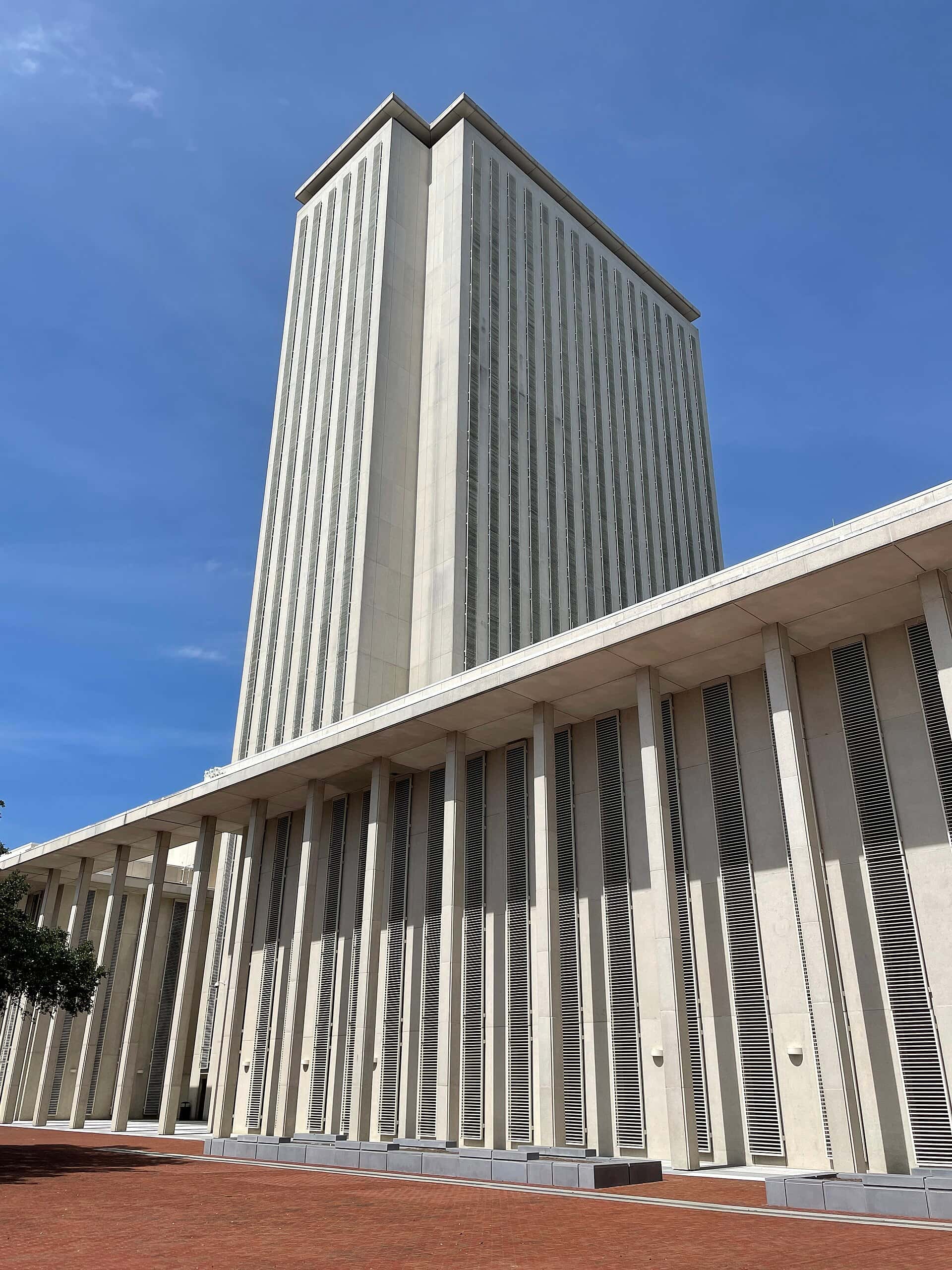
Florida voters will decide on November 3 whether to sharply increase the state's homestead exemption, in what would be the largest change to residential property taxation in a generation. The measure, placed on the ballot by the Legislature as CS/HJR 1-F and titled the Save Our Homes from Excessive Property Taxes amendment, would raise the current $50,000 homestead exemption to $150,000 in 2027 and $250,000 in 2028.
Like all Florida constitutional amendments, it requires at least 60 percent approval to pass. The Legislature approved the joint resolution during a special session held June 1 through June 3, with the House voting 75 to 26 and the Senate 30 to 9. Governor Ron DeSantis has been the measure's most prominent advocate and has described it as a phased step toward eventually eliminating property taxes in Florida.
What the amendment does
The homestead exemption reduces the assessed value on which a property owner pays tax. Under current law a homesteaded owner subtracts $50,000 from assessed value before the millage rate is applied. The amendment would raise that subtraction to $150,000 for the 2027 tax year and to $250,000 for 2028.
The carve-out matters as much as the headline number. The House amended HJR 1-F so that the new exemptions do not apply to school district levies. School taxes typically account for roughly 40 percent of a Florida homeowner's property tax bill, which means a homeowner would continue paying the school portion on the full assessed value. The savings apply to the county, municipal, and special district portions.
The measure covers primary, homesteaded residences only. It does not apply to second homes, investment properties, short-term rentals, commercial buildings, or properties owned by part-time residents. That is a significant limitation in a state where a large share of the property tax base sits in exactly those categories.
Florida homeowners should also understand what the amendment leaves untouched. The Save Our Homes assessment cap, which limits annual increases in assessed value for homesteaded property to three percent or the change in the Consumer Price Index, whichever is lower, remains in place unchanged. So do the existing additional exemptions available to seniors, veterans with service-connected disabilities, and surviving spouses of first responders.
Who benefits and by how much
The benefit is largest, in percentage terms, for owners of modestly valued homes. A homesteaded property assessed at $300,000 would see roughly two-thirds of its non-school taxable value removed under the full $250,000 exemption. A property assessed at $900,000 would see a much smaller proportional reduction, though the dollar savings would be similar.
That structure is a flat-dollar exemption rather than a percentage reduction, so it is inherently progressive in effect across homesteaded properties. It is also geographically uneven. Counties where median home values sit closer to the exemption amount would see a larger share of their homesteaded base removed than counties where values run well above it.
New residents and recent buyers stand to benefit relatively more than long-tenured owners. Florida's existing Save Our Homes assessment cap already limits annual increases in assessed value for homesteaded properties, which means owners who have held a home for decades often carry assessed values far below market. Those owners get less additional benefit from a larger exemption because their assessed value is already suppressed.
The phase-in structure also matters for how the effect is felt. Because the increase arrives in two steps, in 2027 and again in 2028, local governments face the reduction across two consecutive budget cycles rather than absorbing it at once. That gives counties and cities time to adjust, and it means homeowners will see a partial benefit in the first year and the full benefit in the second, which can generate confusion when the first tax bill arrives smaller than expected but not as small as the headline suggested.
What local governments stand to lose
The revenue side is where the argument gets contentious. Property taxes are the primary funding source for Florida county and municipal governments, and they pay for sheriff's offices, fire rescue, emergency medical services, libraries, parks, road maintenance, and county health functions.
Removing $200,000 of taxable value per homesteaded property from the non-school base is a substantial reduction. Local governments would face a choice among three options: cut services, raise millage rates on the remaining base, or find revenue elsewhere. Raising millage shifts the burden toward the properties that do not qualify for the exemption, which means commercial property, rental housing, and non-homesteaded residential.
That shift has second-order effects worth naming. Higher effective rates on rental property tend to flow into rents. Higher rates on commercial property tend to flow into lease costs for small businesses. Neither outcome appears in the ballot summary, and both are the predictable arithmetic consequence of narrowing a tax base while holding service levels constant.
Counties with a high share of homesteaded residential property relative to commercial and tourism-based property would face the sharpest adjustment. Rural counties generally fall into that category. Counties with large hotel, resort, or industrial tax bases have more room to absorb the change.
Portability is the wrinkle that complicates individual estimates further. Florida allows homesteaded owners who sell and buy another Florida home to transfer accumulated Save Our Homes benefit to the new property, up to a statutory cap. Owners carrying substantial portability already have suppressed assessed values, and stacking a larger exemption on top of that can in some cases reduce a non-school taxable value to near zero, which is where the revenue impact concentrates.
The case supporters make
Proponents argue that Florida homeowners have absorbed rapid increases in property tax bills driven by the run-up in home values since 2020, and that the exemption has not kept pace. The $50,000 exemption has been in place since 2008, when Florida's median home value was a fraction of what it is now, so its real value has eroded considerably.
The affordability argument is also connected to insurance. Florida homeowners have faced simultaneous pressure from property tax bills and property insurance premiums over the past five years, and while insurance rates have begun to ease in 2026, the cumulative cost of ownership remains a live political issue. Supporters present the exemption increase as the lever state government can pull directly.
DeSantis has framed the measure as a first phase rather than an endpoint, detailing a broader approach aimed at eventually eliminating property taxes in Florida. That longer-term goal would require replacing the revenue, and no consensus plan for doing so has emerged. Sales tax expansion is the most frequently discussed alternative, and it carries its own distributional problems in a state with no income tax.
Special districts are the category most people never think about and the one with the least flexibility. Fire control districts, hospital districts, water management districts, and mosquito control districts levy their own millage and typically have narrow statutory rate caps. Unlike a county commission, which can shift priorities across a large budget, a single-purpose district with a capped rate and a shrinking base has very few options other than reducing the service it exists to provide.
What it means for Floridians on Election Day
Voters will see the measure alongside a crowded November 3 ballot that also includes the special election for the United States Senate seat, statewide cabinet races, and legislative contests. Turnout dynamics in a non-presidential November could matter for a measure that needs 60 percent.
Homeowners evaluating the measure should look at their own tax bill rather than at the headline exemption figure. The relevant line is the non-school portion of the bill and the assessed value after the Save Our Homes cap. For many long-tenured owners the practical savings will be smaller than the $250,000 number suggests.
Renters have a harder calculation, because they receive no direct benefit and could face indirect cost if local governments respond by raising millage on non-homesteaded property. That is a projection rather than a certainty, since local governments could instead reduce spending, but it is the mechanism that housing economists have flagged.
Business groups have generally been cautious about the measure rather than enthusiastic, which is not the reaction a tax cut usually draws. The reason is the base-narrowing dynamic: a reduction that applies only to homesteaded residential property leaves commercial property carrying a larger share of whatever local governments still need to raise. Chambers of commerce in several Florida counties have raised that concern publicly.
What's next
If approved by at least 60 percent of voters, most provisions would take effect January 1, 2027, with the exemption rising to $150,000 for that tax year and to $250,000 for 2028. Property appraisers across all 67 counties would implement the change in their 2027 assessment rolls.
Local governments are already building contingency into their planning. County budget cycles for fiscal year 2028 will begin work in the spring, and finance officers will need to model the reduction well before voters weigh in. Expect county commissions and city councils across the state to discuss the potential impact publicly through the fall.
The campaign itself is likely to intensify through October. Supporters have a straightforward message about lowering homeowner costs. Opponents, likely including local government associations, public safety unions, and some county officials, will make the service-reduction argument. Whether that opposition organizes into a funded campaign, and whether it can hold the measure below 60 percent, is the open question.
There is also a timing question that voters should factor in. Florida property insurance rates have begun to fall, with decreases recorded in 51 of 67 counties this year, which eases one side of the ownership cost equation on its own. A voter weighing the amendment is deciding whether to add a second reduction on the tax side at a moment when the insurance side is already improving, and whether the local service consequences are worth it given that the affordability pressure of two years ago has partially receded.
Spotted an issue with this article?
Have something to say about this story?
Write us a letterComments
No comments yet. Be the first to weigh in.
Related Coverage

Miami Voters to Decide $450 Million Police and Fire Bond as City Carries Heavy Debts and Pension Bills
1h ago

Martin County's MARTY Buses Stop Cold After Operator Walks Away From Contract, Stranding Riders on the Treasure Coast
1h ago

Florida now requires REAL ID or a passport with I-94 to register a vehicle, leaving some immigrants unable to qualify
2h ago

Broward Mayor Launches Probe of Sheriff Gregory Tony's Spending as County Budget Feud Escalates
4h ago