Fort Lauderdale's Yellow Tap Water Runs Clear After $666 Million Plant Comes Online
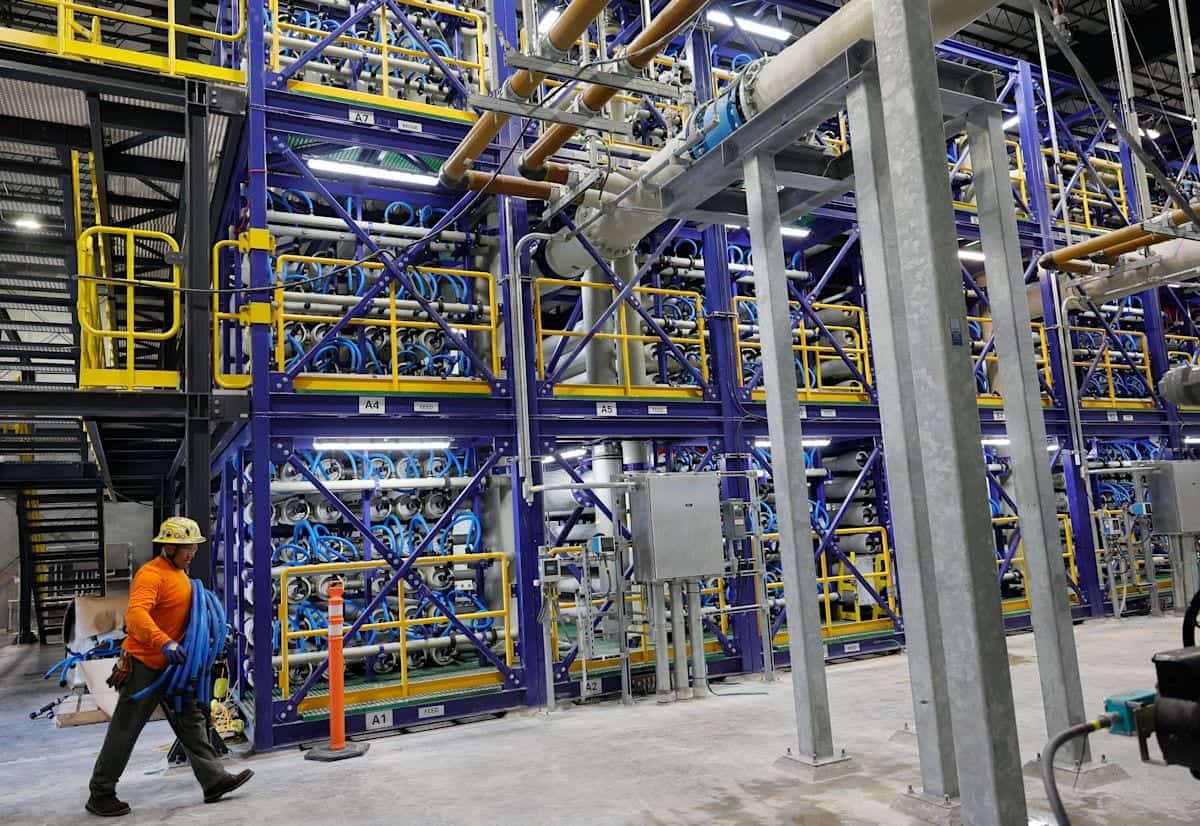
Fort Lauderdale's notorious yellow tap water is gone. City officials say every customer served by the new $666 million Prospect Lake Clean Water Center is now getting clear water, weeks after the plant fully replaced the 1950s-era Fiveash treatment plant that had tinted the city's water for decades.
The plant came fully online on Oct. 8 after a monthlong transition, city spokeswoman Ashley Doussard told the Sun Sentinel. "That was when the city stopped producing water from its older treatment plant," she said. "Now that the water is clear, we do not expect any reappearance." The city has told hotels they can throw away the cards that for more than a decade reassured guests the yellow water was safe to drink.
Why the water was yellow
Fort Lauderdale's raw groundwater carries tannins, natural organic compounds from decaying plant matter that are harmless to drink but give water a tea-colored tint. City officials long maintained the water was safe, and its most recent water quality report showed its drinking water met all federal, state and local standards despite the discoloration, WLRN reported.
The problem was the treatment. Fiveash, built in 1953, used lime softening, a process that could not strip out tannins. It also could not remove PFAS, the long-lasting "forever chemicals" linked to harmful health effects. Residents complained of stained bathtubs and yellow toilets; in the Sunrise Intracoastal neighborhood, one resident told CBS Miami that plumbers had simply told him, "it's just the way it is."
What the new plant does
The Prospect Lake Clean Water Center, on Prospect Road west of Fort Lauderdale Executive Airport, uses nanofiltration and ion exchange, technologies designed to remove tannins and emerging contaminants. The city held an opening celebration on Oct. 15. Here is how the new plant compares with the one it replaced, based on figures from the city and WLRN.
| Feature | Fiveash plant | Prospect Lake Clean Water Center |
|---|---|---|
| Opened | 1953 | 2026 |
| Capacity | 30 million gallons a day | Up to 50 million gallons a day |
| Treatment | Lime softening | Nanofiltration and ion exchange |
| Removes tannins and PFAS | No | Yes |
| Wind rating | Not built to current standards | Category 5 hurricane winds |
Fiveash is being converted from a treatment plant into a storage and distribution center. The new plant serves Fort Lauderdale and Port Everglades, along with all or parts of Wilton Manors, Oakland Park, Tamarac, Davie, Lauderdale-by-the-Sea and Sea Ranch Lakes.
The project was delivered through a public-private partnership between the city, IDE Technologies, Ridgewood Infrastructure and Kiewit Water Facilities Florida, according to the city's announcement, as reported by Construction Dive.
The experts who doubted it
Before the plant opened, some experts warned that clean water leaving the plant might pick up color again as it traveled through the city's old, unlined cast-iron pipes. Ralph Zeltman, a retired county engineer who serves on the city's Infrastructure Advisory Board, told the Sun Sentinel earlier this year that the water might turn yellow in the pipes. Fred Bloetscher, a water infrastructure expert, predicted residents could see yellow water for several months.
Zeltman says he is now a believer, partly because of his cat, Gabriel. In mid-October, he noticed the water in the cat's bowl at his home in Imperial Point had lost its yellow tinge. "It used to turn yellow and now it's clear," he told the Sun Sentinel.
Bloetscher praised the city's operators. "If the water is clear, it would indicate that the operations staff is doing an excellent job in balancing the water to prevent corrosion," he said. Doussard said the city checked with Wilton Manors and Oakland Park, and both confirmed clear water. "All indication is that color is no longer in the city's system," she said.
At the Oct. 15 opening, Mayor Dean Trantalis dismissed the pipe concerns. "We don't have old, rusted pipes that all these haters have been saying," he said, according to WLRN, calling the city's distribution system intact and safe and blaming the old treatment plant for the problem. The city expects to spend $54 million replacing water pipes between 2023 and 2028.
The cost to customers
The plant did not come cheap. City commissioners approved it in 2023 on a divided 3-2 vote, with some raising concerns about the price tag. Water customers will cover the project's roughly $1.4 billion total cost over a 30-year loan, WLRN reported, with rates going up 9 percent through 2027 before leveling off to 5 percent annual adjustments. The plant also comes with a 30-year contract; when it ends, the city can decide on further upgrades.
Trantalis called the plant one of the largest infrastructure investments in the city's history. "This was a commitment we should have made years ago," he told the Sun Sentinel. "And finally we accomplished that goal of providing clear, clean, plastic-free water to the community."
A boost for tourism
For a city that depends on visitors, the change is about more than aesthetics. Lisa Namour, general manager of Bahia Mar Fort Lauderdale Beach, a DoubleTree by Hilton, said the resort had kept a notice about the yellow water in all 288 of its rooms for more than a decade. "People would ask us about the yellow water," she told the Sun Sentinel. "You could mostly see it in the toilets." The cards went in the trash once the city gave the word.
Ina Lee, founder of the Beach Council of the Greater Fort Lauderdale Chamber of Commerce, called clear water "a boost for tourism." At the opening, Trantalis tore up a water discoloration notice taken from a nearby hotel, and U.S. Rep. Debbie Wasserman Schultz, D-Weston, remarked on the large crowd. "There's nothing like having a problem with something as basic as your water out of your tap to get folks riled up and concerned," she said.
What's next
With the new plant handling all production, the city's attention shifts to its aging distribution network and the pipe replacement program running through 2028. City officials say they do not expect the yellow tint to return. For Broward County households in the plant's service area and the hotels that cater to the city's visitors, a decades-old Fort Lauderdale quirk appears to be over.
Spotted an issue with this article?
Have something to say about this story?
Write us a letterComments
No comments yet. Be the first to weigh in.
Related Coverage
Manatee, Sarasota and five other Florida counties vote Tuesday on taxes to protect land from development
23h ago

DeSantis Awards $100 Million for Springs Restoration and Water Supply, Including Septic Work Near Crystal River's Kings Bay
2d ago
Okaloosa County Sets Nov. 12 Sinking of the SS United States off Destin to Create the World's Largest Artificial Reef
3d ago
PFAS 'Forever Chemicals' Found in About 96% of Florida Waterways Tested, Including the Hillsborough River, as New Tampa Bay Study Maps Hot Spots
4d ago