JSO Keeps Seizing Cars as Jacksonville Street Takeovers Collide With a Traffic Death Toll
The Jacksonville Sheriff's Office has continued an aggressive campaign against street takeovers and illegal racing, arresting four people and impounding vehicles after a Labor Day car meetup that grew to roughly 30 vehicles. Two of those arrested, an 18-year-old and a 20-year-old, each face at least one felony charge. Two others, both 18, face misdemeanors. All are presumed innocent unless convicted.
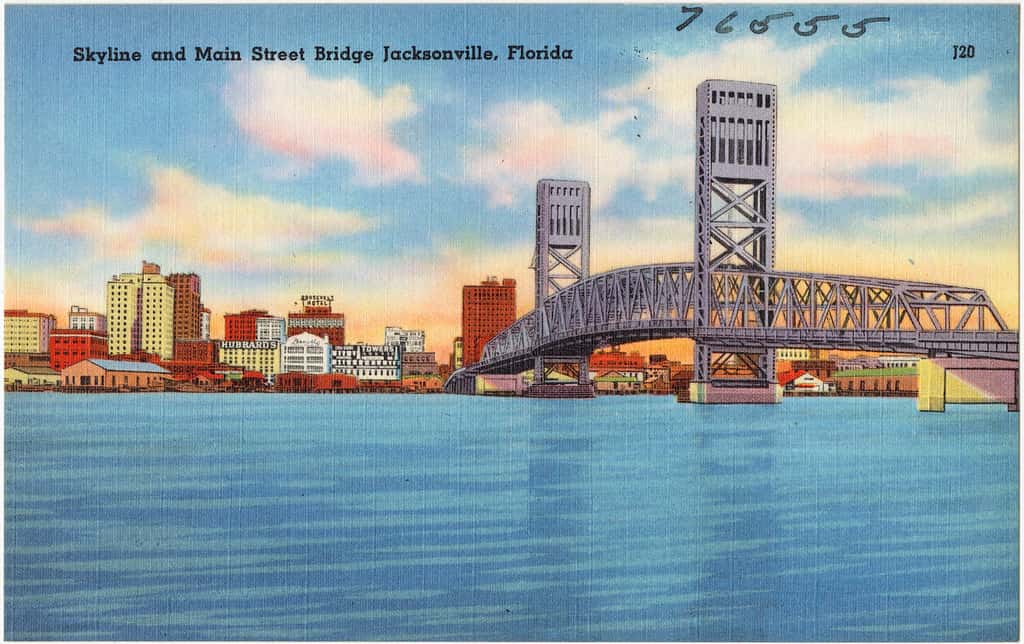
Days earlier, JSO arrested a 20-year-old Jacksonville man who deputies say participated in a street takeover near the Acosta Bridge and then fled at speeds estimated at 120 mph on Interstate 95. The sheriff's office was running a citywide street racing deployment that evening in response to coordinated car meets being promoted on social media.
The enforcement pattern reflects a statistic Sheriff T.K. Waters has cited repeatedly: Duval County has recorded 105 traffic fatalities since the start of the year compared with 30 homicides. In a city where public safety conversation typically centers on violent crime, the roads have been considerably more lethal.
What JSO has been doing
The sheriff's office has run a series of named operations targeting street racing and takeovers. Operation Friday Night Lights produced eight arrests and dozens of traffic citations over a single weekend in July, with JSO partnering with the Florida Highway Patrol after learning that morning of a planned meetup that night. An earlier effort, Operation Braking News, resulted in 22 arrests and seven vehicles seized.
Vehicle seizure is the enforcement tool that distinguishes this campaign. Florida law allows law enforcement to impound vehicles used in street racing offenses, and the practice targets the economics of the activity directly. A citation is a cost participants can absorb. Losing the car is not.
The operations are intelligence-driven in a specific way. Street takeovers are organized on social media, which means the events are advertised before they occur. Law enforcement monitoring those channels can position resources in advance rather than responding after a takeover has already shut down an intersection.
The September 7 deployment that led to the Acosta Bridge arrest followed exactly that pattern, with JSO responding to a series of coordinated car meets promoted online.
What a street takeover is
A street takeover involves a group of vehicles blocking an intersection or roadway, creating a temporary arena in which drivers perform donuts, burnouts and drifting maneuvers while spectators film. The events are distinct from traditional drag racing, which involves two cars racing in a straight line.
The takeover format creates specific dangers. Spectators stand close to vehicles performing high-speed rotational maneuvers, and drivers frequently lose control. Blocked intersections prevent emergency vehicles from passing. When law enforcement arrives, participants scatter at high speed through city streets, which is how the 120 mph flight down I-95 developed.
The phenomenon has spread nationally over the past several years, driven largely by social media, where footage of takeovers circulates widely and generates the attention that motivates participation. Cities across the country have responded with enhanced penalties, vehicle seizure authority and dedicated enforcement units.
Florida strengthened its street racing laws in recent years, adding penalties for spectators as well as drivers and expanding vehicle impoundment authority. The spectator provision addresses the crowd that makes the event possible.
The traffic death context
The comparison Sheriff Waters draws, 105 traffic fatalities against 30 homicides in Duval County this year, reframes what public safety means in Jacksonville.
Jacksonville's road design contributes. The city covers a very large land area, the largest of any city in the contiguous United States by municipal boundary, and its arterial roads are wide, fast and built for volume. Wide multilane arterials with long blocks and infrequent signalized crossings encourage speed and produce severe crashes when they occur.
Florida as a whole has among the highest traffic fatality rates in the country, and its metropolitan areas appear consistently among the most dangerous in the nation for pedestrians. Jacksonville specifically has ranked poorly in those assessments for years.
Street racing is not the primary driver of that fatality count. Most traffic deaths result from ordinary crashes involving speed, impairment, distraction and failure to yield. But high-speed enforcement pursuits and takeover-related crashes contribute, and the activity normalizes exactly the driving behavior that produces the rest of the toll.
What Florida law says
Florida's street racing statute has been strengthened twice in recent years, and the current version reaches considerably further than the traditional prohibition on racing.
The law prohibits racing on highways, and it also prohibits participating in, coordinating, facilitating or collecting money for a race or a stunt driving exhibition. That language is what allows charges against organizers who never get behind a wheel.
Spectators are covered as well. Knowingly attending a street race or takeover is itself an offense under Florida law, on the theory that the crowd is what makes the event happen. Enforcement of the spectator provision is uneven, in part because establishing that someone knowingly attended rather than happened to be present is a factual question.
Penalties escalate with repeat offenses. A first conviction carries a fine and a driver license revocation for a defined period. Subsequent convictions carry longer revocations and higher fines, and vehicles can be impounded for an initial period with forfeiture possible in some circumstances. Fleeing law enforcement at high speed is a separate and more serious felony offense.
The combination of license revocation and vehicle seizure is what gives the statute teeth. A driver who loses both the car and the ability to drive legally faces consequences that continue long after the citation is paid.
How Jacksonville compares
Street takeovers are a national phenomenon, and the enforcement approaches other cities have tried offer some indication of what works.
Several California cities, where the takeover format originated in its current form, have used road design interventions including raised pavement markers and center islands at intersections known for takeovers, physically preventing the circular driving the events require. Those modifications are permanent and do not require ongoing enforcement presence.
Other jurisdictions have focused on the social media layer, pursuing charges against organizers who promote events and working with platforms to remove promotional content. That approach faces practical limits, since accounts are easily replaced.
Vehicle seizure, which JSO has used extensively, has the most direct deterrent logic, and agencies that use it aggressively generally report reductions in participation. The counterpoint is that it shifts the activity rather than eliminating it, and neighboring jurisdictions without similar enforcement often see increased activity as a result.
Jacksonville's geography complicates all of this. The city's enormous land area includes long stretches of wide arterial road far from residential density, which provides ample locations and makes saturation enforcement impractical.
The enforcement debate
Aggressive enforcement against street racing raises the same questions that pursuit policies raise generally. A 120 mph flight down an interstate is dangerous to everyone on the road, and whether a pursuit for a traffic offense is worth that risk is a judgment agencies weigh.
Most agencies have adopted policies limiting pursuits for non-violent offenses, balancing the risk of the pursuit against the seriousness of the underlying crime. JSO, like other Florida agencies, has such a policy, and the details of how it applies in a given incident are typically reviewed afterward.
Vehicle seizure has its own critics, who note that the person losing the vehicle is not always the driver. A car borrowed or registered to a parent creates consequences for someone who was not present. Courts have generally upheld the practice where statutory procedures are followed.
The alternative approaches, which some cities have tried alongside enforcement, include sanctioned venues where drivers can perform legally. Those programs have produced mixed results, partly because the appeal of a takeover includes the illegality itself.
What it means for Jacksonville residents
For drivers, the practical effect of a takeover is a blocked road and a hazardous environment. For people who live near locations where takeovers recur, it is noise, tire debris and property damage.
For the young men being arrested, the consequences are serious and lasting. A felony conviction at 18 or 20 affects employment, housing applications and educational opportunities for decades. The individuals arrested in these cases face charges, not convictions, and the outcomes will be determined by the courts.
The broader question for Jacksonville is whether enforcement against a visible and dramatic behavior addresses the traffic fatality problem that Sheriff Waters cites. Street racing enforcement is measurable and produces arrests. Reducing the overall crash toll involves road design, speed management and enforcement of ordinary violations, which generates far less attention.
The social media layer
Every one of these events began the same way: as a post. Street takeovers in Jacksonville and elsewhere are organized through social media, with location and time distributed to followers shortly before the event to limit law enforcement preparation time.
That organizing method cuts both ways. It allows large groups to assemble quickly at locations chosen for their suitability, and it gives law enforcement advance notice when investigators monitor the same channels. JSO's September 7 citywide deployment was a direct response to coordinated meets being promoted online.
The footage is also the point. Participants record the events and post the results, and the audience those posts reach is what motivates the behavior. A takeover that no one films has little appeal to the people organizing it.
That dynamic creates an enforcement complication. Video posted publicly is evidence, and agencies have used it to identify participants and vehicles after the fact. But the same visibility that helps investigators also spreads the format to new cities and recruits new participants, which is why the phenomenon has proven difficult to contain through enforcement alone.
What's next
The arrested individuals will proceed through the Duval County court system, where the State Attorney's Office for the Fourth Judicial Circuit will make charging decisions and cases will resolve through plea or trial.
JSO has indicated the enforcement operations will continue, and the pattern of social media organization means the sheriff's office generally has advance notice of planned events.
The larger traffic safety question remains open. Duval County's fatality count continues to climb, and the enforcement campaign addresses one contributor to a problem with many sources.
Spotted an issue with this article?
Have something to say about this story?
Write a letter to the editor