Marlins and Rays Take Opposite Paths Into the 2026 Trade Deadline
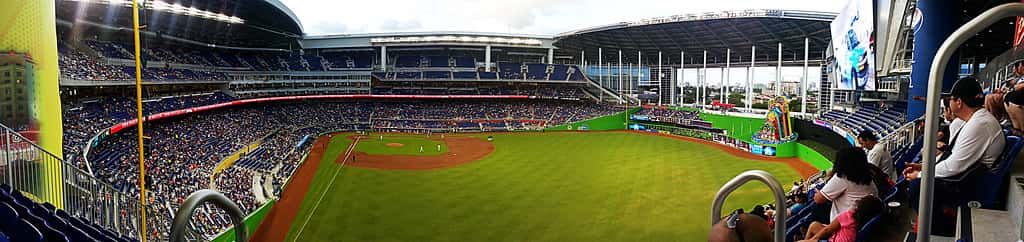
Florida's two Major League Baseball franchises entered the final days before the 2026 trade deadline pointed in opposite directions. The Tampa Bay Rays, sitting near the top of the American League East with 62 wins, have operated as buyers with a farm system stocked by years of prior deadline transactions. The Miami Marlins have moved in the other direction, including a trade that sent catcher Nick Fortes to the Rays in exchange for outfield prospect Matthew Etzel. With the deadline set for August 3, both clubs face the annual calculation that defines a season's second half.
The Fortes trade
The transaction sending Fortes from Miami to Tampa Bay represents the kind of modest, need-based deal that fills most deadline activity. Catching depth is among the most difficult commodities to acquire in season, and contending teams routinely address the position through trades for established backups rather than through internal promotion.
For Miami, receiving an outfield prospect in Etzel fits the organization's operating pattern. The Marlins have consistently converted major league players approaching or in arbitration into younger controllable talent, accepting near-term competitiveness costs in exchange for extending the club's window further out.
Intrastate trades between the Marlins and Rays are less remarkable than they might appear, since the two clubs play in different leagues and different divisions and face each other only in limited interleague play. The competitive disincentive that constrains trades within a division does not apply.
Where the Rays stand
Tampa Bay's position atop the American League East reflects the organizational model the franchise has run for more than a decade: draft and develop efficiently, trade players before their cost exceeds their value, and reload continuously rather than cycling through rebuild phases. The prospect capital accumulated through that approach is what allows the club to buy at deadlines without depleting its future.
The American League East has historically been the sport's most demanding division, and leading it in early August carries genuine weight. The Rays have built their record without the payroll that several division rivals carry, which is the persistent story of the franchise and the reason its front office decisions attract attention across the sport.
Deadline additions for a contending team typically address bullpen depth, bench versatility, and rotation insurance rather than transforming a roster. Tampa Bay's history suggests a preference for undervalued players who fit specific roles over marquee acquisitions, an approach that has generally served the club's competitive position.
Where the Marlins stand
Miami's approach reflects a club evaluating its position honestly rather than pursuing marginal improvement. Selling at a deadline is not a concession about talent so much as a judgment about timing, and the Marlins have generally been willing to make that judgment earlier than clubs that hold on hoping for a second-half surge.
Infielder Otto Lopez, who represented Miami on the National League All-Star team earlier in July, has drawn reported interest from other clubs including the Boston Red Sox. Players who reach All-Star recognition while under club control for multiple additional seasons occupy an unusual position at a deadline, since their trade value is high but so is their value to the team that holds them.
The organization's broader challenge remains attendance and revenue. loanDepot park has struggled to draw consistently, and the resulting payroll constraints shape every roster decision the front office makes. Building a sustained contender under those conditions requires the player development pipeline to produce at a rate few organizations achieve.
The deadline environment this year
Analysts covering the 2026 deadline described an unusual degree of parity across the league, with a large number of teams positioned close enough to contention that few clubs identified themselves clearly as sellers. That dynamic typically reduces the supply of available players relative to demand, which raises acquisition costs for buyers.
Parity affects the two Florida clubs differently. For Tampa Bay, a thin seller market means paying more in prospects for the same upgrade, which cuts against a strategy built on value. For Miami, a thin seller market means better returns on the players the club does make available, since more buyers compete for fewer options.
The August 3 deadline date reflects the modern calendar, which places the deadline later than the traditional July 31 date used for decades. The additional days give clubs more information about their position and compress negotiation into a shorter final window.
What it means for Florida baseball fans
For Rays fans, the deadline represents an opportunity to extend a season that has already exceeded most preseason expectations. Contending clubs that add at deadlines send a signal to their clubhouse and their fan base about organizational intent, and the response to those additions frequently shapes the final two months.
For Marlins fans, the deadline is a familiar experience with a longer horizon. Prospect acquisition is a slow return on investment, and the players received in these transactions typically reach the major leagues two to three years later, if at all. The franchise's ability to develop them determines whether the pattern eventually produces a sustained contender.
Both clubs face stadium and market questions that extend beyond any single deadline. Tampa Bay's long-running venue situation and Miami's attendance challenges are structural factors that constrain what either front office can accomplish, and they shape strategy in ways that roster analysis alone does not capture.
The stretch run ahead
The final two months will test whether Tampa Bay's position holds against the schedule and the health of its roster. American League East races have historically remained unsettled into September, and a division lead in early August provides margin rather than certainty.
Miami's remaining schedule offers evaluation opportunity. Clubs in the Marlins' position use the final two months to give extended playing time to young players whose readiness for the following season is uncertain, and the information gathered shapes offseason planning.
Grapefruit League spring training returns to Florida in February, and both clubs will begin the next cycle with rosters shaped substantially by decisions made this week. For Florida baseball, the deadline is where the following season begins.
The stadium questions behind both clubs
Tampa Bay's venue situation has been the franchise's central off-field question for most of its existence. Attendance at Tropicana Field has consistently ranked near the bottom of the league despite competitive teams, a pattern that reflects the stadium's location relative to the region's population centers as much as fan interest.
Miami's situation differs. loanDepot park is a modern facility in a central location, yet attendance has lagged, which points to factors beyond the building. Sustained losing seasons, roster turnover that prevents fans from forming attachments to players, and the market's competition for entertainment spending all contribute.
Both situations constrain payroll, and payroll constrains roster construction. The relationship between revenue and competitiveness is not deterministic, as Tampa Bay's record demonstrates, but it narrows the margin for error in ways that higher-revenue clubs do not face.
What the farm systems say about the future
Tampa Bay's ability to buy at deadlines rests on a prospect base built through years of drafting and trading. The organization's player development reputation is among the strongest in the sport, and its capacity to convert mid-round draft picks and acquired prospects into major league contributors is what sustains the model.
Miami's system has absorbed the returns from successive selling deadlines, including the outfield prospect acquired in the Fortes trade. The volume of prospects an organization accumulates matters less than the rate at which it develops them, and that rate is what determines whether a rebuilding cycle produces a contender or repeats itself.
Both clubs draw on Florida's high school and college talent base, which is among the deepest in the country. The state produces major league players at a rate exceeded by few others, and the presence of spring training facilities across Florida gives organizations year-round development infrastructure in the state.
How deadline trades are evaluated later
Deadline transactions are judged on timelines that extend years beyond the season in which they occur. A prospect acquired in 2026 typically reaches the major leagues between 2028 and 2029, if at all, which means assessments made at the time of a trade are provisional.
Buyer-side evaluation depends heavily on outcome. A rental acquisition that contributes to a deep postseason run is generally regarded as worthwhile regardless of the prospect cost, while the same trade in a season that ends without a playoff berth is remembered differently despite identical process.
Seller-side evaluation is more purely about the players received. Organizations that consistently acquire useful major leaguers through deadline sales sustain the model, while those that do not eventually face the accumulated cost of repeated selling without a corresponding competitive payoff.
What's next
Any remaining transactions before the August 3 deadline will be reported through official club announcements and league transaction logs. After the deadline passes, rosters are largely fixed for the remainder of the regular season, with only waiver claims and minor league promotions available to make changes.
Postseason positioning becomes the dominant storyline for Tampa Bay through September. For Miami, the focus shifts to player development and to evaluating which members of the current roster figure into the club's plans for 2027.
Both franchises will publish their September call-up decisions when rosters expand, which offers the clearest view of how each organization ranks its own prospects. For the Marlins in particular, those decisions indicate which of the players acquired in this and prior deadlines the organization considers closest to contributing.
For fans of either club, the remainder of the season offers different things to follow. Tampa Bay supporters have a division race that will run into September and a roster built to compete in it. Miami supporters have a group of young players receiving extended opportunity, and the performance of those players over the final two months is the most direct evidence available about where the organization stands heading into next season.
Spotted an issue with this article?
Have something to say about this story?
Write a letter to the editorComments
No comments yet. Be the first to weigh in.