Marlins Erase a Six-Run Deficit to Stun the Phillies in Miami
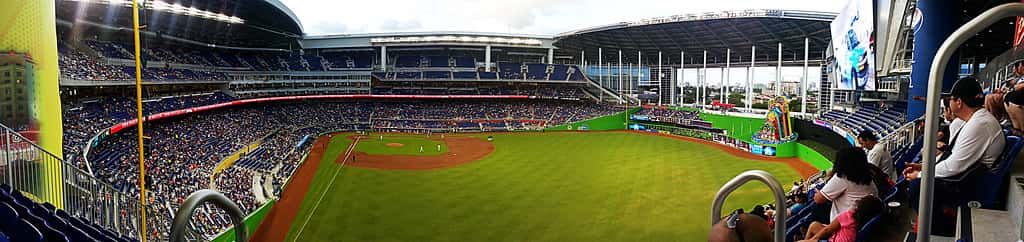
The Miami Marlins trailed the Philadelphia Phillies 6-0 and came all the way back, beating the National League East leaders 8-6 on Wednesday night at loanDepot park in what stands as their largest comeback of the 2026 season. Griffin Conine delivered the decisive blow, a pinch-hit home run in the eighth inning that put Miami ahead for the first time all evening.
How the comeback happened
Philadelphia built its lead early and appeared to have the game in hand. Miami chipped away rather than exploding, and the offense was distributed rather than concentrated. Otto Lopez, Heriberto Hernandez and Xavier Edwards each drove in two runs, accounting for six of the eight Miami runs between them.
Conine's eighth-inning pinch-hit homer supplied the go-ahead margin. Pinch-hit home runs that flip a game in the eighth inning are among the lower-probability events in baseball, and the situational value of this one was magnified by the deficit Miami had already erased.
Tyler Zuber earned the win in relief, moving to 1-1 on the season. Pete Fairbanks closed it out for his 15th save. Jonathan Bowlan took the loss for Philadelphia, dropping to 2-1.
The Marlins bullpen deserves the larger share of the credit for making the comeback possible. A 6-0 deficit only becomes reachable if the relief corps prevents it from growing, and Miami's relievers held Philadelphia scoreless long enough for the offense to close the gap.
The series context
The win followed a 1-0 Marlins victory over Philadelphia on Tuesday, July 28. Consecutive wins over a division leader, one a shutout decided by a single run and the other a six-run comeback, represent two entirely different kinds of victory in as many nights.
Philadelphia has been among the National League's stronger clubs and sits in position for postseason contention. Miami's ability to take games from that caliber of opponent in late July matters for how the organization evaluates its own trajectory heading into August.
Games like Wednesday's carry weight in a clubhouse beyond the standings line. A club that has spent recent seasons in rebuild mode uses this kind of result to establish what its young roster is capable of when the situation is unfavorable.
Where the Marlins stand
Miami's franchise arc since the 2023 wild card appearance has been one of roster reconstruction. The organization traded established veterans for prospect capital, absorbed the losing seasons that follow, and built toward a young core that is now arriving at the major league level.
Xavier Edwards has been central to that project. A contact-oriented middle infielder with elite speed, he represents a style of offense that runs counter to the power-and-patience orthodoxy that dominates the modern game. Otto Lopez has established himself as a regular contributor. Heriberto Hernandez has provided right-handed production.
Conine, the son of Marlins franchise fixture Jeff Conine, carries a name that resonates in South Florida in a way few current players' do. The elder Conine played on both of Miami's World Series championship teams, in 1997 and 2003, and remains associated with the organization.
Pete Fairbanks' presence in the Miami bullpen reflects the churn of the modern relief market. Fairbanks had been a fixture of the Tampa Bay Rays bullpen and is now closing games for Miami, with 15 saves on the season.
What it means for South Florida baseball
Attendance and engagement remain the organization's persistent challenge. loanDepot park is one of the most physically pleasant ballparks in the major leagues, with a retractable roof that solves the twin South Florida problems of summer heat and afternoon thunderstorms, and the club has still struggled to fill it.
The market explanation is well worn: a transient population, competition from the Miami Heat, the Florida Panthers, the Miami Dolphins and Inter Miami, and a history of ownership decisions that dismantled winning rosters. The counterargument is equally well worn: winning fixes attendance, and Miami has not sustained winning long enough to test it.
Games like Wednesday's are the raw material for building that back. A six-run comeback against a division leader, capped by a homer from a player whose surname is on the ballpark's ring of honor, is the kind of night that produces new fans.
The road ahead
The Major League Baseball trade deadline falls on August 3. Miami's position in the standings will determine whether the front office operates as a buyer or a seller, and clubs in the Marlins' general position often do both, moving expiring contracts while acquiring controllable pieces.
Fairbanks is the kind of asset that draws deadline interest. Contending clubs consistently overpay for high-leverage relief in late July, and a closer with 15 saves is a natural subject of inquiry. Whether Miami is inclined to move him depends on the organization's read of its own timeline.
The rest of the schedule offers a straightforward test. The National League East contains Philadelphia, the New York Mets and the Atlanta Braves, which means Miami plays a substantial share of its remaining games against clubs with playoff intentions.
Why six-run comebacks are rare
The arithmetic behind Wednesday's result explains why it stands out. Win probability models built on decades of play-by-play data place a team trailing by six runs after the early innings in the low single digits as a percentage, and the figure falls further with each half inning that passes without the deficit narrowing.
The reason is structural rather than psychological. A six-run deficit requires either one large inning or several productive ones, and the modern bullpen is constructed specifically to prevent both. Relief pitchers throw harder than starters, face fewer batters, and are deployed against favorable platoon matchups. The late innings are the hardest part of a game in which to score at volume.
Miami's comeback took the more sustainable route. Rather than one crooked number, the Marlins distributed production across the lineup, with Otto Lopez, Heriberto Hernandez and Xavier Edwards each driving in two runs. Six of the eight runs came from those three, and the remaining margin came from Griffin Conine's pinch-hit homer in the eighth.
Pinch-hit home runs that put a team ahead in the eighth inning or later are among the lower-frequency events in a season. Most pinch-hit appearances come against a reliever with a platoon advantage, in a high-leverage spot, from a hitter who has been sitting for hours.
What the bullpen did
The comeback is credited to the offense in the box score, but it was made possible by relief pitching that kept the deficit at six.
Tyler Zuber earned the win, moving to 1-1. Pete Fairbanks closed for his 15th save. Between the point at which Philadelphia stopped scoring and the point at which Miami took the lead, the Marlins bullpen had to retire a lineup that had already produced six runs, without allowing the game to move further out of reach.
Fairbanks' presence in Miami's bullpen is a case study in how relief pitchers move through the modern game. He established himself in Tampa Bay, where the Rays built one of the sport's most effective bullpens through acquisition and development rather than free agent spending, and he now closes for a division rival of that club's interleague neighbor.
Relief pitching is the most volatile asset class in baseball. Year-over-year performance correlation for relievers is weaker than for any other position group, which is why front offices are reluctant to commit long contracts to them and why the trade market for relievers heats up every July.
The Marlins rebuild in context
Miami's organizational arc since its 2023 wild card appearance has followed a pattern that has become standard across the sport, and the results are now beginning to surface at the major league level.
The club traded established veterans for prospect capital, absorbed losing seasons, and concentrated resources on player development and international amateur signing. That approach carries a well-documented cost in attendance and in fan patience, and it has produced championship rosters in several markets while failing in others.
What distinguishes the current Miami group is its offensive profile. Xavier Edwards represents a style of hitting, contact-oriented with elite speed, that runs against the power-and-patience orthodoxy that has dominated roster construction for a decade. Rule changes limiting defensive shifts and enlarging the bases have made that skill set more valuable than it was five years ago.
Otto Lopez has established himself as a regular contributor. Heriberto Hernandez has provided right-handed production. Griffin Conine carries a surname that resonates in South Florida, as the son of Jeff Conine, who played on both Marlins World Series championship teams in 1997 and 2003.
Pitching remains the organization's identified strength in the minor league system, and the pace at which those arms reach the major leagues will determine when Miami's window opens.
The attendance question
No conversation about the Marlins proceeds far without reaching attendance, and the subject deserves a fair accounting rather than the usual shorthand.
loanDepot park is among the more comfortable venues in the sport. The retractable roof solves the two conditions that make outdoor baseball difficult in Miami between June and September: afternoon heat that regularly pushes the index above 105 degrees, and thunderstorms that build over the interior and reach the coast most summer evenings. A climate-controlled ballpark in South Florida ought to be an asset rather than a liability.
The competition for the entertainment dollar is real. The Miami Heat, the Florida Panthers, the Miami Dolphins and Inter Miami all draw from the same market, and Inter Miami's arrival with Lionel Messi in 2023 added a competitor with genuine international pull.
The more specific problem is institutional memory. The franchise has twice won a World Series and twice dismantled the roster shortly afterward, in 1997 and again in 2003. Those decisions taught a generation of South Florida fans that investment in the team would not be reciprocated, and no marketing effort undoes that quickly.
The only demonstrated remedy is sustained winning over multiple seasons. Nights like Wednesday, a six-run comeback capped by a homer from the son of a franchise icon, are the individual bricks. The question is whether enough of them accumulate.
What's next
The Marlins continue their homestand at loanDepot park before heading out on the road. Miami's remaining schedule is heavily weighted toward divisional opponents, which concentrates both the difficulty and the opportunity.
The August 3 deadline is the next organizational milestone. What the Marlins do or do not do in the 72 hours before it will say more about the front office's assessment of this roster than any single week of results.
The Florida Press will cover the Marlins through the deadline and into the stretch run.
Spotted an issue with this article?
Have something to say about this story?
Write a letter to the editor