Sandy Alcantara Sets Marlins Innings Record in a Career Revival Season
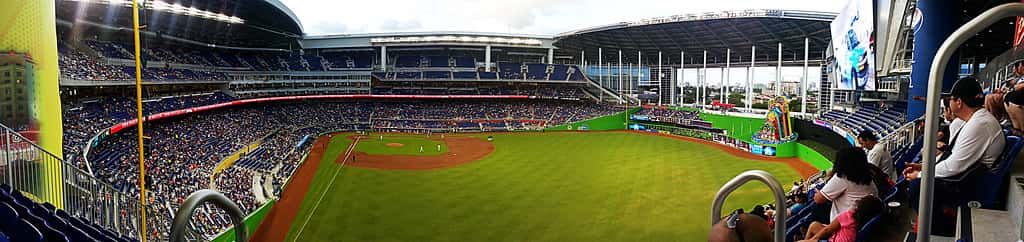
Sandy Alcantara has spent the 2026 season answering the question that hung over the Miami Marlins for two years: whether the pitcher who won the National League Cy Young Award in 2022 would return after elbow reconstruction. The answer arrived in pieces through the spring and summer, and on August 8 it arrived with a franchise record attached.
Alcantara threw seven scoreless innings against the Los Angeles Angels in a 7-0 Miami win, allowing three hits and one walk while striking out eight. In the third inning, he struck out Josh Lowe to pass Ricky Nolasco for the most innings pitched in Marlins history, reaching 1,226 and continuing to add to the mark with every start.
The win moved him to 13-6 on the season, a record that reflects both his own performance and a Marlins team that has been more competitive than most projections suggested it would be. For a franchise that has traded away most of its stars before they reached this kind of milestone, the record itself is a statement about an unusual tenure.
The road back
Alcantara underwent elbow surgery that cost him an entire season, a procedure that has become routine in modern baseball but that remains a genuine threat to a power pitcher's career. The typical recovery arc runs 14 to 18 months, and pitchers who return often need a second season before their command and velocity fully stabilize.
His rehabilitation followed that pattern. He threw live batting practice late in a season that had already gotten away from Miami, then was shut down with the club out of contention, and used spring training to build toward a full workload.
What has distinguished his 2026 is the workload itself. Alcantara's calling card before the injury was volume, a willingness and ability to pitch deep into games in an era when starters are routinely removed after five innings or the second time through the order. That trait carried real value for a Marlins bullpen that has historically been thin.
The seven-inning outing against the Angels was a version of that old profile: efficient, aggressive in the strike zone, and complete enough that the bullpen was barely used.
The record in context
Ricky Nolasco held the Marlins innings record for more than a decade, accumulating his total across parts of eight seasons in Miami from 2006 through 2013. Nolasco was durable and consistently in the rotation during a period when the franchise cycled through rosters rapidly.
Alcantara passing him says as much about the Marlins as about either pitcher. Miami has been one of baseball's most aggressive trading organizations, moving established players before they reach their most expensive arbitration years or free agency. Two franchise fire sales in the 1990s and additional teardowns since have meant very few players accumulate long tenures.
Alcantara arrived in the trade that sent Marcell Ozuna to St. Louis after the 2017 season, one of the deals in the teardown that followed the ownership change. He developed into an ace in Miami, won the Cy Young in 2022, and signed a club-friendly extension that kept him under contract through the injury and the recovery.
That extension is the reason he was still on the roster to break the record. Absent it, he would almost certainly have been traded before now.
The 2026 Marlins
Miami has been more competitive this season than the organization's recent history would suggest, though the team also participated in the trade deadline as a seller in at least one notable transaction, sending catcher and first baseman Liam Hicks to Tampa Bay in a deal that returned infielder Brayden Taylor, shortstop Adrian Santana, and right-hander Jacob Kisting.
That transaction fits a familiar pattern: converting a productive major leaguer into controllable young talent. Miami's front office has consistently prioritized the farm system, and the results have been mixed, producing periodic waves of talent without sustained contention.
The rotation has been the club's strength, which is also familiar. Miami has developed pitching effectively for years, and Alcantara's return at something approaching his previous level gives the staff a genuine front-line anchor for the first time since the injury.
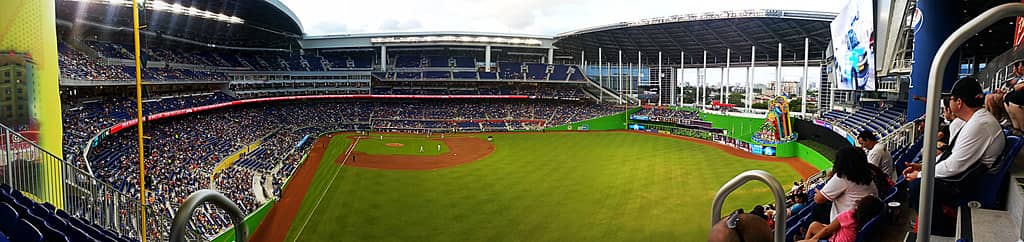
Attendance and revenue remain structural challenges. loanDepot park has consistently ranked near the bottom of the league in attendance, which constrains payroll and reinforces the trade-and-develop cycle.
What Alcantara's season means going forward
The most important consequence of a healthy, effective Alcantara is that Miami has an asset with real value. A front-line starter under contract is the most valuable currency in baseball, and the Marlins have historically converted such assets into prospects.
That creates an obvious tension. Fans who have watched the franchise trade away every star it has developed will read a strong Alcantara season as a countdown rather than a foundation. The organization's alternative argument is that a healthy ace at a reasonable contract is exactly the kind of piece a team keeps if it intends to contend.
Which reading is correct will become clear over the coming offseason and next year's trade deadline. Miami's competitive window depends on whether the young position players acquired in recent deadline deals arrive at the same time.
For Alcantara individually, the season restores his market value and, more immediately, his standing as one of the game's genuine workhorse starters at a moment when that role is disappearing from baseball.
Why South Florida should care
Miami's sports market is crowded and demanding. The Heat have been consistently relevant, the Panthers have reached the top of the NHL, Inter Miami draws global attention, and the Dolphins occupy the emotional center of the region's sports life. The Marlins compete for attention at the margins.
What the franchise has offered reliably is pitching development. Alcantara is the latest and best example, and a healthy version of him gives South Florida fans a reason to watch a specific date on the calendar every fifth day.
The innings record also anchors a franchise history that is otherwise thin on continuity. Miami has two World Series titles, both won by teams assembled quickly and dismantled immediately afterward, which leaves the franchise without the accumulated records and long tenures that give a baseball team institutional memory.
Alcantara now holds the most durable of those records, and every start extends it.
What Miami has built around him
A rotation anchor is only valuable if the roster around him can convert quality starts into wins, and Miami's construction reflects a specific theory about how a low-payroll club competes.
The organization has consistently prioritized pitching in the draft and in trades, accumulating arms in volume on the theory that pitching is both the most valuable commodity and the most likely to attrit. That approach has produced multiple major league starters and a pipeline that continues to generate them.
Position player development has been the weaker side of the operation, and the deadline deals reflect an effort to address it. Brayden Taylor and Adrian Santana, acquired from Tampa Bay in the Liam Hicks trade, are infield prospects, and the organization's recent drafts have leaned more heavily toward hitters.
Defense has been a stated emphasis. A pitching-first roster benefits enormously from converting batted balls into outs, and Miami has built its outfield alignment and infield positioning around supporting the rotation.
The park itself is a factor. loanDepot park has generally suppressed offense relative to league average, which flatters Miami pitchers in raw statistics and makes evaluating the roster's true quality more difficult than the surface numbers suggest.
The vanishing workhorse
What makes Alcantara's innings record notable extends beyond the Marlins. The pitcher who works deep into games has become one of baseball's endangered species, and the reasons are structural rather than a matter of individual toughness.
Analytics established that hitters perform progressively better each time they face a pitcher within a game, which gave front offices a quantitative reason to pull starters earlier. Bullpen specialization followed, with relievers throwing at maximum effort in short bursts and posting better rate statistics than a tiring starter.
Pitcher health economics pushed the same direction. Teams sign starters to long, expensive contracts and have every incentive to protect that investment, which means innings limits, monitored pitch counts, and quick hooks. Elbow reconstruction is now so common that avoiding it has become a roster construction priority.
Against that backdrop, a pitcher who returns from elbow surgery and immediately resumes throwing seven-inning outings is an outlier. Alcantara's 2022 Cy Young season featured a workload almost nobody else in baseball attempted, and the fact that he is chasing that profile again after surgery is the most interesting thing about his season.
What's next
Award consideration is a secondary storyline. A pitcher with a 13-6 record, a strong innings total, and a compelling return narrative will draw attention in Cy Young voting, though the field in the National League is typically deep and the Marlins' record limits national exposure.
The Marlins have roughly seven weeks left in the regular season, and Alcantara is on pace for a full complement of remaining starts. Each one adds to the franchise innings mark and to a season that has already reestablished his standing.
Miami's remaining schedule will determine whether the team finishes above or below .500 and whether the front office reads 2026 as a step forward. The performance of the players acquired at the deadline over the final stretch will inform the offseason plan.
Watch Alcantara's workload management as the season closes. Teams typically protect pitchers in their first full season after elbow reconstruction, and Miami has no competitive incentive to push him deep into September if the club is out of the race.
The Florida Press will continue covering the Marlins through the close of the season at loanDepot park.
Spotted an issue with this article?
Have something to say about this story?
Write a letter to the editor