Off-Duty Flagler Sheriff Pursues Driver Clocked at 125 MPH on Interstate 95
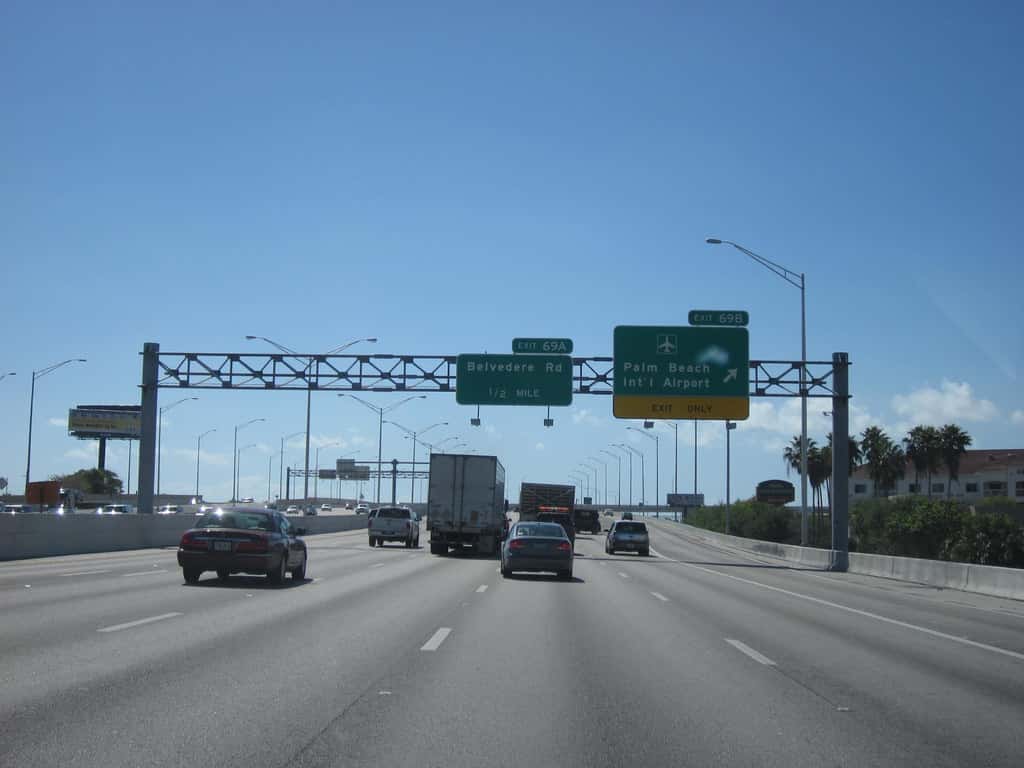
A 22-year-old Palm Coast man was arrested Friday evening after Flagler County Sheriff Rick Staly, driving off duty in an unmarked agency vehicle, paced a vehicle at speeds reaching 125 mph along Interstate 95, according to an account of the incident reported from the sheriff's office.
The driver has been charged and is presumed innocent unless and until convicted.
What authorities described
According to the account, Staly was traveling south on Interstate 95 just past the State Road 100 exit when a white 2016 Dodge Challenger with black racing stripes passed him at high speed. The sheriff was off duty at the time, driving an unmarked agency vehicle on his way to a dinner meeting with his wife.
Using his vehicle's certified speedometer, Staly paced the Challenger at speeds between 115 and 125 mph over a distance of nearly six miles before the stop was completed.
The use of a certified speedometer to pace a vehicle is an established method of speed measurement in Florida traffic enforcement. Pacing requires the officer to maintain a constant distance behind the target vehicle while reading the patrol vehicle's own speed, and certification of the speedometer is what makes the reading admissible.
Why the speed matters legally
Florida law treats extreme speeding differently from ordinary speeding violations. Driving at speeds substantially above the posted limit can support charges beyond a standard citation, including reckless driving, which is a criminal offense rather than a civil traffic infraction.
Florida also has specific statutory provisions addressing racing on highways, which cover not only organized racing but also speed competition and attempts to outdistance another vehicle. Those charges carry mandatory license revocation on conviction and are treated more seriously than a speeding citation.
At 125 mph, a vehicle covers roughly 183 feet per second. Reaction time alone, before any braking begins, consumes well over a hundred feet at that speed, and total stopping distance extends far beyond what most drivers intuitively estimate. The physics is what underlies the legal distinction between speeding and reckless operation.
Interstate 95 in Flagler County
Interstate 95 runs the length of Florida's east coast and carries substantial traffic through Flagler County, connecting the Jacksonville metropolitan area to Daytona Beach and points south. The stretch through Flagler is largely rural, with long sightlines and relatively light development compared with the interstate's approaches to major cities.
Those conditions contribute to speeding. Roads that feel open encourage higher speeds than roads that feel constrained, a relationship traffic engineers have documented extensively. The design of a rural interstate segment communicates safety to drivers in ways that can be misleading.
Florida has consistently ranked among the states with the highest traffic fatality counts. The combination of population, tourism traffic, extensive interstate mileage, and year-round driving conditions produces exposure that few states match.
The sheriff's approach to enforcement
Staly has led the Flagler County Sheriff's Office since 2017 and has maintained a visible public profile, with the agency using distinctive language in its public communications about arrests and enforcement.
An off-duty sheriff initiating a traffic stop is not routine. Sworn law enforcement officers retain their authority when off duty, but agencies generally have policies governing when off-duty enforcement action is appropriate, weighing the risk of an officer acting without radio support, backup, or a marked vehicle.
High-speed pursuits carry particular risk. Pursuit policies across American law enforcement have tightened considerably over recent decades as agencies have documented the danger that pursuits pose to bystanders, officers, and occupants of the pursued vehicle. Many agencies now restrict pursuits to serious felony circumstances.
In this case, the account describes pacing across roughly six miles before the stop, which reflects the distance required to complete a traffic stop at highway speeds rather than an extended pursuit.
What it means for Florida drivers
The practical lesson for drivers is that unmarked vehicles are in use, and that agency personnel including senior command staff have enforcement authority regardless of whether they are on shift.
Beyond enforcement, the underlying safety point is straightforward. Speed is among the most consistent factors in fatal crashes, and its effect is not linear. Crash energy increases with the square of speed, which means the difference between 70 and 125 mph in a collision is far greater than the difference in the numbers suggests.
Florida's traffic safety record has prompted sustained attention from the Florida Highway Patrol and the Department of Highway Safety and Motor Vehicles, which conduct periodic enforcement campaigns targeting speed, impaired driving, and distracted driving.
Drivers who encounter aggressive or extremely high-speed driving can report it to the Florida Highway Patrol by dialing *FHP from a mobile phone, which connects to a regional communications center.
The court process ahead
The case now moves to the office of the state attorney for the Seventh Judicial Circuit, which covers Flagler, Volusia, Putnam, and St. Johns counties. Prosecutors will review the arresting agency's charges and determine what to formally file.
Criminal traffic charges proceed through the same process as other criminal cases, with arraignment, potential pretrial motions, and resolution through plea agreement or trial. Penalties on conviction can include fines, license consequences, and in some circumstances incarceration.
For a defendant of 22, license consequences frequently carry more practical weight than any fine, given the difficulty of maintaining employment without driving privileges in most of Florida.
Florida's traffic safety record
The incident sits against a broader context that gives it significance beyond a single traffic stop.
Florida consistently ranks among the states with the highest annual traffic fatality totals. The contributing factors are structural: a large and growing population, enormous tourist volume including drivers unfamiliar with local roads, extensive interstate mileage, year-round driving conditions that eliminate the seasonal reduction in exposure that colder states experience, and a substantial population of both very young and older drivers.
Speed appears repeatedly in fatal crash analysis, and its role is frequently misunderstood. Speed does not merely increase the likelihood of a crash by reducing available reaction time. It increases the severity of any crash that occurs, because kinetic energy scales with the square of velocity.
The practical consequence is that a crash at 125 mph involves roughly three times the energy of the same crash at 72 mph. Vehicle safety systems, including crumple zones, airbags, and restraint systems, are engineered and tested against impact speeds far below that, and their protective capacity degrades sharply outside the range they were designed for.
Pursuit policy and its evolution
Law enforcement approaches to vehicle pursuits have changed substantially across recent decades, driven by accumulated data on their outcomes.
Research documented that a meaningful share of pursuits ended in crashes, and that those crashes injured bystanders, officers, and vehicle occupants including passengers who had no role in the decision to flee. A significant portion of pursuits were initiated over relatively minor underlying offenses.
Agencies responded by tightening policies. Many now restrict pursuits to circumstances involving violent felonies, require supervisory authorization to continue, and mandate termination when risk factors including traffic density, weather, or speed exceed thresholds.
Technology has provided alternatives. Tire deflation devices, aerial support where available, and improved capacity to identify vehicles and locate drivers afterward have reduced the necessity of pursuing in the moment.
The distinction between a pursuit and a traffic stop at highway speed matters in evaluating this incident. The account describes pacing across roughly six miles to complete a stop, which reflects the distance required to safely effect a stop at interstate speeds rather than an extended pursuit of a fleeing driver.
Charges and consequences for young drivers
The consequences facing a 22-year-old defendant in a case like this extend well beyond any immediate penalty.
Florida treats reckless driving as a criminal offense rather than a civil infraction, meaning a conviction produces a criminal record. Racing on a highway carries mandatory license revocation, and Florida law addresses not only organized racing but speed competition and attempts to outdistance other vehicles.
License consequences typically matter more than fines for defendants of this age. Florida is a state where most employment requires driving, public transit coverage is limited outside a few urban cores, and a revoked license can end a job.
Insurance consequences persist for years. A reckless driving conviction affects premiums substantially and can result in nonrenewal, forcing a driver into high-risk coverage markets at multiples of standard rates.
Those cascading effects are why defendants in criminal traffic matters frequently benefit from legal representation even when the immediate exposure appears modest.
Interstate travel patterns in August
The timing of the incident coincides with one of the heavier stretches on Florida's interstate system, which shapes enforcement priorities across the state.
August combines several traffic streams. Summer vacation travel continues through the month, with families moving to and from Florida destinations. College students return to campuses across the state, producing concentrated movement along the interstate corridors in the weeks around mid-August. School districts reopen in the second week of the month, adding morning and afternoon congestion around schools and bus routes in every community.
Interstate 95 and Interstate 75 carry the bulk of north-south movement, with Interstate 4 connecting Tampa to Daytona Beach through Orlando. Those corridors see the most enforcement attention because they combine the highest volumes with the highest speeds.
The Florida Highway Patrol conducts periodic enhanced enforcement operations targeting speed, impaired driving, and distracted driving, frequently timed to holiday periods and to stretches of elevated travel volume.
For drivers, the practical implications are straightforward. Speed enforcement is heavier during these periods, and the underlying crash risk is genuinely higher because of volume and the presence of unfamiliar drivers navigating unfamiliar roads.
What's next
The Flagler County Sheriff's Office continues routine traffic enforcement on the interstate corridors within the county, and the Florida Highway Patrol maintains primary responsibility for interstate highway enforcement statewide.
Summer months typically bring elevated traffic volume on Florida's interstate system as vacation travel peaks, and enforcement activity generally rises accordingly. The start of the school year in the second week of August adds a further shift in traffic patterns around school zones and bus routes across the state.
Spotted an issue with this article?
Have something to say about this story?
Write a letter to the editorComments
No comments yet. Be the first to weigh in.
Related Coverage
Six Years After the Frostproof Fishing Killings, a Polk County Jury Hears the Capital Case
36m ago

JSO Keeps Seizing Cars as Jacksonville Street Takeovers Collide With a Traffic Death Toll
2h ago
A 1992 Boynton Beach Assault Ends in a Prison Sentence After DNA and a Border Stop
12h ago

Hillsborough Deputies Arrest Lutz Man Accused of Holding Abuse Files
1d ago