Polk County Sheriff Announces 39 Arrests in a Yearlong Fentanyl and Methamphetamine Investigation
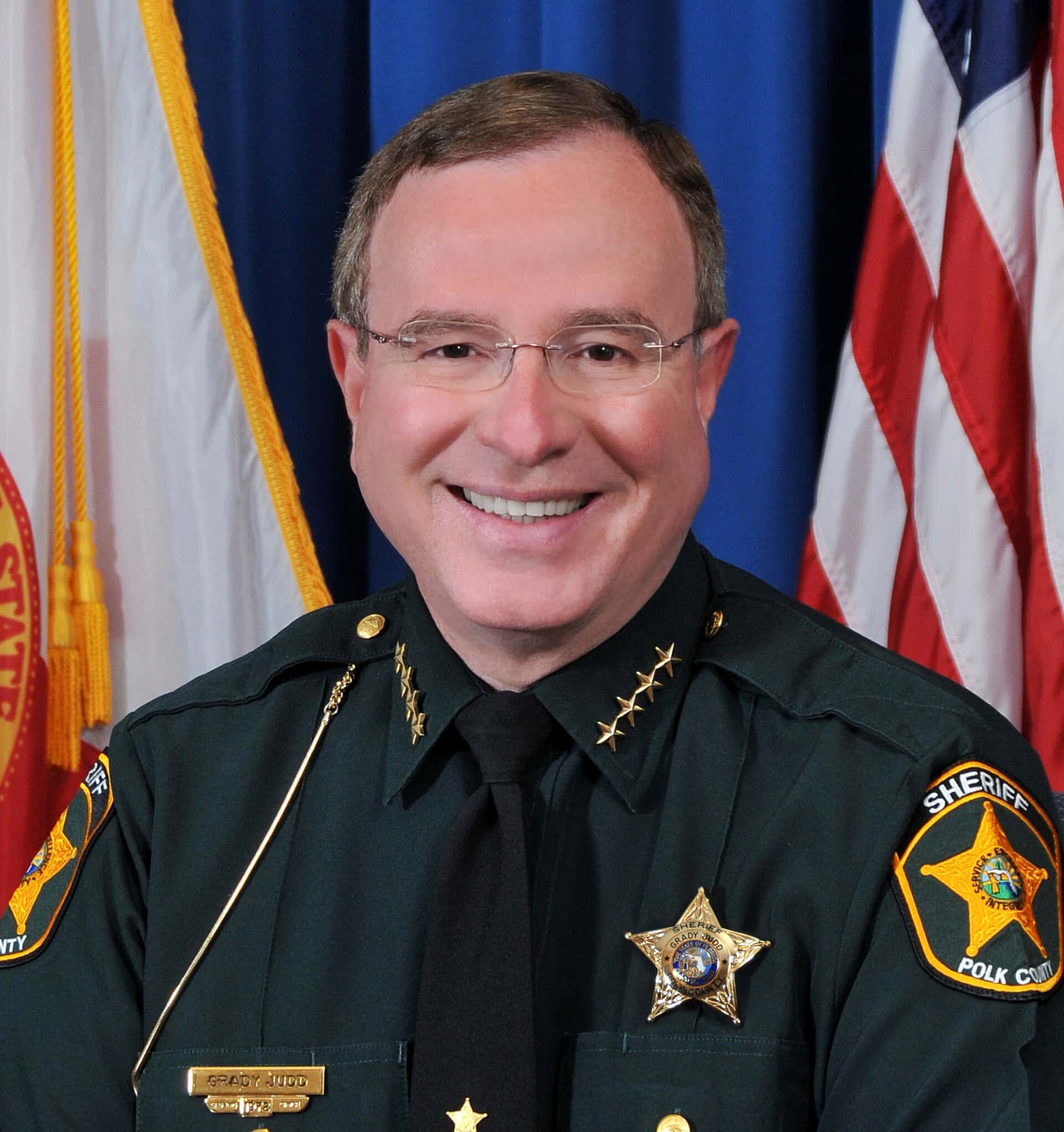
The Polk County Sheriff's Office announced 39 arrests in what Sheriff Grady Judd described as a major drug trafficking investigation, with detectives seizing methamphetamine, fentanyl, cocaine, firearms and cash during the operation.
The investigation, which the agency identified as Operation End of Worlds, was conducted by the sheriff's office High Intensity Drug Trafficking Area task force working with the Auburndale Police Department and the Florida Department of Law Enforcement. Judd announced the results at a news conference on Thursday.
According to the sheriff's office, detectives secured a wiretap and, roughly a month later, began serving search warrants and arresting individuals identified through the investigation. Judd said the operation took down two of what he characterized as the top five drug dealers in Lakeland.
Everyone arrested is charged rather than convicted, and each defendant is presumed innocent unless and until the state proves its case in court.
How the investigation worked
Wiretap authorization is among the more demanding investigative tools available to law enforcement, and its use signals a case built over an extended period rather than assembled from individual incidents.
Obtaining a wiretap requires a court order supported by an application demonstrating probable cause and establishing that other investigative techniques have been tried and failed, are unlikely to succeed or are too dangerous. Judges review those applications, and the resulting orders are time limited and require periodic reporting to the court.
Once authorized, intercepted communications typically identify the structure of a distribution network, including suppliers, distributors and the logistics of how narcotics move. That structural information is what allows an agency to conduct arrests across a network simultaneously rather than one at a time.
The sequence the sheriff's office described, a wiretap followed roughly a month later by search warrants and arrests, is the standard pattern. Investigators gather intercepted evidence, corroborate it through surveillance and controlled purchases, then execute warrants across multiple locations on a coordinated schedule.
The multi-agency structure
The High Intensity Drug Trafficking Area program is a federally funded framework that supports coordination among federal, state and local agencies in regions designated as significant drug trafficking areas. Central Florida carries that designation.
The practical value of the structure is jurisdictional. Drug distribution networks do not respect municipal or county lines, and an agency confined to its own boundaries loses the ability to follow a network where it goes. Task force arrangements allow officers from multiple agencies to work a single case.
The Florida Department of Law Enforcement provides statewide investigative capacity and forensic laboratory services that local agencies rely on, and its involvement in a case of this scale typically includes both investigative support and laboratory analysis of seized substances.
Auburndale Police Department's participation reflects the geography of the case, with activity extending into that city in eastern Polk County.
Fentanyl and the Florida context
The presence of fentanyl among the seized substances places this case in the center of the most significant drug enforcement and public health problem Florida faces.
Fentanyl is a synthetic opioid substantially more potent than heroin by weight, which changes the economics of trafficking and the risk to users. Quantities small enough to be difficult to detect can supply large numbers of doses, and the margin between a dose and a fatal dose is narrow.
The public health consequence has been severe. Florida recorded thousands of opioid related deaths annually through the peak of the crisis, with fentanyl and fentanyl analogs accounting for the large majority. Overdose deaths in Florida and nationally have declined from their peak in recent reporting, though they remain far above historical levels.
Florida has responded with enhanced criminal penalties for fentanyl trafficking, expanded availability of the overdose reversal medication naloxone, and public awareness efforts. Law enforcement agencies have made fentanyl distribution a stated enforcement priority.
What the charges are likely to involve
Florida drug trafficking statutes are structured around quantity thresholds, with mandatory minimum sentences attaching when the weight of a controlled substance exceeds specified amounts. Those thresholds vary by substance and are considerably lower for fentanyl than for other drugs, reflecting its potency.
Individuals arrested in a case of this kind typically face charges that vary substantially by their role. A person identified as a supplier faces different exposure than someone charged with possession or with a lower level distribution offense.
Firearms recovered during an investigation frequently generate additional charges, including possession of a firearm by a convicted felon and enhancements that apply when a weapon is possessed in connection with a drug offense.
Federal prosecution is a possibility in cases with the characteristics described here, and the division of cases between state and federal court in multi agency investigations is decided by prosecutors based on factors including the scope of the conduct and the available sentencing exposure.
The enforcement debate
Large scale drug enforcement operations generate a recurring policy discussion about what they accomplish, and it is worth presenting fairly.
Supporters argue that removing established distribution networks disrupts supply, that targeting higher level distributors is more effective than arresting users, and that the firearms and cash seized in such operations represent capacity for violence and further trafficking that is genuinely removed.
Critics note that drug markets have historically demonstrated resilience, with new distributors filling the space created by arrests, and argue that enforcement resources produce better outcomes when paired with treatment access and harm reduction measures.
The research literature generally supports elements of both positions. Enforcement against organized distribution has measurable short term effects on local markets, while long term reductions in overdose mortality correlate more strongly with treatment availability and naloxone distribution.
Polk County's sheriff has been among the more publicly visible law enforcement officials in Florida and has consistently advocated aggressive enforcement, a position that has substantial support among county residents.
Polk County context
Polk County occupies the interior between Tampa and Orlando, with Lakeland and Winter Haven as its largest cities and a population that has grown rapidly as development has pushed inland from both metropolitan areas.
Its position along Interstate 4 and the rail and highway corridors connecting the coasts has long made it relevant to drug distribution, since narcotics moving between Florida's metropolitan markets pass through it.
The county's growth has brought suburban development into areas that were agricultural a generation ago, and the sheriff's office has expanded correspondingly. It is among the larger sheriff's offices in the state.
What it means for residents
For residents of Lakeland, Auburndale and surrounding communities, an operation of this scale typically produces a short term reduction in visible street level activity in the areas affected.
The public health dimension is the more durable concern. Fentanyl contamination of the illicit drug supply means that any substance purchased outside a pharmacy carries overdose risk, including pills that appear to be legitimate prescription medication.
Naloxone is available in Florida without a prescription at pharmacies and through community distribution programs, and public health agencies encourage households where anyone may be at risk to keep it available. It reverses opioid overdose and carries no potential for misuse.
Treatment resources are accessible through the state's behavioral health system and through the federal treatment locator, and Florida operates a statewide helpline for substance use and mental health referrals.
How fentanyl reaches Florida communities
The supply chain that ends in a Polk County arrest generally begins overseas, with precursor chemicals manufactured abroad, synthesized into fentanyl and moved into the United States primarily through established smuggling routes.
Once inside the country, distribution operates through networks that are typically less hierarchical than the organizations that dominated earlier drug markets. Synthetic opioids do not require agricultural production, which lowers the barrier to entry and produces a more fragmented distribution landscape.
Pressing fentanyl into counterfeit pills marked to resemble prescription medication has been one of the more dangerous developments. Buyers who believe they are purchasing a pharmaceutical product receive an unregulated product of unknown potency, and dosing within a single batch can vary substantially.
That variability is why public health agencies emphasize that no illicit substance can be assumed safe, including substances users do not associate with opioids. Contamination of stimulant supplies with fentanyl has been documented repeatedly.
What seizures do and do not tell us
Seizure quantities announced at press conferences are among the most frequently misread figures in crime reporting, and some context helps.
A seizure represents what was recovered, not what a network moved. Investigators generally believe the recovered quantity is a fraction of total distribution, though the multiple is not knowable with precision.
Purity varies enormously, which means weight alone says little about potency or dose count. Laboratory analysis establishing purity typically comes well after the initial announcement, and the dose estimates sometimes cited at press conferences are calculated using assumptions that can vary.
None of that diminishes what an operation accomplished. It is a caution against treating any single number as a precise measure of a drug market's size.
Treatment access in Central Florida
Enforcement operations and treatment capacity are related in ways that county officials across Florida have increasingly acknowledged, since individuals arrested on possession related charges frequently have underlying substance use disorders that incarceration alone does not address.
Florida counties operate drug courts and diversion programs that route eligible defendants toward supervised treatment rather than conviction and incarceration. Eligibility is generally limited by charge severity and criminal history, which excludes trafficking level offenses.
Medication assisted treatment, which uses approved medications alongside counseling to treat opioid use disorder, has the strongest evidence base of available interventions. Access has expanded in Florida but remains uneven, particularly in rural counties and for people without insurance.
The state operates a helpline connecting residents to substance use and mental health services, and the federal treatment locator provides searchable listings of licensed providers by location and payment type.
What's next
The 39 individuals arrested will proceed through the criminal court process, beginning with first appearance and continuing through formal charging decisions by prosecutors, arraignment and the pretrial phase.
Cases arising from a single investigation frequently resolve at different rates and in different ways, with some defendants cooperating, some pleading and some proceeding to trial. Sentencing exposure varies widely based on charges, quantities and criminal history.
The sheriff's office indicated the investigation produced arrests across a network, and investigations of this kind sometimes generate additional charges as analysis of seized evidence and intercepted communications continues.
Spotted an issue with this article?
Have something to say about this story?
Write a letter to the editor