Proposed FEMA Cost Shift Would Land Hard on Florida Counties
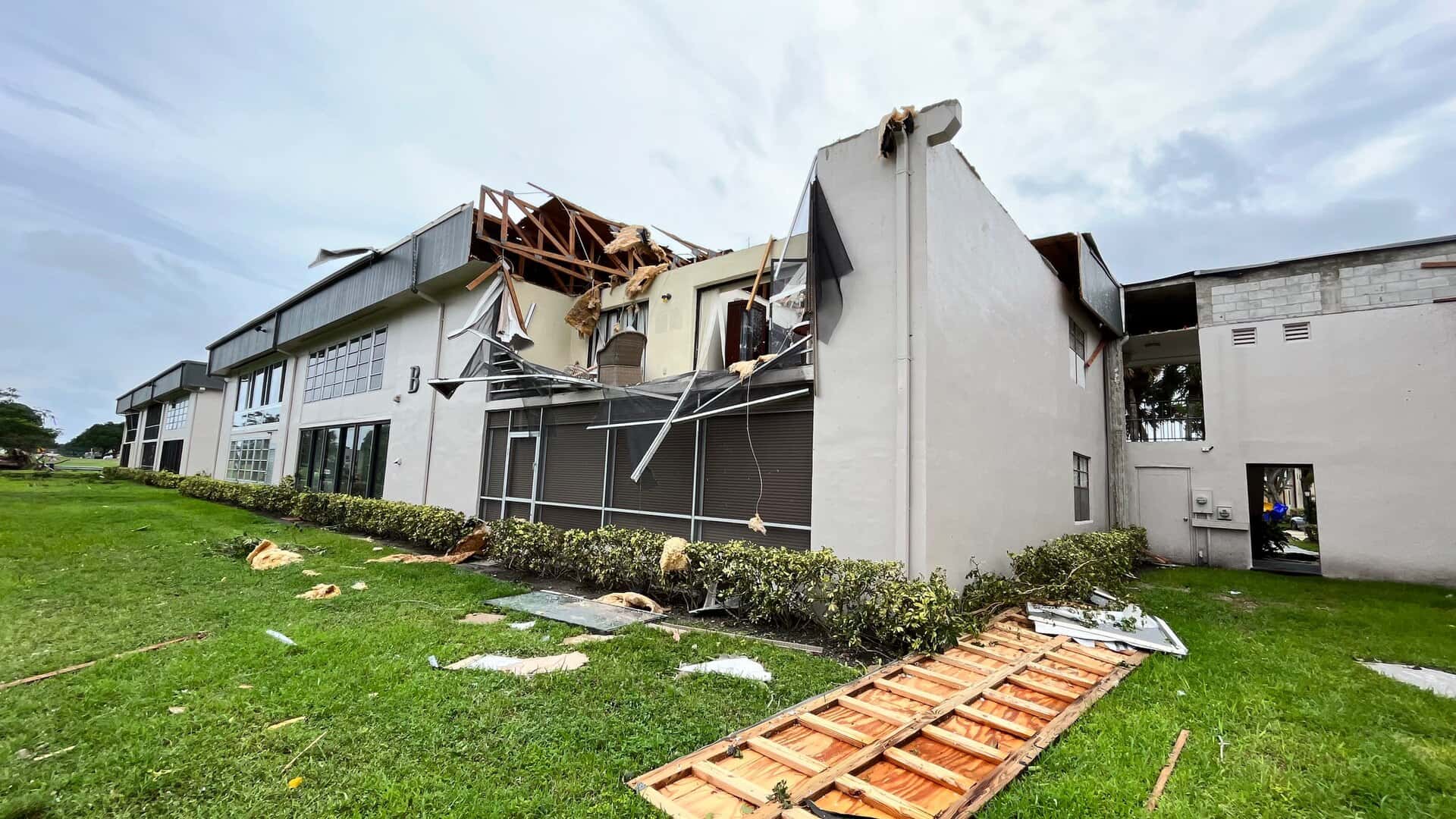
Recommendations from the FEMA Review Council released in May 2026 call for shifting a substantially larger share of disaster recovery costs onto states, local governments and households. For Florida, which has received among the highest federal reimbursement rates in the country for recent hurricanes, the change would represent one of the largest fiscal shifts the state has faced in decades.
The stakes are compounded by timing. In November, Floridians vote on Amendment 3, a property tax measure that would reduce the revenue counties, cities and special districts collect. Property taxes fund the local half of disaster response: debris removal crews, emergency hotlines, shelter operations, and the reserves that front costs while jurisdictions wait months or years for federal reimbursement.
The combination has drawn attention from county budget officers across the state, who face the prospect of higher local disaster obligations and lower local revenue arriving in the same period.
What Florida receives now
FEMA reimbursed Florida at 100% of eligible costs for Hurricanes Michael, Ian, Helene and Milton, and at 90% for Hurricane Irma. Those are unusually favorable ratios, granted through presidential disaster declarations that adjusted the standard cost-share formula.
The default federal share under the Stafford Act is 75%, with the remaining 25% split between state and local governments. Enhanced ratios up to 100% are available for catastrophic events and are granted at presidential discretion.
Florida's recent history of receiving enhanced reimbursement reflects both the severity of the storms and the state's political position. It is not a guaranteed entitlement, and it is precisely the kind of discretionary generosity the review council recommendations would constrain.
The difference between 100% and 75% reimbursement on a multi-billion dollar recovery is measured in hundreds of millions of dollars, borne by state and local governments.
Other federal program changes already in effect
The cost-share question is not the only change. Hazard Mitigation Grant Program funding for new disasters was effectively frozen beginning in March 2025, removing a stream that historically funded projects to reduce damage from future storms.
In April 2025, FEMA canceled the Building Resilient Infrastructure and Communities program, rescinding nearly $300 million in planned mitigation projects across Florida. A federal court later ruled that termination unlawful and FEMA reinstated the program, but the disruption to project timelines was real.
Mitigation funding has a documented return. Studies of hazard mitigation investment have consistently found that each dollar spent on mitigation reduces future disaster losses by several dollars. Cutting mitigation to reduce near-term federal spending increases long-term federal spending.
FEMA has also continued to approve individual recovery obligations in Florida, including a nearly $97 million approval announced in April to support ongoing recovery in the state.
What it means for county budgets
Florida county governments carry the operational burden of disaster response. Sheriff's offices, emergency management agencies, public works departments and utilities are county functions, and they are what actually deploys before and after a storm.
Counties front the cost. Debris removal contractors are paid on a schedule that does not wait for federal reimbursement, and reimbursement often arrives years later after documentation review and appeals. Counties need reserves large enough to carry that gap.
Property tax is the primary revenue source funding those reserves. Amendment 3 would reduce that base, and the reduction would fall unevenly, affecting jurisdictions differently depending on their mix of homesteaded and non-homesteaded property.
Rural counties are the most exposed. A Panhandle county with a small tax base and significant hurricane risk has neither the reserves to front costs nor the borrowing capacity to substitute for them.
What it means for households
The recommendations reportedly contemplate shifting costs to households as well as governments, which in practice means tightening eligibility for individual assistance programs.
FEMA individual assistance covers temporary housing, home repair, and other needs for households affected by declared disasters. It is not insurance and does not make households whole, but for uninsured and underinsured Floridians it is the primary federal support after a storm.
Florida's insurance market makes this consequential. Homeowners insurance in Florida is among the most expensive in the country, deductibles for hurricane damage are typically percentage-based rather than flat, and flood damage requires separate coverage that many households do not carry.
A household with a 5% hurricane deductible on a $400,000 home faces $20,000 out of pocket before insurance pays anything. Federal individual assistance has historically helped bridge part of that gap for lower-income households.
The state's position
Florida has built substantial emergency management capacity, and the Division of Emergency Management is generally regarded as among the more capable state agencies of its kind. The state has also maintained reserves that give it more flexibility than most states.
State officials have expressed measured optimism about federal funding continuity while also preparing for changes. The state's fiscal position is stronger than most, but state reserves are not sized to replace federal disaster funding at scale.
Florida's congressional delegation, the third largest in the country, has historically worked across party lines on disaster funding. That delegation is the mechanism through which the state's interests would be represented in any statutory change to the cost-share formula.
Whether the recommendations become policy through administrative action or require legislation is a significant question. Administrative changes to discretionary cost-share decisions are easier to implement than statutory changes to the Stafford Act formula.
How disaster reimbursement actually works
Public assistance reimbursement is slower and more administratively demanding than most residents realize, and understanding the mechanics explains why counties need substantial reserves regardless of the eventual federal share.
After a declared disaster, local governments document eligible costs: debris removal, emergency protective measures, and repair or replacement of damaged public infrastructure. Those costs must be documented to federal standards, reviewed, and obligated before any money moves.
The review process routinely takes years for large projects, and FEMA can and does deobligate previously approved funding on audit, requiring jurisdictions to return money they have already spent. That risk is a permanent feature of the program.
The practical effect is that a county recovering from a major hurricane operates for an extended period having spent money it has not been reimbursed for, on the expectation that it eventually will be. Reducing the federal share would extend and deepen that exposure.
The state's insurance backstop
Florida maintains the Florida Hurricane Catastrophe Fund, a state-run reinsurance mechanism that provides coverage to private insurers writing residential property policies in the state.
The fund reduces what insurers pay for private reinsurance, which in turn moderates what homeowners pay in premiums. It is funded through premiums paid by participating insurers and, if losses exceed its capacity, through assessments on most Florida insurance policyholders.
That assessment mechanism is the part homeowners often do not know about. A catastrophic season that exhausts the fund produces assessments on nearly every insurance policy in the state, including auto policies, for years afterward.
The fund is a state resource, and it addresses insured losses rather than public infrastructure. It does not substitute for federal public assistance, and a reduction in federal reimbursement would not be offset by it.
What smaller counties face
Florida's fiscal capacity varies enormously by county. Miami-Dade, Broward, Hillsborough, Orange and Palm Beach counties have large tax bases, professional finance staff and access to credit markets on favorable terms.
Counties like Liberty, Calhoun, Glades and Hamilton have populations under 20,000, small tax bases, and limited administrative capacity. They face the same federal documentation requirements as the largest counties and have far fewer resources to meet them.
Hurricane Michael demonstrated the consequence. Inland Panhandle counties with minimal tax bases sustained catastrophic damage in 2018, and recovery in several of them remains incomplete eight years later even with reimbursement at 100%.
A reduction to 75% federal share would place costs on those jurisdictions that they have no realistic mechanism to pay, which is the specific fiscal problem the recommendations create for Florida.
What Floridians can do to prepare financially
Policy uncertainty at the federal level translates into a straightforward implication for households: individual preparation carries more weight when the federal backstop is less certain.
Insurance review is the first step. Homeowners should know their hurricane deductible in dollars rather than as a percentage, confirm whether they carry flood coverage, and understand what their policy excludes.
Documentation is the second. Photographs or video of a home's interior and contents, stored where they survive the loss of the house, substantially speed claim settlement. Policy numbers, deeds and identification should be stored digitally or in a waterproof container.
An emergency fund sized to cover a hurricane deductible plus immediate evacuation costs is the third. Evacuation itself is expensive: fuel, lodging for several days and meals add up quickly, and those costs arrive before any insurance or assistance does.
What's next
Watch whether FEMA acts on the review council recommendations before the end of hurricane season. Changes announced during an active season would apply to storms that have not yet formed.
Watch the Amendment 3 campaign. County associations and local government groups have raised the disaster funding implications, and how prominently that argument features will shape the debate.
Watch county budget adoption. Florida counties adopt budgets in September, and the reserve levels they set this year reflect their assessment of the risk that federal reimbursement will be smaller and slower.
For households, the practical response is insurance review. A shift in federal policy toward less individual assistance raises the value of adequate private coverage, including flood coverage, which most Florida homeowners policies exclude.
Residents can follow their own county's budget hearings, which are held publicly each September and are where reserve levels and millage rates are set. Those hearings are the point at which the abstract question of federal disaster policy becomes a concrete local decision about how much a county holds back against the next storm, and public comment is accepted at them.
Spotted an issue with this article?
Have something to say about this story?
Write us a letterComments
No comments yet. Be the first to weigh in.
Related Coverage

Every Florida Child Now Has a Trump Account, but Parents Must Claim It to Unlock the $1,000
2h ago
Businessman Samir Handal Pleads Not Guilty in Miami as Federal Case Over Haitian President's Assassination Expands
3h ago

Panhandle Roads and Bridges Reopen After Isaias, but Pensacola and Okaloosa Airports Stay Closed
1d ago

Ex-CIA official pleads guilty in $194 million fraud, will forfeit $102 million in Palm Beach and Hobe Sound real estate
1d ago