Rays Hit 78-53 and Turn a Road Trip Into a Playoff Statement

The Tampa Bay Rays arrived in Detroit this week at 78 games over .500 territory that few outside the organization projected in March, carrying a 78-53 record and one of the best road stretches in baseball. Tampa Bay had won 11 of its last 13 games away from home entering Tuesday's game at Comerica Park, a run that has separated the Rays from the pack in a crowded American League playoff picture.
Monday's series opener went to Tampa Bay 4-1 against a Detroit club that entered the series at 61-70 and riding a six game losing streak. Casey Legumina drew the Tuesday start for the Rays against Detroit's Jackson Jobe.
With roughly five weeks left in the regular season, the Rays are in the position that has defined the franchise's identity for two decades: a small payroll club outperforming its resources and forcing the rest of the league to take it seriously in September.
How the Rays got here
A 78-53 record through late August projects out to something in the mid 90s in wins over a full season, a total that has historically been enough to secure a postseason berth in the American League and to compete for a division title.
The road performance is the number that stands out. Winning 11 of 13 away from home is difficult for any team, and it addresses what has been a recurring vulnerability for clubs that build around a distinctive home environment. Road success travels; home field advantages do not.
Tampa Bay's model has been consistent across regimes: identify undervalued players, develop pitching depth, deploy platoons aggressively, and treat roster construction as a continuous process rather than an offseason event. That approach has produced sustained competitiveness on payrolls that consistently rank near the bottom of Major League Baseball.
The organization's pitching development pipeline has been the durable competitive advantage. The Rays have repeatedly converted acquired arms into productive major league contributors, and have shown a willingness to trade pitchers at peak value and replace them from within.
The American League picture
The American League playoff structure sends six teams to the postseason: three division winners and three wild cards. The top two division winners receive byes through the wild card round, which is a substantial advantage in a short series format.
At 78-53, the Rays are positioned to compete for a division title rather than settle for a wild card, though the specific standing depends on how the American League East shakes out over the final weeks. The division has historically been among baseball's toughest, with multiple high payroll clubs competing for the same spots.
The difference between a division title and a wild card berth is significant in the current format. Wild card teams play a best of three series on the road, which puts a season's work at the mercy of a three game sample. Division winners with byes advance directly to the division series with rest.
Detroit, at 61-70 and losing, represents the kind of series a contender must take advantage of. Playoff races are frequently decided by how teams perform against clubs already out of contention, and September schedules that include weaker opponents can be worth several games in the standings.
The stadium question
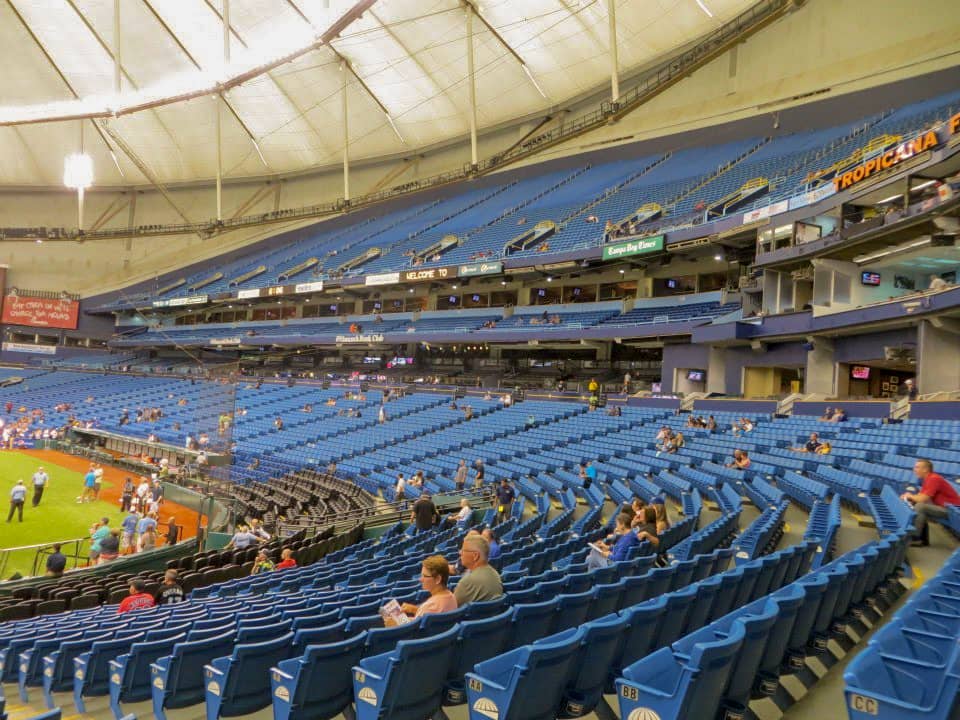
The Rays' on field success continues to run alongside an unresolved question about where the franchise plays long term. Tropicana Field in St. Petersburg has been the club's home since its inception, and the ballpark's future has been the subject of extended negotiation involving the team, the city of St. Petersburg and Pinellas County.
The stadium situation has been a persistent backdrop to Rays seasons for more than a decade, complicating attendance narratives, revenue projections and the franchise's ability to make long term commitments. Tampa Bay consistently ranks near the bottom of Major League Baseball in attendance despite consistent on field competitiveness.
That disconnect between performance and attendance has been analyzed extensively. Contributing factors commonly cited include the ballpark's location relative to the population center of the Tampa Bay region, the drive across the bay from Hillsborough County, and the region's demographic mix.
None of it changes what happens between the lines. A team playing at a 95 win pace in late August is a serious postseason threat regardless of where it plays or how many people watch in person.
What Rays fans should watch
The rotation's health through September is the variable that most determines postseason outcomes. Playoff baseball compresses to three or four starters, and a club that arrives in October with its best arms healthy and rested has a meaningfully better chance than one patching together starts.
Bullpen usage becomes critical in this stretch. Contending teams face a tension between winning games now and preserving high leverage relievers for October, and the Rays have historically been aggressive about managing workloads with an eye toward the postseason.
The final September schedule matters. Games against division rivals carry double weight, both adding to Tampa Bay's win column and subtracting from a competitor's, and the sequence of those matchups can determine whether a lead is comfortable or precarious in the last week.
Watch also for how the roster is configured for October. Postseason rosters differ from regular season rosters, with fewer starters and more relievers and bench specialists, and the decisions made in September about who gets playing time often signal who the club plans to carry.
Florida's baseball picture
Florida has two Major League clubs, and both are in the playoff conversation as August ends, which has not been a common occurrence. The Miami Marlins entered this week roughly two games back in the National League wild card race, competing with Pittsburgh and Washington for the final spots.
That gives the state something it rarely has: meaningful September baseball on both coasts. A Rays postseason run and a Marlins wild card push would put Florida baseball in a national spotlight it has not occupied simultaneously in years.
The state's baseball infrastructure runs deeper than the two major league clubs. Florida hosts half of Major League Baseball's spring training in the Grapefruit League, has a substantial minor league footprint including the Jacksonville Jumbo Shrimp, Pensacola Blue Wahoos and Clearwater Threshers, and produces a large volume of professional talent through its high school and college programs.
For Tampa Bay specifically, a deep October run would arrive at a moment when the region's sports calendar is crowded, with the Buccaneers opening the NFL season and the Lightning preparing for hockey. Competing for attention is a good problem for a franchise that has often struggled to command it.
How the Rays build a contender on a small budget
Tampa Bay's payroll typically ranks near the bottom of Major League Baseball, and the organization's methods for competing anyway have been studied and copied across the sport.
The foundation is player acquisition at the margins. The Rays have consistently identified players other organizations undervalued, including pitchers with promising underlying metrics but poor surface results, position players with defensive value not captured in traditional statistics, and prospects available in trades for established players approaching free agency.
Roster flexibility is the second element. Tampa Bay uses more platoons than most clubs, moves players between positions more freely, and carries rosters built for matchup optimization rather than for fixed lineups. That approach extracts more value from players who would be limited in a conventional deployment.
Pitcher usage has been the most visible innovation. The Rays popularized the opener, in which a reliever starts a game to face the opposing lineup's best hitters before a traditional starter enters, and have generally led the sport in willingness to prioritize outcomes over convention.
Player development supports all of it. The organization's minor league system has produced a steady supply of major league contributors, particularly pitchers, which allows the club to trade from surplus rather than pay market prices in free agency.
The tradeoff is that beloved players leave. Tampa Bay routinely trades productive players a year or two before free agency, converting them into younger, cheaper talent. That churn is what makes the model sustainable and what makes it frustrating for a fan base that never gets to keep a favorite for a full career.
What October looks like from here
A team at 78-53 in late August faces a specific set of strategic questions that a team fighting for its life does not.
Rest becomes a genuine consideration. Clubs comfortably positioned in the standings often reduce playing time for regulars carrying minor injuries, on the theory that a healthy roster in October is worth more than an extra regular season win in September.
Rotation alignment matters too. Managers work backward from the projected postseason schedule to determine which starters would be available for which games, and that can mean adjusting the late September rotation to set up the postseason order.
Bullpen roles get sorted in this window. Postseason bullpens run shorter and lean harder on trusted arms, and the September usage pattern usually reveals which relievers a manager intends to use in high leverage October situations.
Roster evaluation continues alongside. Even a contending club uses the final weeks to assess players who might factor into the postseason roster or the following season, and the balance between winning now and gathering information is a recurring managerial tension.
For a franchise that has reached the postseason repeatedly over the past decade without converting a run into a championship, the organizational focus is on arriving in October with the roster positioned to win a short series. Everything in September serves that.
What's next
The Rays finish the Detroit series and continue a schedule that will determine their playoff positioning. Roughly 30 games remain, and at 78-53 the club controls its own outcome rather than needing help.
Roster expansion arrives in September, when active rosters increase, giving managers additional bullpen and bench options. How the Rays use that flexibility, whether to rest regulars, evaluate young players or maximize matchup leverage, will reflect how secure they feel in the standings.
The postseason begins in early October. If Tampa Bay holds its current pace, the club will be playing meaningful baseball into that month, and the question shifts from whether they qualify to what seed they carry into the bracket.
For a franchise that operates at the bottom of the payroll table and near the bottom of the attendance table, arriving at the end of August with the best record in its division is the organization's model working exactly as designed.
Spotted an issue with this article?
Have something to say about this story?
Write us a letterComments
No comments yet. Be the first to weigh in.
Related Coverage

Panthers open home schedule against Wild without Barkov and Marchand
30m ago
Rays await Guardians or White Sox in ALCS after sweeping Yankees; Game 1 Monday at Tropicana Field
1d ago
John Carlson scores twice, Dennis Hildeby makes 34 saves as Lightning hold off Wild 3-2
1d ago
Winless Dolphins host Bengals at Hard Rock Stadium seeking first win under Jeff Hafley
1d ago