SpaceX Hits 100 Falcon 9 Flights of 2026 With a Record 37th Booster Reuse
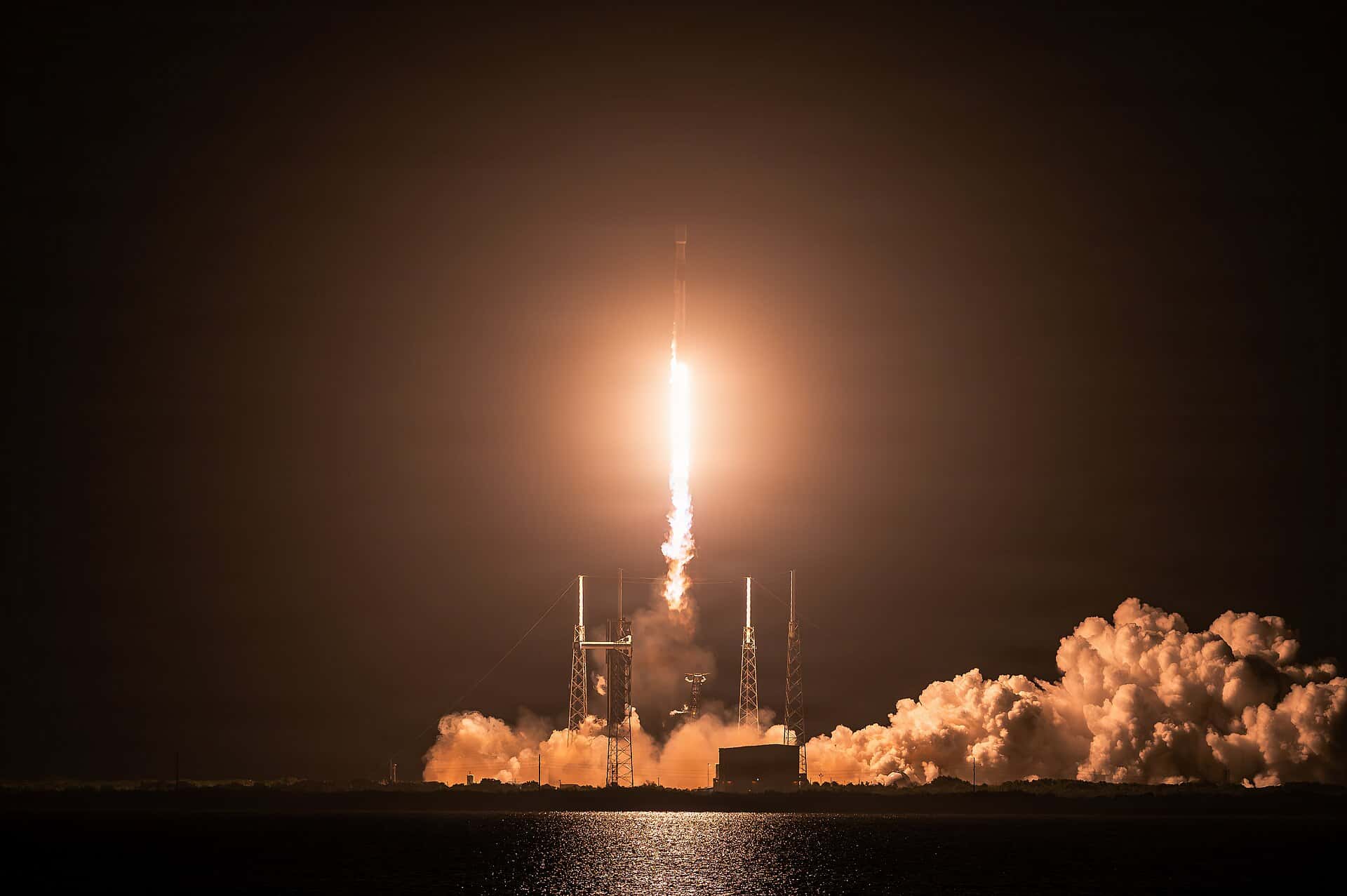
A Falcon 9 rocket lifted off from Cape Canaveral Space Force Station at 5:33 a.m. Eastern on August 25, carrying 29 Starlink satellites to low Earth orbit and marking two milestones at once: the 100th Falcon 9 flight of 2026 and a record 37th mission for the first stage booster designated B1067.
About eight and a half minutes after liftoff, the booster landed on the drone ship A Shortfall of Gravitas, stationed in the Atlantic Ocean off the Florida coast. The recovery cleared the way for a 38th flight, extending a reuse record that would have been considered implausible a decade ago.
The cadence behind those numbers is what makes Florida's Space Coast function as it does now. SpaceX reached 100 orbital launches for 2026 on August 22 across all its vehicles and launch sites, a pace roughly two months ahead of where the company stood at the same point in 2024, with analysts projecting the company could approach 155 total launches by year's end.
What the milestone represents
Reusability was the founding premise of SpaceX's approach to launch economics, and the argument was always that the manufacturing cost of a first stage could be amortized across many flights if the stage could be recovered and refurbished cheaply enough.
Booster B1067's 37 flights are the strongest available evidence for that thesis. Each additional flight from a single stage lowers the effective per launch cost of the hardware, and the refurbishment turnaround between flights has compressed substantially as the company has accumulated operational data on what actually wears out.
Landing on a drone ship in the Atlantic is the more demanding recovery mode compared with returning to a landing zone on shore. Downrange ocean recovery is required for missions where the booster lacks the fuel margin to fly back, which includes most Starlink deployments given the mass they carry.
The 100th Falcon 9 flight of a calendar year is itself remarkable in the context of launch industry history. For most of the space age, a national program flying 20 orbital missions in a year was operating at high tempo. A single commercial vehicle reaching triple digits changes what launch capacity means.
What it means for the Space Coast
Brevard County has been transformed by the launch cadence. Cape Canaveral Space Force Station and NASA's Kennedy Space Center together host launch complexes operated by SpaceX, United Launch Alliance, Blue Origin and others, and the volume of activity has driven employment, construction and tourism in the surrounding communities.
Titusville, Cocoa Beach, Merritt Island and Melbourne have absorbed population growth tied to aerospace employment. The county's housing market, school enrollment and infrastructure planning all now account for an industry operating at a scale that did not exist during the shuttle era's later years.
Launch viewing has become a durable tourism product. Kennedy Space Center Visitor Complex draws visitors year round, and launches themselves bring people to Brevard County beaches and causeways. A predawn launch draws a smaller crowd than an evening one, but the cumulative volume across a hundred plus launches per year is substantial.
The Space Coast's economy has also diversified beyond launch operations into manufacturing, satellite integration and supporting services. Companies have located facilities in Brevard and surrounding counties specifically to be near the launch infrastructure, which produces a supply chain effect the region did not have in earlier decades.
The operational tempo question
Sustaining this pace requires range capacity, and the Eastern Range managed by Space Force at Cape Canaveral has had to modernize its scheduling, tracking and safety systems to support launches occurring days and sometimes hours apart.
SpaceX demonstrated the compressed timeline in mid August, launching back to back Falcon 9 missions for Globalstar and the United States Space Force with a gap of 38.5 minutes between liftoffs, a record for the company. That kind of turnaround depends on parallel pad operations and on range systems capable of resetting almost immediately.
Weather and technical scrubs remain the primary constraints. A Starlink mission launched August 21 after a last minute scrub the previous day, a routine occurrence at this tempo. High cadence operations mean scrubs cost less, because the next attempt is typically available within a day.
The tempo also raises questions the region is beginning to address around airspace and maritime traffic. Each launch requires closing airspace and ocean areas, and at 150 launches per year the cumulative disruption to commercial aviation routes over Florida and the Atlantic becomes a planning matter rather than an occasional inconvenience.
Starlink and the payload picture
The majority of Falcon 9 flights carry Starlink satellites, SpaceX's own broadband constellation. That vertical integration is central to the economics: the company is its own largest customer, which provides a baseline of demand that supports the launch infrastructure regardless of the external commercial market.
Starlink service has practical relevance in Florida. Rural counties in the Panhandle, North Florida and the interior agricultural regions have historically had limited broadband options, and satellite internet has become a functional alternative in areas where fiber deployment is not economical.
The service also has emergency management applications. After hurricanes, terrestrial communications infrastructure can be damaged for extended periods, and satellite connectivity has been deployed in Florida disaster response to restore communications for emergency operations and affected residents.
Non Starlink payloads include commercial communications satellites, national security missions for the Space Force and the National Reconnaissance Office, NASA science and cargo missions, and rideshare payloads for smaller operators. That mix means the Cape's activity supports customers far beyond any single company.
Florida's aerospace position
Florida's advantage in launch is geographic and durable. The Cape's latitude provides an energy benefit for equatorial orbits, and the Atlantic Ocean to the east provides a downrange corridor over water rather than population, which is the basic safety requirement for a launch site.
Competition exists. Vandenberg Space Force Base in California serves polar orbit missions, and new sites have developed in Texas, Virginia and elsewhere. But the combination of infrastructure, workforce and range services at the Cape has kept Florida as the dominant United States launch location.
State policy has supported the industry through Space Florida, the state's aerospace economic development agency, which finances infrastructure and works to attract aerospace operations to the state. That has been a bipartisan priority across administrations.
NASA's Kennedy Space Center remains a major presence alongside the commercial operations. The Artemis program's crewed lunar missions launch from Kennedy, including Artemis II, which launched in April 2026 carrying four astronauts on a lunar flyby.
Who else launches from Florida
SpaceX dominates the launch count, but the Space Coast supports a broader set of operators, and their activity shapes the region's aerospace economy as well.
United Launch Alliance, the joint venture between Boeing and Lockheed Martin, operates from Cape Canaveral Space Force Station and has flown national security, NASA and commercial missions from Florida for years. Its Vulcan Centaur vehicle succeeded the long serving Atlas V and Delta IV rockets.
Blue Origin has developed launch infrastructure at Cape Canaveral for its New Glenn vehicle and operates a large manufacturing facility in Brevard County that employs a substantial local workforce. The company's Florida presence represents one of the largest single aerospace employment investments in the region in decades.
NASA's Kennedy Space Center operates Launch Complex 39, from which the Apollo and Space Shuttle programs flew and from which the Artemis program's Space Launch System now launches. Artemis II carried four astronauts on a lunar flyby after launching from Kennedy in April 2026, the first crewed mission beyond low Earth orbit since 1972.
The Space Force's Space Launch Delta 45 manages the Eastern Range, providing tracking, safety and scheduling services to all operators. Range modernization has been essential to supporting the current launch tempo, since the systems designed for a dozen launches per year could not handle a hundred.
Space Florida, the state's aerospace finance and development authority, has financed infrastructure at the Cape and works to attract aerospace manufacturing and operations to Florida. Its involvement is part of why the state has retained its launch dominance as competing sites have developed elsewhere.
What launch means for Florida's economy
The aerospace sector's contribution to Florida is now measured in tens of thousands of jobs and billions in annual output, concentrated on the Space Coast but extending across the state.
Brevard County carries the largest share, with employment spanning launch operations, manufacturing, engineering, range support and the supply chain that serves all of it. The county's unemployment rate and wage levels have both benefited from the sector's growth.
Central Florida's broader corridor, including Orlando, has developed adjacent capacity in simulation, modeling and training, sectors with roots in the region's defense and theme park engineering base. Those skill sets overlap with aerospace requirements in ways that have supported cross sector hiring.
Educational institutions have built around it. Embry Riddle Aeronautical University in Daytona Beach, the Florida Institute of Technology in Melbourne, and the University of Central Florida all supply engineering graduates into the regional aerospace workforce, and state college programs train technicians.
Tourism captures a further slice. Launch viewing, the Kennedy Space Center Visitor Complex and the general association between Florida and spaceflight all contribute to visitor spending in a region that would otherwise compete purely on beaches.
The sector's growth has also created pressures. Housing costs in Brevard County have risen with the employment base, and infrastructure including roads and schools has had to expand to serve a population growing faster than the county planned for a decade ago.
What's next
SpaceX's launch schedule shows continued high frequency operations from both Florida and Vandenberg through the remainder of the year. Reaching approximately 155 launches would represent another substantial year over year increase.
Booster B1067's next flight will extend the reuse record further. SpaceX has not publicly stated a design limit for Falcon 9 first stages, and the company has repeatedly raised its own certification ceiling as accumulated flight data supported it.
Watch for continued range infrastructure investment at the Cape. Supporting the projected cadence requires ongoing modernization, and both Space Force and commercial operators have programs underway.
For Brevard County residents, the practical reality is a launch every few days, visible from beaches, causeways and backyards across Central Florida and audible across a wide area. What was once an event has become a rhythm.
Spotted an issue with this article?
Have something to say about this story?
Write us a letterComments
No comments yet. Be the first to weigh in.
Related Coverage

Every Florida Child Now Has a Trump Account, but Parents Must Claim It to Unlock the $1,000
4h ago
Businessman Samir Handal Pleads Not Guilty in Miami as Federal Case Over Haitian President's Assassination Expands
4h ago

Panhandle Roads and Bridges Reopen After Isaias, but Pensacola and Okaloosa Airports Stay Closed
1d ago

Ex-CIA official pleads guilty in $194 million fraud, will forfeit $102 million in Palm Beach and Hobe Sound real estate
1d ago