The Rays Bought at the Deadline and Kept Their Prospects. Now Comes the Hard Part.
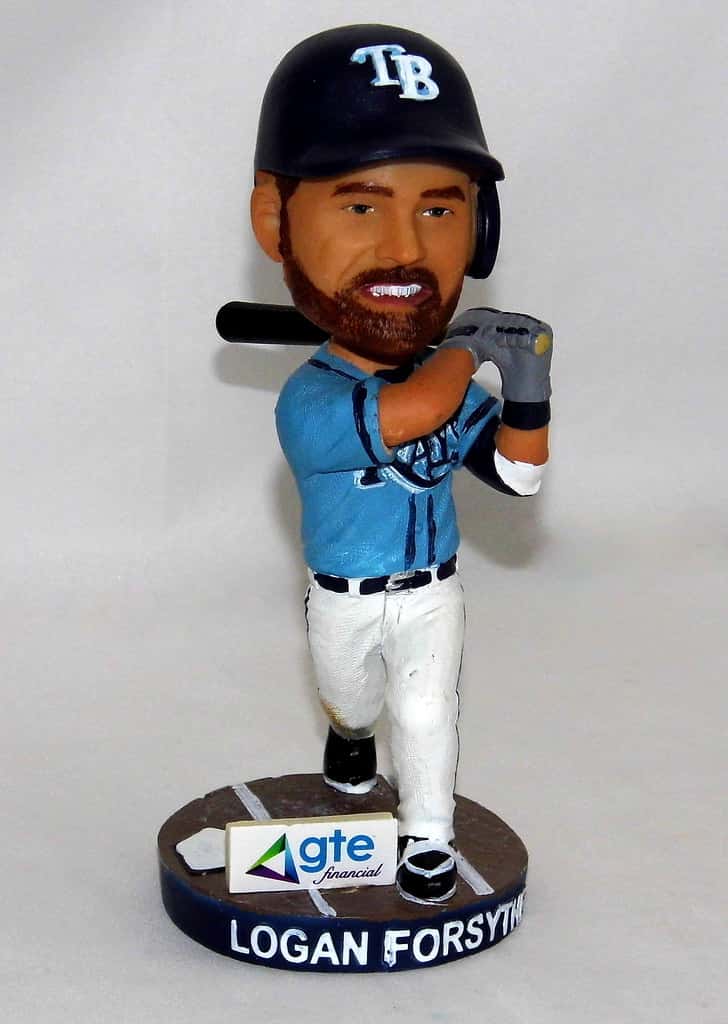
The Tampa Bay Rays did something at the 2026 trade deadline that the organization has rarely done: they bought, and they bought aggressively. Across a busy deadline day, Tampa Bay added starting pitching, catching depth, bullpen help, and an outfield bat without surrendering any of the prospects at the top of its system, a combination that reflects both the club's competitive position and the depth of talent it has accumulated.
What the Rays added
The headline acquisition was right-hander Freddy Peralta, obtained from the New York Mets in exchange for outfielder Aidan Smith, infielder Emilien Pitre, and right-hander Gary Gill Hill. Peralta brings frontline starting pitching to a rotation that has been the organization's traditional strength and its recurring vulnerability in the same breath.
Tampa Bay also acquired catcher and first baseman Liam Hicks from the Miami Marlins for infielder Brayden Taylor, shortstop Adrian Santana, and right-hander Jacob Kisting. Hicks adds a bat and positional flexibility to a roster that values players who can move around the diamond.
Two additional moves rounded out the day. Right-hander Tyler Wells came from the Baltimore Orioles for right-hander Michael Forret, and outfielder Jack Suwinski arrived from the Los Angeles Dodgers along with international bonus pool money in exchange for catcher Hunter Feduccia and right-hander Jacob Kmatz.
Why keeping the top prospects matters
The Rays operate under payroll constraints that are structural rather than cyclical, and their competitive model depends on a continuous pipeline of cost-controlled talent reaching the major leagues. A deadline that costs the organization its best prospects mortgages exactly the asset the model requires.
What Tampa Bay executed instead was a set of deals paid for out of organizational depth. The players moved were legitimate prospects, but they came from the layer beneath the system's top tier, which is precisely where a well-stocked farm system creates trade currency without weakening its own future.
Doing that requires having accumulated enough quality that a team can subtract eight prospects across four deals and still project a strong system. That accumulation is the product of years of drafting, international signing, and prior trades, and it is what allowed the front office to be aggressive without being reckless.
The competitive position
Tampa Bay entered the deadline in a strong spot in the American League standings, which is what justified buying. Junior Caminero and Jonathan Aranda have driven the offense, with Caminero producing multi-homer games and Aranda delivering the kind of on-base production that lengthens a lineup.
The American League East has historically been the most difficult division in baseball to navigate, with multiple large-market clubs willing to spend at levels Tampa Bay cannot approach. Competing in that environment requires roster efficiency at nearly every position, and it leaves little margin when injuries hit.
The deadline additions address the specific vulnerabilities that show up in a long season. Rotation depth erodes as innings accumulate. Bullpens wear down. Catching is physically punishing and injuries there are common. Tampa Bay bought insurance at each of those points.
What Peralta changes
Acquiring an established starting pitcher is the move with the largest potential impact on a postseason series. Playoff baseball compresses rotations, and having a pitcher who can be trusted with a start in an elimination game is a materially different proposition than depth pieces filling innings.
The Rays have built a reputation for pitching development, and their track record of improving pitchers after they arrive is one of the organization's genuine competitive advantages. That reputation is part of why the front office can trade for arms that other clubs have grown ambivalent about.
Rotation stability also relieves the bullpen. Tampa Bay's pitching usage patterns have often relied on high-leverage relief innings, and a starter who reliably works deep into games preserves those arms for October, when their effectiveness matters most.
The stadium question that never leaves
Any discussion of the Rays eventually reaches the venue. Tropicana Field's condition and the franchise's long-running search for a permanent solution have shadowed the organization for two decades, affecting revenue, attendance, and the club's ability to project stability to free agents.
The connection to on-field decisions is direct. Payroll capacity is a function of revenue, and revenue is constrained by a venue and market situation the front office does not control. The trading strategy the organization uses is in significant part a response to those constraints rather than a pure philosophical preference.
A deep postseason run generates revenue and civic momentum in a way nothing else does. The stakes of this particular stretch run extend past the standings for a franchise whose long-term Tampa Bay future has repeatedly been in question.
What Florida baseball fans should watch
The Rays and the Marlins are moving in opposite directions this season, and the Hicks trade between them illustrates it precisely. Tampa Bay traded three younger players for a major leaguer who helps now. Miami traded a major leaguer for three younger players who help later.
For fans across Florida, the practical implication is that meaningful late-season baseball in the state this year is happening on the Gulf Coast. September games with playoff positioning at stake are a different experience than September games in an evaluation year.
Spring training returns both clubs to Florida in February, when the Grapefruit League brings 15 major league organizations to the state and generates significant tourism revenue for the communities that host them.
The risk in buying
Deadline acquisitions do not guarantee outcomes. Teams that buy aggressively and miss the postseason absorb both the prospect cost and the disappointment, and the players acquired frequently carry contract situations that limit how long the benefit lasts.
The specific risk for Tampa Bay is that a payroll-constrained club has less capacity to absorb a failed gamble. A large-market team that buys and misses reloads the following winter. A team operating at the bottom of the payroll distribution has fewer mechanisms for doing that.
The counterargument is that competitive windows are rare and should be pushed when they open. A roster with this much cost-controlled talent producing simultaneously does not assemble often, and declining to add to it carries its own cost.
How the Rays keep producing this talent
Tampa Bay's ability to generate major league contributors from a comparatively small budget has been studied across baseball, and the answer is not a single innovation. It is a set of practices applied consistently: aggressive international scouting, willingness to draft on tools over polish, and player development that focuses on specific improvable traits rather than general instruction.
The organization has also been persistently early on tactical shifts. Opener usage, defensive positioning, and roster construction philosophies that Tampa Bay adopted before the league caught up have each provided temporary edges that eroded as competitors copied them.
Junior Caminero and Jonathan Aranda are products of that pipeline, and their emergence is what makes the current window possible. Cost-controlled offensive production is the scarcest resource for a low-payroll club, because pitching can be manufactured through development more reliably than hitting can.
The pipeline's continuity is the reason the front office protects its top prospects at the deadline. Trading the next Caminero for a rental would produce a short-term gain and remove the mechanism the entire organizational model depends on.
What the American League race looks like
The American League field this season includes several clubs operating at payroll levels far above Tampa Bay's, and the wild card structure means the Rays are competing not only within their division but against teams across the league for the same postseason slots.
The expanded playoff format has changed the calculus for teams in Tampa Bay's position. More postseason berths means a strong but not dominant regular season can produce a playoff appearance, which raises the value of marginal deadline additions relative to the pre-expansion structure.
Once in October, the format compresses advantages. A short series is substantially more random than a full season, and a team with strong top-of-rotation pitching can beat a superior opponent over five or seven games at a rate that regular season records would not predict.
That is the underlying logic of the deadline strategy. Acquiring a starter like Peralta is a bet on postseason leverage rather than on regular season win totals, and it only pays if the club gets there.
What a deadline trade actually costs
Evaluating deadline trades requires accounting for something beyond the players exchanged: contract control. A player acquired with multiple years of team control remaining is a fundamentally different asset than a rental who reaches free agency in the offseason, and the prospect cost scales accordingly.
Tampa Bay's front office has historically favored acquisitions with control years remaining, which fits an organization that cannot replace departing talent through free agency. Trading prospects for two months of production is a strategy available to clubs that can re-sign the player afterward.
The prospects moved in these deals carry their own uncertainty. Minor league players fail at high rates even when well regarded, and the expected value of a prospect discounts heavily for the probability that they never become a productive major leaguer.
That asymmetry is what makes deadline trading a market. A contending team values certain present production above uncertain future production, and a rebuilding team makes the opposite calculation. Both can be right given their respective positions.
What's next
The remaining schedule determines whether the deadline is remembered as decisive or as an expensive miss. American League wild card and division positioning will turn on head-to-head results against the teams the Rays are chasing and holding off.
Roster expansion in September adds flexibility, and the Rays have historically used the expanded roster creatively with matchup-based deployment that other organizations have since copied.
If Tampa Bay reaches the postseason, the rotation the front office assembled at the deadline becomes the thing the season is judged on. That is the bet the organization made in late July, and the next two months settle it.
Spotted an issue with this article?
Have something to say about this story?
Write a letter to the editor