AI Data Centers Take a Midterm Beating as Edgewater Votes to Ban Them and Tech Stocks Slide, Sharpening Florida's Fight
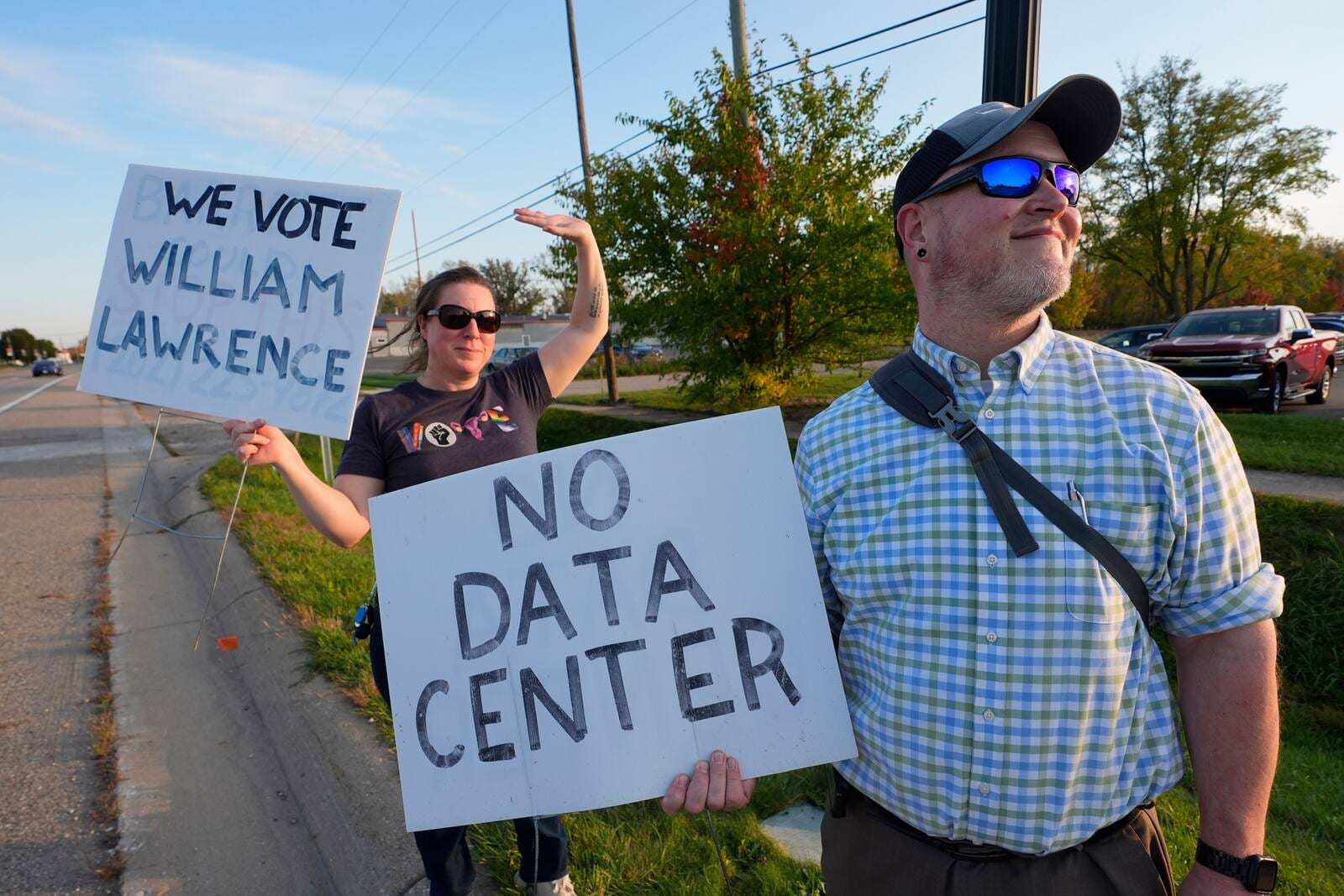
AI data centers took a beating in Tuesday's midterm elections, and Florida voters were part of the backlash. In Volusia County, Edgewater residents wrote a ban on new data centers into their city charter with more than 77 percent of the vote, while across the country voters approved nearly every local measure to restrict the facilities and elected governors who campaigned on reining them in. Wall Street took notice: on Thursday the Nasdaq fell 5.5 percent and chipmakers led a broad selloff, as investors bet that Democratic gains could slow the AI construction boom.
For Florida, where county commissions from DeSoto to Lake to Nassau have spent the fall fighting over hyperscale projects and Florida Power & Light is courting gigawatts of new data center demand, the results sharpen a debate that the governor-elect and the Legislature will inherit in 2027.
A national rebuke at the ballot box
Data centers were not voters' top concern, but many winning candidates took hard-line positions against them, the Associated Press reported. In Texas, Democrat Gina Hinojosa defeated Republican Gov. Greg Abbott after saying she would block a data center permit that was not a good deal for Texans, and Democrat Clayton Tucker became the state's first Democratic agriculture commissioner since 1986 on a pledge to fight data centers over water use. In Ohio, Democrat Amy Acton won the governorship after pledging to block projects that do not meet certain standards, and Wisconsin Gov.-elect David Crowley called for ending the state's sales tax exemption for data center developers.
The AP said Democrats took control of Congress and flipped at least five governorships. According to a tally by Data Center Watch and 10a Labs, 32 of the 34 winning governor candidates in races the AP had called support stronger regulation of or restrictions on data centers, and 12 support bans or moratoriums.
Local referendums were even more lopsided. Ballotpedia counted 41 data center measures on Nov. 3 ballots in 10 states, Florida among them, and voters backed banning or pausing development in 38 of them, with results in the rest still pending, Fast Company reported. A separate count by Redbud Consulting found restrictions passing in 44 of 45 decided contests. In AP VoteCast polling, about three-quarters of voters said they oppose a new data center in their own community, with majorities opposed in both red and blue states, and about one in four called the issue crucial to their congressional vote. AdImpact found more than $380 million spent on TV ads mentioning data centers, with Democrats outspending Republicans on the topic by more than 3 to 1.
Wall Street reacts
Markets absorbed the results on Thursday. The Dow Jones Industrial Average fell 1,833 points, or 3.4 percent, the S&P 500 dropped 4.4 percent to 7,354, and the Nasdaq Composite lost 5.5 percent to 24,315, putting it in a correction more than 10 percent below its October record, CBS MoneyWatch reported.
The selloff hit the AI supply chain hardest:
| Stock | Thursday move |
|---|---|
| Advanced Micro Devices | Down 17.3% |
| CoreWeave | Down 9.8% |
| Nvidia | Down 9.2% |
| Trump Media & Technology Group | Down 10.5% |
Joe Maher, a markets economist at Capital Economics, told CBS MoneyWatch that "the immediate risk is that restrictions on data center construction slow the pace of the AI infrastructure buildout." Chris Larkin of E*Trade from Morgan Stanley said there had been "visible cracks in the AI ecosystem, and they widened on Thursday." Morgan Stanley analysts wrote that the results bring "greater expectations for data center restrictions," according to the AP. Stock futures were mixed early Friday.
Edgewater's ban and Florida's local fights
Florida's lone data center measure on the ballot was in Edgewater, a Volusia County city just south of New Smyrna Beach. The charter amendment, which the City Council placed on the ballot this summer after passing an ordinance as a stopgap, prohibits "the approval, construction, expansion, or operation of new data centers" in the city. It passed with more than 77 percent. Council members had argued a charter provision would be harder for a future council to undo than an ordinance.
Edgewater joins a growing list of Florida communities pushing back, many of them covered by The Florida Press this fall:
- DeSoto County: Commissioners blocked two rezonings near Arcadia sought by DCIP Group on back-to-back nights, Oct. 27 and 28: a roughly 238-acre site and the 554-acre 3F Ranch property, where nine facilities would total 2.1 million square feet. The company said the campus would run on natural gas rather than the local grid. The county had already adopted a one-year moratorium on new data center applications in July.
- Lake County: Commissioners extended their moratorium by six months, through June 2027, carrying it past the next legislative session in Tallahassee.
- Nassau County: Officials unveiled draft data center rules as residents pressed for tougher limits and some called for an outright ban.
The Florida Phoenix, citing FloridaDataCenters.org, reported in September that 19 Florida local governments had paused or banned data centers.
Data centers in the governor's race
The issue also surfaced at the top of Florida's ballot. Democrat David Jolly proposed a one-year moratorium on new data centers while state officials studied their effects on electricity, water, neighborhoods and the environment. Republican Byron Donalds said siting decisions belong to local governments, not the governor, and pointed to the law Gov. Ron DeSantis signed this year. The Florida chapter of the Sierra Club, which endorsed Jolly, said data centers had become a deciding issue for many voters; its director, Susannah Randolph, told WUSF, "People do not want hyperscale data centers in this state."
Donalds won, 50.1 percent to 48.7 percent in election-night returns, so Florida will keep the framework DeSantis signed rather than a statewide pause. That law, SB 484, signed May 7 in Lakeland, bars utilities from shifting data center infrastructure and power costs onto homes and small businesses, requires large users to pay their full cost of service, preserves local governments' power to set tougher standards or reject projects, creates a dedicated water-permitting process favoring reclaimed water, and bars utilities from serving facilities controlled by foreign countries of concern. DeSantis called the measures "much-needed protections for taxpayers and our natural resources."
What it means for FPL
The state's largest utility is betting heavily on the demand that voters elsewhere just pushed back on. FPL parent NextEra Energy raised its forecast for data center and other large-load demand on FPL's system to 8 gigawatts by 2032, up from 6 gigawatts, and told investors this summer that its large-load pipeline totaled about 21 gigawatts, with roughly 12 gigawatts in advanced discussions. Chief Executive John Ketchum said the company expected to be able to announce a large-load deal in Florida by the end of the year.
FPL's large-load rate schedules, approved in its rate settlement and in effect since Jan. 1, apply to new customers of 50 megawatts or more and include minimum terms, take-or-pay requirements, exit fees and collateral. On Oct. 1, FPL asked the Public Service Commission to find those tariffs comply with SB 484, saying they require data center customers to fund new generation and interconnection costs. Duke Energy Florida told regulators it has no committed large-load data center customers, and Tampa Electric filed its own large-load tariff proposal on Sept. 30.
What's next
The industry is warning of costs. Dan Diorio of the Data Center Coalition told the AP there would be "real world consequences" if moratorium promises are kept, including lost tax revenue for host communities, and OpenAI has asked policymakers for "clear rules for how the industry builds." President Trump, perhaps the industry's biggest champion, could stall any federal crackdown, the AP noted. In Florida, the next tests come at the PSC, which must rule on the utilities' large-load tariffs; in county commission chambers still weighing moratoriums; and in the 2027 legislative session. Donalds has said he will release a state-commissioned data center study when it is complete, with results expected next year.
Spotted an issue with this article?
Have something to say about this story?
Write us a letterComments
No comments yet. Be the first to weigh in.
Related Coverage
Trump Weighs Replacing Hegseth, and a CBS Source Says DeSantis Is Under Consideration for the Pentagon as He Calls the Midterms a 'Meteor Strike'
18h ago

One Dead, Two Hurt as Robinson R44 Helicopter on a Photography Flight Crashes Into Biscayne Bay Off Key Biscayne; NTSB Investigating
19h ago

Democrats Vow to Rein In ICE After Winning Congress, but in Florida, the 287(g) Capital, Their Power Is Mostly Oversight
23h ago

Democrats' Midterm Sweep Puts ACA Subsidies Back in Play as Florida, the Nation's Largest Marketplace, Opens 2027 Enrollment
23h ago