NASA Joins Artemis III Orion Modules at Kennedy Space Center
NASA has connected the two major components of the Orion spacecraft that will carry astronauts on Artemis III, joining the crew and service modules on July 30 inside the Neil Armstrong Operations and Checkout Building at Kennedy Space Center. The agency described the milestone in an update published in early August, part of a steady sequence of assembly progress on Florida's Space Coast.
The joined spacecraft is intended to fly NASA astronauts Randy Bresnik, Andre Douglas, and Frank Rubio along with European Space Agency astronaut Luca Parmitano. NASA has characterized progress across the Artemis III elements as outpacing the equivalent stage of Artemis II integration, with the mission planned to launch next year.
For Brevard County and the broader Space Coast, these milestones are the visible output of a workforce that has grown substantially over the past decade as both NASA programs and commercial launch operations expanded at Kennedy Space Center and neighboring Cape Canaveral Space Force Station.
What was completed
Joining the crew and service modules is a significant integration step. The crew module is the pressurized compartment that houses the astronauts and returns to Earth. The service module, provided by the European Space Agency, supplies propulsion, power, thermal control, and consumables including water and breathable air during the mission, and is jettisoned before reentry.
Connecting them mechanically and electrically is a precision operation performed inside the Operations and Checkout Building, the same facility where Apollo spacecraft were processed. Once joined, the integrated spacecraft moves through a testing campaign covering electrical continuity, propulsion system checks, and environmental testing before it is fueled and mated to the launch vehicle.
Rocket hardware has been progressing in parallel. All four RS-25 engines for the Artemis III Space Launch System core stage, built by L3Harris Technologies, were delivered to the Vehicle Assembly Building at Kennedy Space Center on July 21. Additional flight hardware has been arriving and stacking at Kennedy through the spring and summer.
What Artemis III is meant to do
Artemis III is the mission NASA has designated for a crewed lunar demonstration, following Artemis II, which carried a crew around the Moon without landing. The mission architecture involves Orion launching on the Space Launch System from Kennedy Space Center, with a separate human landing system meeting the crew in lunar orbit.
NASA's recent update described the current Artemis III work as preparation for a crewed demonstration mission in low Earth orbit, reflecting how mission planning has evolved as the agency has worked through the readiness of the landing system and other elements. Program milestones and mission definitions have been adjusted multiple times as hardware development has proceeded.
The agency has also been working with Northrop Grumman on repurposing Gateway elements for Moon Base demonstration missions, part of a broader restructuring of how the lunar architecture fits together beyond the initial landing.
Why this happens in Florida
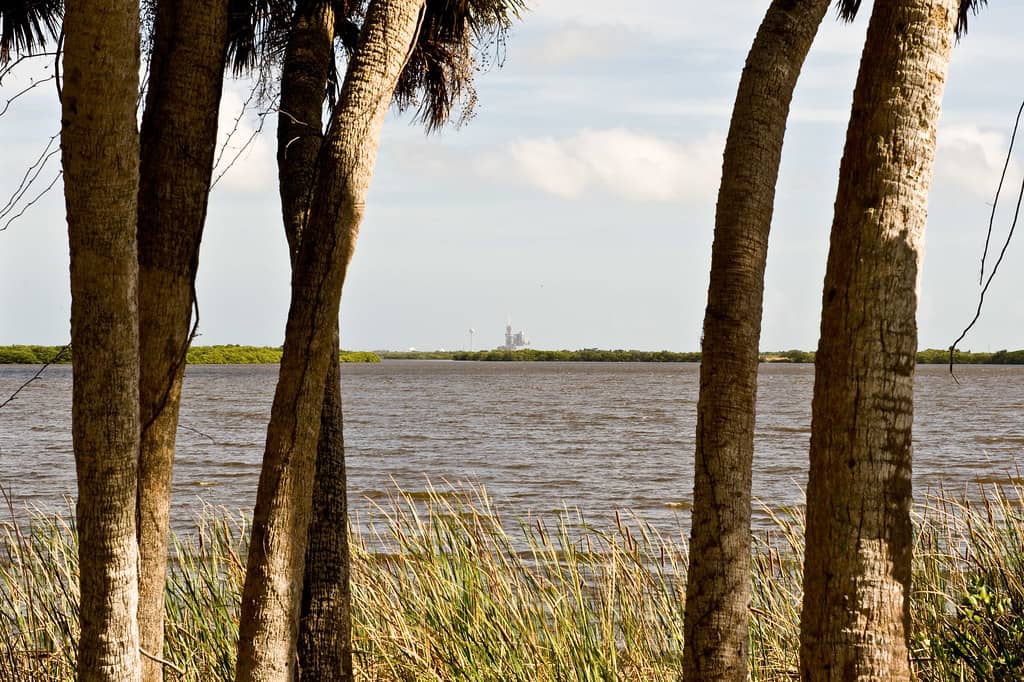
Kennedy Space Center exists on Merritt Island because of geography. Launching eastward over the Atlantic means expended stages and any failure debris fall over open water rather than populated land, and the site's latitude provides a modest velocity assist from Earth's rotation for missions to low-inclination orbits.
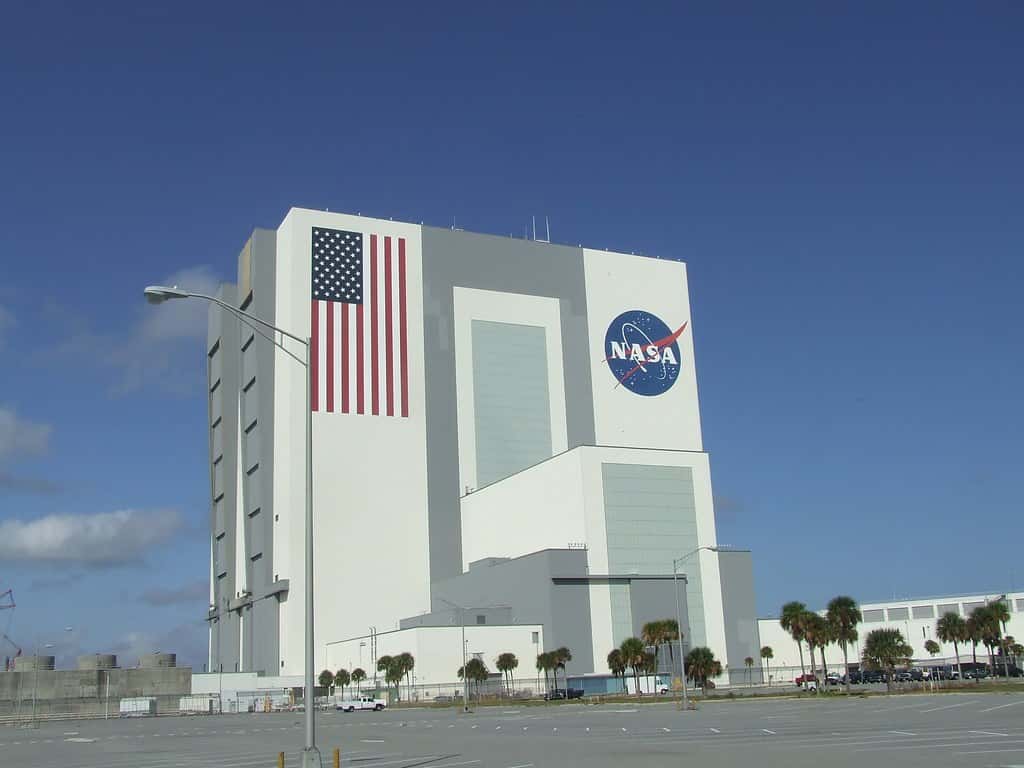
That geography made Florida the center of American human spaceflight for six decades, and the infrastructure built around it, from the Vehicle Assembly Building to the crawlerways to the launch complexes, is not readily replicated. Programs that could technically launch elsewhere generally do not, because the processing facilities and the trained workforce are here.
The economic footprint extends well beyond NASA's direct employment. Contractors, suppliers, and the businesses serving them constitute a substantial share of the Brevard County economy, and the Palm Bay-Melbourne-Titusville metropolitan area has consistently ranked among the country's stronger performers on economic growth indices in recent years.
The commercial launch context
Artemis assembly is proceeding alongside a launch cadence at Cape Canaveral that has no historical precedent. SpaceX has conducted Falcon 9 missions at a rate that has made launches from the Space Coast routine rather than exceptional, including a Falcon 9 flight carrying AST SpaceMobile BlueBird satellites from Cape Canaveral on August 5. A Falcon Heavy launch is scheduled from Kennedy Space Center on August 30.
That volume has changed daily life in Brevard County. Sonic booms from returning boosters are a regular occurrence, road closures for launch operations are routine, and launch viewing has become a substantial tourism draw for the region alongside the Kennedy Space Center Visitor Complex.
It has also created scheduling complexity. Range operations at Cape Canaveral Space Force Station must accommodate NASA missions, national security launches, and a heavy commercial manifest, and the Eastern Range has invested in automation to increase throughput. Artemis operations require exclusive use of substantial infrastructure during their launch campaigns.
What it means for Floridians
The most direct effect is employment. Space Coast aerospace jobs span engineering, technical trades, logistics, and support services, and they pay well above the regional median. The stability of that employment depends on program continuity, which is determined by federal appropriations and by the commercial market rather than by anything decided in Florida.
Education and workforce pipelines have responded. Florida Institute of Technology, Embry-Riddle Aeronautical University, University of Central Florida, and Eastern Florida State College all feed the sector, and Space Florida has worked to attract aerospace manufacturing and operations to the state beyond launch activity itself.
For residents statewide, launches remain a shared civic event. Night launches from Cape Canaveral are visible across much of the peninsula under clear conditions, and major crewed missions draw substantial crowds to Brevard County beaches and causeways.
What Orion has to survive
Orion's design requirements are driven by a single number: the speed at which it returns from the Moon. A spacecraft returning from lunar distance enters the atmosphere at roughly 25,000 miles per hour, substantially faster than a return from low Earth orbit, and the heat shield must handle temperatures near 5,000 degrees Fahrenheit.
The Artemis I uncrewed flight test produced heat shield char loss that differed from predictions, and NASA conducted an extended investigation into the phenomenon before proceeding. That kind of finding is exactly what uncrewed test flights exist to surface, and resolving it consumed a significant portion of the program schedule between missions.
Life support is the other system that distinguishes a crewed lunar spacecraft. Orion must sustain a crew for a mission measured in weeks, managing atmosphere, temperature, water, and waste without resupply, and must do so with the redundancy required when the crew is days from Earth rather than hours.
The workforce behind the milestones
Kennedy Space Center employs thousands of civil servants and contractors, and the Artemis program's assembly work draws on trades and specialties that exist in very few places. Technicians qualified to work on flight hardware require extensive training and certification, and that qualified workforce is among the program's genuine constraints.
Prime contractors distribute work across the country. Lockheed Martin builds Orion's crew module, the European Space Agency and Airbus supply the service module, Boeing builds the SLS core stage, and L3Harris builds the RS-25 engines. Florida is where those elements converge for integration, which is why assembly milestones happen here regardless of where components are manufactured.
Brevard County's economy has grown alongside that activity. The Palm Bay, Melbourne, and Titusville metropolitan area has appeared among the stronger performers on national economic growth indices, and the region's housing and commercial development has tracked aerospace employment closely enough that launch cadence and program funding are treated as local economic indicators.
How Artemis compares to Apollo
The comparison is unavoidable and frequently misleading. Apollo launched from the same complex using facilities that Artemis has inherited and modified, including the Vehicle Assembly Building, the crawler transporters, and Launch Complex 39. The physical continuity is genuine.
The programs differ substantially in objective. Apollo was structured around demonstrating capability within a defined political timeframe, and the program ended when that objective was met. Artemis is structured around establishing sustained lunar presence, which requires infrastructure, reusability, and international and commercial partnership that Apollo did not attempt.
That difference shows in the architecture. Artemis depends on a human landing system developed commercially rather than by the agency, on international contributions including the European-built service module, and on lunar infrastructure intended to support repeated missions. Each dependency adds capability and also adds a point where schedule can slip.
Cost structure differs as well. Apollo consumed a substantially larger share of federal spending at its peak than Artemis does, which constrains how quickly the current program can move but also makes it less vulnerable to the kind of abrupt cancellation that ended Apollo with hardware already built.
What's next
The joined Orion spacecraft enters an extended test and checkout campaign at Kennedy Space Center. Space Launch System stacking operations continue in the Vehicle Assembly Building, and the sequence of integration milestones will continue to be published through NASA's mission blogs.
NASA has said Artemis III hardware progress is running ahead of the equivalent phase for Artemis II, though schedule performance on a program of this complexity has historically been difficult to project far in advance. The agency updates its target timelines as integration and testing proceed.
The Florida Press will continue covering Kennedy Space Center and Cape Canaveral operations, including Artemis milestones and the commercial launch manifest from the Space Coast.
NASA publishes program updates through its mission blogs, which document integration milestones as they are completed. Those posts are the primary source for Artemis progress and generally appear within days of the work they describe.
The Kennedy Space Center Visitor Complex offers public access to portions of the space center, including views of the Vehicle Assembly Building and the launch complexes, and remains among Brevard County's largest tourism draws.
Schedule projections for programs of this complexity have historically been difficult to hold, and NASA updates its target timelines as testing proceeds. The agency has said Artemis III hardware work is running ahead of the equivalent phase for Artemis II.
Spotted an issue with this article?
Have something to say about this story?
Write a letter to the editor