U.S. Economy Grows at 3.4% Pace in Third Quarter as Inflation Heats Up, Sharpening Florida's Cost-of-Living Debate Before Election Day

The U.S. economy grew at a 3.4% annual pace from July through September, beating forecasts on the strength of consumer spending and heavy investment in artificial intelligence, the Commerce Department reported Thursday, Oct. 29. A separate report released the same morning showed inflation speeding up in September, a mixed message for Florida households five days before an election in which the cost of living is a central issue.
Third-quarter growth was faster than the 2.2% pace from April through June and topped the 3% that economists surveyed by data firm FactSet had expected. Thursday's figure is the first of three government estimates for the quarter.
What drove the growth
Consumer spending, the largest part of the economy, rose at a 3.8% annual rate in the quarter, according to the Associated Press. Business investment outside housing jumped 12.7%, fueled by the AI boom. Investment in information processing equipment surged 37.4%, software investment rose 9.6% and research and development rose 7.5%.
Housing was the weak spot. Residential investment fell 3.3%, hurt by high mortgage rates, and has declined in six of the last seven quarters. That pattern is visible in Florida, where Florida Realtors reported single-family closed sales fell 3.5% in September from a year earlier, to 20,537, and new pending sales dropped 7.6%. The statewide median price edged up 1.2% to $415,000.
The AP noted that the economy has stayed resilient despite higher energy prices caused by the fighting with Iran.
Inflation picks up again
The personal consumption expenditures price index, the inflation gauge the Federal Reserve follows most closely, rose 3.6% in September from a year earlier, up from 3.4% in August, the Commerce Department said. On a monthly basis, prices climbed 0.5%, up from 0.3% in August and the biggest monthly increase since May.
Core prices, which exclude volatile food and energy, rose 3.1% from a year earlier, up from 3% in August. They increased 0.3% from August to September, the same as the month before.
Annual inflation has worsened since the Iran war sent oil and gasoline prices higher. U.S. oil still tops $100 a barrel, compared with less than $70 before the war, according to the AP. Polls show rising prices have soured most voters on the economy and on President Donald Trump's handling of costs. Trump campaigned in 2024 on lowering prices.
Layoffs stay low
The job market remains steady on the layoff side. Initial claims for state unemployment benefits fell by 1,000 to a seasonally adjusted 194,000 in the week ended Oct. 24, according to Labor Department figures reported by Reuters. Economists had expected 199,000. Claims have stayed mostly below 200,000 since mid-September and are close to the 189,000 recorded in mid-July, which was the lowest level since 1969.
The Fed's dilemma
The reports landed a day after the Federal Reserve held its key rate at a range of 3.75% to 4%, following a quarter-point increase in September. With inflation well above the Fed's 2% target and the economy growing quickly, the central bank will remain under pressure to raise rates again at its December meeting, the AP reported. Two Fed officials voted Wednesday for an immediate quarter-point increase. At his news conference, Fed Chair Kevin Warsh said third-quarter growth was likely running above 3%, led by consumer spending and business investment, a forecast Thursday's report confirmed.
For Florida borrowers, that matters most in housing. Freddie Mac's survey put the average 30-year fixed mortgage at 7.32% for the week of Oct. 22, compared with 6.19% a year earlier.
How Florida's economy compares
Florida's job market has been improving, but more slowly than the national picture. The state's unemployment rate fell to 4.4% in September, its fourth straight monthly decline since peaking at 4.8% in May, according to FloridaCommerce figures reported by WUSF. That still sits above the national rate of 4.2%. About 489,000 Floridians were unemployed out of a labor force of 11.1 million, up 28,000 from a year earlier.
Job gains over the past year were concentrated in a few sectors, while finance and government shrank. The year-over-year changes in Florida payrolls, according to the state report:
| Sector | Change over the year |
|---|---|
| Education and health services | +40,300 |
| Leisure and hospitality | +16,800 |
| Transportation and utilities | +8,300 |
| Construction | +3,300 |
| Manufacturing | +2,100 |
| Information | -3,600 |
| Government | -8,900 |
| Financial activities | -15,800 |
Regional gaps are wide. The Miami-Fort Lauderdale-West Palm Beach area had the lowest unemployment rate at 3.2% in September, while the Wildwood region that includes The Villages was at 7.6%. In the Panhandle, the Fort Walton Beach-Destin area was at 4.1% and the Pensacola region at 4.6%, figures that predate Hurricane Isaias' Oct. 9 landfall.
Small businesses are cautious. National Federation of Independent Business Florida executive director Bill Herrle said in a statement that “growing economic uncertainty is making it more difficult to plan for the future,” citing labor shortages and rising fuel costs.
Gas is the price Floridians feel first
Nothing illustrates the inflation numbers more directly than the pump. AAA put Florida's average price for regular gasoline at $4.09 a gallon on Monday, Oct. 26, nearly $1.20 more than a year earlier, NBC 6 South Florida reported. The state average has moved between $4.02 and $4.22 since the end of September. Florida diesel, which affects the cost of trucking goods, averaged $6.14, up $2.59 from a year ago.
Nationally, the AP said gas averages about $4.25 a gallon. AAA expects some relief as stations switch to cheaper winter-blend gasoline.
What it means at the ballot box
Floridians vote Tuesday, Nov. 3, with early voting already underway. Affordability has been a dominant theme in the state's races, and Thursday's numbers cut both ways: an economy growing faster than expected, alongside inflation that is moving further from the Fed's target. In Florida, the debate also runs through Amendment 3, the property tax measure on the ballot.
What's next
The Commerce Department will revise its third-quarter growth estimate twice more in the coming months. The October jobs report and October consumer price data will follow, and both will shape the Fed's decision at its Dec. 8 and 9 meeting. FloridaCommerce will release October state employment figures in November, giving the first look at how Hurricane Isaias affected jobs in the Panhandle.
Spotted an issue with this article?
Have something to say about this story?
Write us a letterComments
No comments yet. Be the first to weigh in.
Related Coverage

Gainesville Medical Equipment Company Owner Convicted in $8.6 Million Medicare Brace Fraud Scheme
4h ago
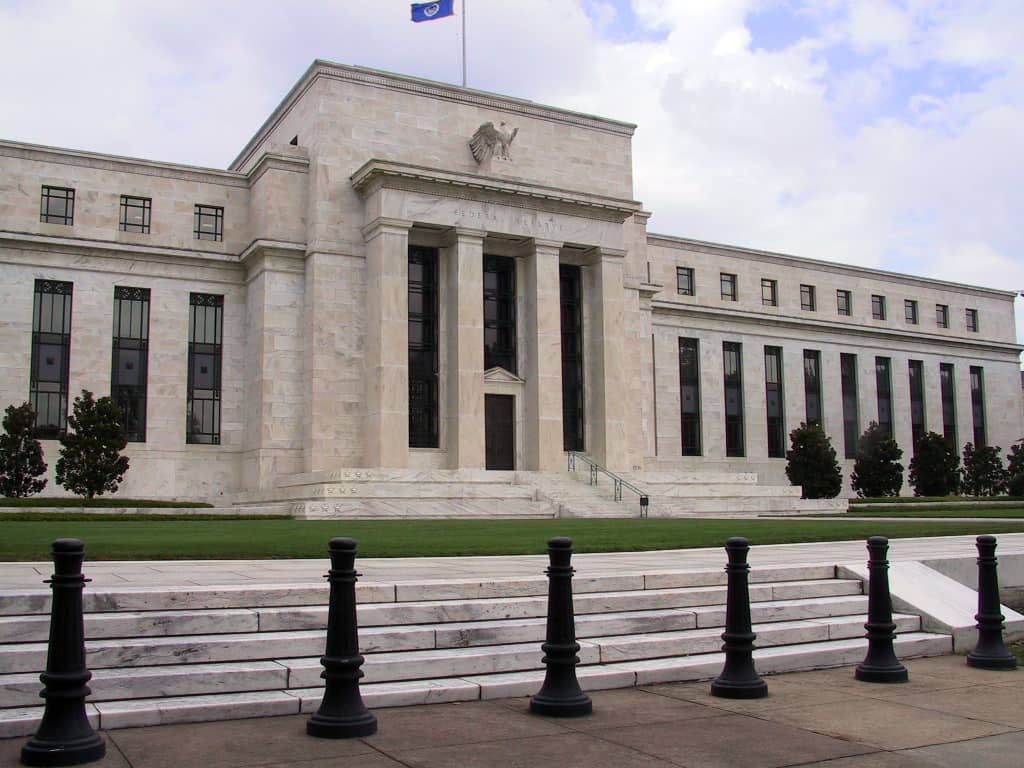
Fed Holds Rates at 3.75% to 4% as Inflation Stays High, Leaving Florida Homebuyers Facing 7% Mortgages Days Before the Election
5h ago

Civil Rights Groups Sue Over DHS Voter Probes of Naturalized Citizens, and Florida Sits Outside a Court Order Limiting Them
6h ago

Artemis III Rocket Takes Shape at Kennedy as SLS Core Stage Joins Its Boosters Ahead of a Pad 39B Tanking Test
7h ago