Buccaneers Sit 0-2 After 23-19 Loss to the Browns, Mayfield's Former Team
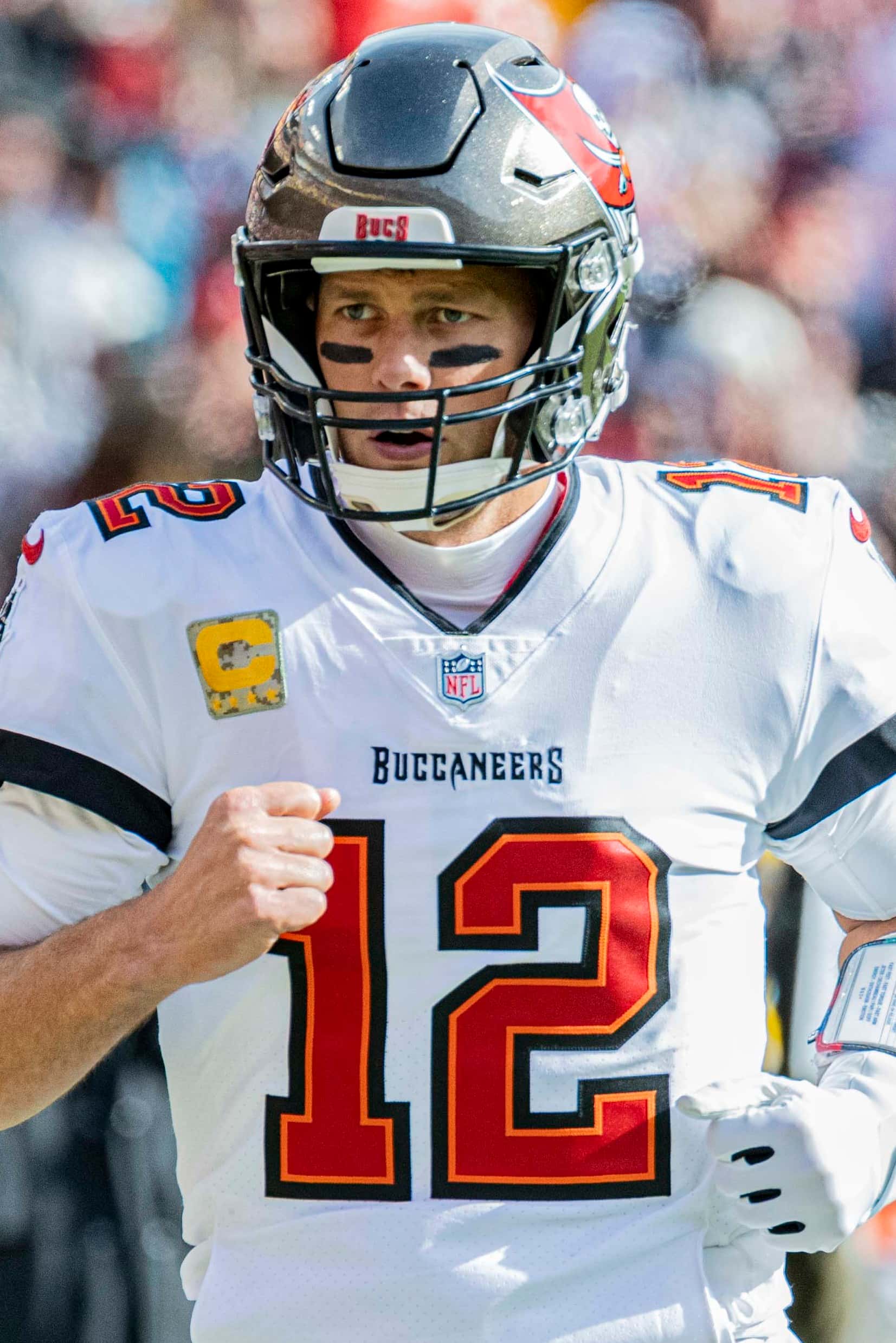
The Tampa Bay Buccaneers lost 23-19 to the Cleveland Browns on Sunday in a game interrupted by a fourth-quarter weather delay, falling to 0-2 for the first time since 2014 and for the first time in Baker Mayfield's tenure as the team's quarterback. Mayfield said afterward that the Buccaneers need to fight their way out of the start, and told reporters he was pretty shocked to find the team in this position.
The loss carried an extra layer for the quarterback. Cleveland selected Mayfield first overall in the 2018 NFL draft and traded him away in 2022, and he is now 0-2 against the Browns, with his earlier loss coming as a member of the Carolina Panthers. Revenge games are a media construct more than a competitive factor, but the outcome does not help.
Tampa Bay had its chances. The Buccaneers had the ball with a final possession after play resumed following the weather delay, and on fourth and 11 from Cleveland's 20-yard line with 22 seconds remaining, Mayfield's pass up the seam sailed beyond his receiver's reach.
How the game slipped away
A 23-19 final indicates a game decided at the margins rather than a lopsided defeat. Four points is the span of a single possession, and games in that range typically turn on two or three specific sequences rather than on a sustained disparity in quality.
The weather delay in the fourth quarter with roughly two minutes remaining introduced an unusual variable. Lightning delays require players to leave the field and wait, sometimes for extended periods, and returning to complete a two-minute drill after a break of that kind is a circumstance no team practices.
The final sequence is where the game ended. Facing fourth and 11 from the Cleveland 20 with 22 seconds on the clock, Tampa Bay needed a conversion to sustain the drive, and Mayfield's throw up the seam was not catchable. Fourth-and-long conversions succeed at low rates, and the situation reflected earlier failures as much as the throw itself.
Scoring 19 points is the broader issue. A Buccaneers offense built around Mayfield and an established receiving corps is expected to produce more, and two games of insufficient scoring is the pattern that has put the team at 0-2.
An 0-2 start Tampa Bay has not seen in over a decade
The last time the Buccaneers opened a season 0-2 was 2014, a season that ended with a 2-14 record and a coaching change. The reference is unflattering, though the current roster bears no resemblance to that one and the comparison is chronological rather than analytical.
Tampa Bay has been among the NFC South's more consistent teams in recent seasons, winning division titles and reaching the postseason with regularity in a division that has been competitive without being strong. That history is the reason 0-2 registers as a surprise.
The NFC South's relative parity is the Buccaneers' most valuable asset at the moment. Divisions that produce a dominant team leave little room for a slow starter to recover; divisions where several teams hover near .500 allow a 0-2 team to remain in contention through October.
The Minnesota Vikings visit Raymond James Stadium on Sunday, September 27, in a Week 3 matchup with a 4:05 p.m. kickoff on FOX. Minnesota entered the week at 2-0 despite losing its starting quarterback in Week 1, which makes the opponent's resilience part of the story.
Mayfield under scrutiny
Mayfield's public comments, saying the team needs to fight its way out and describing himself as shocked at the start, are the kind of candid remarks that generate coverage and that reflect genuine frustration rather than a media strategy.
His career has followed an unusual arc. A first overall pick in Cleveland, traded to Carolina, a stint in Los Angeles and then a reestablishment in Tampa Bay that restored his standing as a starting NFL quarterback. That trajectory means he has more experience with adversity than most quarterbacks at his career stage.
The criticism arriving after two losses has included questions about whether Tampa Bay's investment in him was justified, a predictable reaction in a results-driven environment. Two games is a small sample on which to revisit a roster decision.
What matters competitively is production, and 19 points against Cleveland was not enough. Quarterback evaluation in the NFL is largely a function of scoring, and Mayfield needs the offense to produce more regardless of where the responsibility for the shortfall lies.
The coaching question
Head coach Todd Bowles has faced criticism following the loss, with postgame analysis identifying both the coach and his quarterback among the game's negative performers. That scrutiny is standard after an 0-2 start and intensifies if it extends to 0-3.
Bowles' tenure in Tampa Bay has included division titles and playoff appearances, which provides a foundation of credibility that a two-game slide does not immediately erase. NFL patience, however, is measured in weeks rather than seasons.
The specific tactical questions center on offensive production and on situational decision-making, including the sequence that left the team facing fourth and 11 in the closing seconds. Play calling in the final minutes attracts disproportionate attention because the outcomes are visible and immediate.
Coaching evaluation at this stage is premature in any analytical sense. The relevant window is six to eight games, by which point the difference between a slow start and a bad team becomes apparent in ways two games cannot establish.
What Tampa Bay needs
The offense requires more scoring, and the path to it runs through consistency rather than explosiveness. A team scoring 19 points is generally converting some drives and stalling on others, and improving the conversion rate in the red zone and on third down is the conventional remedy.
Defensively, allowing 23 points is a respectable performance that would win many NFL games. The unit is not the primary problem after two weeks, which narrows the focus and simplifies the corrective work.
Health will shape the season as much as scheme. Injury reports around the quarterback position in particular have drawn attention, and availability at that position is the single largest determinant of NFL outcomes.
The home schedule offers an immediate opportunity. Raymond James Stadium provides a familiar environment, and the September 27 matchup with Minnesota is the kind of game a team must win to keep a season from turning.
A difficult Sunday for Florida's NFL teams
Tampa Bay's loss came on the same afternoon the Miami Dolphins fell 35-13 in San Francisco, leaving both teams at 0-2 and producing one of the more discouraging NFL Sundays in recent memory for Florida fans.
Two of the state's three franchises starting without a win affects the regional football economy in measurable ways, from television ratings to sports bar traffic to the merchandise sales that track team performance closely.
The contrast with Florida's college programs was stark. The Florida Gators won at Auburn for the first time since 1999, and Miami's Hurricanes remained unbeaten after a road win at Wake Forest, while the professional teams struggled.
For the state's substantial transplant population, which maintains allegiances to teams from elsewhere, the local outcomes matter less. But for the regional fan bases that sustain the franchises commercially, an 0-2 start on both coasts is a difficult beginning.
Raymond James and the Tampa Bay sports calendar
Tampa Bay's sports market is unusually crowded for its size, with an NFL franchise, an NHL team in the Lightning, a Major League Baseball team in the Rays and major college programs competing for attention and discretionary spending.
The timing intensifies the competition this month. The Rays clinched a playoff berth and hold a substantial American League East lead, and the Lightning opened training camp in mid-September ahead of the NHL season. A struggling football team competes for attention against a baseball team heading to the postseason.
That dynamic is genuinely unusual in Tampa Bay, where football has historically dominated the fall conversation. A Rays postseason run would claim a share of October attention that the Buccaneers would ordinarily hold uncontested.
For the region's economy, the concentration of simultaneous postseason and season-opening activity is a net positive, driving hotel occupancy, restaurant traffic and downtown activity across multiple venues in the same weeks.
The NFC South landscape
Tampa Bay's division has been among the league's most winnable in recent seasons, which is the single strongest argument that an 0-2 start is recoverable. Divisions where the eventual champion wins 11 or 12 games punish slow starters severely; divisions decided at nine or ten wins leave room for a team that finds its form in October.
Winning the division carries a guaranteed home playoff game, which is worth substantially more than a wild card berth. That prize keeps the Buccaneers' season meaningful even at 0-2, provided the rest of the division does not pull away in the next month.
Divisional games are the leverage points. Each one swings two teams' records simultaneously, meaning a Tampa Bay win over a division rival is worth roughly twice a win over a nonconference opponent in the standings math. The Buccaneers' divisional schedule is therefore where the season will be decided.
The unfavorable reading is that 0-2 teams in weak divisions often stay mediocre rather than improving, finishing near .500 and missing the playoffs on a tiebreaker. Tampa Bay needs a run of wins rather than a gradual climb to avoid that outcome.
What's next
The Buccaneers host Minnesota on September 27 at 4:05 p.m. on FOX, facing a 2-0 opponent that has absorbed a quarterback injury and kept winning. A loss would put Tampa Bay at 0-3 and place the season in serious jeopardy.
The corrective focus is offensive production. Nineteen points will not win consistently, and Tampa Bay's personnel should support more than that, which makes the gap between capability and output the central question for the coaching staff this week.
Mayfield's stated intention to fight out of the start is the appropriate posture, and the NFC South's competitive balance means the opportunity is real. Two losses in a 17-game season are recoverable. Three would begin to look like something else.
Spotted an issue with this article?
Have something to say about this story?
Write a letter to the editor