Buccaneers and Jaguars Meet in Jacksonville for Joint Practices and a Preseason Finale
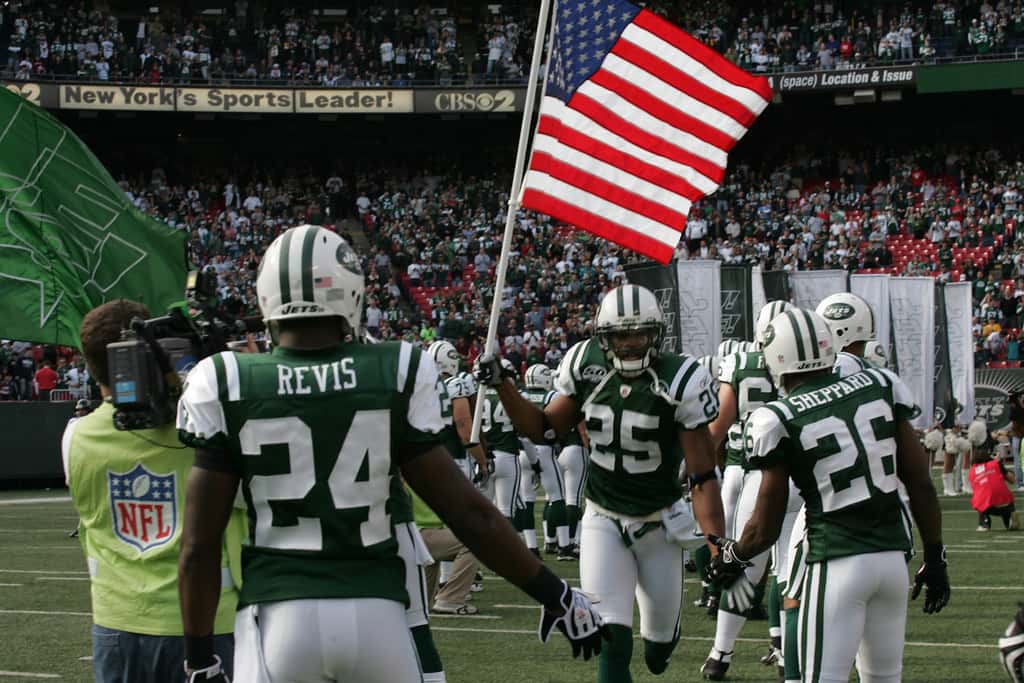
The Tampa Bay Buccaneers departed for Jacksonville on Monday to begin a week of joint practices with the Jacksonville Jaguars ahead of Friday's preseason finale at EverBank Stadium. Kickoff is set for 7:30 p.m. Eastern on August 28. The two clubs practiced together Tuesday and Wednesday, which makes it unlikely that many starters, if any, will play in the game itself.
Tampa Bay arrived off a 16-15 win over the Kansas City Chiefs on Saturday night at Raymond James Stadium. Head coach Todd Bowles made the trip with the roster, and photos released by the club showed players boarding for the flight north.
This is the annual all-Florida preseason meeting, and it carries more practical weight than the score will suggest. Both franchises must reduce their rosters to 53 players by 6 p.m. Eastern on Sunday, August 30, which means the week's work is the last evidence coaching staffs will gather before making roughly 37 cuts apiece.
Why joint practices matter more than the game
Joint practices have become the preferred evaluation tool across the NFL, and the reasoning is straightforward. Preseason games expose starters to injury risk in exchange for snaps against simplified schemes. Joint practices deliver competition against an unfamiliar opponent in a controlled environment where coaching staffs can script situations, stop drills and repeat matchups.
A coaching staff can run a full period of red zone work, another of two-minute offense, another of third-down situations, and get more usable repetitions in ninety minutes than a starter would see in an entire preseason game.
The two clubs also benefit from the change in look. Six weeks of practicing against the same defense produces diminishing returns for an offense, because both sides begin anticipating rather than reacting. A different opponent restores the evaluation value.
What the game itself will show
With starters likely held out, Friday's game becomes an extended audition for the players competing for the final roster spots and for practice squad positions. For those players, it is the most important sixty minutes of their year.
Coaching staffs evaluate different things in that setting: whether a player finishes plays when the score is meaningless, whether he executes assignments correctly under fatigue, and whether he contributes on special teams.
Special teams is the decisive factor for a large share of roster decisions. A backup linebacker who covers kicks well is more valuable to a 53-man roster than one who is marginally better on defense but cannot play in the kicking game.
The Jaguars' situation
Jacksonville hosts the finale with the same deadline pressure. The franchise has cycled through rebuilding phases over the past decade, and roster construction has been a persistent challenge.
EverBank Stadium has been undergoing a major renovation project, part of a stadium agreement between the team and the City of Jacksonville that reshapes the venue and the surrounding district. Construction has affected capacity and configuration during the transition.
For Northeast Florida, the Jaguars are the region's only major professional franchise, which gives the team a different civic role than teams in markets with multiple professional clubs.
The Buccaneers' situation
Tampa Bay enters the season with an established coaching staff under Bowles and a roster that has been among the more stable in the NFC South. The Buccaneers have been a consistent playoff participant in recent seasons.
The win over Kansas City, decided by a single point, was the sort of preseason result that means little competitively but produces useful film against a well-coached opponent.
Raymond James Stadium will host the club's regular season home schedule beginning in September, and Tampa Bay's early season slate will determine whether the franchise's recent divisional consistency continues.
The cutdown arithmetic
Training camp rosters carry up to 90 players. Reaching 53 requires releasing or trading roughly 37, and every NFL team does it on the same schedule, which creates a flood of available players on Sunday afternoon and Monday.
Players with fewer than four accrued seasons pass through waivers, where teams claim in reverse order of the prior season's standings. Veterans with four or more accrued seasons become free agents immediately.
Practice squads then form, with teams signing up to sixteen players who practice with the club and can be elevated on game days under specific rules. A significant number of players cut on Sunday sign practice squad deals with the same team on Monday or Tuesday.
What Florida's three NFL teams share this week
Miami, Tampa Bay and Jacksonville all face the same deadline and the same conditions. Late August practices in Florida run in heat and humidity that shape how coaching staffs structure the week, with morning sessions the norm and hydration protocols enforced closely.
The Dolphins returned to practice Monday after a preseason loss to the New York Giants, with quarterback Quinn Ewers back on the field and rookie receiver Chris Bell participating in team drills after knee surgery.
All three clubs will finalize rosters Sunday, and all three open the regular season in the second week of September.
What joint practices risk
The tradeoff with joint practices is that competitive intensity between unfamiliar teams occasionally produces fights and, more consequentially, injuries. Coaching staffs manage that with strict rules about contact levels and by ending periods early when tempers rise.
The injury calculus is why some staffs limit starter participation even in joint practices. A player lost in a late-August practice is lost for the regular season just as surely as one lost in a game.
Both organizations have incentives to keep the week productive and clean, and coaching staffs generally coordinate expectations before the first session.
The in-state rivalry that is not quite a rivalry
Tampa Bay and Jacksonville play in different conferences, which means they meet in the regular season only once every four years under the NFL's scheduling formula. That limits the rivalry's development.
The preseason meetings and joint practices have become the more regular point of contact, along with competition for fans in the parts of Florida between the two markets, particularly Gainesville, Ocala and the Nature Coast.
The Dolphins, in the AFC East, share a conference with Jacksonville, which produces more frequent regular season meetings between those two.
Stadium economics in Jacksonville
The EverBank Stadium renovation represents one of the larger public-private stadium projects in the country, with the City of Jacksonville and the franchise splitting costs under an agreement approved by the City Council.
Projects of that scale reshape not only the venue but the surrounding district, and Jacksonville's sports complex area along the St. Johns River has been the focus of broader redevelopment planning.
For a city that has periodically faced speculation about franchise stability, a long-term stadium commitment carries significance beyond the building itself.
What fans should watch Friday
Third and fourth quarter play is where the roster decisions get made. Fans watching for genuine information should focus on the offensive and defensive line rotations and on special teams units, where the marginal roster players concentrate.
Quarterback play in the second half typically involves the third-string quarterback and receivers who will not make the roster, which limits its evaluative value.
Injury reports after the game matter more than the score. A significant injury Friday would force roster adjustments over the following 48 hours.
How the preseason schedule got here
The NFL reduced the preseason from four games to three when it expanded the regular season to seventeen games, a change that compressed the evaluation window coaching staffs have to sort a 90-man roster. Three games with limited starter participation is not much live evidence, which is precisely why joint practices proliferated in the years that followed. Teams needed a substitute for the reps they lost, and practicing against another organization filled the gap.
The scheduling of joint practices is negotiated between clubs during the offseason, and geography drives most of the pairings. Two Florida teams playing a preseason game in Jacksonville can practice together without either roster spending a week in a hotel, which reduces cost and disruption for both organizations.
The tradeoff is familiarity. Teams that pair with the same opponent year after year lose some of the evaluation benefit that comes from facing unfamiliar schemes and personnel. Coaching staffs generally rotate partners for that reason, though proximity keeps certain matchups recurring.
What the numbers look like on Sunday
Each of the league's 32 teams will release or trade roughly 37 players by 6 p.m. Eastern on August 30, which means something close to 1,100 players become available in a single afternoon. Personnel departments spend the preceding week building boards of players they expect to be cut elsewhere, so that claims and signings can be submitted immediately once the deadline passes.
Waiver priority follows the reverse order of the previous season's standings, which gives struggling teams first access to the best available players. For clubs that finished near the top, the practical reality is that anyone genuinely valuable will be claimed before their turn arrives, so their focus shifts to free agents with four or more accrued seasons who can sign anywhere.
The practice squad market opens once waivers clear on Monday. Teams can carry up to sixteen practice squad players, with a limited number of veteran exceptions, and a substantial share of those players end up back with the club that just released them.
What's next
Both clubs finalize their rosters by Sunday evening, with practice squad signings following once waivers clear on Monday. Teams also make trades in the final hours before the deadline, though those are typically for late-round draft compensation.
Regular season preparation begins immediately after, with game plans installed against specific opponents rather than the generic work of camp.
For Florida football fans, the professional calendar then merges with the college season, which begins for Florida State on August 29, and with the high school season already underway across the state since August 21.
Spotted an issue with this article?
Have something to say about this story?
Write us a letterComments
No comments yet. Be the first to weigh in.
Related Coverage
Rays await Guardians or White Sox in ALCS after sweeping Yankees; Game 1 Monday at Tropicana Field
54m ago
John Carlson scores twice, Dennis Hildeby makes 34 saves as Lightning hold off Wild 3-2
2h ago
Winless Dolphins host Bengals at Hard Rock Stadium seeking first win under Jeff Hafley
21h ago
Hurricane Isaias Scrambles Florida Sports: FSU Cancels Pensacola Games, FAMU Moves to Friday
1d ago