Citizens Will Require Flood Insurance for Most Home Policies Starting Jan. 1, Even Outside Flood Zones
Starting Jan. 1, 2027, most Citizens Property Insurance Corp. customers whose home policies include wind coverage will need a separate flood insurance policy to keep their Citizens coverage, whether or not they live in a FEMA flood zone. The change is the last step of a requirement the Florida Legislature passed in December 2022, and it reaches the homeowners the earlier phases skipped: those outside high-risk flood zones whose homes are insured for less than $400,000.
Citizens says on its flood requirement page that most new and renewing personal residential policies that include wind coverage "must also have and maintain flood insurance coverage by January 1, 2027." For new policies, the requirement applies from Jan. 1. Existing policyholders must comply when their policies come up for renewal, FOX 13 reported Friday.
Who has to buy flood coverage
The rule applies to Citizens personal residential policies that cover wind. Citizens lists three kinds of policies that are not required to carry flood insurance:
- Condominium unit-owner policies
- Tenant contents policies, the coverage renters buy for their belongings
- Policies that exclude windstorm or hail coverage
FOX 13 summarized the exemptions as condominium owners and apartment renters. Everyone else with a Citizens home policy that includes wind, including single-family homeowners in neighborhoods that have never been mapped as flood-prone, falls under the requirement once the final phase takes effect.
Citizens' policy totals show how many households are in play. As of Oct. 31, 2026, the state-backed insurer reported 216,447 policies in force, including 168,941 personal residential multiperil policies and 43,622 personal residential wind-only policies. Many of those customers already carry flood insurance, either because they live in a high-risk zone or because their home's value pulled them into an earlier phase, so the number who will need to buy new coverage is smaller. Citizens has not published that figure.
The policy count is far below where it stood a year ago. Citizens reported 392,689 policies at the end of January 2026, and the total has fallen steadily as private insurers took over policies through the state's depopulation program.
How the requirement phased in
Lawmakers did not apply the rule all at once. Homes in Special Flood Hazard Areas, the FEMA zones labeled A, AE, V and VE, came first. For homes outside those zones, the requirement was tied to the dwelling's insured value (Coverage A) and dropped each year. The schedule, according to Citizens:
| Effective date | Who must carry flood insurance |
|---|---|
| July 1, 2023 | Homes in FEMA Special Flood Hazard Areas, at renewal |
| Jan. 1, 2024 | Dwelling coverage of $600,000 or more |
| Jan. 1, 2025 | Dwelling coverage of $500,000 or more |
| Jan. 1, 2026 | Dwelling coverage of $400,000 or more |
| Jan. 1, 2027 | All remaining policies with wind coverage, regardless of value |
Citizens' own phrasing for the last row is "all policies, regardless of value," subject to the exemptions above.
What counts as proof
Citizens requires new applicants and renewing policyholders to submit proof of flood coverage along with a signed Policyholder Affirmation Regarding Flood Insurance, form CIT FW01. According to Citizens, acceptable proof includes:
- The declarations page of a flood policy
- If a flood application is still pending, the submitted application plus proof of payment, which Citizens accepts as initial proof of compliance
- For customers with a Citizens wind-only policy, a flood endorsement on their underlying multiperil policy from another company that meets the minimum standard
The amount of flood coverage matters too. Citizens says flood coverage must be equal to or greater than the dwelling value on the Citizens policy. Because the National Flood Insurance Program caps building coverage at $250,000 under its regular program and $35,000 under its emergency program, Citizens will accept the maximum amount a homeowner is eligible for when the full limit is not available from the NFIP.
Homeowners who buy through the NFIP should plan ahead. NFIP policies generally carry a 30-day waiting period before coverage takes effect, so a policy bought the week of a renewal may not be in force on the renewal date. Agents can say whether a pending application and payment receipt will satisfy Citizens in a specific case.
Citizens does not sell flood insurance
The requirement sends customers to a different company for the coverage. Citizens has said it "does not offer flood insurance and is not authorized to do so." Policyholders can buy flood coverage from the federal NFIP or from a private carrier authorized to write flood insurance in Florida.
FOX 13 noted that dozens of private companies sell flood policies. Emily Rogan of the consumer group United Policyholders told the station that buyers should compare both price and coverage, because the policies "can look wildly different." Some cover only the structure; others also pay for personal belongings and for temporary living expenses if a family has to move out after a flood.
Citizens has also pointed out that the rule can change the math for homeowners shopping between Citizens and a private insurer. Private companies are not required to demand flood insurance as a condition of eligibility, so a private homeowners offer that costs more than Citizens on paper may cost less overall once the separate flood premium is counted.
What it will cost
There is no single answer. FOX 13 reported that Citizens has not confirmed how much more individual homeowners will pay, and that the final cost depends on each home's location. Flood premiums vary with elevation, distance from water, the age and construction of the house, and the deductible a homeowner chooses. A home outside a mapped flood zone will often price lower than one inside it, but not always.
Why it matters this month
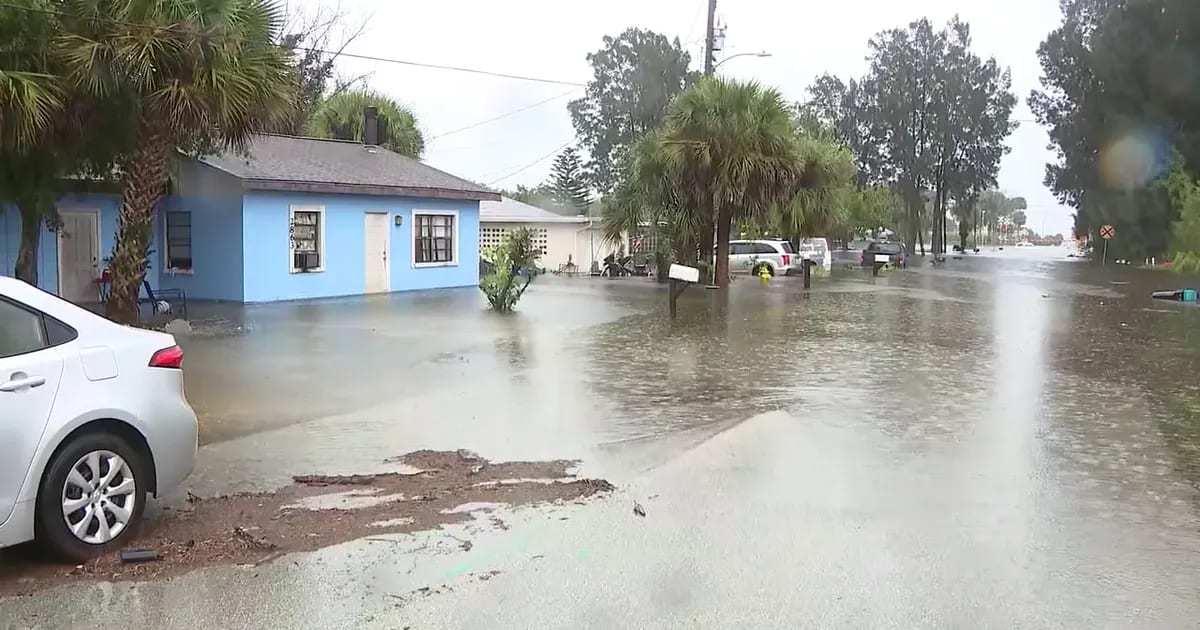
The deadline arrives after a month in which heavy rain flooded homes far from the coast. Citizens spokesperson Michael Peltier told FOX 13 that "a lot of customers who don't live in flood zones are seeing that their properties are getting flooded out this week," pointing to the heavy rain in Brevard County.
That is the gap the law was written to close. A standard homeowners policy, from Citizens or a private company, does not pay for damage from rising water. Without a flood policy, a homeowner whose house takes on water from a storm surge or a stalled rainstorm generally pays for repairs out of pocket or relies on limited federal disaster aid.
Local governments have been spreading the word. Hillsborough County posted a notice on Nov. 13 that flood coverage becomes mandatory for Citizens customers in 2027.
The federal flood program deadline
The NFIP adds its own uncertainty. According to the Congressional Research Service, the program is currently authorized only through Dec. 11, 2026. If Congress does not extend it, FEMA would stop selling new policies and renewing existing ones, though claims on policies already in force would still be paid. Private flood policies are not affected by a lapse.
Congress has relied on a string of short-term extensions since 2017, and the program briefly lapsed from Feb. 1 to Feb. 3 this year. In most past lapses, lawmakers restored the program retroactively. Still, a Citizens customer who needs to buy an NFIP policy in December could face a delay if the deadline passes without action.
What's next
Citizens customers who do not already have flood coverage should check their renewal date and talk with an agent now about NFIP and private options, coverage limits and waiting periods. Condominium unit owners, renters with tenant contents policies and customers whose policies exclude wind are exempt. For everyone else with wind coverage, a Citizens policy written or renewed on or after Jan. 1 will need proof of flood insurance to stay in force.
Spotted an issue with this article?
Have something to say about this story?
Write us a letterComments
No comments yet. Be the first to weigh in.
Related Coverage

Florida AG James Uthmeier says DraftKings' 21 Rivals blackjack game is illegal casino gambling
2d ago

Disney's parks and streaming power a strong fourth quarter as CEO Josh D'Amaro targets $3 billion in savings
2d ago

Florida Tourism Edges Up in Third Quarter as Domestic Travel and World Cup Offset Canadian Slump
2d ago

Florida Orders 7.4% Average Cut in Workers' Compensation Rates for 2027, the 11th Straight Annual Decrease
2d ago