Cuban Man Who Lived in Miami Describes 'Nightmare' After ICE Deported Him to the Central African Republic
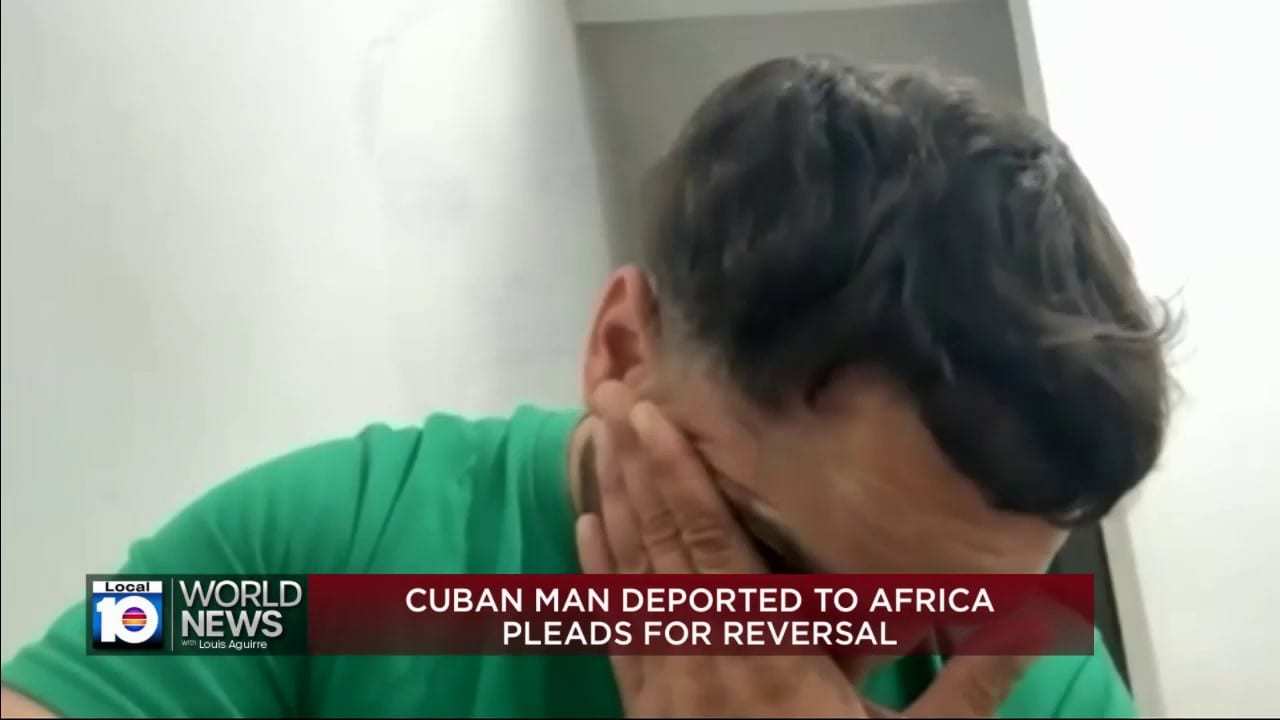
A Cuban man who built a life in Miami over nearly a decade is describing what he calls a nightmare in the Central African Republic, where U.S. Immigration and Customs Enforcement sent him this summer after an encounter that he says began with a traffic stop. Yasmany Moreno, 32, spoke to WPLG Local 10 News in a report published Friday, more than three months after he was flown to Bangui, the capital of a country the U.S. State Department warns Americans not to visit at all.
His case has become one of the most visible examples of the Trump administration's third-country deportations, in which immigrants who cannot easily be returned to their home countries are sent to nations where they have no ties. For South Florida's Cuban community, the largest in the country, the removals of men who lived and worked in Miami have turned a distant policy into a local fear.
From a raft to Miami to Bangui
Moreno left Cuba on a raft in 2016 and landed in the Marquesas Keys in Monroe County, according to the Tampa Bay Times. He was allowed to stay under the "wet foot, dry foot" policy, which the Obama administration ended in January 2017. The Times reported that he was later denied a green card after his temporary permit expired, that he owned a small trucking company in South Florida and that he helped support his parents near Orlando.
After about nine years in Miami, Moreno told Local 10, a traffic stop led to his detention by ICE. A spokesperson for the Department of Homeland Security told the station that Moreno had a record of five traffic offenses, including driving with a suspended license. Moreno has told Cuban diaspora outlets that he has no criminal record.
Reporting by the independent outlet Belly of the Beast says ICE detained him in May 2025 and that an immigration judge ordered him deported to Cuba about two months later. Instead, he spent more than a year moving between immigration detention centers across the country before he was flown out of Texas on July 30, 2026, the Times reported.
A 21-hour flight to an unknown destination
Moreno told the Tampa Bay Times that no one told him where the plane was going and that he learned it was headed to Africa about five hours into the flight. "I honestly thought it was a bad joke," he said. He said he was cuffed at the hands, waist and feet during the roughly 21-hour trip and was sick for four days afterward. He has diabetes and asthma.
He was one of 36 immigrants who arrived in Bangui on that flight. The group was housed at a hotel in the capital without passports, and the deportees said local authorities told them they might have to leave within 90 days. "Now, I feel like I'm in prison," Moreno told the Times.
In the months since, Moreno has become an informal advocate for the other deportees, raising money online and posting videos about conditions, including a warning in October that several migrants in the group had fallen ill with malaria, according to Cuban diaspora outlets that have followed his posts. Moreno, who has said he supported Donald Trump in 2024, has since urged Latino voters to turn against the president.
Other South Florida Cubans sent to Africa
Moreno was not the only deportee on the July 30 flight with Miami ties. Arístides Fernández García, 37, a Cuban who crossed the southern border in 2021, was arrested by ICE on Jan. 6, 2026, during an immigration court hearing in Miami, according to DHS and CBS News Miami. He held an I-220A document, a form of conditional release issued to many Cubans who entered in recent years, and had a pending asylum claim and a work permit.
Fernández García told CBS News Miami that he was held at the Everglades detention site known as "Alligator Alcatraz," at the Krome detention center in Miami-Dade County, and at facilities in Louisiana and Texas before being put on the plane. He said he learned his destination only during a stop in another African country. DHS said he was removed on July 30.
Fernández García left Bangui on Oct. 19 with help from the International Organization for Migration and traveled to Bolivia, where his sister lives, Telemundo 51 reported. Moreno remains in the Central African Republic. Cuban diaspora outlets have reported, based on videos the two men posted, that judges reopened their immigration cases, but that could not be independently confirmed.
The government's position
DHS has defended the removals. In its statement to Local 10, the department said third-country removals are "an essential public safety tool." In earlier statements on the Central African Republic flights, DHS said the administration is using "all lawful options" in what it calls "the largest deportation operation in history," and said that once a person is no longer in ICE custody, ICE is no longer responsible for them.
The administration says it has deported more than 25,000 people to countries with which they have no ties, according to NPR. The Central African Republic began accepting deportees from the United States in June, when 18 people arrived, according to Human Rights Watch. The United States this year awarded $85 million to the International Organization for Migration for operations in the country, according to reports. On Sept. 29, the U.S. Supreme Court put a lower court ruling on hold, allowing third-country deportations to continue while the legal fight plays out, NPR reported.
Lawyers question the legal basis
Immigration attorneys in South Florida say the deportees were not ordered removed to the Central African Republic by any judge. Morella Aguado, a South Florida immigration attorney who does not represent the men, told CBS News Miami that the key question is whether migrants are sent to the country named in their proceedings, and said the practice "shouldn't be at all" legal.
Hector Diaz, a Miami immigration attorney who also does not represent the deportees, told the Tampa Bay Times the situation is "a clear abuse of humanitarian rights." He noted that the Central African Republic has no asylum mechanism, leaving deportees with no clear way to seek protection there or return home. The State Department lists the country at Level 4, "Do Not Travel," citing unrest, violent crime, kidnapping, landmines, health risks and terrorism.
Why it resonates in South Florida
Cuba has long accepted only limited numbers of deportation flights, leaving many Cubans with final removal orders living and working in the United States for years under supervision. Many of them are in Miami-Dade County. The third-country flights have shown that a routine check-in, court hearing or traffic stop can now lead not to Havana but to a country thousands of miles from any family.
What's next
Moreno's future depends on whether his reopened case, as he has described it, leads to his return to the United States, and on how long the Central African Republic and the IOM continue to house deportees. Federal judges in other cases have ordered the government to return people sent to the Central African Republic, and those rulings, along with the broader litigation now before the courts, will shape whether more South Florida residents follow him to Bangui.
Spotted an issue with this article?
Have something to say about this story?
Write us a letterComments
No comments yet. Be the first to weigh in.
Related Coverage
FAA lifts historic nationwide ground stop as Florida airports dig out from thousands of canceled flights
16h ago
Two Epic Universe Performers From Argentina Held by ICE in Arizona After Flying From Orlando, as Friends Cite Pending Asylum Cases
1d ago

Senate Unanimously Passes Weather Act That Would Make Hurricane Forecast Improvement Permanent, Targeting Rapid Intensification and Storm Surge
1d ago
Mario Diaz-Balart Says Immigration 'Overreach' Hurt Republicans as ICE Deportations Hit a Record
1d ago