Dolphins Open 2026 With the NFL's Youngest Roster After Sweeping Cuts
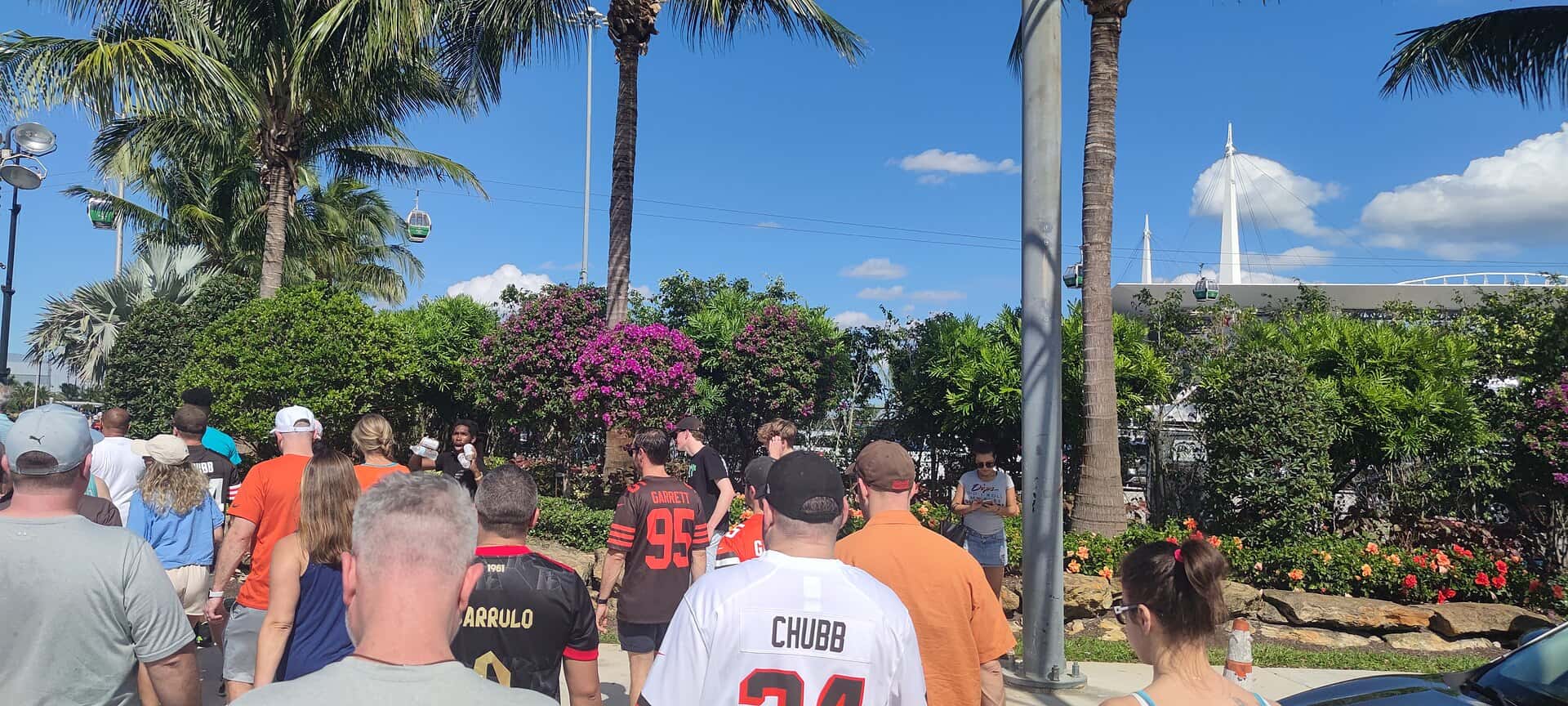
The Miami Dolphins finalized their initial 53-man roster for the 2026 season ahead of the NFL's leaguewide cutdown deadline Sunday evening, and the result is the youngest roster in the league at an average age of 25.3 years. Roughly 47 percent of the players on the initial roster are between 22 and 24 years old.
General manager Jon-Eric Sullivan and head coach Jeff Hafley arrived at that number through a deliberate sequence of releases, trades, and waiver claims rather than by accident. The most notable veteran casualty was linebacker Tyrel Dodson, who recorded 129 tackles for the team last season and was released. The roster carries two quarterbacks: Malik Willis and Kyle McCord.
Cutdown weekend is the most consequential 48 hours of the NFL offseason that nobody attends. Every team reduces from 90 players to 53, hundreds of players hit waivers simultaneously, and front offices spend the window claiming from other teams' releases while trying to retain their own. What emerges is the closest thing to a finished roster any team will have before Week 1.
What the age number actually signals
An average roster age of 25.3 is genuinely unusual. NFL rosters typically cluster around 26 to 27, and the teams at the young end of the distribution are almost always in acknowledged rebuilds. Miami is now the youngest team in the league, and the composition, with nearly half the roster aged 22 to 24, indicates the youth is concentrated rather than driven by a handful of outliers.
Youth in NFL roster construction is primarily a salary cap instrument. Players on rookie contracts, particularly those drafted outside the first round and undrafted free agents, provide production at a fraction of veteran cost. A roster built that way carries more cap flexibility, which can be deployed later when the competitive window opens.
The trade-off is on-field experience, and it tends to show in specific places: pre-snap communication, situational awareness in two-minute and red zone situations, and the discipline that keeps penalty counts down. Young teams commonly lose games they were positioned to win because of errors that veteran units do not make.
There is a second reading of the number that is less flattering than the strategic one. A very young roster can also indicate that a team was unable or unwilling to retain veterans, whether because of cap constraints inherited from prior contracts or because free agents chose other destinations. The distinction between building young deliberately and being young by default is not always visible from outside, and the honest answer usually emerges over two or three seasons rather than immediately.
The Dodson release and what it says
Cutting a linebacker who produced 129 tackles the previous season is not a routine roster decision. Tackle totals overstate a linebacker's value in isolation, since volume partly reflects how often a defense is on the field and how many plays reach the second level, but 129 is a substantial workload from a starter.
Releasing him signals that the decision was about something other than immediate production, most plausibly a combination of cost, scheme fit under Hafley, and a judgment that younger players at the position were ready. Hafley arrived with a defensive background and defensive coaches typically have strong preferences about linebacker profiles in their systems.
The broader pattern across the cuts suggests the front office was willing to absorb short-term production losses in exchange for roster flexibility and developmental snaps. That is a coherent strategy. It is also one that tends to produce uneven early-season results.
Roster turnover of this magnitude also imposes a cost on continuity that does not show up in any statistic. Defensive communication in particular depends on players having repped assignments together enough times that adjustments happen without deliberation, and a unit assembled largely from young players and new arrivals has not accumulated those reps. Coaches generally describe that gap as the thing that takes longest to close.
The quarterback situation
Miami carrying two quarterbacks, Malik Willis and Kyle McCord, is the roster decision that will draw the most attention. Two-quarterback rooms are increasingly common as teams use the 53rd spot elsewhere and rely on the practice squad and gameday elevation rules for emergency depth, but it leaves little margin.
Willis entered the league as a third-round pick with substantial physical tools and an uneven track record as a starter. McCord is the younger of the two and arrived from the college ranks. Neither profile is that of an established starting quarterback with a long body of NFL production behind him.
The Dolphins also moved quarterback Quinn Ewers to Jacksonville in exchange for a 2028 sixth-round draft pick, which is a notable transaction because it sent a quarterback within the state to a division rival's neighbor. That deal further clarifies that Miami had settled on its room before cutdown day.
The practice squad becomes disproportionately important for a team constructed this way. Young players who do not make the initial 53 but who the organization wants to develop are exactly the population the practice squad exists to hold, and gameday elevation rules allow a team to activate practice squad players for individual games without a permanent roster move. A front office running a youth movement uses those mechanisms heavily.
Quarterback rooms this thin also constrain what a team can do in practice. Live reps have to be allocated between two players rather than three, scout team work falls to the offense's own backups, and any injury in practice creates an immediate roster emergency. Teams that carry two quarterbacks generally have a practice squad arm they can elevate, and Miami's handling of that spot will matter more than its obscurity suggests.
What this means for Dolphins fans
The honest framing for South Florida is that this is a developmental season with an uncertain floor. A roster this young, with a first-year general manager's fingerprints on it and a head coach installing his systems, is not typically one that competes for a division title.
The relevant thing to watch is not the win total but whether individual young players show measurable improvement across the season. Rookie and second-year players who look overwhelmed in September and competent in December are the leading indicator that a rebuild is working. Players who look the same in Week 17 as in Week 1 are the opposite signal.
Hard Rock Stadium remains one of the better home environments in the league, and the Dolphins retain a passionate regional following built over decades. Fan patience is the resource a rebuild spends, and Miami has spent some of it in recent years.
The financial logic extends past this season. Rookie contracts run four years for drafted players, with a fifth-year option available for first-round picks, which means a roster loaded with young talent carries cost certainty across a defined window. Teams that time their veteran spending to coincide with the back half of that window are following the standard blueprint for building a contender, and Miami's construction is consistent with that plan.
The AFC East picture
Miami plays in a division that has been defined for a quarter century by other teams' quarterback situations. The Dolphins have generally been the team searching for stability at the position rather than the team providing it, and the 2026 roster does not obviously change that.
Division games are where a young roster's inexperience is most exposed, because familiarity cuts both ways and opponents who see a team twice a year identify weaknesses quickly. The Dolphins will play six division games, and those results will do more than anything else to determine whether the season is judged a step forward.
The intrastate picture matters to Florida readers as well. The Dolphins, Buccaneers, and Jaguars all set rosters this weekend, and all three franchises enter 2026 in visibly different competitive positions. Miami is the youngest and the furthest from a settled quarterback answer.
Injury management is another consideration that cuts both ways for a young roster. Younger players generally recover faster and miss fewer games, which is a genuine advantage across a 17-game season. They also have less experience managing their bodies through the grind of an NFL year, and rookie walls in November and December are a documented phenomenon rather than a coaching cliche.
What's next
Initial 53-man rosters are not final rosters. The waiver wire churns significantly in the days after cutdown, teams claim players released elsewhere, and practice squads are assembled from the pool. Expect the Miami roster to look somewhat different by the season opener.
Injured reserve designations are the other variable. Players placed on IR with a designation to return can come back after a set number of games, which effectively gives teams additional roster capacity later in the season. How Miami used those designations will shape the depth chart in October and November.
The regular season opens in mid-September, and the first meaningful data point on whether this construction works arrives immediately. A young team's first month is usually the roughest, which means judging the Dolphins on September results alone would be premature even by the standards of a league that judges everything immediately.
The schedule itself will shape perception more than most fans account for. A young team that draws a difficult early slate can look considerably worse than it is, and one that draws a soft opening can bank wins before its inexperience is properly tested. Evaluating Miami honestly this season means looking at the quality of opposition alongside the record rather than at the record alone.
The other thing worth watching is how the coaching staff handles losses. Young teams either fracture during difficult stretches or they do not, and the difference is generally attributable to whether the staff has established enough credibility for players to keep executing when results are not arriving.
Spotted an issue with this article?
Have something to say about this story?
Write us a letterComments
No comments yet. Be the first to weigh in.
Related Coverage
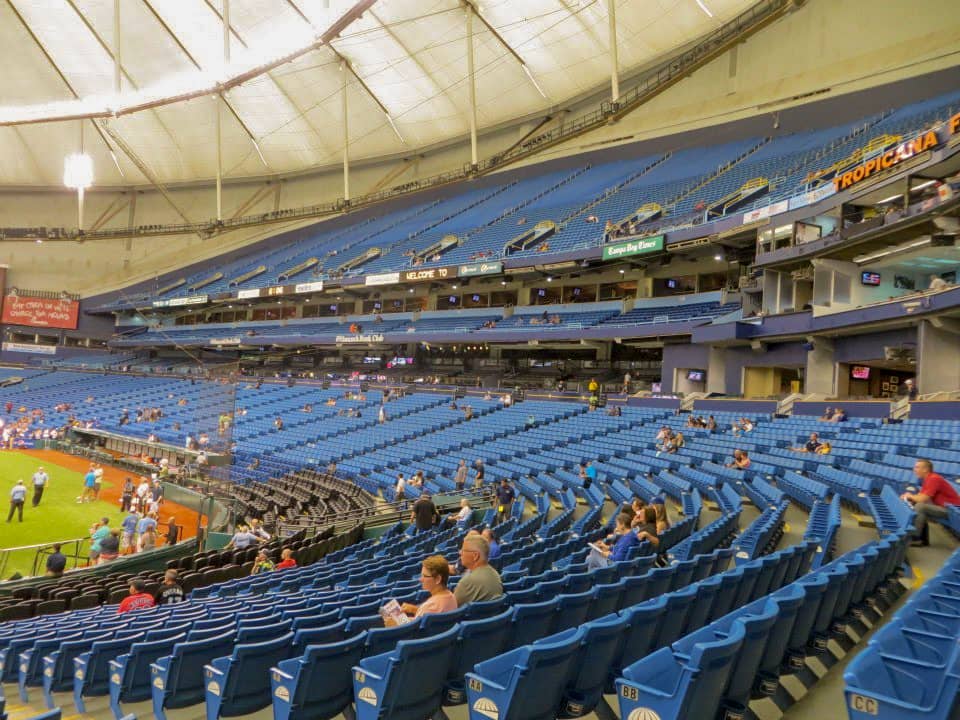
Rays await Guardians or White Sox in ALCS after sweeping Yankees; Game 1 Monday at Tropicana Field
22h ago
John Carlson scores twice, Dennis Hildeby makes 34 saves as Lightning hold off Wild 3-2
23h ago
Winless Dolphins host Bengals at Hard Rock Stadium seeking first win under Jeff Hafley
1d ago
Hurricane Isaias Scrambles Florida Sports: FSU Cancels Pensacola Games, FAMU Moves to Friday
1d ago