Dolphins Fall to 0-2 After 35-13 Loss in San Francisco

The Miami Dolphins dropped to 0-2 on Sunday with a 35-13 loss in San Francisco, a result that was decided well before the fourth quarter and that follows a season-opening defeat in Las Vegas. The 49ers controlled the game in nearly every phase, with Brock Purdy delivering what observers described as a near-perfect performance and Christian McCaffrey reaching 100 career touchdowns, the fourth-fastest player to that mark in the Super Bowl era.
A 22-point road loss is the kind of result that shifts a season's conversation from optimism to diagnosis. The Dolphins have now played two games and been outclassed in one and beaten in the other, and the early portion of a 17-game schedule leaves less recovery time than fans tend to assume.
Miami's offense produced 13 points against a 49ers defense that gave it very little, and the margin reflects a game in which the Dolphins were unable to generate the explosive plays that have defined their identity in recent seasons.
What went wrong in San Francisco
The 49ers won comprehensively rather than through a single decisive sequence. Purdy's efficiency, described as near-perfect, meant San Francisco's offense converted opportunities at a rate that leaves an opponent no room to absorb its own mistakes.
McCaffrey's milestone, becoming the fourth-fastest player in the Super Bowl era to reach 100 career touchdowns, tells its own story about the afternoon. A running back reaching a career mark in a given game is generally a sign that his team controlled the line of scrimmage and the clock.
Thirteen points is the figure that will occupy Miami's offensive staff. Against a quality defense on the road, holding an offense to that total usually involves some combination of pressure on the quarterback, disrupted timing in the passing game and an absent running threat.
Road games in San Francisco carry logistical difficulty that compounds performance issues. The cross-country travel and time zone change are established variables that teams manage but do not eliminate, and an East Coast team playing a late afternoon Pacific kickoff faces a measurable disadvantage.
The 0-2 arithmetic
Starting 0-2 is not fatal, but the historical record is unkind. A substantial majority of teams that begin a season 0-2 miss the playoffs, and the reason is structural rather than psychological: two losses in a 17-game schedule require a winning percentage over the remaining games that most 0-2 teams do not achieve.
Miami's specific situation involves the AFC East, a division where the margin for error depends on how the other three teams perform. Falling behind early in the division race means needing help from opponents' losses rather than controlling one's own position.
The wild card path offers an alternative, and the expanded playoff field has made it more viable than in earlier eras. Teams have recovered from 0-2 starts to reach the postseason, generally by winning a high percentage of games through the middle of the season.
The immediate requirement is to avoid 0-3. Teams that reach that record face odds that approach the mathematically prohibitive, and the psychological dimension becomes real at that point in ways it is not after two losses.
The opener in Las Vegas
Miami's season-opening loss in Las Vegas set the context for Sunday. Losing a road opener is survivable and common; losing two consecutive road games by margins that include a 22-point defeat suggests problems that extend beyond schedule difficulty.
Consecutive road openings are a scheduling burden that falls on a handful of teams each season. Playing the first two games away from home means a team establishes its identity without the benefit of a familiar environment, and the results tend to be worse than the same team's true quality.
The counterargument is that good teams win road games. The NFL's competitive structure is designed so that any team can beat any other on a given Sunday, and a roster with playoff ambitions is expected to take at least one of two winnable road games.
The home schedule ahead offers Miami its clearest opportunity to reverse the trajectory. Hard Rock Stadium provides an environment where the Dolphins have historically performed better, particularly in early-season heat that visiting teams find difficult.
The heat advantage Miami has not yet used
Miami's most reliable competitive edge is climatic. September and October home games in South Florida are played in heat and humidity that visiting teams from northern cities are not conditioned for, and the Dolphins have historically exploited that advantage in fourth quarters.
Two road games to open the season means Miami has banked none of that benefit. The advantage also has a shelf life, as the weather moderates through the fall and by December Hard Rock Stadium offers conditions that no longer trouble anyone.
Roster construction in Miami has emphasized speed, which is a design well suited to the surface and conditions at home and one that has occasionally translated less effectively in cold weather road games late in the season. Front offices weigh that tradeoff explicitly.
The practical implication is that Miami's most favorable stretch of schedule is in front of it if the home games arrive while the weather still favors them. That argues for urgency rather than patience in fixing the offensive problems.
What Miami needs to fix
Thirteen points against San Francisco identifies the offense as the priority. The specific failures, whether protection, timing, play calling or execution, determine whether the fix is a week of practice adjustment or something more fundamental.
Explosive plays are the element Miami's offense has historically depended on, and an absence of them in consecutive games suggests opponents have found effective structural answers. Defenses that play deep coverage to eliminate long passing plays force an offense to grind, and grinding has not been Miami's strength.
The running game is the conventional counter. An offense that can produce consistent yardage on the ground forces defenses out of coverage-heavy alignments, which reopens the deep passing opportunities. Establishing that requires offensive line performance.
Defensively, allowing 35 points is its own problem. The unit faced a highly efficient opponent, which provides context, but Miami will need considerably better defensive performance to win games in which the offense produces modest totals.
The Florida NFL picture
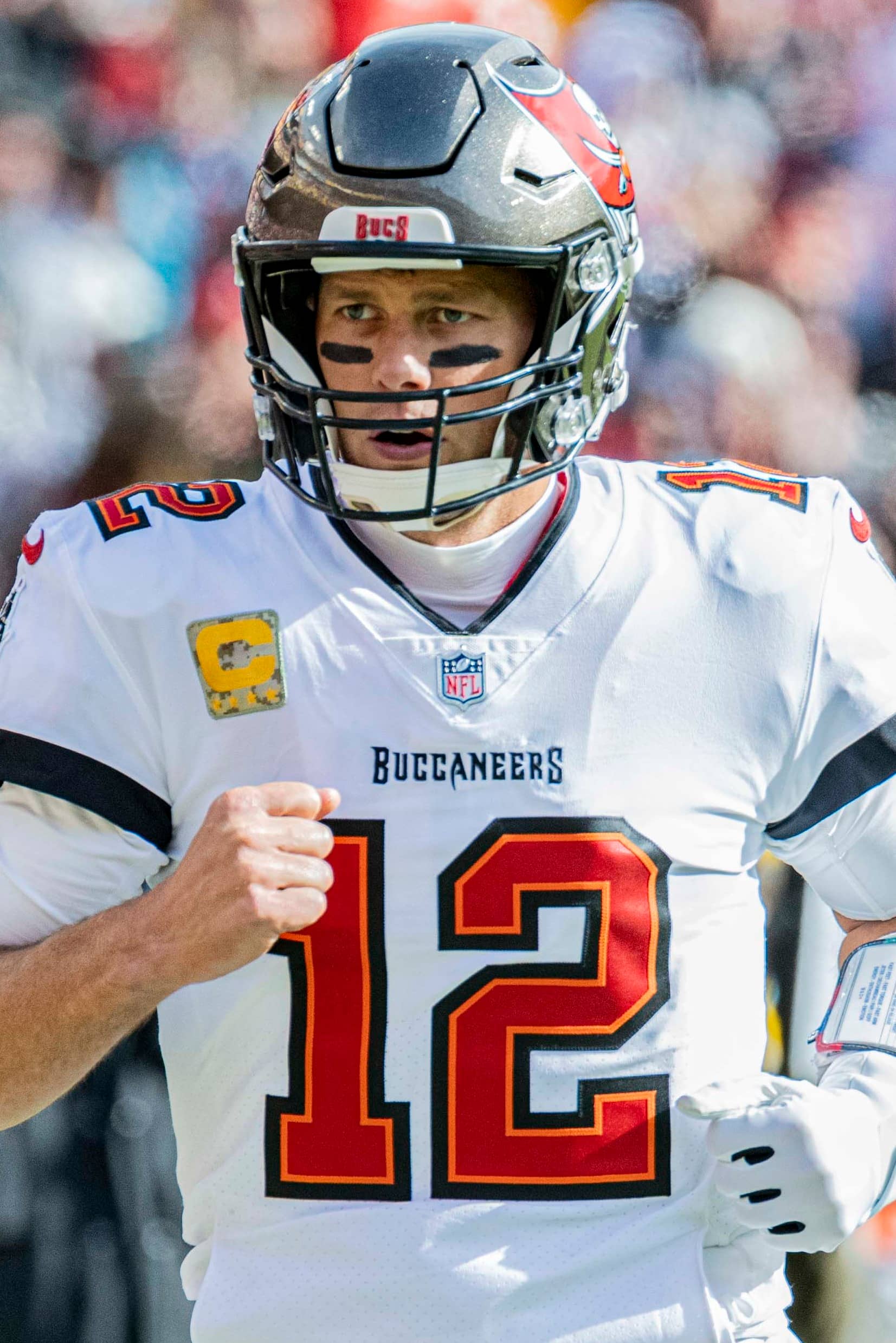
Miami is not alone in its struggles. The Tampa Bay Buccaneers also sit at 0-2 after a 23-19 loss to the Cleveland Browns on Sunday, meaning two of Florida's three NFL franchises opened the season without a win.
That shared difficulty is unusual and has consequences for the state's football economy. Florida's NFL teams draw regional television audiences, and early struggles affect viewership, attendance and the local business activity that surrounds home games.
For fans, the concentration of disappointment across the state's professional teams stands in contrast to the college picture, where Florida beat Auburn on the road and Miami's Hurricanes remained unbeaten. The state's football weekend produced markedly different outcomes at different levels.
The Jacksonville Jaguars complete the state's NFL contingent, and the collective performance of the three franchises shapes how much of Florida's substantial football audience stays engaged through October and November.
The season's remaining path
Seventeen games leaves Miami fifteen to work with, which is sufficient to build a playoff resume if the team addresses its problems quickly. Recovery from 0-2 requires winning at a rate that 0-2 teams historically do not achieve, but it has been done.
The division schedule provides the most direct opportunity. AFC East games are worth more than their single-game value because they affect both teams' records in the standings, and Miami's ability to win those games determines whether the division race remains accessible.
Injury management will matter as much as scheme adjustment. The Dolphins' recent seasons have been shaped substantially by availability at key positions, and depth becomes the operative variable in a season where a team cannot afford additional losses.
The organizational question sits in the background. Consecutive losing seasons or a collapse following early struggles typically prompts evaluation of coaching and front office direction, and a 0-2 start places that conversation on the calendar earlier than anyone in the building would prefer.
What the fan base is weighing
Dolphins supporters have been through several cycles of promising starts that did not survive December, and the current situation inverts that pattern by front-loading the disappointment. Whether that is better or worse depends on whether the team improves, and two games provide insufficient evidence either way.
Season ticket economics in South Florida respond to results with a lag. Renewals are decided in the spring, which means a difficult season affects revenue in the following year rather than immediately, and the near-term financial impact shows up in single-game sales and secondary market pricing.
The secondary market is already a buyer's environment for Florida teams. Tickets for Florida professional games routinely clear below face value in the hours before kickoff, a pattern that reflects both the state's transient population and the competition for entertainment spending in major metropolitan markets.
Television remains the more important commercial channel. Regional viewership for Dolphins games shapes advertising value and the league's scheduling decisions for national windows, and a team that falls out of contention early loses the prime slots that raise its profile.
Hard Rock Stadium's bigger calendar
The Dolphins' venue carries a workload beyond the NFL season. Hard Rock Stadium hosts the Miami Open tennis tournament each spring, college football including Miami Hurricanes home games, international soccer, and major events that have included championship-level competition across several sports.
That multi-purpose role has driven substantial private investment in the facility over the past decade, including canopy construction, seating reconfiguration and premium hospitality expansion. The building's revenue model depends on year-round utilization rather than on ten NFL dates.
For South Florida's economy, the stadium functions as an events anchor generating hotel, restaurant and transportation activity across Miami-Dade and Broward counties. The NFL season is the most visible piece of that calendar but not the largest share of its economic output.
The practical consequence for fans is that the venue's health does not depend entirely on the team's record. A disappointing Dolphins season reduces one revenue stream while the surrounding calendar continues, which insulates the operation in a way that single-purpose stadiums are not.
What's next
The Dolphins need a win, and the immediate priority is avoiding 0-3. The specific opponent matters less than the result, given how sharply playoff probability declines at three losses.
Offensively, the target is straightforward: generate more than 13 points and restore the explosive element that has defined the unit. That likely requires better protection and a functioning running game rather than a schematic reinvention.
For fans, the weeks ahead will reveal which version of this team is real. A roster capable of beating quality opponents does not typically lose by 22 points, and a roster that loses by 22 points does not typically contend. Miami has fifteen games to establish which description fits.
Spotted an issue with this article?
Have something to say about this story?
Write a letter to the editorComments
No comments yet. Be the first to weigh in.
Related Coverage
Buccaneers Sit 0-2 After 23-19 Loss to the Browns, Mayfield's Former Team
7h ago

Padres Rout Marlins 8-2 as Miami Plays Spoiler in a Jammed National League Wild Card Race
17h ago
No. 5 Miami Holds Off Wake Forest 33-20 With Two Starting Cornerbacks Sidelined
17h ago
Jaguars Carry the NFL's Longest Active Win Streak Into Denver
19h ago