Driver Charged With DUI After Entering Hillsborough Fatal Crash Scene
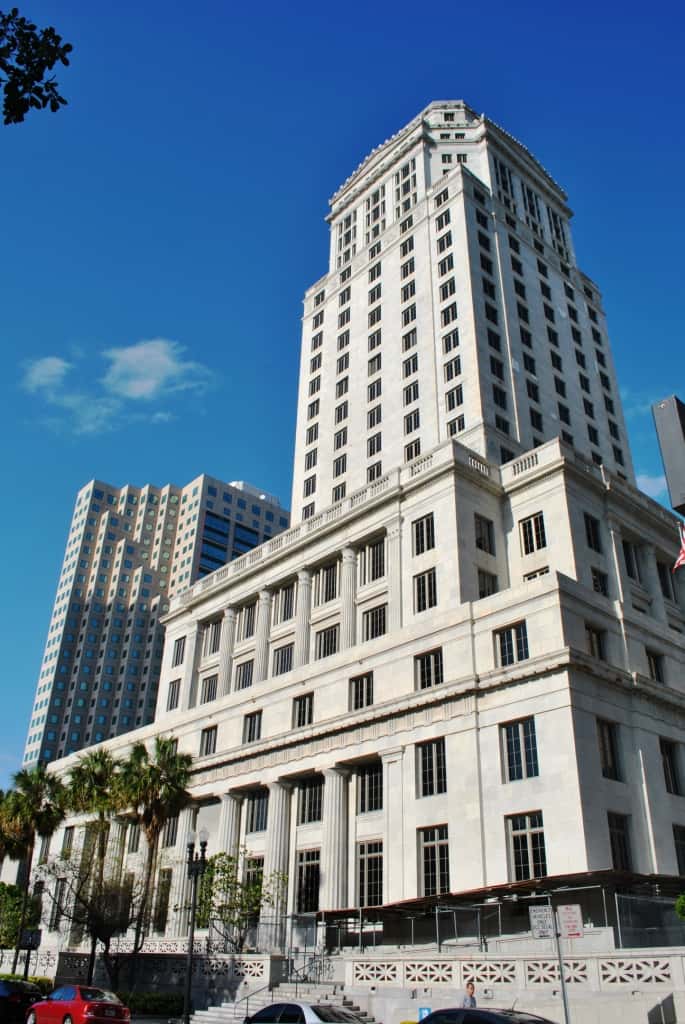
A driver is accused of steering onto the sidewalk of an active fatal traffic crash investigation in Hillsborough County early Sunday morning, according to the Hillsborough County Sheriff's Office, and was arrested on a driving under the influence charge after deputies say he failed a field sobriety test.
Deputies were working the scene of a traffic fatality at Bruce B. Downs Boulevard and North 43rd Street at approximately 3 a.m. Sunday. According to the sheriff's office, a blue Kia Sportage drove onto the sidewalk where investigators were working, with the driver passing marked patrol vehicles whose emergency lights were blocking the roadway.
Deputies identified the driver as Leela Padileti, 29. The sheriff's office said deputies boxed the vehicle in and conducted a field sobriety exercise, which they say the driver failed, leading to the arrest. Body camera footage released by the agency shows the driver telling deputies he had consumed several drinks at a club in St. Petersburg before arriving at the location. Padileti has been charged and is presumed innocent unless and until convicted.
What deputies described
The account provided by the sheriff's office describes a sequence that traffic homicide investigators consider among the more dangerous conditions they work in.
A fatal crash investigation requires deputies to be on foot in the roadway for an extended period, documenting evidence, taking measurements and photographing scene conditions. That work cannot be done from inside a vehicle, and it frequently occurs at night.
Marked patrol vehicles with activated emergency lighting are the primary protective measure, positioned to block traffic lanes and create a buffer between moving vehicles and personnel on foot. According to deputies, those vehicles were in place and were passed.
The location, Bruce B. Downs Boulevard at North 43rd Street, sits in the New Tampa corridor, a multi-lane arterial that carries substantial traffic volume through a heavily developed area.
The charge is driving under the influence. Under Florida law, DUI can be established either through a blood alcohol concentration of 0.08 or higher or through evidence that a driver's normal faculties are impaired, which is where field sobriety observations and officer testimony become relevant.
Florida's Move Over Law
Florida has a statute specifically designed to protect people working on the roadside, and it has been expanded repeatedly.
The Move Over Law requires drivers approaching an emergency vehicle, law enforcement vehicle, tow truck, utility vehicle, sanitation vehicle or road maintenance vehicle displaying warning lights to move over to a lane away from the vehicle when driving on a road with multiple lanes in that direction. When moving over is not possible or safe, the driver must slow to a speed 20 miles per hour below the posted limit.
The law was broadened to include disabled vehicles displaying hazard lights, flares or emergency signage, which means the obligation now applies to ordinary motorists stopped on the shoulder as well as to official vehicles.
Violations carry fines and points against a driver's license. Where a violation results in injury or death, considerably more serious charges are available.
Law enforcement agencies across Florida run periodic enforcement campaigns around the statute, and the Florida Highway Patrol has repeatedly identified roadside worker safety as a priority given the number of officers, tow operators and road workers struck on Florida highways each year.
The scale of impaired driving in Florida
Impaired driving remains a persistent contributor to Florida's traffic fatality total.
Florida's crash statistics, compiled by state transportation and highway safety agencies, consistently show alcohol involvement in a meaningful share of fatal crashes, with the highest concentration in overnight hours on weekends. The window between midnight and 4 a.m. on Saturday and Sunday mornings is the most dangerous period on Florida roads by that measure.
Penalties for a first DUI conviction in Florida include fines, license revocation, probation, community service, mandatory DUI school and possible jail time, with penalties escalating substantially for higher blood alcohol readings, for repeat offenses and where a crash causes injury or death.
Florida also has an implied consent law, under which drivers who refuse a lawful breath, blood or urine test face administrative license suspension separate from any criminal case.
DUI manslaughter, where an impaired driver causes a death, is a felony carrying a substantial mandatory minimum prison term.
The traffic homicide investigation
The underlying fatal crash that brought deputies to the intersection remains a separate investigation.
Traffic homicide investigations in Florida are conducted by specially trained investigators and are considerably more involved than routine crash reports. They typically include scene mapping, vehicle inspection, examination of event data recorders where available, review of any surveillance or dashcam footage, witness interviews and often reconstruction analysis.
Those investigations frequently take weeks or months to complete, and charging decisions in the underlying crash, if any charges result, would come from the State Attorney's Office for the Thirteenth Judicial Circuit, which covers Hillsborough County.
The length of that process is precisely why deputies remain at scenes for extended periods, and why those scenes create prolonged exposure for personnel working in live traffic environments.
What Hillsborough drivers should know
The practical guidance for drivers encountering an emergency scene is straightforward. Reduce speed well before reaching the scene. Move to the lane furthest from the emergency vehicles when it is safe to do so. Do not attempt to drive around blocking vehicles or through cones. Follow directions from officers on scene, including detours that may seem inconvenient.
Drivers should also recognize that emergency lighting at night creates visual conditions that make judging distance and lane position more difficult. Slowing down compensates for that.
For anyone who has been drinking, the alternatives available in the Tampa Bay area are extensive: rideshare services operate throughout the region overnight, and the cost of a ride is a rounding error against the financial and personal cost of a DUI arrest, let alone a crash.
The sheriff's office release of body camera footage in this case reflects a broader practice among Florida agencies of publicizing impaired driving arrests as a deterrent message, particularly where the circumstances are unusual enough to draw attention.
How a DUI case is built
The evidentiary structure of a Florida DUI case is worth understanding, because it explains why field sobriety exercises and body camera footage feature so prominently in these arrests.
Florida law permits conviction on either of two theories. The first is a blood alcohol concentration of 0.08 or higher, established through breath or blood testing. The second is impairment of normal faculties, which does not require a specific numerical reading and rests on observed behavior.
Field sobriety exercises are standardized tests, including horizontal gaze nystagmus, walk and turn, and one leg stand, administered under protocols designed to produce comparable results across officers. Performance on them supports the impairment theory and provides probable cause for arrest.
Body camera footage has become central to both prosecution and defense in these cases. It captures the driver's speech, coordination and statements, and it also documents whether the officer administered the exercises according to protocol, which is a common defense challenge.
Statements made by a driver at the scene, including admissions about drinking, are frequently the most damaging evidence, and they are captured on camera in a way that leaves little room for later dispute about what was said.
Roadside safety in Florida by the numbers
The risk to people working on Florida roadsides is not theoretical, and it is a recurring subject in law enforcement safety data.
Nationally, struck-by incidents are a leading cause of death for law enforcement officers in the line of duty, alongside firearms-related deaths and vehicle crashes. Tow truck operators, emergency medical personnel, firefighters and road construction workers face comparable exposure.
Florida's specific risk profile is elevated by several factors: a high volume of vehicle miles traveled, a large population of visitors unfamiliar with local roads, extensive multi-lane arterial roadways of the type where this incident occurred, and a substantial share of crashes occurring in darkness.
Agencies have responded with tactical adjustments as well as enforcement. Positioning patrol vehicles at an angle to create a physical barrier, using additional blocking vehicles, deploying cones and flares well upstream of the scene, and wearing high-visibility apparel are all standard practice.
None of those measures protects against a vehicle that drives past marked patrol cars with activated emergency lighting, which is what deputies described in this case, and which is the specific scenario that the Move Over Law and impaired driving enforcement are both meant to prevent.
Hillsborough County's road network adds its own risk factors. The county contains a mix of high-speed suburban arterials, interstate corridors carrying substantial freight volume, and dense urban streets in Tampa, and it has consistently ranked among Florida's counties with the highest traffic fatality totals.
The county has invested in Vision Zero planning and in engineering changes intended to reduce severe crashes, including intersection redesigns, lighting improvements and pedestrian infrastructure. Those measures address crash likelihood and severity. They do not address impairment, which remains a behavioral problem that engineering can mitigate but not solve.
What's next
The DUI case will proceed through the Hillsborough County court system. Following arrest and booking, a defendant appears before a judge for first appearance, where bond is addressed. The State Attorney's Office then reviews the case and files formal charges, and the matter proceeds through arraignment and pretrial proceedings.
The defendant is entitled to the presumption of innocence and to legal representation, and the charge represents an accusation rather than a finding of guilt.
The separate traffic homicide investigation into the original fatal crash continues, and the sheriff's office has not released information about that crash's circumstances or the identity of the person killed.
For Hillsborough County, the incident is a reminder of a risk that law enforcement agencies raise regularly but that drivers tend to underestimate: the most dangerous place for a first responder in Florida is frequently not a confrontation, but the shoulder of a road at three in the morning.
Spotted an issue with this article?
Have something to say about this story?
Write us a letterComments
No comments yet. Be the first to weigh in.
Related Coverage

St. Johns County inmate accused of trying to arrange murder of witness in his drug case
1h ago
Six killed in fiery Florida's Turnpike crash after SUV strikes Road Ranger truck in Orange County
1h ago

12 hurt, including six juveniles, in shooting near FAMU's Bragg Memorial Stadium after homecoming game
5h ago

Self-Proclaimed Witch Shannon Ryan Sentenced to Life Without Parole for 2020 Murder of Young Mother Leila Cavett
1d ago