Florida Dengue Outbreak Reaches 425 Local Cases as Virus Spreads to 11 Counties
Florida's 2026 dengue outbreak reached 425 locally acquired cases through Oct. 17, after the state added 57 new local infections in a single week, according to the Florida Department of Health's latest weekly arbovirus surveillance report. Local transmission has now been confirmed in 11 counties, up from eight a week earlier, and the virus has spread beyond its Tampa Bay core into Central Florida, the Space Coast and South Florida.
Hillsborough County remains the center of the outbreak with 346 cases, about 81% of the statewide total. The 2026 count is already more than double Florida's previous record of just under 200 locally acquired cases in 2023, and nearly seven times the 62 local cases the state recorded in 2025.
What the latest state report shows
The Week 41 report, covering Oct. 11 to 17, said 57 cases of locally acquired dengue were reported that week. In all, 425 locally acquired cases and 20 positive mosquito pools have been reported from 11 counties so far this year. A week earlier, through Oct. 10, the state's count stood at 368 cases in eight counties.
The department's breakdown by month of symptom onset shows how quickly the outbreak built over the summer: 21 cases began in July, 160 in August, 226 in September and 18 so far in October. Because cases are confirmed and reported days or weeks after symptoms start, the October figure is expected to grow as more test results come in.
Nearly every local case that has been typed in a lab is the same strain. Of the 425 cases, 393 were identified as dengue serotype 2 (DENV-2), two as serotype 3 in Miami-Dade County, and 30 had an unknown serotype. One case was reported in a person who does not live in Florida.
Where dengue is spreading
The state's county-by-county breakdown of locally acquired cases through Oct. 17 is below.
| County | Local cases (2026) | Notes |
|---|---|---|
| Hillsborough | 346 | Outbreak center; 19 DENV-2 positive mosquito pools |
| Pinellas | 51 | Second-largest cluster |
| Miami-Dade | 9 | Includes two DENV-3 cases |
| Orange | 8 | Onsets from August into October |
| Pasco | 4 | One positive mosquito pool |
| Citrus | 2 | Onsets in September and October |
| Brevard | 1 | September onset |
| Broward | 1 | September onset |
| Manatee | 1 | September onset |
| Palm Beach | 1 | July onset |
| Polk | 1 | First local case announced in September |
| Statewide | 425 | 11 counties |
The report does not yet include Seminole County. On Oct. 21, after the report's cutoff, the Florida Department of Health in Seminole County confirmed a locally acquired dengue case and issued a mosquito-borne illness advisory, the county's first of 2026, WFTV reported. The department said it is working with Seminole County Mosquito Control on surveillance, prevention and control. If the case is added to the next weekly report, Seminole would become the 12th Florida county with local transmission this year.
Neighboring Orange County's cluster began with a case in the Pine Hills area on Sept. 2, followed by cases in Apopka, and the county upgraded its advisory to an alert on Sept. 18, according to WFTV. Brevard County reported its locally acquired case on Oct. 17 and stepped up monitoring and overnight spraying.
As of Oct. 17, the state listed Alachua, Citrus, Duval, Hillsborough, Miami-Dade, Orange, Pasco and Pinellas counties under a mosquito-borne illness alert, and Bay, Brevard, Broward, Holmes, Leon, Manatee, Martin, Palm Beach, Polk and Walton counties under an advisory. Those designations cover all mosquito-borne diseases the state tracks, including West Nile virus and eastern equine encephalitis, not dengue alone.
A historic outbreak for the mainland
Federal officials have cautioned that their historical data are limited, but state and journal sources suggest Florida's 2026 total is the most dengue cases in a calendar year for any state since at least the 1940s, The Associated Press reported in early October, when the count stood at about 250. The case count has risen by roughly 175 since then.
The AP noted that Hawaii had the largest state outbreak since 2009 and 2010, with 264 locally acquired cases over six months in 2015 and 2016. Florida passed that mark in early October. Dengue had not been reported as acquired in the continental United States outside the Texas-Mexico border area from 1945 until Key West recorded cases in 2009 and 2010.
The outbreak has been deadly. In September, the Florida Department of Health confirmed that an elderly Tampa woman who died Sept. 4 had dengue. WUSF reported she was 80 years old and was bitten near her South Tampa home, and called it the region's first dengue death in about 100 years.
Travel continues to seed new infections. The state has recorded 320 travel-associated dengue cases in 2026, 200 of them in Miami-Dade County. Of those imported cases, 266 involved travel to Cuba, and the dominant serotype among them is DENV-2, the same type driving the local outbreak.
How counties are responding
Pasco, Hillsborough and Pinellas counties declared local states of emergency in late September to speed up mosquito control and open access to additional resources. The orders last seven days unless extended, WUSF reported. Hillsborough expanded aerial and ground spraying, including low-flying helicopter treatments over South Tampa, East Tampa, Seminole Heights, Bloomingdale and Riverview, and inspectors have been checking properties for pooled water where mosquitoes breed.
Clearwater released 10,000 gambusia mosquitofish into four city lakes to eat mosquito larvae. Orange County officials planned aerial spraying in October as their local count grew, according to WFTV.
The federal Centers for Disease Control and Prevention had not been asked to send disease investigators as of early October, but provided the state health department $800,000 in assistance, a CDC spokesman told the AP.
Experts have warned the threat may not fade after this season. Most Tampa Bay residents have no prior immunity to the virus, a Tulane University expert told the AP, and a University of Florida researcher said dengue could become more common in the state.
Symptoms and who is at risk
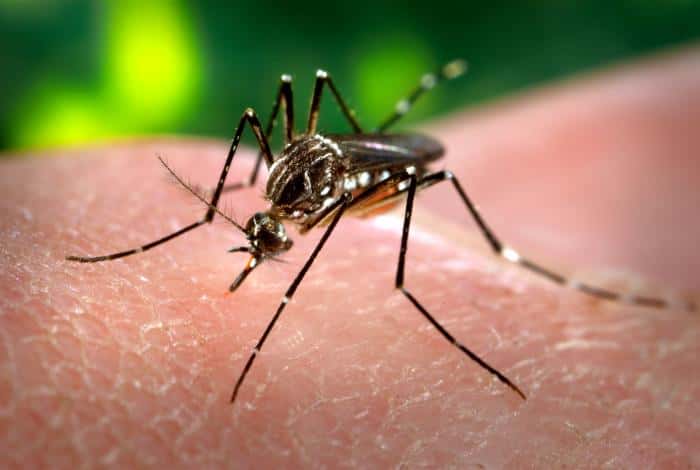
Dengue spreads through the bite of an infected Aedes aegypti mosquito, a species that breeds in small containers of standing water around homes. The disease is not contagious from person to person, according to the Florida Department of Health in Hillsborough County.
Many infections cause no symptoms. When illness occurs, it often resembles the flu, with fever, severe muscle aches, joint pain and sometimes a rash, usually without respiratory symptoms. Symptoms can appear within 15 days of a bite. Severe cases can lead to bleeding, shock and death. A second infection with a different serotype carries a higher risk of severe disease, which is one reason health officials track serotypes closely.
Anyone with symptoms who may have been exposed should contact a health care provider and their county health department. The Hillsborough department lists 813-307-8010, and DOH-Seminole lists 407-665-3243.
How to protect yourself: drain and cover
State and county health officials urge Floridians to follow the department's long-running drain-and-cover guidance:
- Drain standing water from garbage cans, gutters, buckets, pool covers, coolers, toys, flowerpots, discarded tires and any other container where rain or sprinkler water collects. A single water-filled tire can support hundreds of breeding mosquitoes, according to DOH-Hillsborough.
- Empty and clean birdbaths and pet water bowls at least once or twice a week.
- Cover skin with shoes, socks, long pants and long sleeves when outdoors while mosquitoes are active.
- Apply an insect repellent registered by the U.S. Environmental Protection Agency to exposed skin and clothing. The department lists DEET, picaridin, oil of lemon eucalyptus, para-menthane-diol and IR3535 as effective ingredients. Health officials say registered repellents are safe and effective when used as directed, including for pregnant and breastfeeding women.
- Cover doors and windows with screens, and repair damaged screening on windows, doors, porches and patios.
What's next
The Department of Health publishes its arbovirus report weekly, and the Week 42 report covering Oct. 18 to 24 is expected to reflect the Seminole case and any new infections in Tampa Bay and Central Florida. Cooler, drier weather later in the fall typically reduces Aedes aegypti activity, but with October onsets still being reported and new counties joining the list, health officials say residents statewide should keep eliminating standing water and using repellent until mosquito season winds down.
Spotted an issue with this article?
Have something to say about this story?
Write us a letterComments
No comments yet. Be the first to weigh in.
Related Coverage

Florida ABA Therapy Providers Say Molina Has Not Paid Them Since Taking Over Children's Medical Services Plan
1d ago

Moffitt Opens 250,000-Square-Foot Cancer Research Center at Speros Campus in Pasco County
1d ago

DeSantis Says Florida Fentanyl Deaths Fell Nearly 60% Since 2023, Crediting State's Trafficking Crackdown
4d ago
Miami Archbishop Thomas Wenski Accuses AG James Uthmeier of 'Classic Bullying' Over Catholic School Vaccine Rules
4d ago