DUI Charge Follows Fatal Pedestrian Crash on US-98 in Citrus County
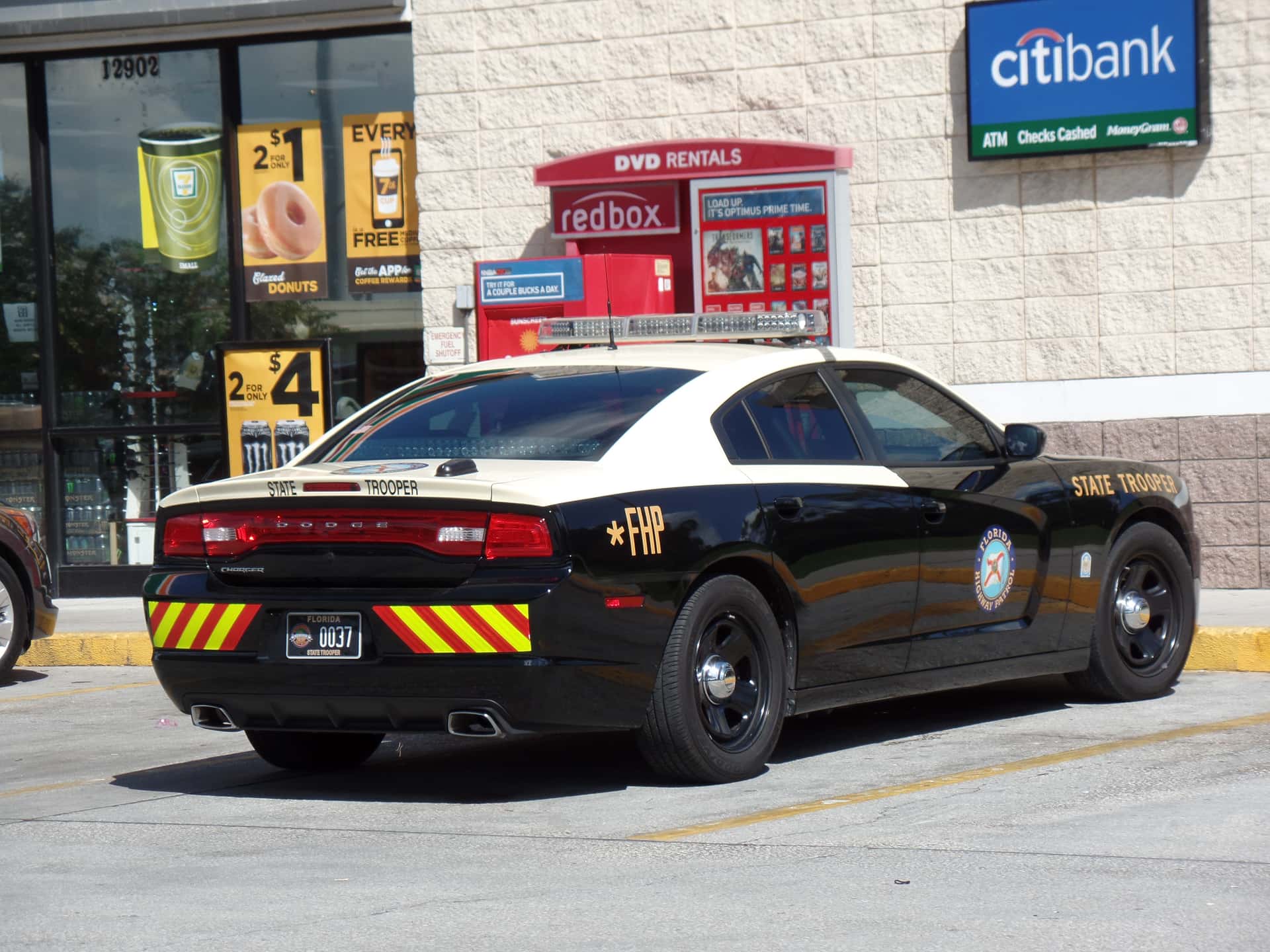
The Florida Highway Patrol arrested a Dunnellon driver on a driving under the influence charge following an early morning crash on US-98 in Citrus County that killed a pedestrian. According to FHP, the collision occurred around 3 a.m. on Tuesday, August 18.
Troopers said Timothy Tyler Corcoran, 32, was driving a Nissan Xterra northbound on US-98 when the vehicle struck a man walking in the roadway just north of West Ashburn Lane. The pedestrian suffered fatal injuries and was pronounced dead at the scene. Corcoran was arrested on a DUI charge following an initial investigation at the crash site.
Corcoran has not entered a plea and is presumed innocent. A DUI arrest at a crash scene reflects a trooper's probable cause determination and is not a finding of impairment by a court.
What the Highway Patrol reported
The crash occurred in darkness on a state highway, a set of conditions that recurs in a large share of Florida's fatal pedestrian collisions. US-98 in that stretch is a rural highway with limited lighting and no continuous pedestrian infrastructure.
The initial FHP investigation produced the DUI arrest, meaning troopers developed probable cause at the scene. Formal charging decisions follow, and whether additional charges are filed depends on toxicology results and the completed traffic homicide investigation.
Florida law provides for a DUI manslaughter charge when a driver operating under the influence causes the death of another person. That is a second-degree felony carrying substantial penalties, and it is a separate charge from a simple DUI.
Traffic homicide investigations in Florida typically take weeks to complete. Blood analysis, crash reconstruction and witness interviews all feed into the final report that prosecutors use to make charging decisions.
Florida's pedestrian safety record
Florida has among the highest pedestrian fatality rates in the country, a distinction the state has held for years across changes in traffic volume, economic conditions and enforcement priorities.
Several Florida metropolitan areas appear consistently near the top of national rankings for pedestrian danger. The underlying causes are structural: wide arterial roads designed for vehicle throughput, long distances between marked crossings, extensive development along highways that were designed as rural corridors, and year-round darkness in early morning and evening commuting hours.
The nighttime concentration is well documented. A substantial majority of pedestrian fatalities nationally occur in the dark, and Florida's pattern matches that. Vehicle speed and driver impairment both increase during overnight hours.
Rural and suburban highways like the US-98 corridor present the specific hazard of pedestrian activity on roads without sidewalks. When development occurs along a highway built for through traffic, people walk on the shoulder or in the roadway because there is nowhere else to walk.
The DUI enforcement picture
Impaired driving remains a persistent factor in Florida traffic deaths. The Florida Highway Patrol conducts DUI enforcement alongside county sheriff's offices and municipal police departments, with periodic saturation patrols and checkpoints.
Florida's DUI statute sets the per se limit at a blood or breath alcohol level of 0.08, with enhanced penalties above 0.15 and for drivers with a minor in the vehicle. The state also prosecutes impairment by controlled substances under the same statute.
Refusal to submit to a breath, blood or urine test carries administrative license suspension under Florida's implied consent law, and a second refusal is itself a criminal offense.
DUI manslaughter, when charged and proven, carries a mandatory minimum prison sentence in Florida along with permanent license revocation. Sentences in such cases frequently exceed the mandatory minimum depending on the circumstances.
Other recent Florida DUI cases
The Citrus County case is one of several DUI-related fatal crash prosecutions moving through Florida courts this summer, reflecting both the frequency of these incidents and the length of the investigative process that follows them.
A driver was charged with DUI manslaughter after two people died in a crash in Lutz, in Hillsborough County, according to FHP. A driver was arrested on DUI manslaughter charges after a fatal crash on State Road 16 in St. Johns County earlier this month. A driver was arrested in Brevard County in connection with a DUI crash that killed three people.
FHP has also made arrests in older cases as investigations concluded, including a DUI arrest connected to a fatal single-vehicle rollover crash from 2025.
Each of those cases involves defendants who are presumed innocent and whose cases have not been resolved. They are noted here to illustrate the volume rather than to characterize any individual case.
What this means for Florida drivers and pedestrians
For drivers, the practical points are unchanged and well established. Impairment begins below the legal limit, fatigue compounds it, and overnight driving on unlit rural highways provides the least margin for error of any driving Floridians routinely do.
For pedestrians, visibility is the controllable factor. Reflective clothing, lights and walking facing traffic where no sidewalk exists all measurably reduce risk, though none of them substitute for infrastructure that does not exist.
For local governments, the infrastructure question is the durable one. Sidewalks, lighting, marked crossings with appropriate spacing, and speed management on arterial roads are the interventions with demonstrated effect on pedestrian fatality rates.
Florida's Vision Zero and complete streets initiatives at the state and local level have made progress in some corridors. The state's overall ranking suggests the pace of that progress has not matched the scale of the problem.
How impaired driving cases are built
A DUI arrest at a crash scene and a DUI manslaughter conviction are separated by a substantial evidentiary process, and understanding that process explains why these cases take months.
The initial arrest rests on a trooper's observations: driving pattern, physical indicators, field sobriety exercises and, where administered, a breath test. That establishes probable cause but is not sufficient by itself to prove impairment beyond a reasonable doubt.
Blood analysis is generally the central evidence in fatality cases. Florida law provides for blood draws in cases involving serious bodily injury or death, and laboratory turnaround typically runs weeks.
Crash reconstruction establishes the physical sequence: speed, point of impact, vehicle dynamics and, in pedestrian cases, where the pedestrian was positioned. That analysis matters because the state must prove causation, not only impairment.
Florida's road design problem
Pedestrian fatalities in Florida concentrate on a specific type of road, and identifying it explains most of the state's ranking.
The pattern is multi-lane arterial roads with speed limits of 40 miles per hour or higher, commercial development on both sides, transit stops, and marked crossings spaced a quarter mile or more apart. Those roads generate pedestrian demand while providing almost no safe way to satisfy it.
Florida has a very large inventory of such roads because much of the state was developed after the automobile, with commercial corridors built along highways that were rural when they were designed.
Rural highways like the US-98 corridor present a related problem in a different form: residential and commercial development along a road with no sidewalks, no lighting and high operating speeds.
Retrofitting is expensive and slow. Sidewalk construction, lighting installation, mid-block crossings with signals, and lane reconfiguration all require funding and, frequently, right-of-way acquisition.
What the data says about outcomes
Speed is the variable with the strongest relationship to pedestrian survival. Research has consistently found that survival probability falls sharply as impact speed rises, with a pronounced drop above roughly 30 miles per hour.
That relationship is why speed management, rather than pedestrian education, is the intervention traffic safety researchers emphasize. A pedestrian struck at 20 miles per hour usually survives; the same person struck at 45 usually does not.
Darkness compounds the problem by reducing the distance at which a driver detects a pedestrian, which shortens available reaction time at exactly the speeds where reaction time matters most.
Impairment removes the reaction entirely in many cases. The combination of darkness, high speed and an impaired driver on a road without pedestrian infrastructure describes a substantial share of Florida's pedestrian fatalities, and it describes the circumstances FHP reported in this case.
Citrus County and the Nature Coast
Citrus County sits on Florida's Nature Coast north of Tampa Bay, a county of roughly 160,000 residents with a population older than the state average and an economy built substantially on retirement, tourism and services.
US-98 runs through the county as a primary north-south route, carrying regional traffic through areas where residential and commercial development has grown up alongside a highway designed for through movement.
The Florida Highway Patrol has primary jurisdiction on state highways in unincorporated areas, working alongside the Citrus County Sheriff's Office. Traffic homicide investigations on state roads are typically handled by FHP's specialized units.
Counties with older populations face a specific pedestrian safety profile. Older pedestrians are both more likely to be struck, because of slower crossing speeds, and more likely to die from injuries that a younger person would survive.
What's next
Watch for the completed FHP traffic homicide report and the State Attorney's charging decision for the Fifth Judicial Circuit, which covers Citrus, Hernando, Lake, Marion and Sumter counties.
Toxicology results are typically the gating item. Laboratory turnaround in Florida can take weeks, and charging decisions in impaired driving fatality cases usually wait for them.
Watch for the arrest affidavit, which is a public record in Florida and will contain the factual basis troopers presented for the DUI arrest.
Corcoran is charged, not convicted, and the presumption of innocence applies. The Florida Press will report the outcome of the charging decision and any resulting court proceedings.
Florida publishes crash data through the Signal Four Analytics system maintained by the University of Florida, and county and municipal governments use that data to identify corridors with recurring pedestrian crashes. Residents concerned about a specific road can raise it with their local metropolitan planning organization, which sets regional transportation project priorities.
Spotted an issue with this article?
Have something to say about this story?
Write us a letterComments
No comments yet. Be the first to weigh in.
Related Coverage

Federal Jury Convicts Three Naples Men in $30,000 Murder-for-Hire Plot Targeting a Man Whose Brother Wanted Him Dead
34m ago

Woman known only as 'Cinnamon,' found dead on a boat off Key West in 1999, identified through DNA
18h ago
Ex-caregiver charged with aggravated manslaughter in 2023 choking death of autistic man at Fort Lauderdale group home
1d ago

Corvette driver sentenced to 47 years for DUI crash that killed Ormond-by-the-Sea couple on A1A
1d ago