Falcon 9 Set to Close Out the O3b mPOWER Constellation From Cape Canaveral
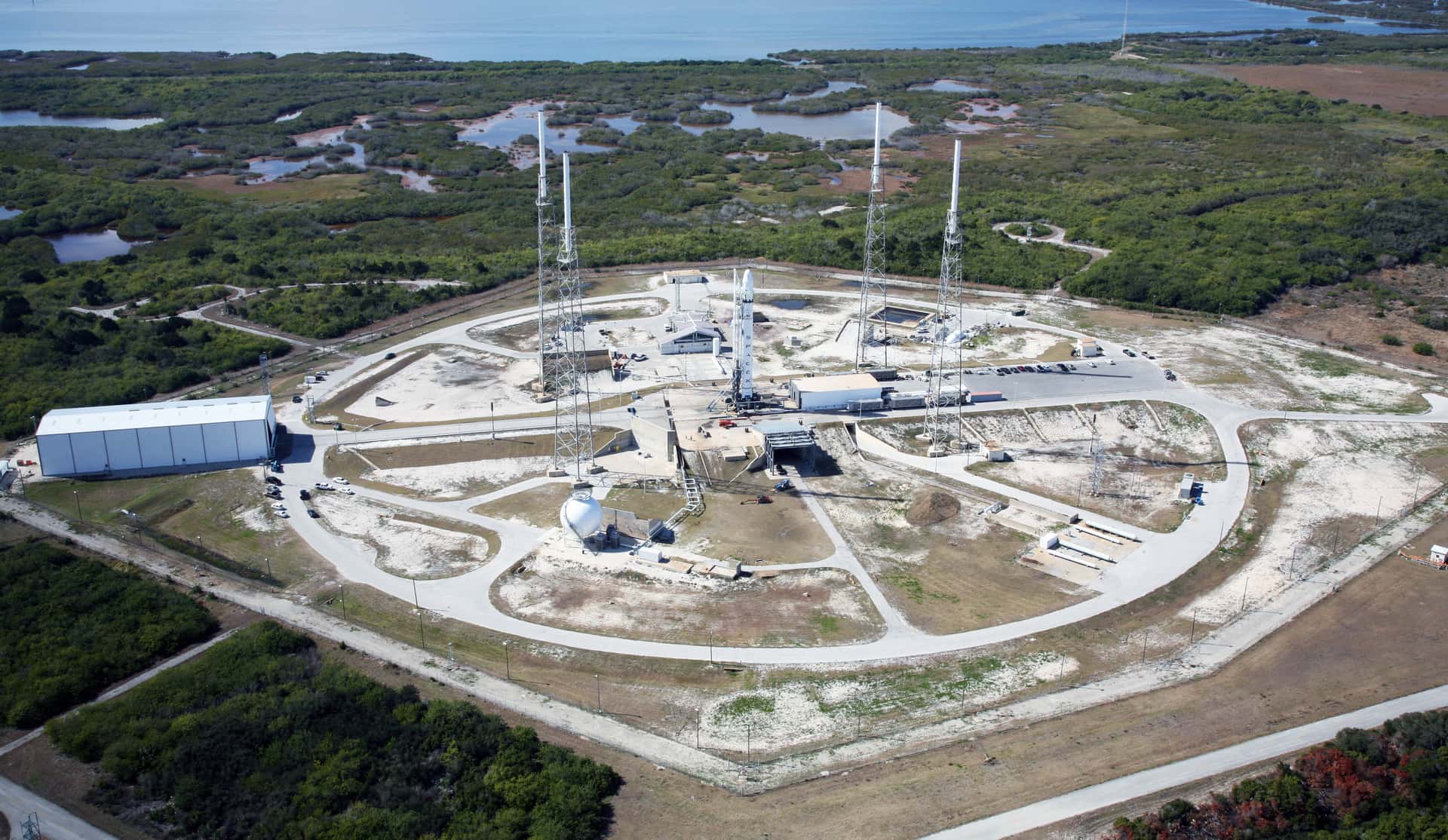
A SpaceX Falcon 9 is scheduled to launch the final three O3b mPOWER satellites on Saturday, September 13, from Space Launch Complex 40 at Cape Canaveral Space Force Station, with a launch window opening at 2:40 p.m. Eastern. The flight completes a broadband constellation whose coverage area includes the Caribbean, Latin America, and the maritime routes that run through Florida's economic orbit.
The launch comes a day after the Crew-13 astronaut mission had originally been scheduled to fly from the same coast. That mission has slipped to no earlier than late September following the detection of an oxidizer leak in the Dragon spacecraft's propulsion system.
The juxtaposition captures the current state of Florida's Space Coast. A crewed mission delays for a technical review while a commercial satellite launch proceeds on schedule the next day, and neither event is unusual enough to disrupt the broader cadence.
What O3b mPOWER does
The O3b constellation operates in medium Earth orbit, a regime between the low Earth orbit used by most communications constellations and the geostationary belt used by traditional broadcast and broadband satellites.
That middle altitude represents an engineering tradeoff. Geostationary satellites remain fixed above one point on Earth, which makes ground antennas simple, but the 22,000 mile distance introduces signal latency of roughly half a second round trip. That delay is tolerable for television and unacceptable for video calls, financial transactions, and interactive applications.
Low Earth orbit constellations minimize latency but require hundreds or thousands of satellites for continuous coverage, because each one passes overhead in minutes. Medium Earth orbit needs far fewer satellites while still cutting latency to a fraction of geostationary levels.
The original O3b name referred to the other three billion, a reference to the global population then without reliable internet access. The mPOWER generation is the constellation's second phase, with higher throughput and the ability to steer capacity toward areas of demand rather than distributing it evenly.
Why the coverage area matters to Florida
The Caribbean basin and Latin America are core markets for this constellation, and Florida sits at the center of the region's commercial and communications architecture.
Miami functions as the primary connectivity hub for Latin America, where undersea fiber cables land and where a substantial share of the region's internet traffic is routed. Satellite capacity over the Caribbean complements that fiber infrastructure, particularly for island nations where a single cable cut can sever a country's connectivity entirely.
The cruise industry is a significant customer for this category of service. Ships departing Florida ports operate for days outside terrestrial network range, and passenger internet has become a competitive product rather than a convenience. Maritime connectivity is one of the applications medium Earth orbit capacity serves well.
Hurricane response is the other Florida relevant application. When a storm destroys terrestrial infrastructure across an island or a coastal region, satellite links restore emergency communications faster than cables can be repaired. Caribbean nations have relied on satellite connectivity repeatedly after major hurricanes.
The Space Coast's operating tempo
Cape Canaveral Space Force Station and Kennedy Space Center now support a launch cadence unlike anything in the facility's history, including the Apollo and shuttle eras. The manifest includes crewed missions, commercial communications satellites, national security payloads, and science missions.
Space Launch Complex 40, the pad for this mission, is one of several active SpaceX facilities on the coast alongside Launch Complex 39A at Kennedy. Other providers operate their own pads, and the density of infrastructure allows multiple missions per week during busy periods.
That cadence has rebuilt Brevard County's economy after the shuttle program ended in 2011. The current workforce is distributed across multiple companies rather than concentrated in a single government program, which makes it more resilient to any one delay or cancellation.
The launch also occurs amid activity elsewhere in the SpaceX manifest, including missions from Vandenberg Space Force Base in California and Starship testing from Texas. Florida's share of that activity is the largest.
What residents and visitors should expect
Launches from Cape Canaveral are visible across a wide area of Central Florida. An afternoon launch offers less dramatic viewing than a pre dawn or dusk attempt, when exhaust plumes catch sunlight at high altitude, but the ascent is still visible from beaches across Brevard County and often from farther inland.
Booster recovery has become routine, with first stages returning to a landing zone at the Cape or to a droneship offshore depending on mission requirements. Return to launch site landings produce sonic booms audible across Brevard and sometimes into adjacent counties.
Launch times move frequently. Weather, range conflicts, and technical holds all shift schedules, and windows can slip by hours or days. Anyone planning to watch should check the provider's own channels close to the attempt rather than relying on a schedule published days in advance.
The commercial space economy in Florida
Florida's position in commercial spaceflight now extends beyond launch operations. Satellite manufacturing, ground systems, mission operations, and supporting supply chains have located in the state, and the Space Coast has developed the workforce density that attracts further investment.
State economic development efforts, including Space Florida, have pursued that expansion deliberately, offering financing and infrastructure support to bring aerospace operations to the state.
The employment profile differs from the shuttle era. Commercial operations employ fewer people per launch than government programs did, but they launch far more frequently, and the diversity of customers means no single program cancellation idles the workforce.
The competitive pressure from low Earth orbit
Completing a medium Earth orbit constellation in 2026 means entering full service in a market that has changed substantially since the system was designed, and the change has come from below.
Large low Earth orbit constellations now provide broadband service across most of the globe, including maritime and aviation markets that were previously served almost exclusively by geostationary and medium Earth orbit systems. Those constellations deliver latency low enough for interactive applications and have scaled to consumer pricing.
The medium Earth orbit argument against them rests on capacity density and on ground segment economics. A smaller number of larger satellites can concentrate substantial throughput over a defined region, which suits customers who need guaranteed capacity in one area rather than global coverage at consumer service levels.
Enterprise and government customers frequently value that guarantee. A cruise line, a mobile network operator extending coverage to remote territory, or a government requiring assured communications over a specific region may prefer contracted regional capacity to a consumer grade global service.
Whether that distinction holds as low Earth orbit operators move into enterprise markets is the commercial question the constellation now faces. The satellites will work as designed. The market they serve is the variable.
What launch cadence has done to satellite economics
The frequency of launches from Florida has changed the underlying economics of the satellite industry in ways that extend well past any individual mission.
When launch was scarce and expensive, satellites were designed to last 15 years or more, built with extensive redundancy, and tested exhaustively, because a failure meant waiting years for a replacement slot. That design philosophy made satellites expensive, which made launches high stakes, which reinforced the conservative approach.
Frequent and cheaper launch inverted the logic. When a replacement can fly within months, designing for a shorter operational life with less redundancy becomes rational. Satellites get cheaper, constellations get larger, and technology refresh cycles shorten from decades to years.
Reusability drove most of that change. Recovering and reflying first stages removed the largest single cost in an expendable launch, and the operational experience accumulated across many flights improved reliability rather than degrading it.
Florida captured a disproportionate share of the resulting activity because the infrastructure was already here. The Cape's existing pads, range instrumentation, and workforce meant the expansion could happen without building a spaceport from nothing.
Space Coast infrastructure and its limits
The current tempo has begun to test constraints that were not binding when launches happened a few times a year.
Range scheduling is one. The Eastern Range coordinates all launches from the Cape and Kennedy, and multiple providers competing for windows requires deconfliction that did not previously exist as a routine problem.
Airspace and maritime closures are another. Each launch requires clearing a corridor, which affects commercial aviation routes into Florida's busy airports and shipping lanes serving Port Canaveral. At low cadence those closures were negligible. At high cadence they accumulate.
Local infrastructure faces the same pressure. Roads, housing, and utilities in Brevard County were sized for a different level of activity, and the aerospace workforce competes for housing in a market already strained by Florida's broader affordability problems.
State and federal investment has followed the growth, but infrastructure lags demand, and that gap is the practical limit on how much further the cadence can increase.
What's next
Completing the O3b mPOWER constellation moves the system from deployment into full operation, and its performance in the Caribbean and Latin American markets will determine whether the medium Earth orbit approach holds its position against rapidly expanding low Earth orbit competitors.
Crew-13 remains the higher profile pending mission from Florida, with NASA to announce a target date once its propulsion system assessment is complete.
Launch schedules are published by SpaceX and by range authorities and are updated continuously. For Florida residents, the reliable approach is to check within a day of any attempt, since anything published earlier is a plan rather than a commitment.
For Brevard County residents, Saturday afternoon is one more entry in a launch calendar that has become part of the ordinary rhythm of life on the Space Coast. That normalization is itself the most remarkable thing about the current era of Florida spaceflight, and it would have been unimaginable to anyone watching from the same beaches 20 years ago.
Spotted an issue with this article?
Have something to say about this story?
Write us a letterComments
No comments yet. Be the first to weigh in.
Related Coverage
Daylight Saving Time Ends Sunday in Florida as Push to Lock the Clock Stalls in the U.S. Senate
58m ago

Poll watchers, DOJ monitors and Florida law: what voters can expect at the polls on Nov. 3
19h ago

María Corina Machado returns to Venezuela after nearly a year in exile, stirring hope and doubt in Doral
21h ago

Free national park entry on Theodore Roosevelt's birthday: what it means at the Everglades, Dry Tortugas and Florida's other park sites
22h ago