Florida Outlasts Auburn 44-39 in a Shootout as Florida State Falls at Alabama
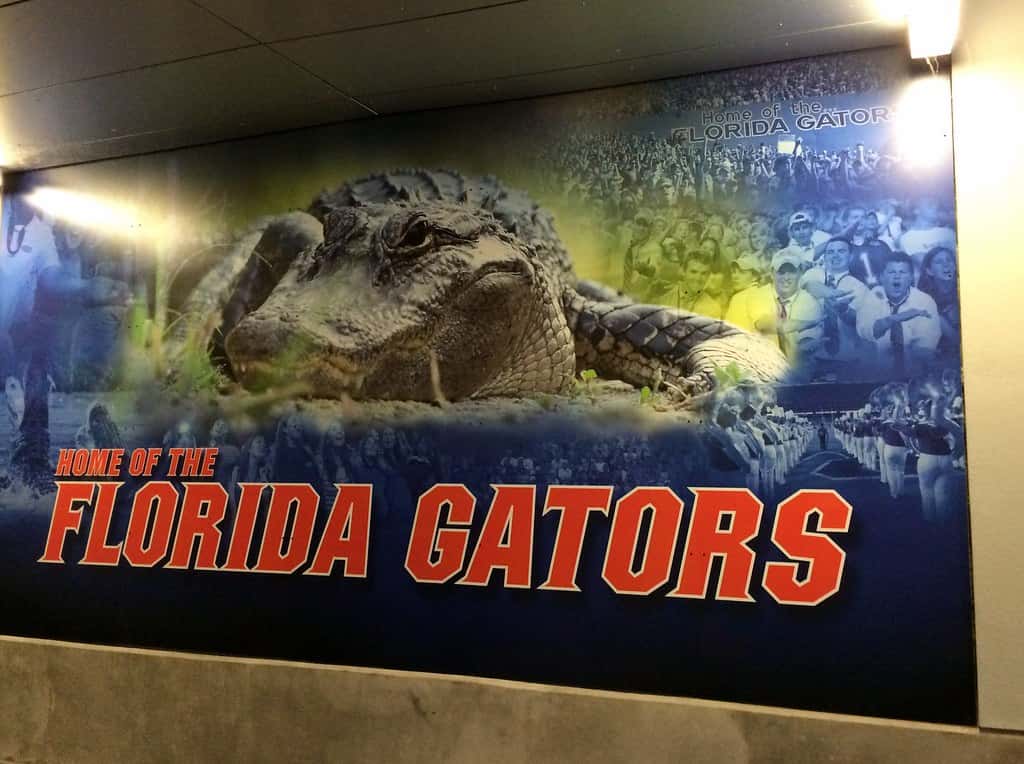
Florida beat Auburn 44-39 on September 19 in a game that produced 83 combined points and gave the Gators a signature Southeastern Conference result. The same weekend delivered very different outcomes for the state's other major programs: Florida State lost 50-36 to No. 10 Alabama, while Miami handled Wake Forest 33-20 on September 18. Taken together, the three results left Florida's flagship football programs in three distinct positions heading into the heart of the conference schedule.
The Gators survive a shootout
Florida's 44-39 win over Auburn was decided by five points in a game where both offenses moved the ball with little resistance. Scoring 44 points against an SEC opponent is a substantial offensive achievement; allowing 39 in the same game is the qualifier that will occupy the coaching staff.
Games of this type tend to hinge on possession count and red zone conversion rather than on any single defensive stop. When neither defense can force consistent punts, the team that wastes fewer trips inside the twenty generally wins, and Florida found enough of those conversions.
SEC road and conference wins carry weight in the postseason calculus that extends well beyond the immediate result. In an expanded playoff structure, a conference win over a Power Four opponent is the currency selection committees weigh, and Florida banked one.
The margin also matters for a program that has spent recent seasons searching for consistency. Winning a close, high-scoring game is a different experience than winning comfortably, and teams that develop the ability to close those games tend to carry it forward.
What the Auburn game revealed
The offensive output suggests Florida has found something that works. Sustaining 44 points against SEC competition requires more than a single explosive component, and it points toward an offense operating with some coherence.
The defensive number is the counterweight. Allowing 39 points at home is not a sustainable formula across an SEC schedule that includes multiple opponents capable of matching or exceeding that output.
Whether the defensive performance reflects scheme, personnel, or simply an opponent playing well is the question the coaching staff faces over the following weeks. Auburn's own offensive capability is part of the context, and one game does not establish a pattern.
Florida's schedule will provide the answer soon enough. The SEC does not offer extended stretches in which a defense can work through problems against soft opposition, and the next several opponents will test whatever adjustments follow.
Florida State's difficult night in Tuscaloosa
Florida State lost 50-36 to No. 10 Alabama on September 19, a result in which the Seminoles scored 36 points and still lost by two possessions. Allowing 50 points to a top-ten opponent on the road is a defensive performance that defines the evening.
The offensive number deserves separate attention. Putting up 36 points against Alabama is not a failure of the offense, and it suggests the Seminoles have offensive capability that will produce results against less formidable opponents.
Road games against top-ten opponents are the hardest environment in college football, and results there are weighted accordingly. A loss in Tuscaloosa is not the kind of result that defines a season by itself.
Florida State opened its 2026 season in Week 0 against New Mexico State on August 29, giving the program an early start to the year and an additional week of competitive reps before conference play. How that early start affects the team's condition through the ACC schedule will become clearer in October and November.
Miami takes care of business
Miami's 33-20 win over Wake Forest on September 18 was the most straightforward of the three results. A 13-point margin over an ACC opponent is the kind of workmanlike outcome that keeps a season on track without generating headlines.
The Hurricanes face Central Michigan on September 26, a non-conference game that arrives at a useful point in the schedule. Games of that type allow depth development and rest for players carrying minor injuries before conference play intensifies.
Miami's position in the ACC race depends heavily on the conference games that follow. The league's structure, without divisions, means the two teams with the best conference records meet in the championship game, which raises the cost of any conference loss.
The Hurricanes and Seminoles will eventually meet in one of college football's longest-running rivalries. Both programs' trajectories through October will determine what that game is worth when it arrives.
The state of Florida college football
Three programs, three different situations. Florida has an SEC win with defensive questions, Florida State has an offense that produced against Alabama and a defense that did not, and Miami has a steady ACC start.
Florida's three Power Four programs compete for the same in-state recruiting base, which makes their relative performance consequential beyond any single season. Recruiting cycles respond to visible success, and high school talent in the state is deep enough to sustain all three when they are winning.
The expanded College Football Playoff changes the calculus for all three. A path to the postseason no longer requires an unbeaten or one-loss season, which means a team that loses in September can still play its way into contention with a strong conference finish.
That structure raises the value of the games immediately ahead. Conference results through October will determine which of the three, if any, remains in the playoff conversation in November.
Florida State's anniversary season
Florida State is marking its 175th anniversary this year, with an expanded Homecoming celebration scheduled for Friday, November 20. The program has announced an extended parade route along with a free concert and carnival for the university and Tallahassee communities.
Anniversary seasons carry expectations that have nothing to do with the schedule. Alumni engagement rises, attendance targets are set higher, and the gap between institutional celebration and on-field results becomes more visible if the two diverge.
Homecoming weekends generate significant economic activity in Tallahassee, filling hotels and restaurants in a city where the university is the dominant institution. An expanded celebration amplifies that effect.
The Seminoles' record by late November will shape the atmosphere. A team in contention turns an anniversary weekend into a celebration; a team out of contention turns it into a reunion.
What it means for Florida fans
The state's college programs are providing more competitive football this fall than its NFL franchises, with the Dolphins and Buccaneers both at 0-2 and the Jaguars at 1-1 through two weeks.
Saturdays in Gainesville, Tallahassee, and Coral Gables remain among the largest regular gatherings in their respective communities. Home game weekends drive hotel occupancy, restaurant traffic, and retail activity that local economies plan around.
Television distribution has made all three programs widely accessible across the state regardless of geography, which means fan bases are less regionally confined than they once were.
Ticket demand tends to track performance with a lag. A team that wins in September sells better in October, and the results from this weekend will affect attendance patterns for the games that follow.
Why 83 combined points happens
High-scoring college football games have become more common as offensive systems have spread and rules have shifted toward protecting quarterbacks and receivers. Tempo offenses that snap the ball quickly increase the number of possessions in a game, and more possessions mechanically produce more points even when efficiency stays constant.
Defensive personnel has not kept pace in the same way. Roster construction rules and the transfer portal have made it harder for programs to build the kind of deep, experienced defensive two-deep that limits explosive plays over four quarters, particularly at positions like safety and interior defensive line where development takes time.
The result is that a 44-39 game in the Southeastern Conference no longer signals two bad defenses. It often signals two offenses operating at a level that any defense would struggle to contain within the current rules and tempo.
That context tempers the alarm about Florida's 39 points allowed without erasing it. The Gators will face opponents whose offenses are less explosive than Auburn's, and the defensive performance against those teams will be the more informative measurement.
Recruiting stakes in a deep state
Florida produces more Division I football talent per capita than nearly any state, and the three Power Four programs inside its borders compete directly for that pool alongside out-of-state programs that recruit it heavily. Results in September affect conversations that continue through the winter signing periods.
Name, image, and likeness arrangements and the transfer portal have compressed the timeline on which those conversations turn. A program that wins can convert momentum into commitments within weeks rather than over a full cycle, and a program that loses can lose players it already had.
That dynamic raises the cost of a difficult September beyond the standings. Florida State's loss at Alabama and Miami's steady start carry recruiting implications that will not be visible in the win-loss column for another year.
It also raises the value of Florida's win over Auburn. An SEC victory in a game decided in the final minutes is the kind of result programs use in living rooms, and the Gators earned one on a national broadcast window.
What's next
Miami plays Central Michigan on September 26. Florida and Florida State continue their conference schedules, where the results will carry more weight for postseason positioning than any non-conference game can.
For Florida, the immediate priority is defensive improvement. Allowing 39 points and winning is a result that will not repeat reliably against the remaining SEC schedule.
For Florida State, the question is whether the offensive production against Alabama travels to ACC opponents and whether the defense can hold up against less explosive offenses. Both will be answered within the next month.
Spotted an issue with this article?
Have something to say about this story?
Write a letter to the editor