FDLE and Florida's Attorney General Report 2,000 Child Predator Arrests Since Early 2025
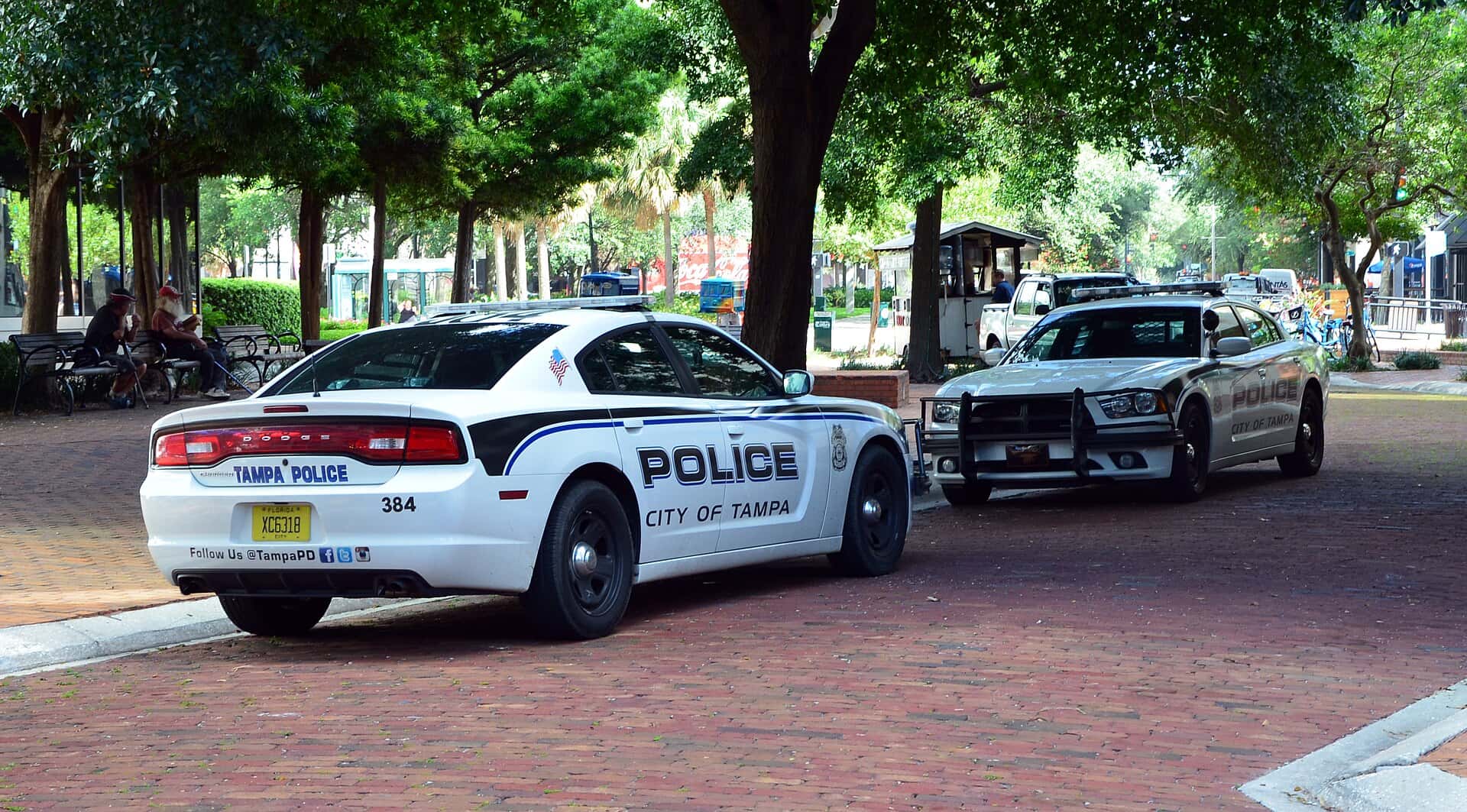
Florida officials say more than 2,000 people accused of preying on children have been arrested in the state since Attorney General James Uthmeier took office in February 2025, a milestone the office announced in mid August. State officials describe the figure as reflecting a sharp expansion in child exploitation investigations and prosecutions carried out with the Florida Department of Law Enforcement and local agencies.
Recent cases announced under that effort include the arrest of Michael Allen Caruso, 67, of Riviera Beach, the Palm Beach County clerk of court, on charges related to child sexual abuse. Caruso has been charged and has not been convicted; the allegations remain to be proven in court and he is presumed innocent.
The announcements matter to Florida families because they describe how the state investigates a category of crime that occurs largely online and across jurisdictions, and because they involve significant use of undercover operations whose scale and methods have drawn both support and scrutiny.
What the state has announced
The 2,000 arrest figure was announced in mid August and covers the period since February 2025. Officials have described the total as encompassing arrests for offenses including possession and distribution of child sexual abuse material, online solicitation of minors, and related charges.
Among the cases announced this year, the Attorney General's office reported the arrest of 58 people in a Marion County sting operation, and separately announced the arrest of 116 people in a human trafficking and child predator operation in Hillsborough County described at a Tampa news conference.
Individual cases announced around the 2,000 arrest milestone included charges against a middle school teacher for possession of child abuse material, according to the office's public statements.
Each of these represents an arrest and a charging decision. Convictions occur later, in court, and arrest totals are not conviction totals.
The Palm Beach County case
The Florida Department of Law Enforcement and the Attorney General's office announced the arrest of Michael Allen Caruso, 67, of Riviera Beach, on charges related to child sex abuse. The announcement was made on August 18.
Caruso served as Palm Beach County's clerk of court, an elected constitutional office responsible for maintaining court records, managing court finances, and serving as county recorder and clerk to the county commission.
Florida's constitution and statutes provide mechanisms for addressing an elected officer facing felony charges, including suspension by the governor pending resolution of the criminal case. That process is separate from the criminal proceeding.
As with every charged defendant, Caruso is presumed innocent. The state carries the burden of proving each element of the charges beyond a reasonable doubt, and no finding of guilt exists at the charging stage.
How these investigations work
Child exploitation investigations in Florida are typically conducted through Internet Crimes Against Children task forces, which combine FDLE personnel, local detectives, and federal partners under a coordinating structure funded in part by the United States Department of Justice.
Two broad investigative approaches predominate. The first involves tracing the distribution of known child sexual abuse material through digital forensics and reports from electronic service providers, which are legally required to report detected material.
The second involves undercover operations in which officers pose as minors or as adults offering access to minors in online spaces, then arrange meetings. Sting operations conducted in this manner produce the large single operation arrest totals that appear in announcements.
Both approaches raise evidentiary and procedural questions that are litigated in individual cases, including chain of custody for digital evidence and, in undercover cases, entrapment defenses. Those questions are resolved by courts case by case.
What it means for Florida families
The practical guidance from law enforcement centers on the platforms where contact typically begins. Investigators consistently describe gaming platforms, social media, and messaging applications as the venues where adults initiate contact with minors.
Recommended steps include reviewing privacy settings on children's accounts, discussing with children that adults sometimes pose as peers online, and establishing that a child can report an uncomfortable interaction without fear of losing device access, which is a common reason children do not disclose.
Reports can be made to the National Center for Missing and Exploited Children through its CyberTipline, to FDLE, or to local law enforcement. Reports involving an immediate threat should go to 911.
Florida maintains a public sex offender registry through FDLE, searchable by address and by name, which is a resource available to parents assessing their immediate area.
Scrutiny and context
Large arrest totals announced at news conferences have drawn attention to how such figures are compiled and what they represent. Arrest counts include charges of varying severity, from possession offenses to attempted contact offenses, and the ultimate disposition of each case varies.
Defense attorneys and some researchers have raised questions about undercover sting methodology, particularly regarding how contact is initiated and how conversations proceed, since those facts determine whether an entrapment defense is available. Those are questions courts resolve.
Public defenders across Florida's circuits handle a substantial share of these cases, and caseload capacity in that system affects how quickly cases move to resolution.
None of that scrutiny bears on the underlying conduct where it is proven. It bears on how the aggregate figures should be read.
What happens to an elected officer facing charges
The Palm Beach County clerk's case raises a question distinct from the criminal proceeding: what becomes of the office while the case is pending.
Florida's constitution authorizes the governor to suspend a county officer charged with a felony or with misfeasance, malfeasance, neglect of duty, or certain other grounds. Suspension is not a finding of guilt; it removes the officer from the duties of the office while the underlying matter is resolved.
The Florida Senate has authority to remove or reinstate a suspended officer. In practice, the Senate frequently defers action until the criminal case concludes, which can leave an officer suspended for an extended period.
When a clerk of court is suspended, the governor may appoint someone to serve in the interim so that the office's statutory functions, including maintaining court records, processing filings, and handling court financial operations, continue without interruption.
If a suspended officer is acquitted or the charges are dropped, reinstatement follows. If convicted of a felony, removal from office results by operation of law.
The scale of the caseload
Behind the announced arrest totals sits a system that must process each case, and its capacity shapes outcomes as much as investigative activity does.
Florida's 20 judicial circuits each have an elected state attorney whose office prosecutes felonies within the circuit. Cases originating from statewide operations are typically referred to the circuit where the conduct occurred, or prosecuted by the Office of Statewide Prosecution where the conduct crosses circuit lines.
Digital forensic examination is the bottleneck in many of these cases. Extracting and analyzing data from phones and computers requires trained examiners and specialized equipment, and backlogs at regional forensic labs can extend case timelines by months.
Public defender offices represent most defendants in these prosecutions, and Florida's public defenders have raised caseload concerns consistently. Adequate defense capacity is what makes convictions durable on appeal, so the resource question affects both sides of the system.
Convictions for offenses involving child sexual abuse material and contact offenses carry sex offender registration requirements, lifetime supervision provisions in some categories, and residency restrictions that vary by local ordinance. Those consequences attach at conviction, not at arrest.
Victim services, including advocates assigned through state attorney offices and through nonprofit child advocacy centers, operate alongside the prosecutions and handle forensic interviews of child victims in settings designed to avoid repeated questioning.
How Florida's task forces are organized
The Internet Crimes Against Children program in Florida operates through regional task forces rather than as a single statewide unit, and the structure explains why announcements often involve multiple agencies.
Florida hosts task forces anchored by agencies in different regions, and each coordinates affiliate agencies within its area. Affiliates include municipal police departments, sheriff's offices, and state agencies that contribute investigators and receive training and forensic support in return.
Funding comes partly from the United States Department of Justice through the national ICAC program and partly from state appropriations. That mix means federal budget decisions affect Florida's investigative capacity directly.
Referrals reach task forces from several directions. Electronic service providers are legally required to report apparent child sexual abuse material they detect, and those reports flow through the National Center for Missing and Exploited Children to the appropriate jurisdiction. Tips also arrive from the public, from schools, and from other agencies.
Because offenders and victims are frequently in different jurisdictions and sometimes different countries, cases often involve coordination with federal agencies including Homeland Security Investigations and the Federal Bureau of Investigation, and prosecution may occur in state or federal court depending on the facts.
What's next
Individual cases announced under this effort will proceed through Florida's circuit courts on their own schedules, with arraignment, discovery, pretrial motions, and either plea or trial.
The Palm Beach County clerk's case will proceed in the Fifteenth Judicial Circuit. Any action regarding the office itself would occur through the constitutional suspension process, separate from the criminal proceeding.
FDLE publishes news releases on its website, and the Attorney General's office publishes announcements through My Florida Legal, which are the primary sources for case specific information.
County clerk of court websites carry the docket entries showing how individual prosecutions progress, which is where the outcome of any specific case eventually appears.
Legislative attention to this area has been consistent, with bills addressing penalties, registration requirements, and investigative authority filed in recent sessions. The 2027 regular session convenes in January, and further proposals are likely given the visibility the enforcement effort has received.
For families, the durable steps remain the practical ones: knowing which platforms children use, maintaining conversations about online contact, and knowing where to report.
Spotted an issue with this article?
Have something to say about this story?
Write us a letterComments
No comments yet. Be the first to weigh in.
Related Coverage

Two Spring Hill men indicted in 2018 home invasion killing of young father in Hernando County
5h ago
Operation Cooked: Undercover Osceola Sting Nets At Least 20 Arrests of Men Accused of Seeking Sex With Children
7h ago

Federal Jury Convicts Three Naples Men in $30,000 Murder-for-Hire Plot Targeting a Man Whose Brother Wanted Him Dead
9h ago

Woman known only as 'Cinnamon,' found dead on a boat off Key West in 1999, identified through DNA
1d ago