Florida Ranks Fourth in the Nation for Forest Loss, and Development Claimed Most of the Trees, Study Finds
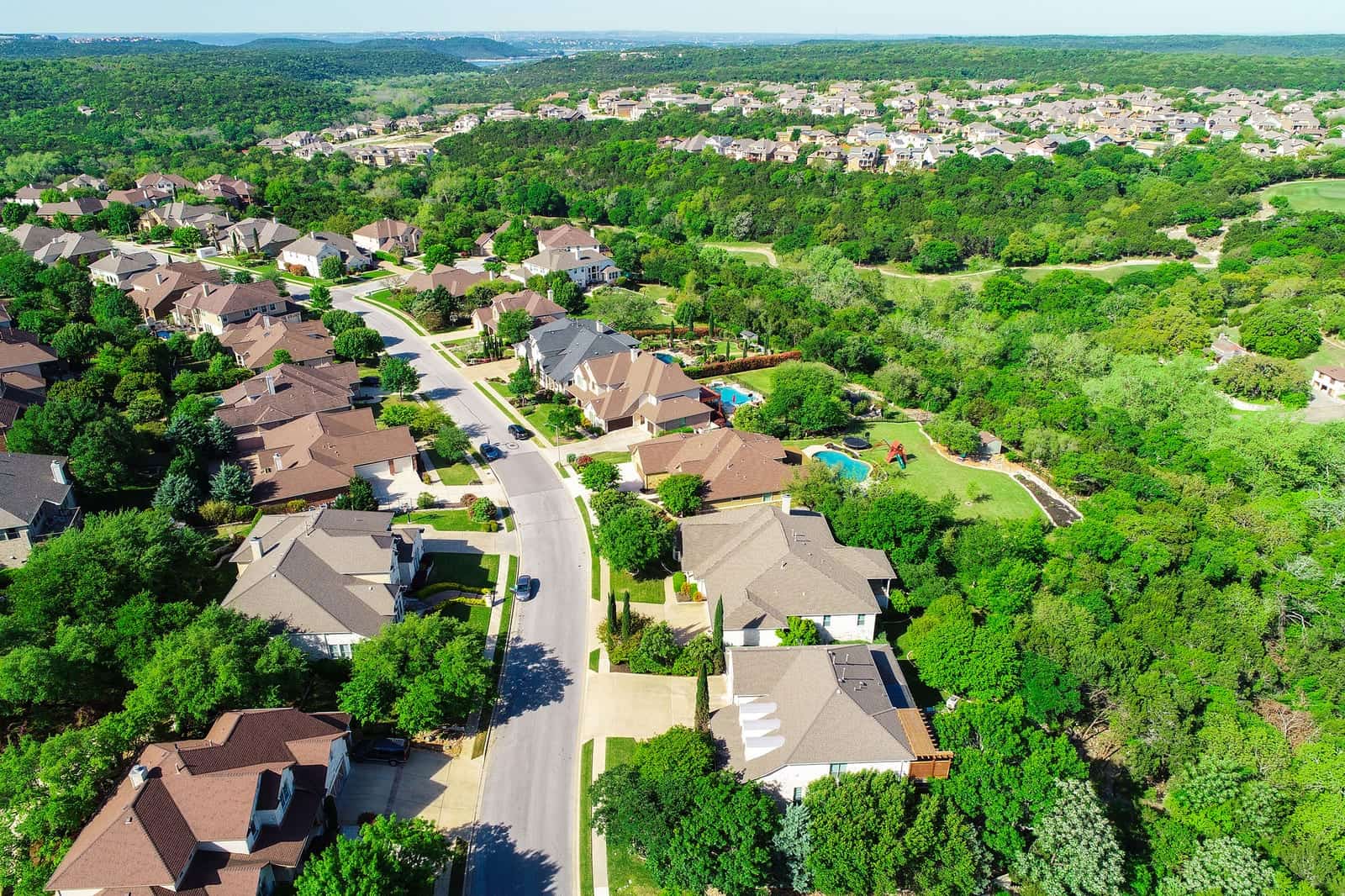
Florida lost about 658,000 acres of forest between 1990 and 2017, the fourth-largest loss of any state in the country, according to a new Clark University analysis released Oct. 29. That works out to more than 23,000 acres a year, and researchers found that most of the land Florida cleared did not grow back as forest: about 55% was paved for development and the remaining 45% became farmland.
The study, which tracked permanent forest conversion across the contiguous United States over 28 years, puts Florida behind only Georgia, North Carolina and Texas for total forest lost, the Tampa Bay Times reported. One of the study's authors called the state a national "hot spot" for forest loss.
What the study found
Nationally, the analysis found that the United States permanently lost about 9.8 million acres of forest from 1990 to 2017, roughly 2% of its forestland, to development and cropland. Eleven states accounted for about 70% of that loss, and most of them are in the South: Georgia, Texas, North Carolina, Florida, Arkansas, Alabama, Virginia, Mississippi, Missouri, South Carolina and Tennessee.
The researchers estimated the combined climate impact of the lost forests at 2.3 billion metric tons of carbon dioxide, according to Clark University. Across the country, cropland expansion drove roughly half of all forest loss and was spread widely, while conversion to development was concentrated around cities and suburbs. The team identified 46 hot spots where development drives concentrated forest loss and 15 where cropland expansion does.
"One of the things that was surprising to us was just how much forest land we're losing in the U.S. still," Chris Williams, a professor of geography at Clark University's School of Climate, Environment, and Society and a co-author of the study, told the Times.
The report was produced for the Forest Carbon Data Partnership, a coalition of conservation groups led by the Open Space Institute, with Williams and fellow Clark researcher Natalia Hasler leading the work. The researchers also released an interactive map, the U.S. Forest Monitor, that shows permanent forest conversion at 30-meter resolution.
How Florida's numbers break down
The figures below summarize Florida's results as reported by the Times.
| Measure | Florida result |
|---|---|
| Forest lost, 1990 to 2017 | About 658,000 acres |
| Average annual loss | More than 23,000 acres |
| National rank | Fourth, behind Georgia, North Carolina and Texas |
| Share converted to development | About 55% |
| Share converted to farmland | About 45% |
The Times compared the annual loss to clearing a forest the size of Coral Gables every year for 28 straight years.
The pattern differs by region. North Florida lost more forestland overall, and much of it was converted to agriculture. South Florida lost a significant amount of forest as well, but nearly all of it was developed.
The researchers used satellite data to determine what happened to former forest land and whether it recovered. That distinction is central to the study, which counts only permanent conversion rather than timber harvests that later regrow.
"When you lose a forest, you have to look for a while to see if it recovers to a forest again. That takes decades," Williams said.
Why the data stops in 2017
Because confirming that a forest is gone for good requires years of follow-up imagery, the analysis currently runs only through 2017. Williams told the Times the team plans to update it through 2025.
That means the study does not capture the past eight years of growth in one of the nation's fastest-growing states. It also predates several major state conservation efforts, which Florida environmental advocates hope will show up as a slowdown in the next version.
The conservation picture since 2017
The largest of those efforts is the Florida Wildlife Corridor, written into state law in 2021. The corridor plan aims to connect about 18 million acres of land across Florida, about 10 million of which are already protected as state parks and conservation areas.
Since the law took effect, Florida has preserved about half a million acres, said Kim Dinkins, policy and planning director for the growth management group 1000 Friends of Florida. Some of that came through outright purchases, but much of it came through conservation easements, legal agreements in which landowners keep and manage their property but give up the right to develop it.
"Hopefully that represents a bit of a turning point in deforestation in Florida but also provides us a plan moving forward," Dinkins said. "It's all about connecting and maintaining those pathways."
The state's main easement tool for working land is the Rural and Family Lands Protection Program, run by the Florida Department of Agriculture and Consumer Services. The 2026-2027 budget gave the program $425 million, the largest amount in state history, according to the department, which says the program has protected more than 234,000 acres since its inception. Agriculture Commissioner Wilton Simpson said in a June statement that the protected lands, "mostly in the Florida Wildlife Corridor, support food production, aquifer recharge, and wildlife habitat."
The threat that remains
Advocates warn the gains may not keep pace. According to 1000 Friends of Florida, about 1.1 million acres of land inside the wildlife corridor is already targeted for development by 2070 under local government plans, and another 3 million acres outside the corridor is also targeted, Dinkins said.
"Even though we've conserved so much land, we stand to lose a lot more," she said.
The corridor also does not reach Southeast Florida, the region where the Clark study found forest loss was driven almost entirely by development.
The fight over Florida Forever
That gap has renewed attention on Florida Forever, the state's land-buying program, which has preserved about 1 million acres in the 26 years since it began. A few years ago lawmakers committed to spending at least $100 million a year on the program, but the Times reported that it received no new funding this year.
"It was passed by the legislature, but they failed to allocate it in their budget," Dinkins said. "No one seems to have challenged it so far."
The state's own accounting is framed differently. When Gov. Ron DeSantis signed the 2026-2027 budget on June 29, his office said it included $150 million for Florida Forever. The Florida Wildlife Federation has said the budget contains no new funding for the program, and that lawmakers redirected money previously dedicated to land acquisition in the wildlife corridor to other programs and projects. During the session, the House had proposed eliminating Florida Forever funding while the Senate proposed $35 million limited to agricultural easements, the Florida Phoenix reported.
Advocates also point to the 2014 constitutional amendment, approved by voters, that directs a share of documentary stamp tax revenue from real estate transactions toward land and water conservation. Environmental groups have long argued the Legislature has largely ignored its intent.
What's next
The Clark team's planned update through 2025 will be the first test of whether the wildlife corridor and the expanded easement programs have slowed Florida's forest loss. In the meantime, the U.S. Forest Monitor lets Floridians look up where forests were permanently converted in their own counties.
The next round of decisions comes in Tallahassee. Lawmakers will write the 2027-2028 budget during the 2027 legislative session, when funding levels for Florida Forever and the Rural and Family Lands program will again be on the table.
Spotted an issue with this article?
Have something to say about this story?
Write us a letterComments
No comments yet. Be the first to weigh in.
Related Coverage
Fort Lauderdale's Yellow Tap Water Runs Clear After $666 Million Plant Comes Online
1d ago
Manatee, Sarasota and five other Florida counties vote Tuesday on taxes to protect land from development
2d ago
DeSantis Awards $100 Million for Springs Restoration and Water Supply, Including Septic Work Near Crystal River's Kings Bay
3d ago
Okaloosa County Sets Nov. 12 Sinking of the SS United States off Destin to Create the World's Largest Artificial Reef
4d ago