Florida Tourism Slips a Second Straight Quarter as Canadian Visits Drop 14%
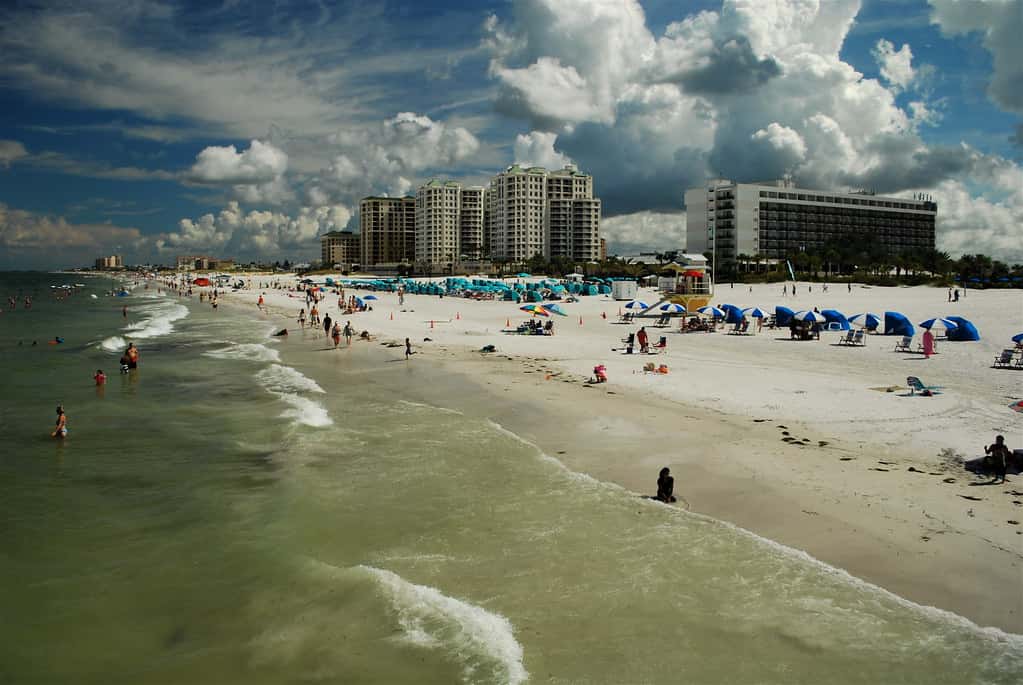
Florida's tourism economy contracted for a second consecutive quarter, according to figures released by Visit Florida, with an estimated 34.01 million visitors arriving between April and June, down 0.7 percent from the same period in 2025. The decline was slight in aggregate but concealed a much sharper drop in one specific market: Canadian visitation fell 13.9 percent during the first half of the year.
For the first six months of 2026, Florida recorded an estimated 73.5 million visitors, a 1.4 percent decrease from the first half of 2025. That is a modest number in percentage terms, but tourism is the state's largest private employer and a foundational contributor to sales tax collections, which fund a substantial share of Florida's general revenue.
The pattern in the data matters more than the headline number. Domestic, overseas and Canadian visitation all declined in the second quarter, which rules out the simplest explanations involving a single market or a single event. Something broader is affecting travel demand into Florida, and state economists and tourism officials are working through what.
What the numbers show
Visit Florida, the state's public private tourism marketing corporation, publishes quarterly visitation estimates built from survey data, air travel counts and lodging metrics. The second quarter estimate of 34.01 million represents the April through June window, which includes spring break tail traffic, the start of summer family travel and the early part of the state's slower season.
Canadian visitation is the standout. Approximately 721,000 Canadians visited Florida in the second quarter, a 4.2 percent decline from the same quarter in 2025. Across the first six months, roughly 1.68 million Canadians traveled to Florida, down 13.9 percent from the first half of 2025. The much larger first half decline reflects the winter months, when Canadian travel to Florida peaks.
That seasonal concentration is the key to understanding the impact. Canadian visitors are disproportionately winter travelers who stay longer than the average domestic visitor, often for weeks or months, and who concentrate in specific markets including Broward, Palm Beach, Pinellas, Sarasota, Lee and Collier counties. A 14 percent decline in that population is felt unevenly across the state.
Overseas visitation also declined, though the state has released less detail on which international markets drove that. Domestic visitation, which accounts for the overwhelming majority of Florida's total, slipped modestly, consistent with broader national data showing softer discretionary travel spending.
Why Canadians are staying away
Statistics Canada reported in July that Canadian travel patterns show what the agency described as a persistent shift away from the United States in travel preferences. That finding, drawn from cross border travel counts, points to a durable behavioral change rather than a one quarter fluctuation.
The context is trade and rhetoric. Tensions between the two countries over tariff policy have run through 2025 and 2026, and repeated public references to Canada as a potential 51st state generated significant backlash among Canadian consumers. Canadian tourism boards and consumer campaigns have promoted domestic and non United States destinations in response.
Currency plays a supporting role. The Canadian dollar's exchange rate against the United States dollar affects the cost of a Florida winter for a retiree on a fixed Canadian income, and unfavorable movement compounds any decision to travel elsewhere. But exchange rate effects alone do not typically produce double digit declines within a single year.
The behavior appears to extend beyond short trips. Real estate agents and property managers in Southwest Florida and the Treasure Coast have reported changes in Canadian seasonal rental bookings and, in some cases, listings from Canadian owners selling Florida property. Those are anecdotal signals rather than measured data, but they align with the visitation trend.
Which parts of Florida feel it most
The effect concentrates geographically. Southwest Florida, particularly Lee and Collier counties, has historically drawn a large Canadian seasonal population, as have Broward County, the Hollywood and Fort Lauderdale beach corridor, Palm Beach County and the Gulf beaches of Pinellas and Sarasota counties.
Those markets depend on the winter season to carry annual revenue. A hotel, restaurant or attraction in Naples or Fort Myers Beach that loses a slice of its January through March business cannot recover it in July, when the market is thinner and rates are lower. That makes a first half decline more damaging than the aggregate percentage suggests.
Central Florida's theme park corridor operates on different dynamics. Walt Disney World, Universal Orlando and SeaWorld Orlando draw heavily from domestic drive and fly markets, from the United Kingdom and Latin America, and from a year round calendar rather than a winter concentration. Softness there tracks domestic discretionary spending more than Canadian sentiment.
The Panhandle, Northeast Florida and the Space Coast are similarly domestic dependent. Panama City Beach, Destin and the Jacksonville beaches draw substantially from the Southeast drive market, which responds to fuel prices and consumer confidence rather than international relations.
What it means for Florida's budget
Tourism is not merely an industry in Florida; it is a revenue mechanism. Florida has no personal income tax and relies heavily on sales tax, and a meaningful share of sales tax collections comes from visitors rather than residents. Every visitor who does not arrive represents forgone taxable spending on lodging, meals, admissions, rental cars and retail.
State economists incorporate tourism forecasts into general revenue estimates that drive the budget the Legislature writes each session. Two consecutive quarters of decline, if extended, would show up in revenue estimating conference projections and constrain the spending decisions available to the next governor and Legislature.
Local governments feel it more directly through tourist development taxes, the bed tax levied on short term lodging in most Florida counties. Those revenues fund convention centers, beach renourishment, stadium debt, destination marketing and, in some counties, a portion of public infrastructure. Declining collections force choices at the county level well before they register at the state level.
Employment is the third channel. Leisure and hospitality is one of Florida's largest employment sectors, concentrated in Orange, Miami Dade, Broward, Pinellas and Lee counties. Sustained softness translates into reduced hours before it translates into layoffs, which makes it harder to detect early in labor statistics.
What the industry is doing
Visit Florida's role is destination marketing, and the agency's budget and strategy are set through the legislative appropriations process. A visitation decline concentrated in a specific international market typically prompts discussion about targeted marketing investment, though the agency's authority to address geopolitical drivers is limited.
Individual destinations have responded with their own approaches. Some Southwest Florida and Gulf Coast tourism development councils have increased marketing to Midwest and Northeast domestic markets to offset Canadian softness. Others have leaned into value messaging, promoting shoulder season rates and package pricing.
Hotel operators and vacation rental managers have adjusted pricing and inventory strategy. In markets where Canadian long stay bookings anchored the winter calendar, operators are working to fill those weeks with shorter domestic stays, which requires more transactions to produce the same revenue and raises operating costs.
The cruise sector, which is headquartered in South Florida and moves passengers through PortMiami, Port Everglades, Port Canaveral and Port Tampa Bay, has continued to report strong demand and record pricing. That divergence is notable: cruise passengers who fly into Florida and sail the same day contribute less to inland tourism spending than a visitor staying two weeks in a beach rental.
How Visit Florida measures visitation
The visitation figures that drive these headlines are estimates rather than counts, and understanding the methodology clarifies what they can and cannot tell us.
Visit Florida contracts research that combines several data streams. Air arrivals are drawn from airline and airport passenger data for the state's major international gateways, including Miami, Orlando, Tampa, Fort Lauderdale and Jacksonville. Non air visitation, which includes the substantial drive market from the Southeast, is estimated through survey research.
The distinction between a visitor and a resident is drawn by trip purpose and origin, and the methodology counts a person once per trip regardless of length of stay. That is why a decline in Canadian visitation understates the economic effect: a Canadian snowbird staying eight weeks counts the same as a weekend visitor from Atlanta.
Length of stay and spending per visitor are tracked separately and reported less prominently, but they matter more for economic impact than headcount. A quarter with flat visitation and declining length of stay produces a worse economic outcome than the visitor number suggests.
The estimates are also revised. Initial quarterly figures are preliminary and adjusted as more complete data arrives, which means a small reported decline can shift when finalized. Analysts generally treat single quarter movements under one percent as within the range of estimation uncertainty.
What makes the current data more meaningful is the consistency of direction. Two consecutive quarterly declines, a first half decline, and a much larger drop in a specific origin market corroborated by an independent Statistics Canada finding together constitute a pattern rather than a measurement artifact.
What's next
Third quarter visitation figures, covering July through September, will be the next data point and will arrive in the fall. That quarter is Florida's slowest and is heavily domestic, so it will speak more to national consumer spending than to the Canadian question.
The more important number is the fourth quarter and the winter season that follows. If Canadian bookings for the 2026 to 2027 winter remain depressed, the decline becomes a structural feature of Florida's tourism economy rather than a temporary reaction. Property managers and hotel operators in the affected markets will have booking visibility on that well before the state publishes visitation counts.
Trade policy is the variable most likely to change the trajectory, and it is entirely outside the state's control. Any easing of tariff tensions or of the rhetoric surrounding them would remove part of the reason Canadian consumers report avoiding the United States, though survey research on consumer boycotts suggests behavior often lags sentiment by a season or more.
For Florida businesses, the practical planning assumption for the coming winter should be a smaller Canadian cohort than in prior years, with domestic marketing and flexible pricing carrying more of the load. Whether that becomes the new baseline or a two year detour is a question the next two winters will answer.
Spotted an issue with this article?
Have something to say about this story?
Write us a letterComments
No comments yet. Be the first to weigh in.
Related Coverage

Bern's Steak House, South Howard Businesses Sue Tampa to Halt $100 Million Flood Relief Project
37m ago
Swire Breaks Ground on Mandarin Oriental Towers on Brickell Key After Selling More Than $1.7 Billion in Condos
19h ago

Seminole Tribe Sues DraftKings and CEO Jason Robins in Broward, Calling Its Florida Prediction Markets an Illegal Sportsbook
20h ago
Jacksonville council members weigh relief for high JEA bills as utility says it isn't ready for a hyperscale data center
1d ago