Florida's Newly Naturalized Citizens Head to the Polls Amid Fears of Federal Agents and DHS Voter Probes
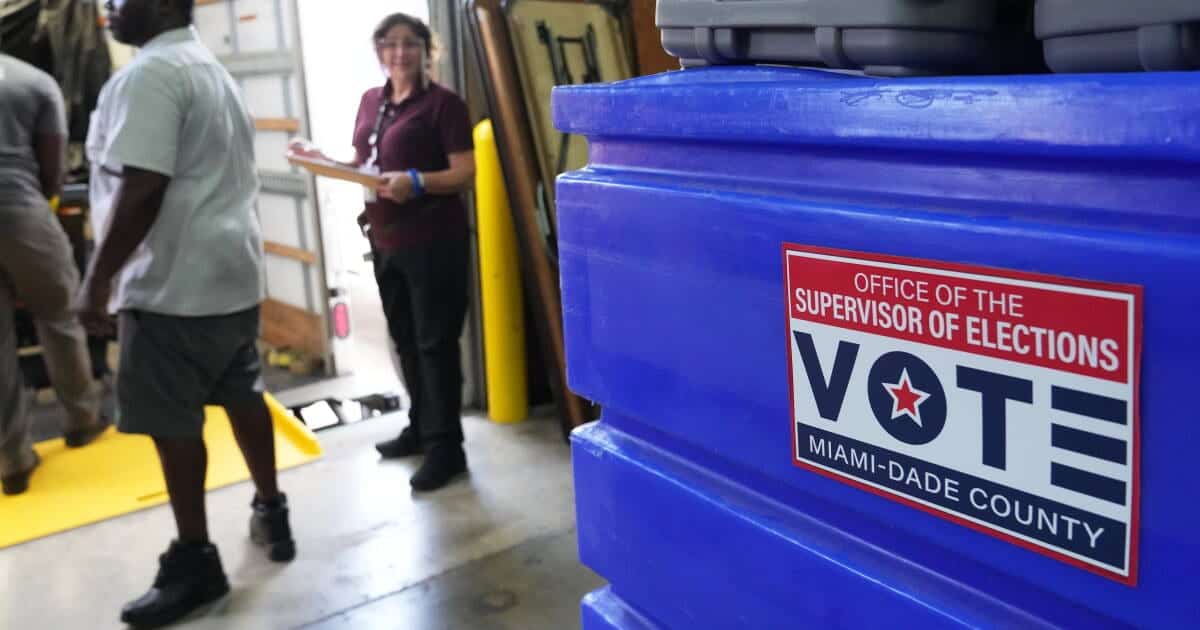
Florida's newly naturalized citizens are casting ballots Tuesday under a cloud of federal scrutiny: a Justice Department plan to send about 1,000 election monitors across all 50 states, Homeland Security investigations into the voting status of foreign-born Americans, and a federal court order limiting those investigations that does not cover Florida. Advocates say the combination has left some new citizens afraid to vote, even as state law sharply limits who may set foot inside a Florida polling room.
Polls are open until 7 p.m. local time. Election officials and advocates stress that a naturalized citizen who is registered has the same right to vote as any other American.
New citizens, old fears
Roughly 25 million naturalized citizens are eligible to vote nationwide, and more than 170,000 gained citizenship this year, Scripps News reported in a story published by WPTV. A recent poll by the National Partnership for New Americans found 53% of naturalized voters surveyed feel less secure in their citizenship.
"It is illegal to intimidate voters, and that includes naturalized voters," said Nicole Melaku, the group's executive director. "We won't be intimidated." Frankie Miranda, president and CEO of the Hispanic Federation, told Scripps News that even immigrants who have successfully naturalized "still are under a lot of pressure and intimidation."
Melaku said naturalization processing times have stretched to 18 months and that several thousand people who might have been eligible to vote this year are stuck in backlog. Despite the fears, she said 90% of the naturalized voters her group polled are highly motivated to vote, and that like U.S.-born voters, most are focused on the economy.
DOJ monitors, with Miami-Dade on the list
Harmeet Dhillon, who leads the Justice Department's Civil Rights Division, said in September the department planned to send 1,000 observers nationwide, which she called the largest monitoring effort in DOJ history, NPR reported. The department said it would have a presence in all 50 states but would not release a full list of locations until Election Day, according to States Newsroom reporting published by the Florida Phoenix. For comparison, the department monitored 64 jurisdictions in 24 states during the 2022 midterm.
NPR confirmed in October that Miami-Dade County was among the jurisdictions notified that DOJ wanted to monitor Tuesday's election. It would not be the first time this year: during the Aug. 18 primary, the Justice Department sent four Civil Rights Division attorneys to different Miami-Dade polling locations, WLRN reported. A DOJ spokesperson told NPR the department prioritizes places with competitive elections and jurisdictions covered by Section 203 of the Voting Rights Act, which requires election materials in languages other than English for qualifying communities.
The DOJ says its monitors observe and report possible violations of federal law, and that they will not include FBI or ICE agents. The NAACP on Monday filed an emergency request for a temporary restraining order in its lawsuit seeking to block federal law enforcement agents, including from the Bureau of Prisons, the DEA and the ATF, from serving as monitors, according to Scripps News.
What Florida law allows at the polls
Florida law is specific about who may enter a polling room or early voting area while voting is underway. Under Section 102.031 of the Florida Statutes, the list is limited to official poll watchers, inspectors, election clerks, the supervisor of elections or a deputy, voters and people caring for them, and law enforcement or emergency personnel who are there with permission of the clerk or a majority of the inspectors. Federal monitors are not on the list. In the 2022 midterm, the Florida Department of State cited that law in telling the Justice Department its monitors would not be allowed inside polling places in Broward, Miami-Dade and Palm Beach counties and that the state would send its own observers instead.
The same law bars soliciting voters within 150 feet of a polling place entrance. A separate statute, the Voter Protection Act, makes it a third-degree felony to use or threaten force, violence or intimidation to make someone vote or refrain from voting, or to knowingly use false information to challenge a person's right to vote.
The FBI told Florida supervisors of elections over the summer that there would be no immigration enforcement at polling places, the Tampa Bay Times reported. Federal law bars the president from deploying military personnel to the polls, and armed federal agents are generally banned from conducting activities in and around polling places.
DHS probes of naturalized citizens, and a court order that skips Florida
Alongside the monitors, the Department of Homeland Security has been checking the voting status of naturalized Americans. Civil rights groups, including OCA-Asian Pacific American Advocates and Common Cause, represented by the American Civil Liberties Union, have sued over a U.S. Citizenship and Immigration Services effort they describe as an "Unlawful Voter Initiative," alleging that fully naturalized citizens have faced improper investigations and door-to-door questioning, according to States Newsroom reporting. The Florida Press covered that lawsuit on Oct. 29.
Separately, on Oct. 21 U.S. District Judge Araceli Martínez-Olguín of the Northern District of California temporarily blocked DHS election-related field operations in nine states: California, Connecticut, Georgia, Missouri, Nevada, New York, Pennsylvania, Washington and Wisconsin. The judge found the program likely violates the Voting Rights Act, according to States Newsroom reporting, and limited questioning of people whom agents know or reasonably should suspect are U.S. citizens. Florida is not one of the nine states, so the order does not restrict DHS activity here. DHS has said it has no plans to question or investigate people it believes to be U.S. citizens.
A Justice Department spokesperson told Scripps News the department has charged 208 people since the start of the Trump administration and that "many of these defendants falsely swore they were U.S. citizens to register." A UCLA analysis cited by Scripps found the administration's list of alleged noncitizen voters contains errors, including naturalized citizens who are eligible to vote.
Florida's recent brush with federal agents at the polls
Florida voters have already seen how quickly such concerns can spread. During early voting, Leon County Supervisor of Elections Mark Earley notified the FBI after a voter reported Border Patrol agents at a Tallahassee early voting site. Authorities later said the agents were there to vote, the Tampa Bay Times reported. In Monroe County, the elections chief separately reviewed video of apparent armed federal agents during early voting in Key Largo, as The Florida Press reported in October.
What voters can do
Advocates urge naturalized citizens to bring the same thing every Florida voter needs: a valid photo ID with a signature. Voters do not have to show naturalization papers to vote if they are already registered. Anyone who believes they were intimidated or improperly challenged can report it to the poll clerk, their county supervisor of elections, or the Florida Department of State's Division of Elections. The Justice Department's Civil Rights Division also accepts voting complaints.
What's next
The Justice Department said it would review monitor reports after Election Day and act where appropriate. The NAACP's emergency request over who may serve as monitors, the ACLU-backed lawsuit over DHS investigations of naturalized citizens, and any appeal of the nine-state order remain before the courts. Any change that extends those limits to Florida would come after today's voting ends.
Spotted an issue with this article?
Have something to say about this story?
Write us a letterComments
No comments yet. Be the first to weigh in.
Related Coverage
Cost of Owning a Home in America Hits a Record $2,163 a Month, and Florida Homeowners and Renters Carry One of the Heaviest Burdens
1h ago
Blood Pressure Pill Recalled Nationwide After Failing a Lab Test: What Florida Patients Taking Olmesartan, Amlodipine and Hydrochlorothiazide Should Check
1h ago
Starting Nov. 3, Every Traveler Flying Into the U.S. Must Sign an Ebola Attestation: What Florida Flyers Need to Know
19h ago

Pia Dandiya and Casey Askar Battle for Florida's Open, Coast-to-Coast 22nd Congressional District
19h ago