FSU Gets $400,000 Federal Grant to Fight Sexual Assault, Dating Violence and Stalking on Campus
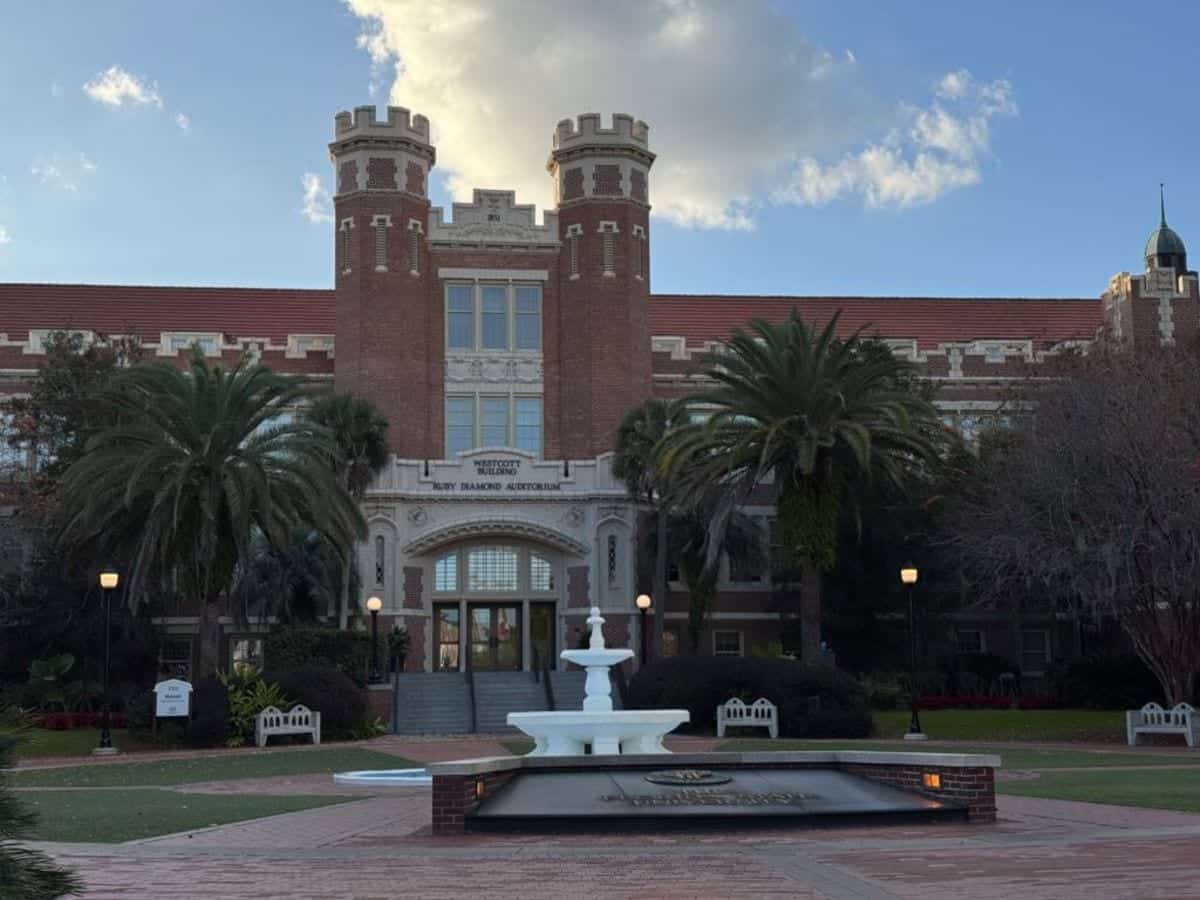
Florida State University has received a $400,000 federal grant to combat domestic violence, dating violence, sexual assault and stalking on its Tallahassee campus, the U.S. Department of Justice announced. The three-year award comes from the department's Office on Violence Against Women and arrives as FSU's own federally required crime reports show reported stalking and dating violence cases on its main campus rose in 2025.
The grant spans 36 months, the Florida Phoenix reported. It was announced by the U.S. Attorney's Office for the Northern District of Florida, which covers Tallahassee.
What the grant pays for
The money comes through the Office on Violence Against Women's Campus Program, which helps colleges build programs to prevent and respond to sexual and relationship violence. In describing the program, the Justice Department said it supports "comprehensive approaches designed to enhance victim services (including legal services), implement prevention and education programs, and develop and strengthen security and investigation strategies to prevent, prosecute, and respond to domestic violence, dating violence, sexual assault, and stalking."
U.S. Attorney John Heekin said in a news release that the award would back FSU's on-campus efforts. "Through this critical investment of federal grant monies, we provide vital resources to FSU's on-campus programs that ensure victim safety and assistance while holding offenders accountable," Heekin said.
The announcement, as reported, did not itemize how FSU plans to divide the money among victim services, prevention education and campus security. Under the program's framework, those are the three areas the funding is meant to strengthen.
What FSU's crime reports show
Every college that takes federal student aid must publish an annual security report under the Jeanne Clery Act, listing crimes reported on or near campus over the previous three calendar years. FSU's 2026 report, prepared by the university's director of Clery Act compliance and published for the 2026-27 academic year, covers calendar years 2023 through 2025.
The main campus figures for the offenses the grant targets are below. The numbers count reports received in each year, not convictions, and the university records a crime in the year it was reported.
| Offense, FSU main campus | 2023 | 2024 | 2025 |
|---|---|---|---|
| Rape | 11 | 6 | 7 |
| Fondling | 3 | 3 | 2 |
| Statutory rape | 0 | 1 | 2 |
| Domestic violence | 0 | 4 | 1 |
| Dating violence | 4 | 1 | 9 |
| Stalking | 13 | 9 | 17 |
The 2023 rape count includes one assault that occurred in 2021 but was reported in 2023, the report notes. In 2025, six of the seven reported rapes, all nine dating violence cases and nine of the 17 stalking cases were in on-campus residence halls.
Federal campus reporting standards treat domestic violence incidents as felonies or misdemeanors, the Phoenix noted. Stalking is defined as "engaging in a course of conduct directed at a specific person that would cause a reasonable person to fear for the person's safety or the safety of others or suffer substantial emotional distress."
What FSU already does
The grant builds on prevention and response programs FSU already runs. According to the university's annual security report, all new students are asked to complete a sexual violence prevention program before they enroll. In the 2025-26 academic year, incoming students received Title IX sessions at orientation and an online sexual violence prevention module at the start of their first semester.
Ongoing programs listed in the report include Sex and Respect Week in September, Domestic Violence Awareness Month events in October, Healthy Relationships Week in February and Sexual Assault Awareness Month in April. The university also offers presentations to student athletes and ROTC leaders, and the Green Dot bystander intervention program, which FSU describes as an effort to prevent power-based personal violence and build a culture of safety and respect.
The FSU Police Department has taught Rape Aggression Defense, a 12-hour self-defense course for women, since fall 1996 and says more than 1,500 women have taken it. The report lists four 12-hour student classes in 2025-26. Students can also take the course for one hour of elective credit. Employees receive anti-sexual misconduct training when they are hired, the training is offered three times a semester, and new teaching assistants take it annually.
FSU's kNOw MORE initiative is the university's hub for sexual misconduct education, prevention and reporting, and its Title IX Office handles complaints. The report says the university also offers counseling, health and legal referrals, visa and immigration assistance and changes to housing, classes or work arrangements when reasonably available.
Where students can get help
FSU's Victim Advocate Program has a confidential advocate on call 24 hours a day, including holidays, for students, faculty and staff, as well as anyone victimized on campus, at an FSU-sponsored event or by a member of the FSU community, according to the program. Advocates can provide emotional support, crisis intervention, instructor notification and help with student conduct, legal and medical matters, and a person does not have to file a police or university report to receive their help.
- Victim Advocate Program, 24/7: (850) 644-7161, or text (850) 756-4320
- FSU Police Department emergencies: (850) 644-1234
- FSU Title IX Office: (850) 645-2741
The report notes that survivors may seek an evidence collection exam anonymously without reporting to police or university officials, and that under Florida law sexual assault examinations are free.
The year-to-year picture
FSU's annual security report covers its Tallahassee main campus and Innovation Park plus seven separate campuses, each with its own statistics. On the main campus, the 2025 figures show a shift toward cases reported in student housing. In 2024, all six reported rapes were in residence halls, but none of the nine stalking reports were. In 2025, nine of the 17 stalking reports and all nine dating violence reports came from residence halls.
The report also counts offenses on non-campus property, such as buildings the university or recognized student groups own or control away from the main campus. It lists three rapes there in 2024 and one in 2025. The Clery figures do not capture incidents that are never reported, and the university says it is the survivor's choice whether to involve police.
What's next
The award runs for three years. FSU's next annual security report, covering calendar year 2026, is due under the Clery Act by Oct. 1, 2027, and will offer the first look at reported cases during the grant period. Neither the Justice Department announcement nor the Phoenix report detailed program milestones or how FSU will divide the money, so the university's plans for the three years of funding are the next thing to watch.
Spotted an issue with this article?
Have something to say about this story?
Write us a letterComments
No comments yet. Be the first to weigh in.
Related Coverage

Florida Seeks Expert Reviewers for 96 Proposed Social Studies Textbooks, From Kindergarten to History of Communism
2h ago
Osceola County Weighs $191,885 in Opioid Settlement Money for Vape Detectors at 19 Schools
22h ago
New College of Florida Seeks Up to $47 Million to Finance USF Sarasota-Manatee Campus Takeover
3d ago

Florida education commissioner Henry Mack defends science standards rewrite as critics fault treatment of evolution and climate
4d ago