Gators Open Fall Camp August 5 Under First-Year Coach Jon Sumrall
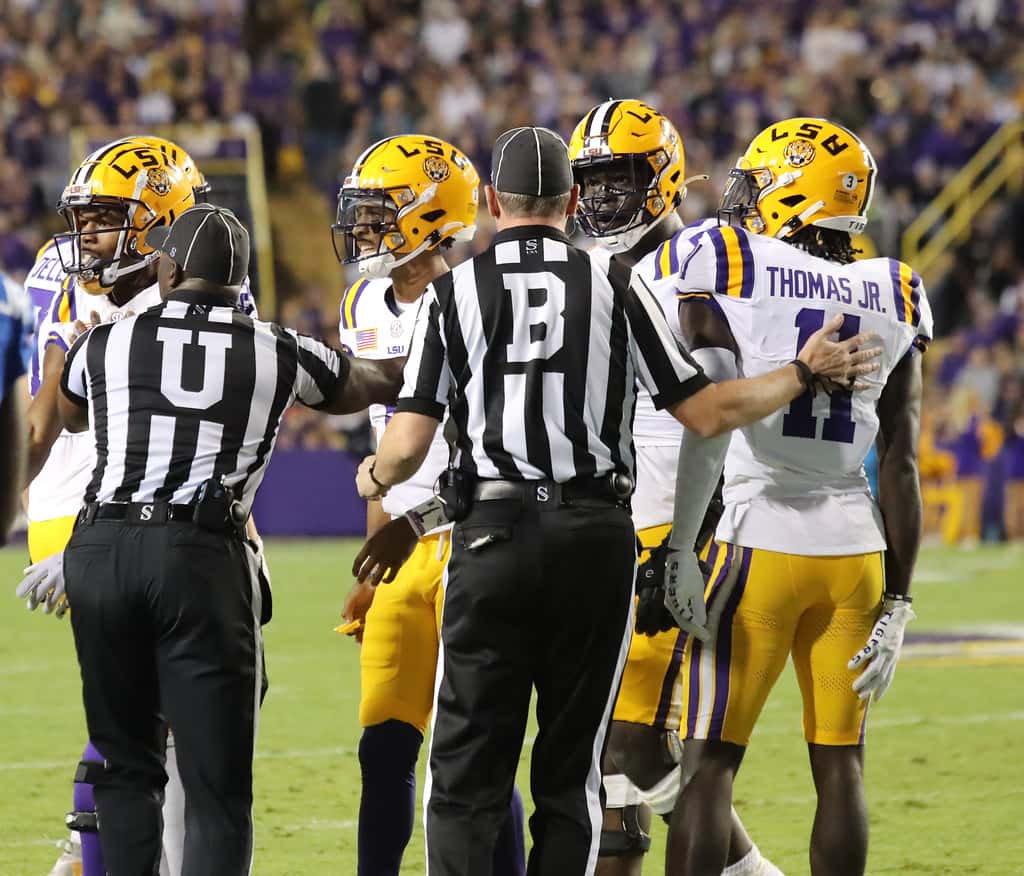
Florida football begins a new era on Aug. 5. The Gators hold their first fall camp practice that Wednesday under first-year head coach Jon Sumrall, who will meet with media the day before on Aug. 4. Florida has scheduled two scrimmages during camp, on Saturday, Aug. 15 and Saturday, Aug. 22, and opens the 2026 season on Sept. 5 against Florida Atlantic at Ben Hill Griffin Stadium in Gainesville.
The schedule itself is routine. The circumstances are not. Florida is beginning its first season under a new head coach in a conference that has grown deeper and more difficult, and in an era where roster construction through the transfer portal and name, image and likeness compensation has compressed the timeline on which programs are judged.
Fall camp is where a first-year staff finds out what it actually has. Spring practice happens before summer roster additions arrive and before strength and conditioning work has fully taken hold. August is the first extended look at the complete roster in pads.
What a first-year staff does in August
The primary work of a new coaching staff's first fall camp is installation and evaluation, and those two goals pull against each other.
Installation means teaching the offensive and defensive systems, the terminology, the practice tempo, the meeting structure and the expectations that govern everything from film study to conditioning. Every one of those is new for returning players, who spent previous seasons learning a different set of answers to the same questions.
Evaluation means determining who can play. A new staff inherits a depth chart it did not build and has limited history with most of the roster. Spring practice provides a first look, but summer additions and physical development change the picture.
The two scrimmages, on Aug. 15 and Aug. 22, are where those goals converge. Scrimmage work under game-like conditions, with officials and live tackling, produces evaluation data that controlled practice periods cannot. The Aug. 15 scrimmage typically serves to sort the two-deep, and the Aug. 22 session, closer to the opener, functions more as a dress rehearsal.
The state of the SEC
Florida competes in a conference that has become considerably harder since the Gators last won it. The addition of Texas and Oklahoma expanded the SEC and eliminated divisions, which changed both the scheduling structure and the path to the conference championship game.
Under the current format, teams play a schedule drawn from across the conference rather than a fixed divisional slate, and the two teams with the best conference records meet in the championship game. That removes the possibility of winning a weak division and increases the premium on every conference result.
The expanded College Football Playoff has changed the calculus in the other direction. With a larger field, a two-loss or even three-loss team from a strong conference can remain in contention deep into the season, which means teams stay alive longer and the sport's regular season retains meaning further down the standings.
For a first-year coach, that structure is a mixed inheritance. The path to a playoff berth is wider than it was, but the schedule offers fewer soft weeks in which to develop a young team.
The roster construction problem
College football roster building has changed fundamentally over the past several years, and first-year coaches feel it most acutely.
The transfer portal allows players to move between programs with far fewer restrictions than in the past, which means a coaching change frequently triggers departures. Players recruited by a previous staff, particularly those who were not projected starters, often look elsewhere when the coaches who recruited them leave.
The counterweight is that the portal also allows a new staff to acquire experienced players quickly rather than waiting for high school recruits to develop. A program can substantially remake a position group in a single offseason.
Name, image and likeness compensation adds a resource dimension that did not previously exist. Programs now compete for players on financial terms as well as on development, playing time and fit, and collectives supporting individual schools vary considerably in scale.
Florida's advantages in that environment are real. It is a flagship state university in the most fertile high school recruiting state in the country, with a large and well-resourced alumni base and facilities that compete with anyone. Converting those advantages into results is the work.
Why the opener matters more than it should
Florida Atlantic on Sept. 5 is, on paper, the kind of game a program like Florida is expected to win comfortably. It is also a game between two Florida schools, which introduces recruiting and in-state pride dimensions that a neutral nonconference opponent would not.
For a first-year staff, the opener functions as the first public data point in what will be a long evaluation. Fan bases and media form impressions quickly, and a sloppy performance against an in-state opponent generates a narrative that takes weeks to dislodge.
The practical value of the game is more mundane. It provides live reps for a team running a new system, exposes problems that practice did not reveal, and gives the staff film of its own players executing under real conditions.
Ben Hill Griffin Stadium, known universally as the Swamp, remains one of the more difficult environments in college football when the building is full and the team is competitive. Early September in Gainesville also means heat, which has historically been a factor Florida uses to its advantage against visiting teams.
What it means for Florida fans
Gator fans have been through a long stretch of instability, with coaching changes and seasons that fell short of the program's historical standard. Patience is not a natural condition in a fan base that remembers national championships in 1996, 2006 and 2008.
The realistic frame for a first year under a new staff is that the important indicators are not entirely in the win column. Whether the team plays disciplined football, whether it improves through the season rather than fading, whether the staff develops young players and whether recruiting momentum builds are all more predictive of year three than the year one record.
That framing is easier to state than to accept in the middle of an SEC schedule, which is the perpetual tension in college football at a program with Florida's expectations.
For fans wanting to see the team before the season, fall camp practices are generally closed to the public, unlike the NFL model. The scrimmages on Aug. 15 and Aug. 22 are internal evaluations rather than open events, so the opener on Sept. 5 will be most fans' first look.
Recruiting runs on a parallel clock
While the staff installs an offense in August, it is simultaneously running a recruiting operation whose results will not appear on the field for years.
The recruiting calendar overlaps the season almost entirely. Official visits cluster around home games, and prospects commit throughout the fall ahead of signing periods that now fall in December and February. A first-year staff is therefore selling a program it has not yet demonstrated.
Florida's structural advantages in recruiting are substantial. The state produces more Division I football talent per capita than nearly anywhere in the country, and the concentration in South Florida, Tampa Bay and Central Florida means a Gainesville-based staff can reach elite prospects within a few hours' drive.
The corresponding challenge is that Florida State, Miami and every SEC program recruit the same territory, along with programs from across the country that treat Florida as a national recruiting destination. Holding the best in-state prospects is a defensive operation as much as an offensive one.
Building depth in the modern era
Roster management in college football now resembles professional personnel work more than it resembles the recruiting-only model that prevailed for decades.
Scholarship limits, transfer portal windows, eligibility rules and compensation arrangements all interact, and programs employ general managers and personnel staffs to manage them. A coaching staff that is excellent at development but poor at roster management will lose players it developed.
Depth is where this shows up most acutely. A program can field a competitive starting lineup through the portal relatively quickly. Building the second and third string, the players who absorb injuries and who become starters in year two and three, still requires high school recruiting and patient development.
SEC schedules test depth specifically. A conference slate of physical games week after week produces attrition, and teams that lack depth fade in November. That is why first-year records at programs in transition often look worse in the back half of the season than the front.
For Florida, the measure of Sumrall's first year will be as much about whether the roster holds together in November as about any individual result in September.
What's next
Sumrall meets with media on Aug. 4, which will be the first substantive public comment on the roster heading into camp. Practice begins Aug. 5, with scrimmages on Aug. 15 and Aug. 22.
Depth chart clarity typically emerges in the final week of camp, as staffs move from evaluation into game preparation for the opener. Quarterback resolution, if there is a competition, tends to come first because the position requires the most repetitions with the first team.
The season opens Sept. 5 against Florida Atlantic in Gainesville, followed by an SEC schedule that will define the year. For a program in transition, August is where the foundation gets poured, and the results of that work will not be fully visible for some time.
What Florida can establish in the next month is an identity: how the team wants to play, and whether the roster it has can play that way.
Spotted an issue with this article?
Have something to say about this story?
Write us a letterComments
No comments yet. Be the first to weigh in.
Related Coverage
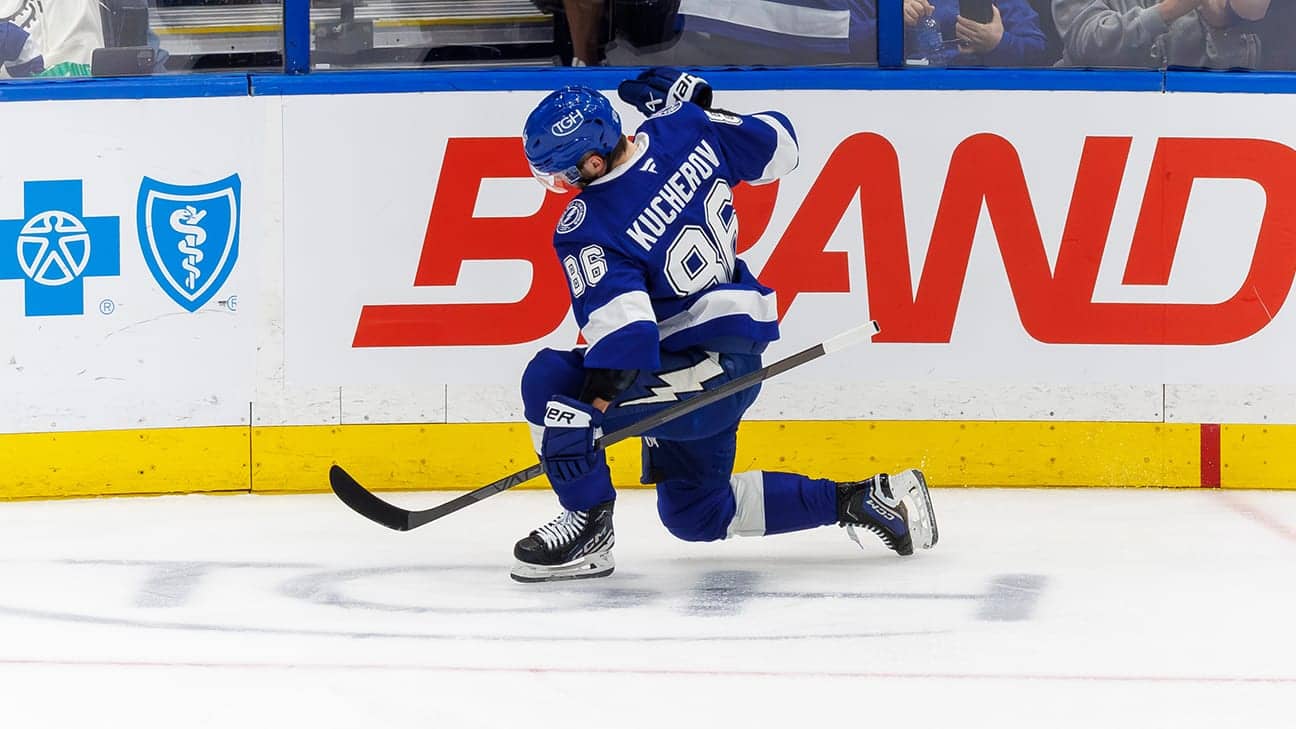
Nikita Kucherov Passes Steven Stamkos as Lightning's All-Time Points Leader in OT Loss to Mammoth
5h ago

Hornets Beat Heat 115-110 as Giannis Antetokounmpo Fouls Out and Miami Falls to 0-3
6h ago

Timberwolves Dominate the Glass, Rout Magic 115-93 at Kia Center as Orlando Falls to 0-2
1d ago

Pistons Beat Heat 128-111 as Giannis Antetokounmpo's 36 Points Can't Fix Miami's Defense in 0-2 Start
1d ago