Messi Scores Four as Inter Miami Routs Montreal 7-1 to Snap a Five-Game Winless Run
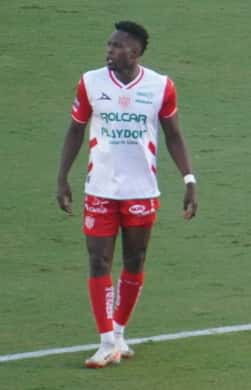
Lionel Messi scored four goals in a Major League Soccer match for the first time in his career on Saturday night, driving Inter Miami to a 7-1 win over CF Montreal and ending a five game winless run across all competitions.
Messi restored Miami's advantage shortly before halftime, struck again in the 52nd minute, completed his hat trick in the 83rd and capped the performance with a free kick in stoppage time. He also recorded an assist, giving him a direct hand in five of his team's seven goals.
The timing mattered as much as the scoreline. Inter Miami had gone five matches without a win before Saturday, a stretch that had raised questions about the club's form heading into the decisive weeks of the MLS regular season.
How the match unfolded
A 7-1 result in a professional league is rare enough to be noteworthy on its own. It generally requires one team to be both clinical in front of goal and comfortable in possession while the other loses defensive shape and never recovers it.
Messi's sequence, a goal before halftime followed by three in the second half spread across roughly 40 minutes, describes a match that broke open rather than one that was decided early. The stoppage time free kick was the exclamation point rather than the difference.
The supporting cast accounted for three additional goals, a distribution that speaks to a team creating chances broadly rather than a single player carrying the load. That is a more encouraging sign for a club trying to reverse a slump than a narrow win would have been.
A first in MLS
Messi has scored four or more goals in a match before in his career, but Saturday marked the first time he had done it in Major League Soccer. For a player whose career achievements include multiple Ballon d'Or awards and a World Cup, a first of any kind at this stage is unusual.
The performance also underlines what Messi's presence has meant for the league commercially and competitively since his 2023 arrival. Matches involving Inter Miami draw audiences and attendance figures that exceed league norms, and a four goal game is precisely the kind of event that reaches beyond the sport's regular audience.
Miami's roster has been built around Messi and the group of former Barcelona teammates who joined him, a construction that has produced spectacular ceilings and, at times, inconsistency when the core is unavailable or out of rhythm.
The season context
The five game winless run that preceded Saturday had put Inter Miami in an uncomfortable position with the MLS regular season entering its final stretch. Major League Soccer's playoff structure admits a large share of the league, but seeding determines home field advantage through the postseason.
Messi returned earlier this month from an extended break following the World Cup, and the club's form during his absence and reintegration is part of the explanation for the winless stretch. Squads built around a singular player often struggle to maintain output when that player is unavailable or working back to full sharpness.
Saturday's result suggests the reintegration is complete. A four goal, one assist performance is not the output of a player still finding fitness.
What it means for South Florida
Inter Miami has become one of South Florida's most visible sports properties in a market that already carries NFL, NBA, NHL and MLB franchises. The club's matches draw a distinct audience, heavily international and younger than the region's other teams typically attract.
The economic dimension runs through the club's new stadium and the surrounding development in Miami-Dade County, a project whose scale reflects the ownership group's bet that soccer can sustain a major venue in the market permanently.
The 2026 World Cup, hosted across North America with matches at Hard Rock Stadium in Miami Gardens, has raised the sport's profile in Florida further. The tournament's presence in the region has fed interest that clubs across the state have worked to convert into sustained attendance.
Florida's soccer landscape
Inter Miami is not the state's only professional club. Orlando City competes in MLS, Orlando Pride plays in the National Women's Soccer League, and lower division clubs operate in several Florida markets.
Orlando City and Inter Miami have developed a genuine rivalry driven by geography and by the contrast in how the two clubs were built, with Orlando established a decade earlier through more conventional roster construction.
Youth soccer in Florida is among the strongest development environments in the country, aided by year round playing weather and a large population with connections to soccer playing nations. The professional clubs increasingly draw from that base.
What comes next in the standings
Inter Miami's immediate task is converting Saturday's result into a run. A single dominant win ends a slump statistically but does not by itself establish form, and the schedule ahead will determine whether the club enters the playoffs as a contender or as a team that peaked in August.
MLS playoff seeding rewards regular season performance with home field advantage, which in a league with substantial travel distances is a meaningful edge. Miami's remaining fixtures carry that weight.
Messi's individual output also positions him in the league's scoring conversation, though team results are the measure the club itself has emphasized.
How MLS structures its season
Major League Soccer runs a schedule that differs from the European calendar most international fans know. The regular season runs roughly from late winter through the fall, followed by the MLS Cup Playoffs, with the champion determined by a knockout tournament rather than by the regular season table.
The Supporters' Shield goes to the club with the best regular season record, an honor that carries prestige without determining the champion. Playoff seeding is what regular season performance most directly purchases, and home field advantage in a league with continental travel distances is a genuine competitive asset.
Roster rules shape what clubs can build. Designated Player slots allow teams to sign a limited number of players whose compensation exceeds the salary budget charge, which is the mechanism that made Messi's arrival possible and that governs how clubs assemble around such signings.
The league also participates in Leagues Cup alongside Liga MX clubs and in the CONCACAF Champions Cup, competitions that add fixtures and, for clubs advancing deep, compress the domestic schedule.
What Messi has meant to the league
Messi's arrival in 2023 changed Major League Soccer's commercial profile immediately. Attendance for Inter Miami's road matches rose substantially, broadcast viewership increased, and the league's international subscription product gained subscribers at a rate it had not previously achieved.
The effect on Florida specifically has been pronounced. South Florida already had a large soccer following drawn from Latin American, Caribbean and European communities, and the club converted latent interest into attendance and merchandise sales.
Whether the effect persists beyond Messi's playing career is the question the league has worked to answer, primarily by investing in academy systems and by using the visibility to build habits among new fans rather than relying on a single player's presence.
The 2026 World Cup, with matches at Hard Rock Stadium in Miami Gardens, has extended that visibility. Florida hosted matches in a tournament that reached audiences far beyond the sport's regular following.
The rest of Florida's soccer picture
Orlando City has competed in MLS since 2015 and has built its own following in Central Florida, playing at a soccer specific stadium in downtown Orlando. The club's supporters culture predates Inter Miami's existence and has its own established identity.
Orlando Pride competes in the National Women's Soccer League, a competition whose profile has risen substantially over the past several years alongside growth in the women's game globally.
Below the top flight, clubs in Tampa Bay, Jacksonville, Miami and other Florida markets compete in lower divisions, providing professional pathways and local competition in cities without an MLS franchise.
Youth development is where Florida's long term contribution to American soccer is most likely to register. Year round playing weather, a large and diverse population and an established academy infrastructure combine to make the state one of the country's most productive development environments.
Both MLS clubs operate academies feeding into their first teams, and homegrown player signings from those systems have become a routine part of roster construction.
What a 7-1 result means in a playoff race
Goal difference functions as a tiebreaker in most league formats, and a six goal margin moves that figure substantially in a single night. In a tight playoff race, a result of this scale can be worth more than the three points alone.
The psychological dimension is harder to quantify but real. A team that had gone five matches without a win carries doubt into fixtures, and a decisive result is the most direct way to remove it.
For opponents, the film now shows a Miami side capable of scoring in volume, which changes how teams set up against them. Opponents that had pressed high may sit deeper, which presents a different problem for Miami to solve.
The remaining fixtures determine whether Saturday was a turning point or an outlier. One match against a struggling opponent establishes capability, not form.
What's next
Inter Miami returns to league play with its confidence restored and its central player in form. The club's supporters will look for consistency rather than another spectacle, since one result against a struggling opponent does not resolve the questions raised by five matches without a win.
Montreal, on the other end of Saturday's scoreline, faces its own reckoning. Conceding seven goals in a professional match invites structural questions that go beyond a single poor night.
For Florida soccer fans, the takeaway is simpler. On a Saturday night in August, one of the greatest players in the sport's history produced a performance that will be replayed for years, and he did it wearing a Florida club's colors.
Spotted an issue with this article?
Have something to say about this story?
Write a letter to the editorComments
No comments yet. Be the first to weigh in.
Related Coverage
Giannis Antetokounmpo Opens His First Heat Training Camp in Boca Raton as Miami Rebuilds Around a Two-Time MVP
5h ago

Trevor Lawrence Throws Three Touchdowns as Jaguars Rout Patriots 35-6 in Jacksonville
2d ago

Rays Draw the Yankees in the ALDS as Drew Rasmussen Gets the Game 1 Ball at Home
2d ago
Florida Gators Jump 13 Spots to No. 8 in AP Poll After 52-28 Rout of No. 4 Ole Miss
2d ago