Jackson Hole Meeting Carries Outsized Stakes for Florida Housing
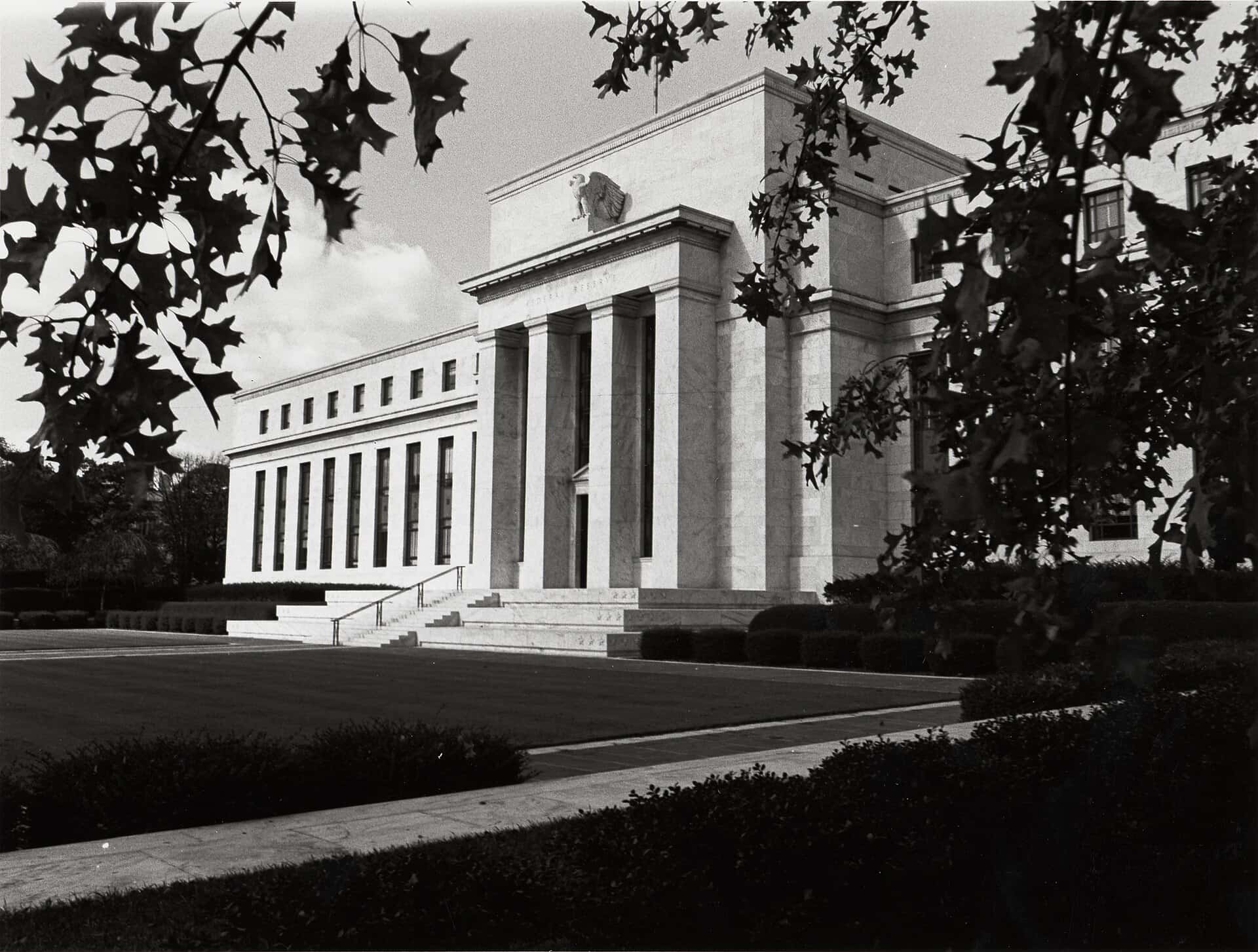
The Federal Reserve's annual Jackson Hole economic symposium runs August 27 through 29, and Chair Kevin Warsh will deliver his first keynote in that role on August 28. The speech comes three weeks before the September meeting of the Federal Open Market Committee, and the signals it sends will move bond yields and, with them, the mortgage rates that determine what Floridians pay to buy a home.
The committee has held its benchmark rate at 3.50% to 3.75% for five consecutive meetings, most recently on July 29 in a 9 to 3 vote. The three dissenters, Beth Hammack of Cleveland, Neel Kashkari of Minneapolis and Lorie Logan of Dallas, did not want a cut. They wanted a quarter-point increase.
That configuration matters for how Floridians should read the coming weeks. The disagreement inside the committee is not between holding and cutting. It is between holding and hiking.
What the Fed is weighing
Import tariffs continue to function as a supply-side price shock, raising consumer prices independent of underlying demand conditions. That is the specific complication facing the committee: inflation driven by trade policy behaves differently from inflation driven by excess demand.
Conventional monetary tightening addresses demand-driven inflation by cooling activity. It does less about a price increase originating in trade costs, and tightening into a trade-driven slowdown risks producing unnecessary economic damage.
The counterargument, which the three dissenters presumably hold, is that the origin of a price increase matters less than whether inflation expectations become entrenched. Once households and businesses expect persistent inflation, the source becomes irrelevant to the policy response.
This year's symposium theme is financial innovation and its implications for payments and policy, with roughly 120 central bankers from more than 70 countries attending. Keynotes at Jackson Hole provide framework signals rather than rate decisions, but markets treat them as forward guidance.
Why this matters more in Florida
Florida's economy is more interest-rate sensitive than most states'. Construction, real estate, and financial services together represent a larger share of employment and output here than nationally, and all three respond directly to the cost of credit.
The state's housing market has shown resilience without rate relief. Closed sales rose for an eleventh consecutive month in July, with single-family transactions up just over 5% and condo and townhouse sales up 11%. The single-family median price rose 3.7% to $425,000.
Those gains came with mortgage rates in a narrow band rather than falling, which suggests demand supported by in-migration and by buyers accepting current rates as the operating environment. A rate cut would add to that demand rather than create it.
The labor market is the countervailing signal. Florida's average unemployment rate has moved above 4% this year, and the state lost jobs in financial activities, construction, trade and transportation, and manufacturing over the past twelve months. Construction losses of roughly 8,700 positions are directly tied to financing costs.
The transmission mechanism
The Fed does not set mortgage rates. It sets the federal funds rate, which affects short-term borrowing costs, and mortgage rates track the 10-year Treasury yield plus a spread.
That means a Fed signal moves mortgage rates only through the bond market's interpretation of it. A hawkish Jackson Hole speech that pushes Treasury yields higher raises mortgage rates within days. A dovish one lowers them.
For a Florida buyer, the arithmetic is concrete. On a $425,000 home with 20% down, a one percentage point difference in mortgage rate changes the monthly principal and interest payment by roughly $220. Over a 30-year term that difference is substantial.
Rate movements also affect the supply side. Homeowners holding mortgages below current rates have an incentive not to sell, which constrains inventory. Florida's single-family supply stood at 4.5 months in July, and lower rates would ease that lock-in effect over time.
The commercial and condo dimensions
Florida's commercial real estate market carries its own rate exposure through refinancing. Commercial mortgages typically carry shorter terms than residential ones, which means a substantial volume of loans reaches maturity each year and must be refinanced at prevailing rates.
Loans written during the low-rate period that mature now refinance into a materially higher cost structure, which pressures property owners and can force sales. That dynamic has been playing out nationally and Florida is not exempt.
The condominium market has a distinct rate sensitivity. Associations facing structural repair obligations under Florida's post-Surfside requirements have in some cases financed those repairs through association loans rather than special assessments. The interest rate on those loans determines what monthly assessments have to be.
For unit owners, that means Fed policy affects their association dues, not only their mortgage. It is an indirect channel but a real one in a state with as much condominium housing as Florida has.
What Floridians should watch
The specific language to watch in Warsh's remarks concerns how the Fed characterizes tariff-driven price increases. If the framing treats them as a one-time level shift rather than ongoing inflation, that points toward eventual easing. If the framing emphasizes inflation expectations, it points the other way.
The second thing to watch is any discussion of the labor market. The committee's mandate includes employment, and a chair who emphasizes labor market softening is signaling more willingness to cut than one who emphasizes price stability alone.
Market reaction on August 28 and the days following is the practical indicator. Treasury yields move within minutes of the speech, and mortgage rate quotes follow within a day or two.
The September FOMC meeting is where any actual decision occurs. Jackson Hole shapes expectations; it does not change policy.
How Florida households experience rate policy
Interest rate policy reaches Florida households through more channels than the mortgage market alone, and several of them are more immediate.
Credit card rates track the prime rate, which moves directly with the federal funds rate. For households carrying balances, a rate change appears in the next billing cycle rather than at a future home purchase.
Auto loans respond similarly. Florida's development patterns make vehicle ownership close to mandatory across most of the state, and auto loan costs are a significant fixed expense for households in markets without transit alternatives.
Savings rates move in the same direction, which benefits Florida's large retiree population. Households holding certificates of deposit and money market balances have earned meaningfully more over the past several years than during the near-zero period, and rate cuts would reverse that.
The retiree dimension
Florida's population skews older than any state except Maine, and that demographic profile changes how rate policy affects the state relative to the national average.
Retirees drawing on fixed income portfolios benefit from higher rates on the fixed income side and are less affected by mortgage rates, since a substantial share own their homes outright. That is the opposite exposure from a young household trying to buy.
The competing pressure for Florida retirees is inflation, which erodes fixed incomes directly. Social Security cost of living adjustments lag actual price increases, and the categories where Florida costs run highest, including insurance and health care, are not the categories that dominate the index used for those adjustments.
That combination means Florida's retiree population has a different interest in Fed policy than the state's working-age population, and the two groups would not necessarily welcome the same decision.
What businesses are watching
Florida's small business sector, which represents a large share of state employment, feels rate policy through commercial credit. Lines of credit, equipment financing and Small Business Administration loans all price off benchmark rates.
The construction and real estate sectors are the most directly exposed. Development financing costs determine which projects pencil, and Florida's construction employment has already declined by roughly 8,700 positions over the past year.
Tourism operators face a different transmission. Consumer discretionary spending responds to household financial conditions, and Orlando-area operators have reported softening attendance that they attribute in part to weaker consumer sentiment and higher travel costs.
For all of them, the useful signal from Jackson Hole is not the rate decision, which comes in September, but the framework the Fed chair articulates for how the committee is weighing inflation against employment.
What Jackson Hole has produced before
The Kansas City Fed's annual symposium has a history of producing consequential policy signals, which is why markets treat it as more than an academic conference.
Chairs have used the venue to introduce framework changes, to signal shifts in the balance of risks, and in some years to prepare markets for policy moves that followed weeks later. Not every year produces a market-moving speech, but enough have that the expectation persists.
The setting matters to how signals are read. A speech at Jackson Hole carries more weight than the same content in congressional testimony, because the audience is central bankers and the format allows a more complete articulation of reasoning.
For a chair delivering a first keynote, the speech also functions as an introduction of an analytical framework. Markets will parse it for how this Fed leadership thinks about the tradeoffs, not only for what it intends to do in September.
What's next
The symposium runs August 27 through 29, with Warsh's keynote on the 28th. The September FOMC meeting follows roughly three weeks later.
For Florida buyers under contract, the practical question is whether to lock a rate now or float. That is an individual decision that depends on closing timeline and risk tolerance, and the presence of three committee members who want a rate increase is a reason not to assume rates will fall.
For sellers, a rate cut would improve buyer affordability and support transaction volume, while a signal in the other direction would slow a market that has been improving.
For the state's construction and financial services employers, who have shed jobs over the past year, the direction of policy determines whether that contraction continues into 2027 or begins to reverse.
Spotted an issue with this article?
Have something to say about this story?
Write us a letterComments
No comments yet. Be the first to weigh in.
Related Coverage

Ex-CIA official pleads guilty in $194 million fraud, will forfeit $102 million in Palm Beach and Hobe Sound real estate
6m ago

11th Circuit voids septic permit ban in Indian River Lagoon manatee case after federal 'harm' rule rollback
7m ago

Trump ties disaster aid to midterm campaign as Hurricane Isaias nears Florida Panhandle
19h ago
Trump Backs Camp David-Style Presidential Retreat at His West Palm Beach Golf Club on County Land
19h ago