Jaguars Camp Carries Playoff Expectations Into Year Two Under Liam Coen
The Jacksonville Jaguars are working through training camp at the Miller Electric Center under conditions the franchise has rarely experienced: genuine expectations. Camp opened July 29 and runs through August 25, following a 2025 season in which Jacksonville finished 13-4 and won the AFC South in Liam Coen's first year as head coach.
Building on a breakthrough
A 13-4 record and a division title represent one of the strongest seasons in Jaguars history, a franchise whose competitive stretches have been infrequent and short. Coen entered as a first-year head coach and produced immediate results, which places his second season in a different category from the typical sophomore campaign.
Second years under a successful new coach carry their own risks. Opposing coordinators have a full season of tape on the system, the element of unfamiliarity is gone, and the schedule difficulty rises because the NFL's scheduling formula places first-place teams against other first-place teams. A team that surprises the league in year one generally does not surprise it in year two.
The internal challenge is different as well. A roster that overachieved relative to expectations must now perform while carrying them, and the psychological adjustment from hunting to being hunted is a real factor that coaching staffs address explicitly.
How camp is structured
The Jaguars have emphasized controlled competitive work in their camp philosophy, with joint practices playing a central role in preparing starters and front-line players for the regular season. Jacksonville will host the Tampa Bay Buccaneers for joint practices at the Miller Electric Center on Tuesday and Wednesday, August 25 and 26, closing out the camp period.
Joint practices have become the preferred evaluation tool for many NFL staffs, and the reasoning is straightforward. Preseason games expose starters to injury risk in low-value snaps, while joint practices allow coaches to script situations, control the intensity, and give front-line players competitive reps against unfamiliar opponents without the uncontrolled contact of live game action.
For an in-state matchup, the Jaguars and Buccaneers pairing carries additional appeal. The two franchises share a state but not a division or conference, which means competitive information exchanged in a joint practice carries limited strategic cost.
The Jaguars have made all open practice dates free to attend, with fans claiming tickets through Ticketmaster. The club has scheduled themed days and giveaways across the camp calendar, and an airbrush artist will be present when Tampa Bay arrives on August 25.
What is at stake this season
Jacksonville's competitive position rests on sustaining what the 2025 season established. The AFC South has historically been among the more volatile NFL divisions, with the title changing hands frequently, and defending a division crown requires beating the same opponents twice each while they adjust.
Health is the variable that most often determines whether a team repeats. NFL rosters have limited depth behind starters at premium positions, and a season-ending injury to a quarterback, a left tackle, or a top pass rusher can move a 13-win team into the middle of the standings regardless of coaching quality.
Roster continuity is the other factor. Success generates free agency departures as other clubs pay for players who performed well, and it also draws away assistant coaches who receive promotions elsewhere. Managing that turnover is part of what separates sustained contenders from one-year risers.
What it means for Northeast Florida
The Jaguars occupy a distinctive position in the Florida sports landscape. Jacksonville is the state's largest city by land area and among its largest by population, but it supports only one major professional franchise, which concentrates regional attention on the team in a way that South Florida and Tampa Bay markets do not experience.
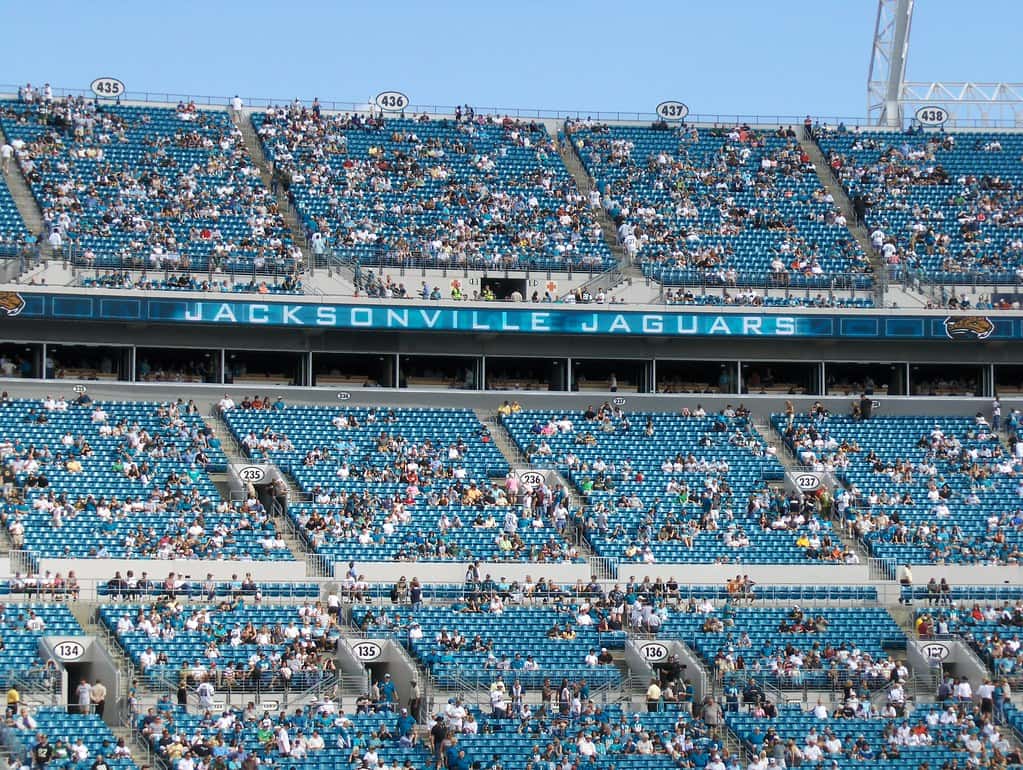
Winning changes the economics of that relationship. Ticket demand, local business activity around game days, and the broader civic conversation all shift when the team contends. The stadium renovation project at EverBank Stadium and the associated development around the site have proceeded alongside these competitive questions, and a winning team strengthens the public case for those investments.
For Northeast Florida fans specifically, the free open practices offer accessible contact with the team during a period when regular season tickets are harder to come by than they were during less successful seasons.
The preseason calendar
Camp practices give way to preseason games, which serve primarily to evaluate roster fringe players competing for the final spots. Starters typically play limited snaps or none at all, particularly on established teams that use joint practices for their front-line evaluation work.
Roster reduction to the regular season limit follows the preseason, and those decisions represent the culmination of camp evaluation. For fans, the practice sessions in August are the best opportunity to see players who may not survive to the regular season roster but who compete intensely for the chance.
Why second seasons are difficult
The pattern of teams regressing after a breakthrough year is well documented across the NFL, and the causes are structural rather than psychological.
Scheduling is the most mechanical factor. The NFL builds schedules partly on prior-year finish, which means a division winner faces other division winners in its non-conference matchups. A team that finished first plays a measurably harder schedule the following season than one that finished last, entirely independent of roster changes.
Familiarity is the second factor. A first-year coordinator's system carries genuine novelty value, and opponents preparing for it work from limited film. By year two, every defensive coordinator in the league has a full season of tape and an offseason to study it. Systems that relied partly on surprise must evolve.
Roster attrition follows success. Players who performed well attract free agent offers, and assistant coaches who contributed receive promotions elsewhere. Both forms of turnover disproportionately affect teams that overachieved.
Finally, teams that win close games at an unusually high rate tend to regress toward normal in subsequent seasons, because close-game outcomes contain substantial randomness.
What sustained success would require
Jacksonville's franchise history makes the current situation genuinely unusual. Sustained contention has been rare enough that consecutive strong seasons would constitute a departure from decades of pattern.
The organizational elements that produce sustained success are reasonably well understood: stable quarterback play, consistent drafting, a coaching staff that retains continuity, and a front office that avoids the roster-destroying contract mistakes that constrain flexibility for years.
Jacksonville has assembled several of those elements. Whether they hold together across multiple seasons is the question that separates a good year from a good era.
The market dimension matters as well. Jacksonville is among the NFL's smaller markets, and revenue considerations shape what the franchise can sustain. Winning improves that position materially, which is why competitive success and the stadium and development questions surrounding EverBank Stadium are more connected than they appear.
The in-state rivalry angle
The joint practices with Tampa Bay carry a dimension beyond preparation. Florida hosts three NFL franchises, an unusual concentration, and each draws from overlapping fan territory in a state where transplant populations mean substantial support for out-of-state teams as well.
The Jaguars, Buccaneers, and Dolphins compete for attention, sponsorship, and youth engagement across a market that no single franchise dominates. Success shifts that balance, and a Jaguars team coming off a division title strengthens its position in North Florida while Tampa Bay and Miami hold their own regions.
Because the three teams sit in different divisions and, for two of them, different conferences, they meet rarely in regular season play. Joint practices are among the few occasions when Florida franchises share a field, which gives the August sessions an appeal beyond their competitive utility.
What camp attendance offers fans
Free open practices have become a meaningful part of the relationship between NFL teams and their local markets, and they serve a purpose beyond goodwill.
Regular season tickets in Jacksonville became substantially harder to obtain following a division-winning season, which prices out portions of the fan base that supported the team through weaker years. Open camp practices provide access that does not depend on ticket availability or secondary market pricing.
The viewing experience differs from a game in ways that reward attention. Fans can watch position-specific drills that never appear on television, observe how coaches instruct individual players, and see the roster's full depth rather than only the players who take game snaps.
Practices also concentrate players in a setting where interaction is possible. Autograph periods and proximity to the field create the kind of access that stadium environments do not permit.
The themed days and giveaways the club has scheduled across the camp calendar reflect a deliberate effort to make the sessions an event rather than an observation opportunity, particularly for families with children on summer break before the August school start.
What's next
The camp period concludes with the Tampa Bay joint practices on August 25 and 26. From there, the Jaguars move into final roster decisions and regular season preparation.
The season itself will answer the question that hangs over any team coming off a breakthrough year: whether 13-4 represented the emergence of a sustained contender or a single season in which several variables broke favorably at once. Coen's second year is the test.
For a franchise with as little sustained success as Jacksonville has had, the more meaningful measure may simply be whether the organization can string consecutive competitive seasons together. That has been rare enough in Jaguars history to constitute an achievement on its own.
Spotted an issue with this article?
Have something to say about this story?
Write a letter to the editor