Jaguars Close Preseason Homestand as Liam Coen Holds Starters Back
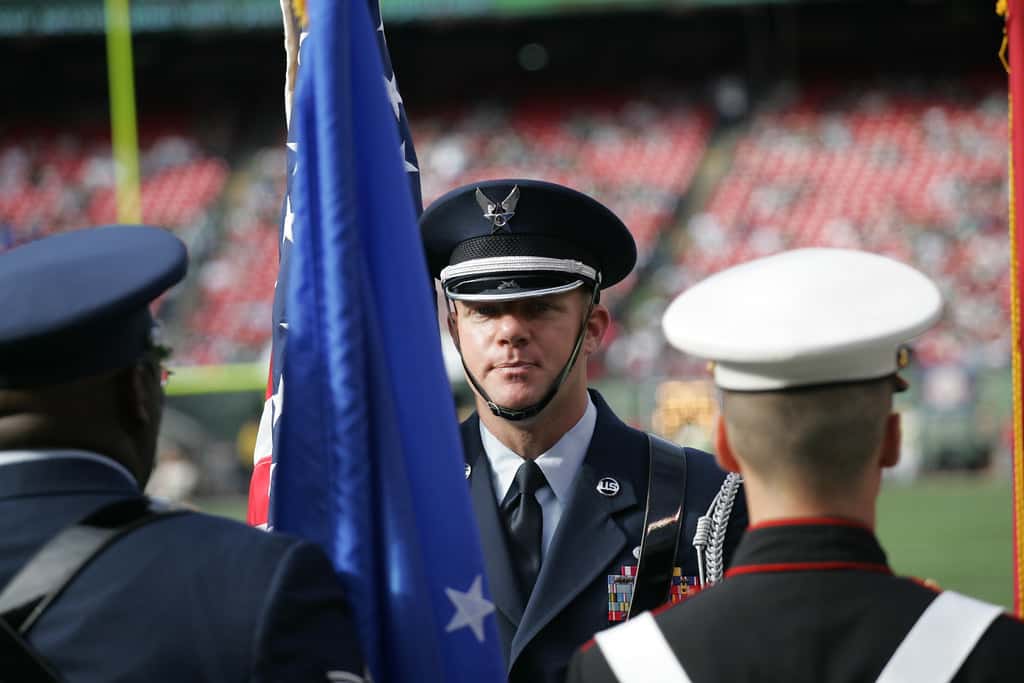
The Jacksonville Jaguars are working through the closing stretch of the 2026 preseason with head coach Liam Coen holding his front-line players largely out of exhibition games, a philosophy he signaled before the preseason began and has maintained through it. Jacksonville opened with a 24-20 win at New Orleans on Aug. 15 and returned to EverBank Stadium for a two-game homestand against Carolina and Tampa Bay.
The approach
Coen entered the preseason saying it was unlikely starters would play much, if at all, in any of the three exhibition games. He remained uncertain about whether to use front-line players against Carolina, and that ambivalence reflects a broader league-wide trend.
The calculation is straightforward. Preseason games carry no competitive value in the standings, and the injury risk to a starter is identical in August to what it is in November. Teams have increasingly shifted starter preparation to joint practices with other clubs, where the intensity can be controlled and the reps can be scripted.
The cost is that game-condition timing and communication go untested until Week 1. Coaches who hold starters out accept that tradeoff on the theory that a healthy roster in September outweighs preseason polish.
Who benefits from the snaps
The players who gain from that policy are the ones fighting for roster spots, and Jacksonville has already seen production from that group. Undrafted free agent running back J'Mari Taylor rushed for 78 yards and a touchdown against New Orleans, a total described as the second-most single-game rushing yards by any player in the league to that point in the preseason.
First-year cornerback Jabbar Muhammad led the team with six tackles including one for loss against the Saints and sealed the win with a pass breakup in the end zone on the final play of the game.
For undrafted and late-round players, those are exactly the performances that determine outcomes at the roster deadline. A 78-yard rushing game or a game-sealing defensive play in August is the primary evidence a coaching staff has when weighing the bottom of the depth chart.
The roster deadlines
NFL clubs must reduce to 75 players by Tuesday, Aug. 26, and to a final 53-man active roster by Aug. 30. The four days between those deadlines constitute the most consequential stretch of the NFL calendar for players outside the established core.
Players released at the final cutdown pass through waivers before becoming eligible for practice squads, which carry 16 players. Teams frequently claim players cut by other clubs during this window, meaning strong preseason performances can produce opportunities elsewhere even for players who do not make their own team's roster.
Jacksonville's roster construction under Coen has emphasized competition at the back end, and the volume of snaps available to reserves in three preseason games gives the staff an unusually complete evaluation set.
The franchise picture
Jacksonville plays at EverBank Stadium in downtown Jacksonville, a venue undergoing a major renovation program that has reshaped the franchise's home schedule and its relationship with the city. The Jaguars are the only NFL franchise in Northeast Florida and draw from a market that extends into South Georgia.
The team has also maintained an annual regular season game in London for more than a decade, an arrangement unique in scale among NFL franchises and one that shapes both the schedule and the organization's international commercial operations.
Competitively, Jacksonville plays in the AFC South, historically among the league's more volatile divisions, in which teams have moved between last place and division titles in consecutive seasons with some regularity.
What it means for Northeast Florida
NFL home dates are the largest recurring events on Jacksonville's civic calendar, drawing tens of thousands of visitors downtown and generating hotel, restaurant and parking revenue concentrated in a relatively small footprint.
The stadium renovation program carries its own local economic and fiscal dimension, involving public and private investment and a construction timeline that affects the surrounding sports complex, which also includes the baseball park used by the Jacksonville Jumbo Shrimp and the city's arena.
College football adds to that calendar. Jacksonville has historically hosted the annual Florida-Georgia game and a bowl game, both of which bring substantial visitor spending to the same district.
The statewide NFL week
All three Florida NFL franchises face the same deadlines. The Tampa Bay Buccaneers moved to 2-0 in the preseason with a 16-15 win over Kansas City on Saturday at Raymond James Stadium. The Miami Dolphins are navigating cutdown in the first year under head coach Jeff Hafley and general manager Jon-Eric Sullivan, with Malik Willis installed as the projected starting quarterback.
The Jaguars and Buccaneers are scheduled to meet in Jacksonville to close the exhibition slate, one of the intrastate preseason matchups the league periodically schedules and one that gives Florida fans a rare direct comparison between two of the state's franchises.
Final depth charts across all three clubs will publish in the days after Aug. 30.
Why the preseason shrank
The NFL reduced its preseason from four games to three when it expanded the regular season to 17 games. That change compressed evaluation time and accelerated the timeline on which coaching staffs must reach roster decisions.
The reduction also increased the value of joint practices, because teams needed to replace the lost evaluation reps somewhere. Joint sessions now function as the primary controlled environment in which starters face another team.
For roster-bubble players, however, the reduction cut available game film by 25 percent. Three games rather than four means fewer opportunities to make the impression that determines whether a player is employed in September, which raises the stakes on each individual snap.
The undrafted path
J'Mari Taylor's 78-yard rushing performance against New Orleans illustrates a route into the NFL that remains genuinely viable. Undrafted free agents sign immediately after the draft, typically for minimum salaries with modest guarantees, and compete against drafted players for the same spots.
Every NFL roster carries undrafted players, and some become long-term starters. The path requires a preseason performance substantial enough to overcome the organizational investment in drafted competitors, because teams are naturally reluctant to release players they selected.
Special teams contribution is usually the differentiator. A running back who is the fourth-best back on the roster does not make a 53-man roster on offensive ability alone, but one who also covers kicks and returns punts occupies a roster spot that would otherwise require two players.
Jacksonville's stadium project
EverBank Stadium is undergoing a major renovation program that reshapes the venue and the franchise's long-term arrangement with the city. Projects of that scale involve public financing components, construction timelines that affect game operations, and negotiated commitments about the team's future in the market.
For Jacksonville, a mid-sized market by NFL standards, stadium arrangements carry more weight than they do in larger cities. The franchise's economic contribution to the downtown sports complex district, which also includes the baseball park and arena, is a recurring subject in city budget discussions.
The London game series adds a further dimension. Jacksonville has played annual regular-season games in the United Kingdom for more than a decade, an arrangement that generates additional revenue but costs the team a home date in most seasons.
The AFC South and what a season looks like
The AFC South has historically been among the league's more volatile divisions, with teams moving between last place and division titles in consecutive years. That volatility reflects both roster turnover and the relative parity the league's economic structure produces.
Jacksonville's roster under Coen carries young players at several key positions, and young rosters typically improve within a season as experience accumulates. The teams that surprise in the NFL are usually those whose young players develop faster than projected rather than those who acquired the most veteran talent.
For fans in Northeast Florida, the relevant early-season indicators are the same everywhere: turnover margin, third-down efficiency and whether the offense operates cleanly in situations that require communication under pressure.
How practice squads work now
Practice squads carry 16 players and have become a substantially more significant roster tool than they once were. Teams can elevate practice squad players to the active roster for individual games without a permanent transaction, a limited number of times per player per season.
Practice squad players can also be signed away by other clubs, but only to an active roster and with a guaranteed minimum tenure. That rule prevents teams from stockpiling other clubs' developmental players without commitment.
A limited number of practice squad spots may be used on veteran players regardless of accrued seasons, which lets teams maintain experienced depth at positions where injury would otherwise be difficult to cover mid-season.
Injury designations and the season-long roster
The 53-man roster set on Aug. 30 is not the roster a team carries in December. Injured reserve, physically unable to perform designations and in-season signings reshape it continuously.
Players placed on injured reserve after the initial roster is set can be designated to return after a minimum absence, a rule that gives teams flexibility to carry players through short-term injuries without releasing them. Players placed on reserve lists before the final cutdown generally cannot return that season.
For Jacksonville, those mechanics matter because a young roster that develops through the season needs its developmental players available in November and December, when the games that determine a season's outcome are played.
What's next
Jacksonville completes the preseason and then reduces to 53 players by Aug. 30. Waiver claims and practice squad signings follow in the subsequent days.
The regular season opens in September, and Coen's decision to withhold starters from exhibition work will be evaluated against how the offense operates in Week 1. That is the practical test of the approach.
The Florida Press will continue to cover the Jaguars, Buccaneers and Dolphins through roster cuts and into the season.
Spotted an issue with this article?
Have something to say about this story?
Write a letter to the editorComments
No comments yet. Be the first to weigh in.
Related Coverage

Trevor Lawrence Throws Three Touchdowns as Jaguars Rout Patriots 35-6 in Jacksonville
2h ago
Rays Finish 98-64 and Await Yankees or Red Sox for ALDS Game 1 at Tropicana Field
3h ago
Florida Gators Jump 13 Spots to No. 8 in AP Poll After 52-28 Rout of No. 4 Ole Miss
7h ago
Baker Mayfield Out at Least Three Weeks as 0-3 Buccaneers Turn to Undrafted Rookie Jalon Daniels
15h ago