Marlins Batter the Reds 7-1 Behind a Javier Sanoja Three-Run Homer
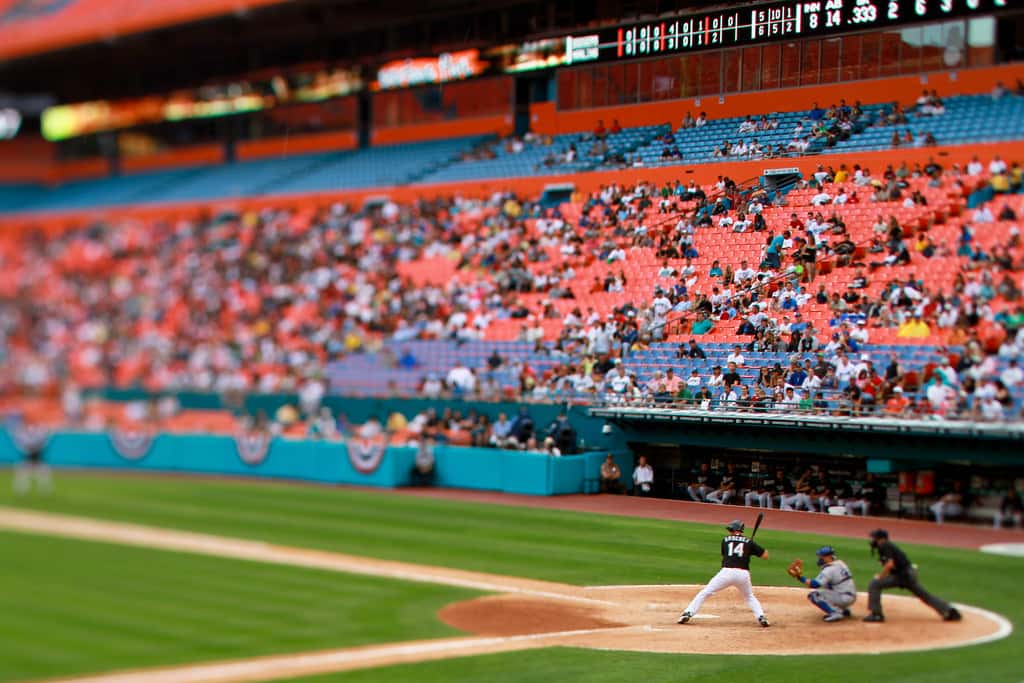
The Miami Marlins beat the Cincinnati Reds 7-1 on Sunday, riding a three-run home run from Javier Sanoja and an early breakthrough from Heriberto Hernandez in a comfortable win that keeps the club in the conversation on the periphery of the National League wild card race.
Hernandez got the scoring started before Sanoja's home run broke the game open. The seven-run output represents a strong offensive day for a club whose profile has been built more on pitching and defense than on run production.
The win improved a record that has hovered near the .500 mark for much of the summer, keeping the Marlins in a middle tier of the National League that separates the clearly eliminated from the clearly qualified.
The young core taking shape
Sanoja and Hernandez both represent the category of player the Marlins organization has leaned on: young hitters given regular playing time in a season where development matters as much as the standings.
That approach is a function of the franchise's structural position. Miami operates near the bottom of Major League Baseball payroll rankings, which forecloses the free agent market as a primary roster-building tool and pushes the organization toward drafting, international signings and trades that convert established players into prospects.
The upside of that model is cost-controlled talent. A young position player performing at a major league level for several seasons before reaching arbitration is the most valuable asset class in the sport for a low-payroll club.
The downside is volatility. Rosters built around inexperienced players produce wider swings, and a lineup can look formidable one week and overmatched the next as pitchers adjust and young hitters adjust back.
Where the Marlins sit
Reported figures for the Marlins around this stage of the season have placed the club in the vicinity of .500, occupying a spot in the National League wild card standings that is neither in playoff position nor mathematically out of reach.
That is a familiar and uncomfortable position in modern baseball. The expanded playoff format keeps more clubs alive deeper into the calendar, which means front offices face a genuine decision at the trade deadline about whether to add, subtract or hold.
Six weeks of regular season baseball remain, which is enough time for a hot stretch to change the picture entirely and enough time for a bad one to end it. A seven-run win over a divisional-adjacent opponent is the kind of result a club in that position needs to string together.
The Miami baseball market
The Marlins occupy a difficult position in a crowded South Florida sports market. The Dolphins dominate the fall, the Heat command deep local loyalty built on multiple championships, the Panthers have surged in relevance, and Inter Miami has captured a global audience.
Baseball has to compete for attention in that environment, and the franchise's history has not helped. Two World Series titles are offset in local memory by two teardowns that followed them, and by ownership changes that reset the relationship with the fan base each time.
loanDepot park, the club's retractable-roof home in Little Havana, addressed the practical problem of summer baseball in South Florida. Afternoon thunderstorms and August humidity made open-air baseball in Miami genuinely difficult, and a climate-controlled venue removed weather as a factor in attendance decisions.
The stadium sits in a neighborhood with deep baseball roots, and the club's connection to Miami's Cuban, Venezuelan and Dominican communities remains its most durable asset. Signing and developing Latin American talent is both a competitive strategy and a community one.
What a win like this indicates
Seven runs from a lineup that has struggled for consistency is worth noting for what it suggests about the pieces rather than for the result itself.
A three-run home run requires two baserunners ahead of it, which means the at-bats before Sanoja's swing did their job. Low-payroll clubs frequently lose games not because they lack a power threat but because the plate appearances that create scoring opportunities produce nothing.
Holding an opponent to a single run is the other half. The Marlins have built their recent competitive stretches on run prevention, and a one-run allowance backs up a seven-run output in a way that produces a comfortable rather than a nervous afternoon.
What it means for Marlins fans
The realistic frame for the rest of this season is development rather than contention. Watching which young players establish themselves as major league regulars is the return on a season spent near .500.
Sanoja and Hernandez are part of that evaluation, as are the pitchers who have absorbed innings through the summer. A club in the Marlins' financial position needs multiple cost-controlled contributors to emerge in the same window in order to compete, and the second half of a season like this one is where that gets sorted out.
For fans, the practical value proposition remains strong. Tickets for weeknight games at loanDepot park are among the more accessible in professional sports, and the venue's climate control makes a summer evening game genuinely comfortable in a way that few Florida outdoor sporting events are.
How a low-payroll club builds a roster
Miami's operating model is shared by a handful of Major League Baseball franchises and produces a specific and recognizable pattern of roster construction.
The draft is the primary channel. Amateur selections are cost-controlled for years before reaching arbitration and for longer before free agency, which makes each successful pick disproportionately valuable to a club that cannot replace production through free agent spending.
International amateur signings are the second channel, and they matter enormously in Miami. The club's location and its connections to Latin American baseball communities give it advantages in scouting and player relations that translate into signings other markets struggle to make.
Trades of established players for prospects are the third. When a club with limited payroll capacity has a player approaching free agency, converting that player into multiple years of cost-controlled talent is often the rational move even when it costs wins in the current season.
The model works when the graduating players arrive in overlapping windows. It fails when they arrive sequentially, because the club is never good in the same year across enough positions to contend.
What to watch in the final weeks
For a club in Miami's position, the remaining schedule functions as an extended evaluation period, and several specific questions get answered.
Playing time distribution reveals organizational priorities. When a club gives consistent starts to a young player over a veteran with a similar profile, that is a signal about how the front office sees the following season.
Pitcher workload management matters for young arms. Innings limits, rest patterns and the decision to shut a pitcher down before the season ends all indicate how the organization values a given arm's long-term development against present competitiveness.
September roster expansion adds a limited number of spots, which gives additional prospects major league exposure. Who receives those call-ups is another read on the internal depth chart.
Defensive positioning tells its own story. Clubs use the final weeks to test players at positions they may occupy the following year, and a middle infielder taking reps in the outfield or a corner infielder moving across the diamond reflects a roster plan rather than a whim.
The National League landscape
Miami competes in the National League East, historically among the more expensive divisions in baseball, which frames the difficulty of the club's position.
Payroll disparity within a division compounds across a season because clubs play divisional opponents far more frequently than they play the rest of the league. A team facing well-funded rosters in a large share of its games has a structurally harder schedule than its overall record suggests.
The expanded playoff format partially offsets that. Wild card berths give clubs a path that does not require winning a division, which keeps more teams competitive deeper into the calendar and makes a season near .500 more meaningful than it was under the older format.
The tradeoff is that a wild card entrant faces a short series against a rested opponent, which introduces variance that a superior team cannot fully control. That variance is what makes the expanded format attractive to clubs like Miami: reaching the postseason at all creates a genuine chance regardless of seeding.
Going to a game
For South Florida residents, a Marlins game is among the more accessible professional sports experiences in the region.
loanDepot park's retractable roof and air conditioning make summer evening baseball genuinely comfortable, which distinguishes it from most outdoor sporting events in Florida between June and September.
Ticket pricing on the secondary market frequently clears below face value for weeknight games, particularly in the hours before first pitch, and the ballpark's capacity relative to typical attendance means good seats are generally available.
The stadium sits in Little Havana on the former site of the Orange Bowl, and the surrounding neighborhood offers dining that predates the ballpark by decades. Parking is available in structures adjacent to the stadium, and the location is accessible from the major expressways serving Miami-Dade County.
Schedules, promotional dates and ticket information are published by the club.
What's next
The Marlins continue their schedule through the final six weeks of the regular season. Schedules, probable starters and broadcast details are published by the club and by Major League Baseball.
The standings will clarify quickly. Clubs in the Marlins' position typically resolve their playoff question within two or three weeks in either direction, and the remaining schedule strength will determine which way this one breaks.
Beyond the current season, the organization's roster decisions in the offseason will indicate whether the front office reads this year as a step forward or as another cycle in a longer rebuild.
Spotted an issue with this article?
Have something to say about this story?
Write a letter to the editorComments
No comments yet. Be the first to weigh in.
Related Coverage

Sean Sweeney Opens His First Magic Training Camp With a Defense-First Message for Banchero and Wagner
3h ago
Giannis Antetokounmpo Opens His First Heat Training Camp in Boca Raton as Miami Rebuilds Around a Two-Time MVP
8h ago

Trevor Lawrence Throws Three Touchdowns as Jaguars Rout Patriots 35-6 in Jacksonville
2d ago

Rays Draw the Yankees in the ALDS as Drew Rasmussen Gets the Game 1 Ball at Home
2d ago