Marlins Rout Pirates for Fourth Straight Win and Close on a Wild Card Spot
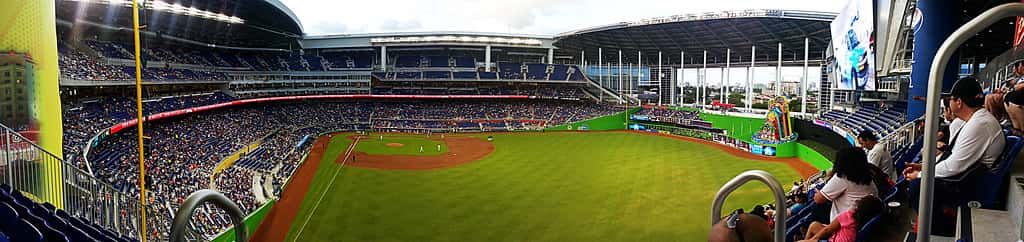
The Miami Marlins beat the Pittsburgh Pirates 8-2 on Wednesday night for their fourth consecutive win, improving to 62-59 and pulling within a game and a half of the final National League wild card position. Griffin Conine and Heriberto Hernandez homered, and Janson Junk worked six solid innings to clinch the series.
The win continued a stretch that has changed the shape of Miami's season. The Marlins endured a 12-game losing streak earlier this summer, a run that would have ended most clubs' seasons, then won six of seven and have now added four straight. A team that traded pieces at the deadline is playing better than it did before the deadline.
Pittsburgh fell to 58-64 and dropped further out of the National League race. For Miami, the standings math is genuinely live: with roughly six weeks remaining, the Marlins sit behind Arizona and Philadelphia for the third wild card by a margin small enough that a good week closes it.
How Miami won
Junk delivered the kind of start that has been the Marlins' recurring need, six innings that kept the game in reach and spared a bullpen that has absorbed heavy usage. He allowed two runs and turned the game over with the lead intact.
The offense supplied the rest. Conine and Hernandez both went deep, and Miami put up eight runs against a Pittsburgh staff that has generally been the Pirates' strength this season. Eight runs is well above the Marlins' season average, and the club's recent surge has coincided with an offense that has stopped stranding runners at the rate that defined its June and July.
Conine has been the more established of the two power sources, and Hernandez has emerged as a piece of the post-deadline lineup. Miami's roster construction after August 3 leaned toward younger position players getting extended runs, and the recent stretch has been a case of those players producing rather than merely accumulating experience.
The series win over Pittsburgh was the fourth straight victory overall and put Miami above .500 at 62-59, a mark the club has flirted with and fallen back from repeatedly this season.
The deadline that was not a fire sale
Miami approached the August 3 trade deadline sitting at 58-55, a game and a half out of the final wild card spot, and made a series of moves that pointed toward the future without dismantling the roster.
The largest was sending catcher Liam Hicks to the Tampa Bay Rays for infield prospect Brayden Taylor, pitcher Jacob Kisting and shortstop Adrian Santana. Hicks was in the middle of a breakout year, and moving a productive 27-year-old catcher while contending was the kind of decision that draws immediate criticism.
Miami also dealt left-hander Braxton Garrett to the Chicago Cubs for prospects Jonathan Long and pitcher Jace Beck, and traded infielder Connor Norby and pitcher Aiden May to the Colorado Rockies for reliever Victor Vodnik.
Taken together, the moves were a hedge rather than a surrender. The Marlins moved players with limited remaining club control, added controllable pieces and a major league reliever, and kept the core of the roster intact. The organization's judgment was that a team hovering around .500 could stay in the race while improving its position for the following seasons, and the four-game winning streak since has made that look defensible.
The wild card math
Miami sits a game and a half behind Arizona and Philadelphia for the third and final National League wild card spot, and roughly two and a half games behind the group holding the second and third positions. San Diego occupies the other wild card berth in the current alignment.
With about six weeks left, that margin is small enough to close and small enough to lose in a week. The relevant factors are schedule strength, health and whether the offense that produced eight runs Wednesday is a real shift or a hot stretch against a struggling opponent.
The Marlins' path is complicated by the number of teams involved. National League wild card races routinely involve five or six clubs separated by a handful of games, which means Miami cannot simply win its own games. It needs the teams ahead of it to lose, and against a crowded field that is a slower process than it looks in the standings.
The 12-game losing streak remains the season's defining liability. Those losses are permanently in the record, and a club that had played .500 baseball through that stretch would currently be holding a playoff position rather than chasing one.
What it means for South Florida
A meaningful August for the Marlins is not a routine occurrence. The franchise has won two World Series titles and has otherwise spent most of its history outside the postseason picture, with a rebuild-and-restart cycle that has repeatedly separated the club from the audience it needs.
Attendance has followed that pattern. Playing meaningful games in late August and September at loanDepot park is the one thing that reliably moves the number, and the schedule from here includes home dates that will test whether South Florida re-engages.
The broader context is that Florida's two major league franchises are both relevant in mid-August. The Rays own the best record in the American League. The Marlins are within striking distance in the National League. The last time both clubs mattered simultaneously this deep into a season is far enough back that most fans would have to look it up.
Local impact across the state
The Hicks trade means the two Florida clubs now have a direct stake in each other's outcomes. Hicks has been producing for Tampa Bay, including a three-run homer Wednesday that helped complete the Rays' 9-0 West Coast trip. The prospects Miami received will be evaluated over years, not weeks.
For the state's baseball infrastructure, two contending clubs create the kind of visibility that matters at the youth level. Florida is among the country's most productive states for major league talent, and the pipeline runs through high school programs, travel organizations and the spring training complexes on both coasts.
Both franchises have also spent recent years navigating stadium questions, Tampa Bay through hurricane damage to Tropicana Field and a temporary relocation, Miami through the long aftermath of the ballpark financing fight. Winning is the variable that changes those conversations more than any other.
The 12-game losing streak in context
A 12-game losing streak is a season-defining event, and it is worth understanding what it costs. Twelve consecutive losses in a 162-game season represents roughly 7 percent of the schedule surrendered without a win, and the arithmetic of the standings does not forgive it.
Had Miami played .500 baseball across those 12 games, meaning six wins and six losses, the club would currently hold a playoff position rather than chase one. That counterfactual is the most direct way to describe what the streak did.
Streaks of that length are rarely explained by a single failure. They typically involve simultaneous underperformance from the rotation and the lineup, compounded by close losses that erode a bullpen and by the psychological effect of pressing at the plate. Managers describe the pattern the same way every time: the team stops playing loose.
What matters now is that the club recovered. Six wins in seven games followed by four straight is a genuine reversal, and organizations that lose 12 in a row frequently do not recover within the same season. Miami has, which is the reason the wild card conversation is happening at all.
What a wild card berth would mean
The National League wild card race routinely involves five or six clubs separated by a handful of games, and the structure of the current playoff format means the difference between third place in the wild card and fourth is the entire season.
For Miami specifically, reaching October would validate a deadline approach that drew criticism. Trading a productive catcher while a game and a half out of a playoff spot is the kind of decision that is defensible in theory and difficult in a clubhouse, and the front office's argument was that the club could remain competitive while improving its future position.
The organizational stakes extend beyond one October. The Marlins have cycled through rebuilds repeatedly since their 2003 World Series title, and each cycle has cost them audience. A playoff appearance built on young players under club control is the foundation of a sustained run rather than a one-year spike.
The immediate obstacle is the schedule and the number of teams in the way. Miami cannot control what Arizona, Philadelphia and San Diego do, and closing a gap of a game and a half against three clubs simultaneously requires either a sustained run of its own or help it does not control.
The rotation question
Miami's path over the final six weeks runs through its starting pitching, and the deadline trade of Braxton Garrett to the Cubs removed a left-handed starter from a rotation that was already thin.
Junk's six innings Wednesday illustrate the specific need. A club chasing a playoff spot cannot afford three-inning starts that empty a bullpen, and the compounding effect of short outings across a week is what breaks contending teams in September.
The Marlins have historically developed pitching well, and the organization's willingness to trade established arms reflects confidence in the pipeline behind them. That confidence is being tested in real time by a playoff race the front office did not fully commit to.
Victor Vodnik, acquired from Colorado, addresses the relief side. High-leverage innings in one-run games decide wild card races, and a bullpen arm who can be trusted in the eighth inning has outsized value over a six-week stretch.
What's next
Miami continues its homestand and then faces the stretch of schedule that will settle the question. The Marlins need to sustain the offensive production, get consistent length from starters like Junk and stay healthy through the September grind.
Vodnik, acquired from Colorado, is the deadline addition most likely to affect games immediately. Bullpen reliability in one-run games is what separates wild card teams from teams that finish two games short, and Miami's relief corps has been stretched.
The four-game winning streak has bought the Marlins relevance. Whether it buys them October depends on the next several series, and on whether a club that lost 12 straight in the summer has genuinely become the team that has won four in a row in August.
Spotted an issue with this article?
Have something to say about this story?
Write a letter to the editor