Marlins Sit Near .500 as a Young Core Carries Miami Into the Stretch
The Miami Marlins have reached the middle of August at 58-56 through 114 games, holding just above .500 in a season built around a young position player core and improving rotation depth. For a franchise that has spent much of the past decade rebuilding, a competitive record this deep into a season represents progress against recent baselines.
The roster construction reflects a deliberate approach. Miami has leaned on emerging hitters, athletic versatility across the diamond and rotation depth rather than concentrating payroll in a small number of high-priced veterans. Jakob Marsee, Joe Mack, Owen Caissie and Agustin Ramirez are among the young players the organization has counted on to take developmental steps this season.
The club supplemented that group with veterans including Christopher Morel and right-hander Pete Fairbanks, both of whom remain relatively young while carrying more major league experience than the core around them.
The injury situation
August has brought a meaningful injury list. Fairbanks landed on the 15-day injured list, removing a leverage arm from the bullpen at a point in the season when relief innings accumulate. Outfielder Griffin Conine went to the 10-day injured list with a left hamstring tear, and right-hander Adam Mazur was moved to the 60-day injured list following right elbow surgery.
Bullpen attrition is the most common way a team's late-season performance erodes. Relief pitchers absorb high-stress innings across a full season, and losing an established late-inning arm forces every other reliever into higher-leverage situations than the roster was built to support.
The hamstring injury to Conine carries a longer recovery profile than a strain, since a tear typically requires an extended absence. Elbow surgery for Mazur places him on a timeline that runs past this season.
Injury lists at this point in a baseball season are normal and every club carries them. The question for Miami is whether the depth behind those names can hold the club's position over the final six weeks.
Where the record puts them
A 58-56 mark through 114 games projects to a finish in the low 80s in wins across a 162-game schedule if the pace holds. Playoff positioning in the National League depends less on any single team's record than on how the wild card race sorts, and margins in that race have been narrow in recent seasons.
Readers should treat projections cautiously. A six-week stretch can move a team several games in either direction, and a club near .500 in mid-August sits close enough to the margin that a modest hot or cold streak changes its situation materially.
The more durable question for a young roster is what the season establishes about individual player development. Playing time for young position players and starting pitchers is itself the point of a season like this one, independent of where the club finishes.
The Florida baseball context
Miami shares Florida with the Tampa Bay Rays, and the two clubs have taken different paths this season. The Rays have been among the strongest teams in baseball, sitting atop the American League East with the best record in the majors as of mid-August.
The two teams meet in interleague play, and the in-state rivalry, while not carrying the history of older matchups, gives Florida baseball fans a regular point of contact between the state's two franchises.
Florida's baseball footprint extends well beyond the two major league clubs. The state hosts half the Grapefruit League spring training operations each February and March, drawing visitors to facilities across Southwest Florida, the Treasure Coast and Central Florida. Minor league affiliates including the Jacksonville Jumbo Shrimp, Pensacola Blue Wahoos and Clearwater Threshers play through the summer, and the Florida Complex League operates rookie-level baseball at spring training sites.
What it means for Florida fans
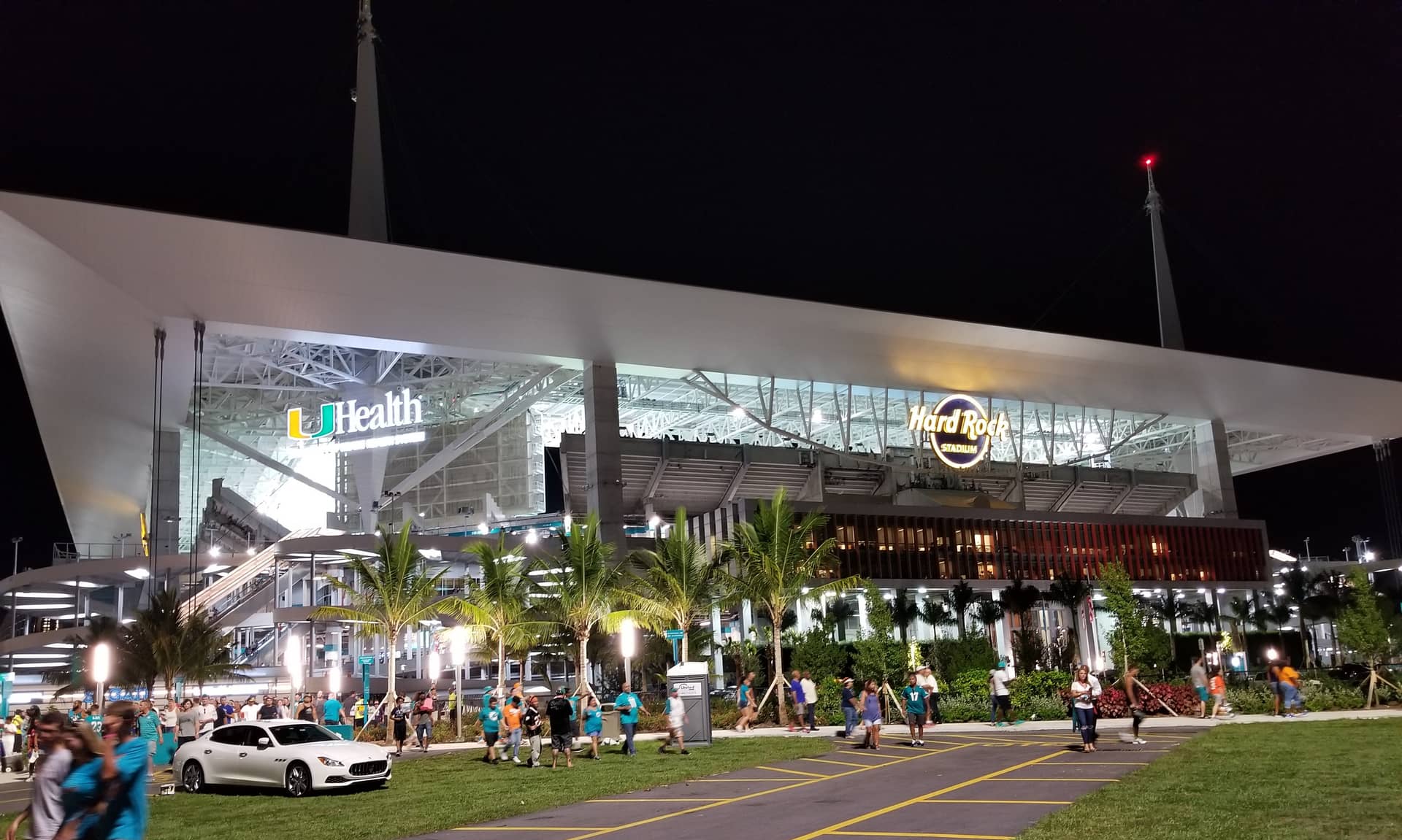
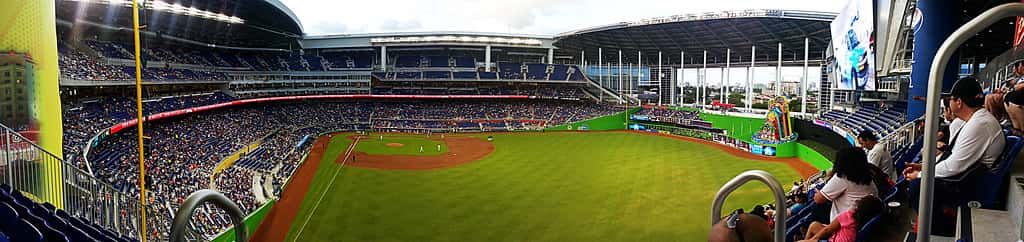
loanDepot park in Miami's Little Havana neighborhood offers a climate-controlled environment that matters in August, when South Florida heat and afternoon thunderstorms would otherwise make outdoor baseball difficult. The retractable roof has been one of the venue's clearest practical advantages.
For fans following a young roster, the meaningful markers differ from those that apply to a contender. Whether young hitters sustain production across a full season rather than fading in the second half, whether starting pitchers hold their velocity and command through career-high innings loads, and whether the club's defensive versatility holds up are the developmental questions that shape next season.
Attendance at Marlins games has been a persistent subject for the franchise, and a competitive record through August generally supports better late-season crowds than a club playing out a lost season.
Local impact across South Florida
The Marlins operate in a crowded South Florida sports market that includes the Dolphins, Heat, Panthers and Inter Miami. Competing for attention and discretionary spending in that environment is a standing challenge, particularly for a baseball club during football season.
loanDepot park itself has become a multi-use venue, hosting World Baseball Classic games and other events beyond the regular season schedule, which broadens its role in the local economy beyond 81 home dates.
The franchise's player development pipeline runs through Florida facilities, connecting the major league club to the state's minor league and complex league operations.
How Miami built this roster
The Marlins have operated under payroll constraints that shape every roster decision, and the resulting approach has been consistent across recent front office regimes: acquire young controllable talent, develop pitching depth, and trade established players before they reach free agency.
That model produces roster churn. Players who reach arbitration years and command higher salaries become trade candidates, and the return is generally younger players further from the majors. The approach can sustain competitiveness if the development pipeline works and can produce extended losing stretches if it does not.
The current roster reflects that pipeline. Jakob Marsee, Joe Mack, Owen Caissie and Agustin Ramirez represent the position player group the organization has bet on, and their collective development trajectory will largely determine whether Miami sustains the competitiveness it has shown this season.
Veteran additions like Christopher Morel and Pete Fairbanks serve a specific function on a young roster, providing major league experience without the long-term financial commitment that would constrain future flexibility.
The stadium and market question
loanDepot park opened in 2012 and remains one of the more distinctive venues in baseball, with a retractable roof that makes summer baseball viable in a climate where outdoor afternoon games would be unplayable for much of the season.
Attendance has been a persistent subject for the franchise. The factors involved are structural rather than simply reflecting team performance: South Florida's transient population, competition from four other major professional franchises, traffic patterns around the Little Havana location, and a fan base with divided loyalties given how many residents relocated from other markets.
The club has invested in the game experience and in community engagement, including programming aimed at the surrounding neighborhood and at South Florida's substantial Latin American baseball fan base. The World Baseball Classic games hosted at the park have drawn strong crowds, demonstrating that demand exists under the right conditions.
Sustained competitiveness is generally the most reliable driver of attendance in any market. A team that contends into September builds a habit of attendance that carries into subsequent seasons, which is part of why the current season's finish matters beyond its immediate standings implications.
What September brings
The final month of a baseball season operates differently from the preceding five, and those differences matter for a young roster.
Active rosters expand in September, allowing teams to carry additional players. For a club in Miami's position, that expansion is an opportunity to give major league innings and at-bats to prospects who spent the season in the minor leagues, accelerating development and informing offseason decisions.
Innings management becomes a live consideration for young starting pitchers. Organizations monitor workload increases from one season to the next, and pitchers approaching career highs are frequently limited or shut down regardless of team circumstances.
Schedule strength varies in the final month depending on which opponents a club draws, and teams eliminated from contention often deploy different lineups than they did earlier, which affects the competitive environment.
For the Marlins, the September stretch will determine whether a season that has hovered near .500 finishes above it, and more importantly what the organization learns about which young players are ready to be counted on next year.
What the offseason will turn on
Decisions the Marlins make this winter will be shaped by what the remaining weeks reveal, and the categories are reasonably predictable.
Arbitration eligibility is the first. Players reaching arbitration years become more expensive, and a club operating under payroll constraints evaluates whether to retain, extend or trade each of them. Those decisions typically drive the winter's most consequential roster moves.
Rotation construction is the second. Young starting pitchers who completed a full season without breaking down establish themselves as rotation pieces; those who did not raise questions about workload management and depth for the following year.
Position player commitments follow. A young hitter who sustained production across a full season becomes a candidate for a long-term extension at a price below what he would command later, a mechanism clubs in Miami's payroll position use frequently.
Free agent activity is generally limited for the Marlins, with additions concentrated in short-term veteran signings rather than major commitments.
What's next
Miami plays out the remainder of the regular season through late September, with roster expansion arriving in September and giving the organization an opportunity to give major league experience to additional young players.
The injury list will shape what the club can do down the stretch, with Fairbanks' return from the 15-day list and Conine's hamstring recovery the most consequential timelines for the current roster.
Whatever the final record, the season's value for a young team is measured in the developmental progress it produces heading into the winter.
Spotted an issue with this article?
Have something to say about this story?
Write a letter to the editor