Messi Returns to Inter Miami After World Cup Final Run With Argentina
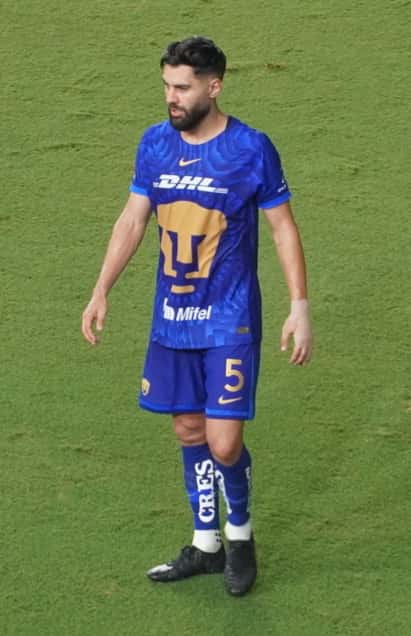
Lionel Messi returned to Inter Miami over the weekend, entering in the 53rd minute against the Columbus Crew roughly 13 days after Argentina's defeat in the 2026 World Cup final. According to match reports, the 39-year-old recorded a goal and an assist in a match that finished 2-2, and received a sustained ovation on his introduction.
The World Cup context
Messi had not appeared for Inter Miami since departing to captain Argentina at the World Cup. The defending champions reached the final and lost 1-0 to Spain after extra time on July 19, ending a tournament run that constituted Messi's sixth World Cup.
Following the tournament, Messi returned to his hometown of Rosario for an extended period with his family before rejoining the club. That sequencing is standard for players coming off a deep international tournament run, where the physical and psychological demands of a month-long competition require genuine recovery time rather than an immediate return to club duty.
The World Cup itself carried particular significance for the region, having been hosted across North America with matches played in the United States, including at Hard Rock Stadium in Miami Gardens. The tournament's presence in Florida generated substantial economic activity and elevated the sport's profile in a market that already had among the strongest soccer followings in the country.
What the return means for Inter Miami
Inter Miami enters the closing months of the MLS season as the reigning MLS Cup champion, pursuing the Supporters' Shield awarded to the club with the best regular season record. Messi's availability for that push is the central variable in the club's remaining schedule.
Managing his workload is the complication. A player of Messi's age returning from a World Cup final run cannot reasonably start every remaining fixture, and the club faces a compressed calendar that includes MLS play alongside additional competitions.
Inter Miami is preparing for the Leagues Cup, the competition contested between MLS and Liga MX clubs, and is also scheduled to face Mexican side Cruz Azul in the Campeones Cup. Those additional fixtures compound the scheduling problem for a squad whose most important player requires managed minutes.
Bringing Messi off the bench in the 53rd minute rather than starting him reflects exactly that calculation. It is the sort of reintegration approach clubs use to restore match fitness without exposing a returning player to a full 90 minutes immediately.
The result and the concern
Surrendering points against Columbus in a match Miami had positioned itself to win illustrates the broader issue the club has faced. Inter Miami's roster is constructed with enormous quality at the top and less depth beneath it, a structure common to clubs built around designated players operating under MLS roster rules.
That construction produces a specific vulnerability. When the marquee players are available and fit, the team is capable of beating anyone in the league. When they are absent, resting, or fatigued, the drop-off is steeper than it would be for a more evenly distributed roster.
The 2-2 result, with Miami contributing a goal and an assist from Messi and still failing to secure the win, is the sort of outcome that raises questions about the squad behind him rather than about the player himself.
The contract question
Reports have indicated that Messi is interested in continuing at Inter Miami beyond his current deal, with the club and the player in discussions over a new contract. Those reports should be treated as reflecting ongoing conversations rather than a completed agreement.
The stakes for the franchise and for MLS are difficult to overstate. Messi's arrival in 2023 transformed Inter Miami's commercial position, drove league-wide attendance and broadcast interest, and reshaped the economics of the league's streaming arrangement. His departure would remove all of that at once.
For South Florida specifically, the club's new stadium at Miami Freedom Park represents a long-term investment whose commercial assumptions were shaped substantially by the attention Messi brought. Continuity matters for those projections.
What it means for South Florida
Inter Miami has become a significant presence in a crowded regional sports market. The club draws from South Florida's large Latin American population, a base with deep soccer affiliation that predates the franchise, and Messi's presence converted latent interest into consistent attendance and merchandise demand.
Match days at the club's venue generate economic activity across surrounding businesses, and the visiting supporter traffic for high-profile fixtures adds hotel and hospitality demand. Those effects are concentrated but real.
The broader significance is generational. A substantial number of children in South Florida are growing up with the opportunity to watch one of the sport's defining players in person on a regular basis, an experience that shapes participation in youth soccer and the region's long-term relationship with the sport.
Managing a 39-year-old across three competitions
The central operational question facing Inter Miami is not whether Messi remains effective. It is how many minutes he can play and in which matches those minutes produce the most value.
Players in their late thirties retain technical quality and decision-making while losing recovery capacity. The consequence is not diminished performance within a match but diminished ability to perform in matches spaced closely together. A schedule with midweek and weekend fixtures across multiple competitions imposes exactly that pattern.
Coaching staffs address this through rotation, accepting weaker lineups in lower-priority fixtures to preserve availability for decisive ones. The difficulty is that Inter Miami's competitions all carry genuine stakes: MLS regular season positioning, the Leagues Cup, the Campeones Cup, and eventually the MLS Cup playoffs.
Coming off a World Cup that extended to the final on July 19, the accumulated load is substantially higher than a normal preseason would produce. The 53rd-minute introduction against Columbus reflects a staged reintegration rather than a full return.
What MLS gained and risks losing
Messi's arrival in 2023 produced effects across Major League Soccer that extended well beyond Inter Miami's results.
Attendance rose league-wide for matches involving Miami, with clubs moving fixtures to larger venues to accommodate demand. Broadcast and streaming interest increased substantially, and the league's media arrangement gained a marquee attraction it had lacked. Merchandise sales reached levels without precedent in the league's history.
Perhaps most significantly, the signing changed how the league is perceived by other elite players, several of whom have subsequently chosen MLS at ages when they retained options in Europe.
The dependency this created is the corresponding risk. A league whose commercial momentum rests substantially on one player in his late thirties faces an obvious transition question. Whether the elevated interest persists after his eventual retirement is the strategic issue MLS executives are working to address, and it is why continuity in the near term carries value beyond individual matches.
The 2026 World Cup's Florida legacy
The tournament that concluded July 19 was hosted across North America, with matches played at venues including Hard Rock Stadium in Miami Gardens.
Hosting produced immediate economic activity through visitor spending, hospitality demand, and infrastructure investment. The more durable effects are harder to measure but potentially larger: elevated participation in youth soccer, strengthened commercial interest from sponsors, and the establishment of South Florida as a venue for major international football.
Argentina's run to the final carried particular resonance in a region with substantial Argentine and broader Latin American populations. The 1-0 extra time defeat to Spain ended a title defense that had drawn enormous local attention.
For Inter Miami specifically, the tournament's conclusion returns Messi and other internationals to club duty at a point when the MLS season enters its decisive phase.
The competitions ahead
Inter Miami's remaining calendar involves several distinct competitions with different structures and stakes, which complicates squad planning considerably.
The MLS regular season continues toward the playoffs, with the Supporters' Shield awarded to the club finishing with the best record. That trophy carries prestige and, more practically, home field advantage through the postseason.
The Leagues Cup brings MLS and Liga MX clubs into direct competition, a tournament that interrupts the regular season calendar and adds fixtures during a period when squads are already managing accumulated load.
The Campeones Cup fixture against Cruz Azul represents a single match between champions of the two leagues, a showcase event rather than a tournament.
The MLS Cup playoffs remain the primary objective for a defending champion. Playoff football in MLS operates on a different logic from the regular season, with series and single-elimination rounds where individual moments carry disproportionate weight, which is precisely the environment where a player of Messi's quality most affects outcomes.
Squad depth and the designated player model
Inter Miami's roster construction reflects constraints that apply across MLS and shape how every club in the league is built.
The designated player mechanism allows clubs to sign a limited number of players whose compensation falls outside standard salary budget rules. That structure enables the acquisition of elite talent while maintaining league-wide cost control.
The consequence is rosters that are top-heavy by design. A club can field two or three players of a caliber the salary budget could never otherwise accommodate, supported by a squad assembled under considerably tighter constraints.
When the designated players are available and fit, such teams are formidable. When those players are absent, rested, or on international duty, the drop in quality is steeper than it would be for a more evenly distributed squad.
The 2-2 result against Columbus, in which Miami contributed a goal and an assist from Messi and still surrendered points, illustrates the pattern. Depth rather than star quality is the variable that determines results across a full season.
What's next
Inter Miami's immediate calendar includes the continuation of the MLS regular season alongside Leagues Cup competition, with the Campeones Cup fixture against Cruz Azul also ahead. How the club manages Messi's minutes across those competitions will indicate its priorities.
The MLS Cup playoffs remain the primary objective for a defending champion, and the Supporters' Shield chase runs alongside it through the end of the regular season.
For now, the most significant development is simply that Messi is back in the squad. Whatever Inter Miami accomplishes across the remainder of 2026 depends more on his availability and fitness than on any other single factor.
Spotted an issue with this article?
Have something to say about this story?
Write a letter to the editor