Miami Federal Judge Permanently Tosses Trump's Epstein Letter Lawsuit Against the Wall Street Journal
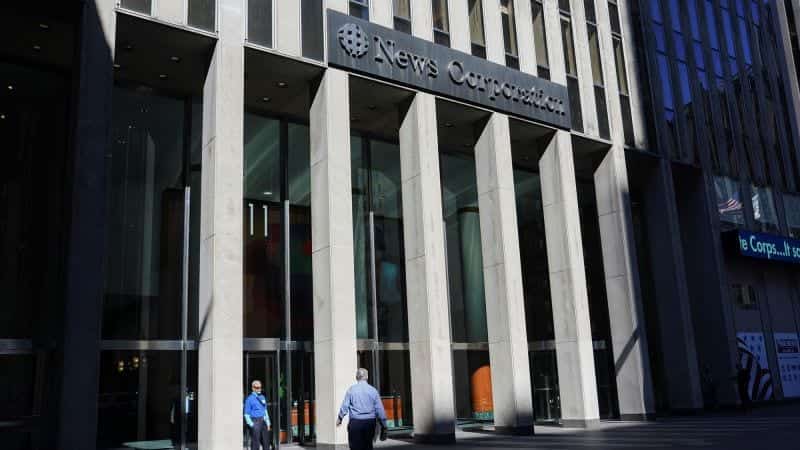
A federal judge in Miami on Saturday permanently threw out President Donald Trump's defamation lawsuit against The Wall Street Journal, its publisher Dow Jones and Rupert Murdoch over the newspaper's story about a sexually suggestive birthday letter bearing Trump's name in a 2003 album compiled for Jeffrey Epstein. U.S. District Judge Darrin Gayles dismissed the case with prejudice on Oct. 31, 2026, ruling that Trump's amended complaint still did not plausibly show the paper acted with actual malice, the standard a public figure must meet to win a libel case.
The ruling closes the case in the Southern District of Florida, the federal court that covers Trump's home county of Palm Beach, unless an appeals court revives it. A dismissal with prejudice means the suit cannot be refiled in the same court. Trump's legal team signaled it is not finished.
What the judge ruled
In a 20-page ruling, according to CBS News, Gayles wrote that the lawsuit was "grasping at straws" and that it attempted to "manufacture" flaws in the Journal's investigative reporting.
"The Amended Complaint falls short of pleading actual malice," Gayles wrote. "Indeed, the allegations regarding malice are conclusory, vague, sometimes inconsistent with the Article, and often irrelevant to whether Defendants knew or should have known that the statements in the Article were purportedly false."
The judge also noted that the Journal's story did not bury Trump's side. "Rather, it informed readers that President Trump decried the Letter as a fake and denied writing it," Gayles wrote, according to The Associated Press. He found that several other allegations in the lawsuit lacked merit as well.
Gayles grounded the decision in New York Times Co. v. Sullivan, the Supreme Court's 1964 ruling that requires public figures suing for libel to prove a publisher knew a statement was false or acted with reckless disregard for whether it was true. Courts call that standard actual malice, and it is the hurdle Trump failed to clear twice before the same judge.
Second dismissal, this time permanent
This was not the first time Gayles rejected the suit. In April, he dismissed it without prejudice, finding that Trump had not adequately alleged the article was published with actual malice. According to CBS News, the judge ruled at the time that the president came "nowhere close" to making that showing. Because that first dismissal was without prejudice, Trump was allowed to try again, and his lawyers filed an amended complaint in May.
Saturday's order ends that second attempt. The amended complaint, the judge found, did not fix the core problem: it did not lay out facts suggesting that the Journal's editors and reporters believed the story was false when they published it.
Why the damages figure differs: $10 billion or $20 billion
Readers may have seen the lawsuit described two ways. The AP, which Local 10 News carried, called it a "$10 billion lawsuit." CBS News described it as a "$20 billion lawsuit." Both figures trace to the same complaint.
When Trump filed the case in Miami federal court in July 2025, news reports on the complaint described two counts of defamation, each seeking at least $10 billion in damages. Outlets that cite the per-count demand report $10 billion; outlets that add the two counts together report $20 billion. Either way, the figure was a demand in a pleading, not an amount any court found Trump was owed, and the suit has now been dismissed before reaching the question of damages.
The story at the center of the case
The Journal published its report in July 2025. It described a letter and drawing that the paper said bore Trump's name and was included in an album compiled for Epstein's 50th birthday in 2003. The AP reported that the letter was collected by British socialite Ghislaine Maxwell as part of the album, years before Epstein was first arrested in 2006. The letter's text, according to the newspaper, was framed by the outline of what appears to be a hand-drawn naked woman.
Trump denied writing it and called the story "false, malicious, and defamatory." The lawsuit accused the paper and its reporters of having "knowingly and recklessly" published "numerous false, defamatory, and disparaging statements," which, it alleged, caused "overwhelming financial and reputational harm" to the president.
The suit named Dow Jones, the Journal's parent company News Corp, Murdoch, News Corp chief executive Robert Thomson and the two reporters on the story, Khadeeja Safdar and Joseph Palazzolo, according to reports on the filing. Dow Jones said at the time that it had full confidence in its reporting and would vigorously defend against the lawsuit.
After the story ran, House lawmakers subpoenaed and obtained a redacted version of the birthday book from Epstein's estate, which included the letter at the center of the lawsuit, CBS News reported. Epstein died by suicide in a New York jail cell in August 2019 while awaiting trial on federal sex trafficking charges.
Trump's team says it will keep going
A spokesperson for Trump's legal team told CBS News the president is not backing down.
"President Trump will continue to press forward in his powerhouse lawsuit against the Wall Street Journal and all of the other defendants," the spokesperson said. "The President will continue to hold those who mislead the American People with Fake News and smears accountable for their actions."
A source familiar with Trump's legal strategy told CBS News the decision will likely be appealed. Because the case was decided in the Southern District of Florida, an appeal would go to the U.S. Court of Appeals for the 11th Circuit, which hears federal cases from Florida, Georgia and Alabama. The AP reported that the White House did not immediately react publicly to the dismissal.
The Florida connection
Trump chose to sue in his home state. The complaint was filed in federal court in Miami, where Gayles sits; the president's legal residence is his Mar-a-Lago club in Palm Beach, which the Southern District also covers. The district has become a regular venue for Trump's legal fights with the news media.
It is also handling his separate defamation lawsuit against the BBC. That is a different case with different defendants: The Florida Press reported on Oct. 25 that a Miami magistrate judge ordered Trump to sit for a deposition in the BBC litigation. Saturday's ruling has no direct bearing on that suit, which turns on its own facts and its own record.
The AP noted that the Journal case is one of several media fights Trump is waging during his second term. Besides the BBC, he is embroiled in litigation involving The Associated Press, and CNN, MS NOW and Politico have sued him for restored access after he barred them from the White House in mid-September.
What's next
Trump's lawyers can ask the 11th Circuit to review Gayles' ruling. An appeal would ask the appellate judges to decide whether the amended complaint plausibly alleged actual malice, the same question Gayles has now answered against Trump twice. Until an appeals court says otherwise, the Journal, Dow Jones, News Corp, Murdoch and the other defendants are out of the case for good.
For South Florida, the practical takeaway is that a closely watched media lawsuit filed in the Miami federal courthouse has ended at the trial level without a trial and without any finding on whether Trump wrote the letter. The judge's ruling turned solely on what the complaint alleged about the newspaper's state of mind.
Spotted an issue with this article?
Have something to say about this story?
Write us a letterComments
No comments yet. Be the first to weigh in.
Related Coverage
Mike Haridopolos faces Jennifer Jenkins in a redrawn Space Coast district that shifted toward Democrats
41m ago
Judge Bars Justice Department From Threatening Election Officials Over Noncitizen Voting Days Before Florida Votes
1h ago
Florida's agriculture department detained 87 and moved 434 to ICE sites in 2025, records show
2h ago
CIA's Open Call for Cuban Informants, Amplified by Rubio and Doral-Based SOUTHCOM, Meets Shrugs on the Island
4h ago